06.14.2019 pdf
Design and construction of hospitals
An integrated vision of the design and construction of the hospital
- 80 new hospitals
- 120 large hospitals refurbishings
- 3.500.000 sqm built hospitals








 About us
 / section
Careers
Careers / section
News & events
News & events / sectionCountries section
About us
About us / section
Careers
Careers / section
News & events
News & events / sectionCountries section


 More results
An integrated vision of the design and construction of the hospital
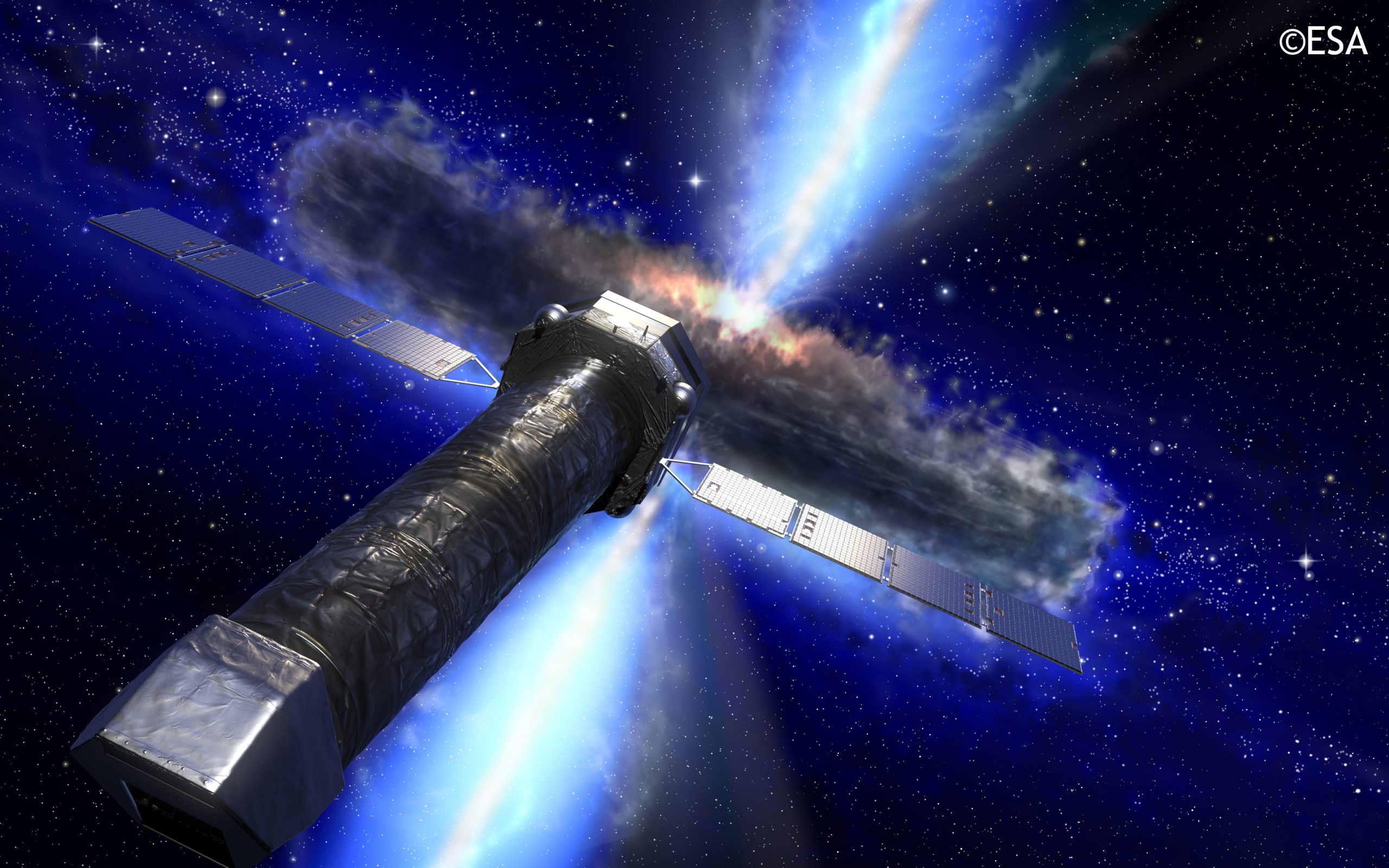
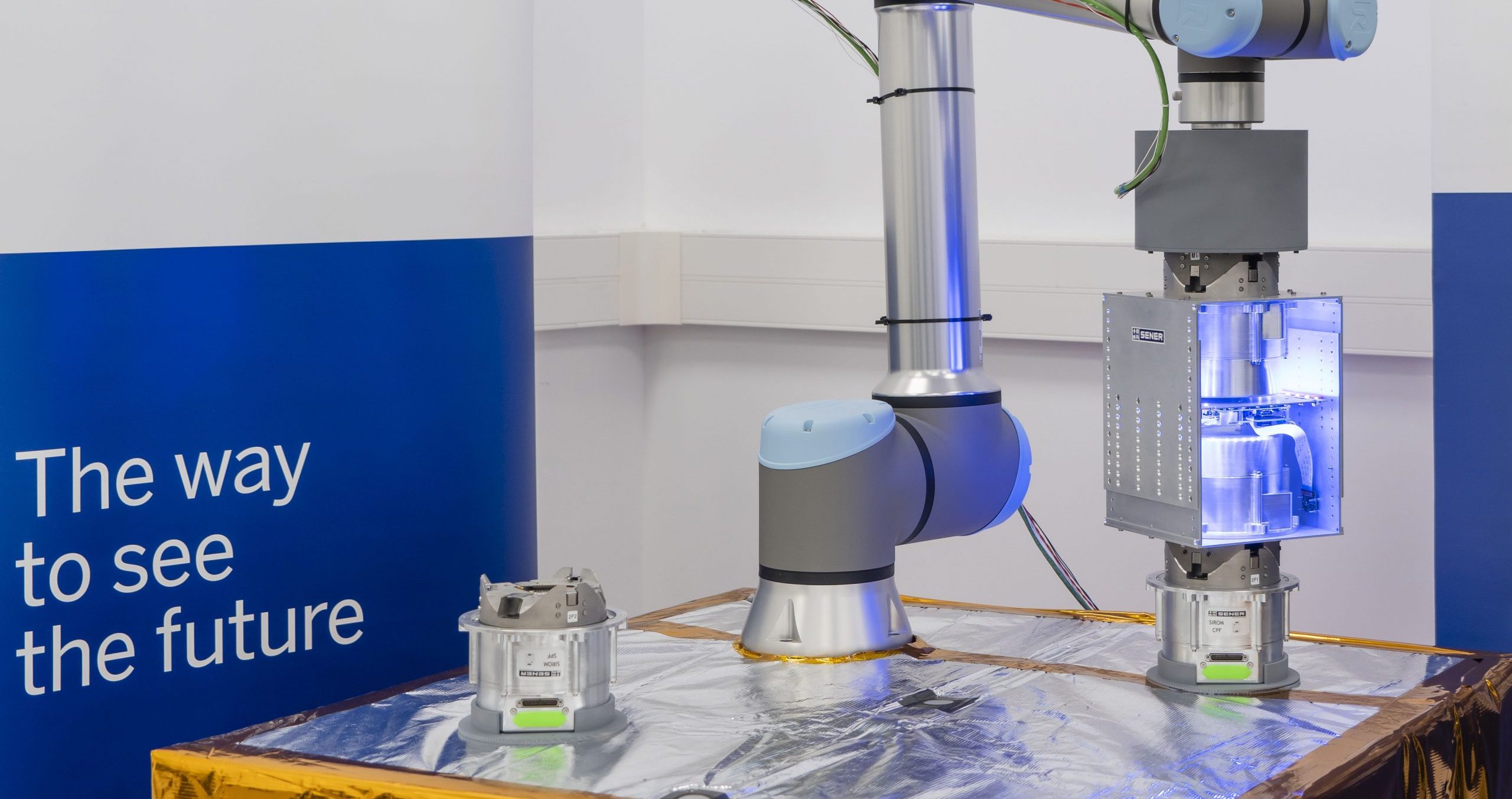
SENER has signed a contract with the European Space Agency (ESA) to design, manufacture and test a prototype of the HDRA (Hold Down and Release Actuator) mechanism for the ATHENA (Advanced Telescope for High Energy Astrophysics) telescope mirror.
ATHENA is a scientific mission from ESA to find answers to major scientific questions about how galaxy groups and black holes form.
In practice, the probe is a huge, 12-meter X-ray telescope that facilitates the study of phenomena such as gamma-ray bursts, magnetic interactions between extrasolar planets and their stars, the gasses surrounding galaxy groups, the auroras of Jupiter, and comets in our solar system.
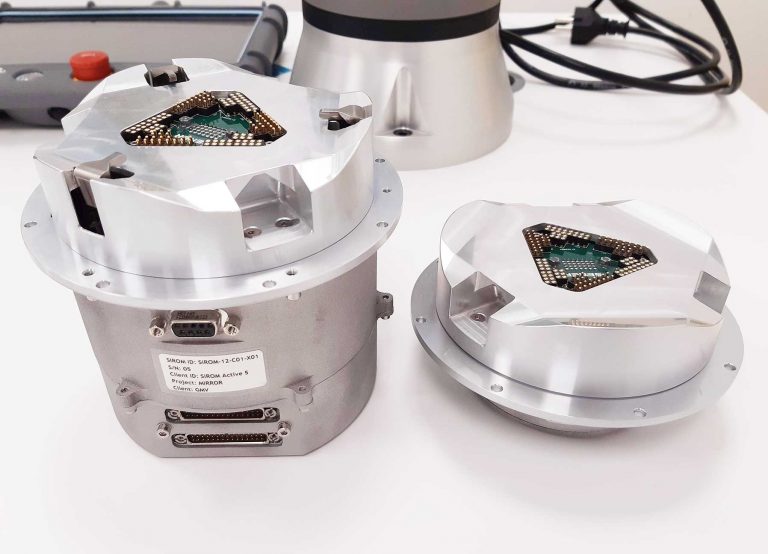
The contract signed by SENER implies the design, manufacture and test of a prototype of the HDRA (Hold Down and Release Actuator) mechanism, which purpose is to ensure that the telescope mirror, of great dimensions, remains immobilized until the probe is in the correct orbit.
To this end, in the design of the mechanism SENER will be using as a fundamental component a version of the family of non-explosive release devices called NEReA (Non Explosive Release Actuator), which has been developed entirely by SENER with its own technology and is currently in the qualification phase.This is the second contract that SENER carries out for this mission, after developing the Instrument Selection Mechanism (ISM) – based on a SENER patent – that allows ATHENA telescope to use two instruments working with just one large mirror, which is not a common solution.
 The ATHENA spacecraft carries two independent instruments; a spectrometer (X-IFU) and an imager (Wide Field Imager, WFI) which will share a single focal point provided by a single X-ray telescope.
ATHENA is the second L-class (Large) mission under the European Space Agency’s ‘Space Vision’ scientific program and the launch of the probe is planned for 2028.
The SENER group has been, for more than 50 years, a top-tier supplier of electromechanical components and systems, navigation systems (GNC/AOCS), communications, astronomy and optics systems for Space, and it is currently participating in the main programs of ESA and NASA (including, in addition to those already mentioned, Hubble, Galileo, Rosetta, Gaia, Herschel and Planck, IXV, Proba 3, BepiColombo, Solar Orbiter, JUICE, Euclid and ExoMars 2020) and of the European Southern Observatory (ESO). The group stands out as one of the leading suppliers for the ESA’s science programs, for its engineering contributions.

SENER has signed a contract with the ESA to design, manufacture and test a prototype SENER has signed a contract with the ESA to design, manufacture and test a prototype of the HDRA mechanism for the ATHENA telescope mirror..[+]
For the first time, the engineering and technology group Sener has been awarded five contracts for the development phase of a future space station in lunar orbit that is destined to become the next international space station, and which is scheduled to be built in the 2020s as part of the Gateway Project.
The Lunar Orbital Platform-Gateway, LOP-G (previously called the Deep Space Gateway, DSG), is an international project in which the American, Russian, Canadian, Japanese and European space agencies are taking part (NASA, Roscosmos, CSA, JAXA and ESA) in order to design and plan a station in orbit around the Moon, called Cislunar, that can house astronauts for short periods of time. It will be used as an intermediate point for both crewed and robotic space missions on the lunar surface in route to other planets, such as Mars, and even to deep space.
This platform will have several modules: Power and Propulsion, Infrastructure and Telecommunications, Logistics, as well as two Habitation modules and an additional airlock for spacewalks.
The Sener group has entered into five different contracts to carry out this project: For the habitation module (I-HAB), Sener, under contract to Airbus Germany, will be responsible for the design of the four Hatches and the internal secondary structure and for Thales Alenia Space Italia, will define the interfaces for the robotic arms (external and internal). For both companies, Sener will also participate in the design of the docking and berthing mechanisms between the I-HAB and the various modules, which will be assembled in orbit.
For the Infrastructure and Telecommunications module (ESPRIT), under contract to Thales Alenia Space France, Sener will perform an assessment on the motorised Hatch, the communication antenna pointing mechanism and the robotic arm interfaces.
For the lunar landing vehicle that will later be coupled to the station in order to collect lunar soil samples, Sener will undertake the structural design, mechanisms and thermal control, also under Airbus contract.
Finally, within the context of the technological development plan for future ESA missions, the Sener group will carry out, for this agency, the S-band deployable antenna integrated into the lunar ascent module. This antenna, with mechanical pointing capability, will allow the transmission of mission data from the lunar surface as well as telemetry and telecommand communications during the module’s ascent and descent maneuvers.
The Sener group has been, for more than 50 years, a top-tier supplier of electromechanical components and systems, navigation systems (GNC/AOCS), communications, astronomy and optics systems for Space, and it is currently participating in the main programs of ESA and NASA (including, in addition to those already mentioned, Hubble, Galileo, Rosetta, Gaia, Herschel and Planck, IXV, Proba 3, BepiColombo, Solar Orbiter, JUICE, Euclid and ExoMars 2020) and of the European Southern Observatory (ESO). The group stands out as one of the leading suppliers for the ESA’s science programs, for its engineering contributions.
SENER has signed a contract with the European Space Agency (ESA) to design, manufacture and test a prototype of the HDRA (Hold Down and Release Actuator) mechanism for the ATHENA (Advanced Telescope for High Energy Astrophysics) telescope mirror.
ATHENA is a scientific mission from ESA to find answers to major scientific questions about how galaxy groups and black holes form.
In practice, the probe is a huge, 12-meter X-ray telescope that facilitates the study of phenomena such as gamma-ray bursts, magnetic interactions between extrasolar planets and their stars, the gasses surrounding galaxy groups, the auroras of Jupiter, and comets in our solar system.
The contract signed by SENER implies the design, manufacture and test of a prototype of the HDRA (Hold Down and Release Actuator) mechanism, which purpose is to ensure that the telescope mirror, of great dimensions, remains immobilized until the probe is in the correct orbit.
To this end, in the design of the mechanism SENER will be using as a fundamental component a version of the family of non-explosive release devices called NEReA (Non Explosive Release Actuator), which has been developed entirely by SENER with its own technology and is currently in the qualification phase.This is the second contract that SENER carries out for this mission, after developing the Instrument Selection Mechanism (ISM) – based on a SENER patent – that allows ATHENA telescope to use two instruments working with just one large mirror, which is not a common solution.
The ATHENA spacecraft carries two independent instruments; a spectrometer (X-IFU) and an imager (Wide Field Imager, WFI) which will share a single focal point provided by a single X-ray telescope.
ATHENA is the second L-class (Large) mission under the European Space Agency’s ‘Space Vision’ scientific program and the launch of the probe is planned for 2028.
The SENER group has been, for more than 50 years, a top-tier supplier of electromechanical components and systems, navigation systems (GNC/AOCS), communications, astronomy and optics systems for Space, and it is currently participating in the main programs of ESA and NASA (including, in addition to those already mentioned, Hubble, Galileo, Rosetta, Gaia, Herschel and Planck, IXV, Proba 3, BepiColombo, Solar Orbiter, JUICE, Euclid and ExoMars 2020) and of the European Southern Observatory (ESO). The group stands out as one of the leading suppliers for the ESA’s science programs, for its engineering contributions.
SENER has signed a contract with the ESA to design, manufacture and test a prototype SENER has signed a contract with the ESA to design, manufacture and test a prototype of the HDRA mechanism for the ATHENA telescope mirror..[+]
An integrated vision of the design and construction of the hospital
Contact us to find out how we can help you.
An integrated vision of the design and construction of the hospital
SENER has signed a contract with the European Space Agency (ESA) to design, manufacture and test a prototype of the HDRA (Hold Down and Release Actuator) mechanism for the ATHENA (Advanced Telescope for High Energy Astrophysics) telescope mirror.
ATHENA is a scientific mission from ESA to find answers to major scientific questions about how galaxy groups and black holes form.
In practice, the probe is a huge, 12-meter X-ray telescope that facilitates the study of phenomena such as gamma-ray bursts, magnetic interactions between extrasolar planets and their stars, the gasses surrounding galaxy groups, the auroras of Jupiter, and comets in our solar system.
The contract signed by SENER implies the design, manufacture and test of a prototype of the HDRA (Hold Down and Release Actuator) mechanism, which purpose is to ensure that the telescope mirror, of great dimensions, remains immobilized until the probe is in the correct orbit.
To this end, in the design of the mechanism SENER will be using as a fundamental component a version of the family of non-explosive release devices called NEReA (Non Explosive Release Actuator), which has been developed entirely by SENER with its own technology and is currently in the qualification phase.This is the second contract that SENER carries out for this mission, after developing the Instrument Selection Mechanism (ISM) – based on a SENER patent – that allows ATHENA telescope to use two instruments working with just one large mirror, which is not a common solution.
The ATHENA spacecraft carries two independent instruments; a spectrometer (X-IFU) and an imager (Wide Field Imager, WFI) which will share a single focal point provided by a single X-ray telescope.
ATHENA is the second L-class (Large) mission under the European Space Agency’s ‘Space Vision’ scientific program and the launch of the probe is planned for 2028.
The SENER group has been, for more than 50 years, a top-tier supplier of electromechanical components and systems, navigation systems (GNC/AOCS), communications, astronomy and optics systems for Space, and it is currently participating in the main programs of ESA and NASA (including, in addition to those already mentioned, Hubble, Galileo, Rosetta, Gaia, Herschel and Planck, IXV, Proba 3, BepiColombo, Solar Orbiter, JUICE, Euclid and ExoMars 2020) and of the European Southern Observatory (ESO). The group stands out as one of the leading suppliers for the ESA’s science programs, for its engineering contributions.
SENER has signed a contract with the ESA to design, manufacture and test a prototype SENER has signed a contract with the ESA to design, manufacture and test a prototype of the HDRA mechanism for the ATHENA telescope mirror..[+]
An integrated vision of the design and construction of the hospital
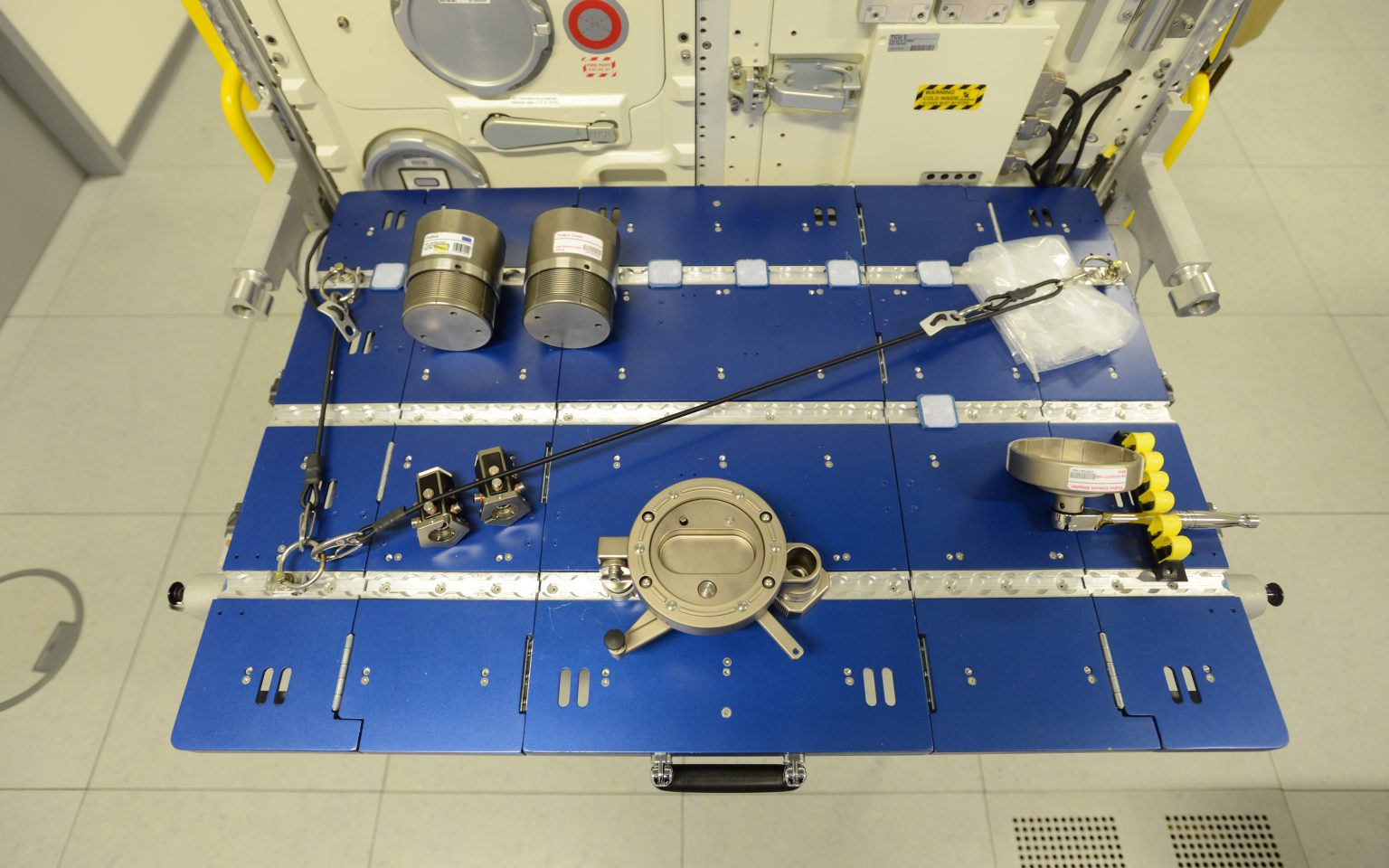
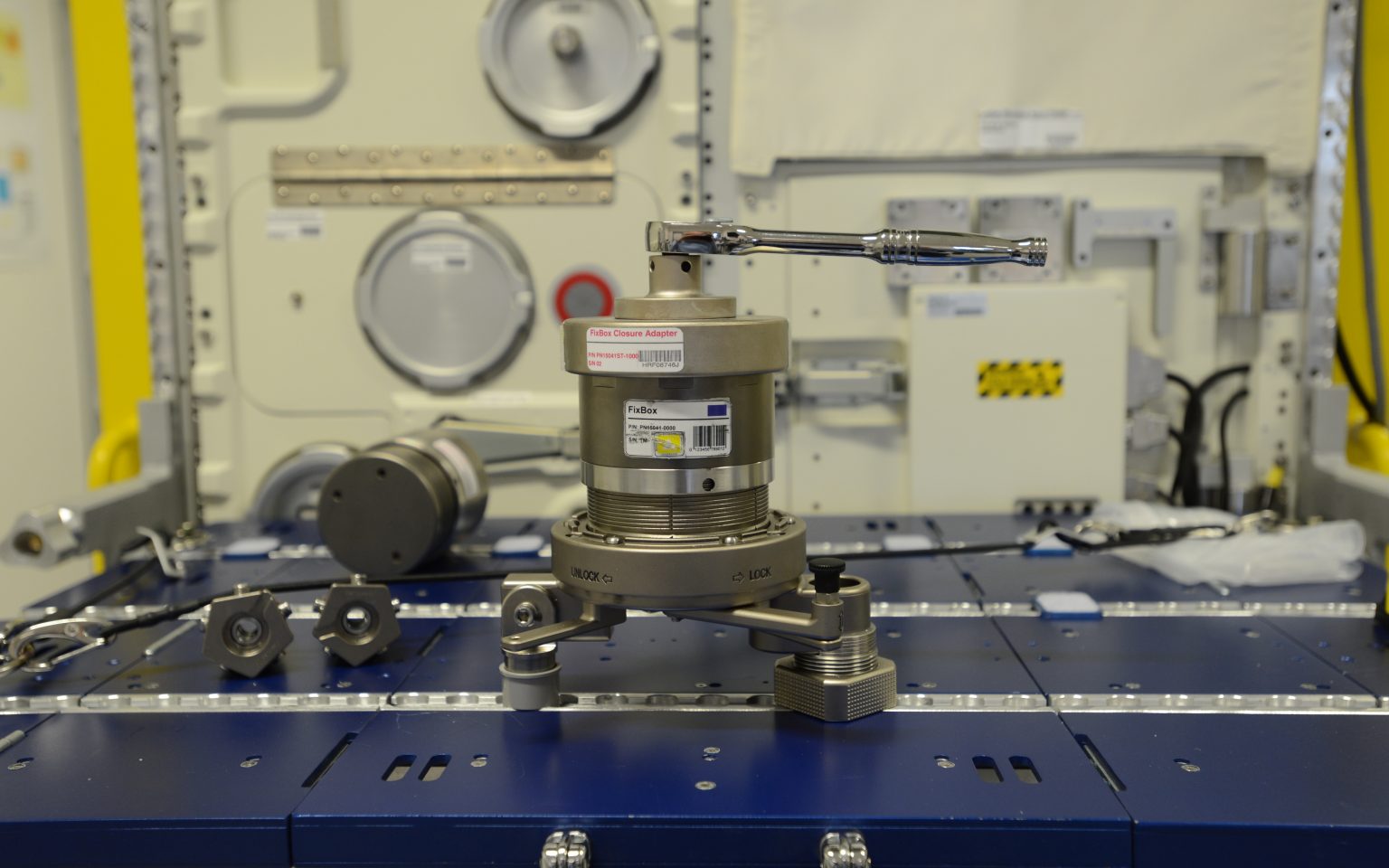
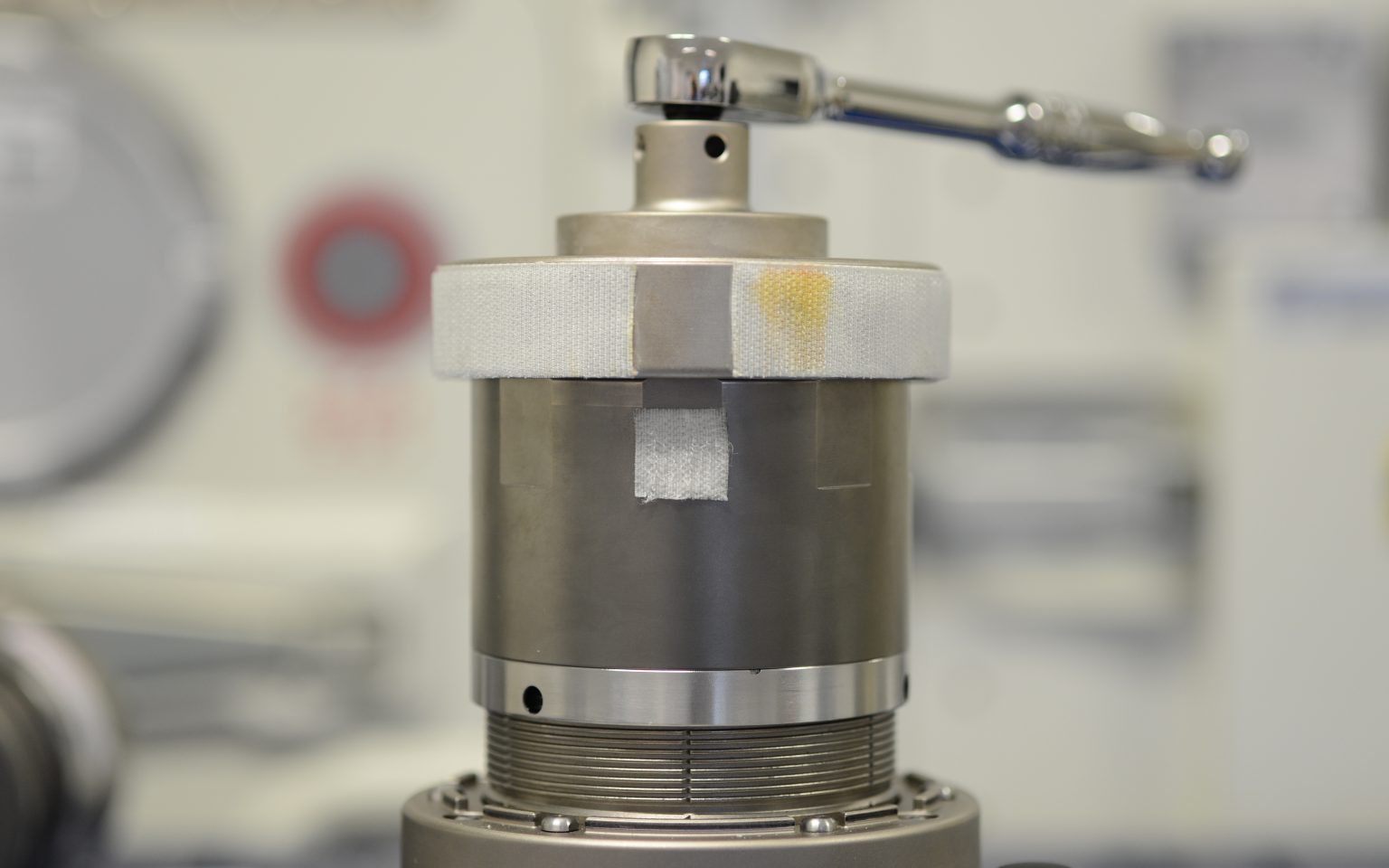
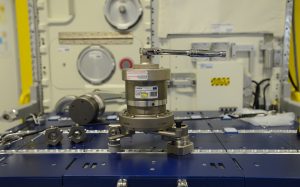
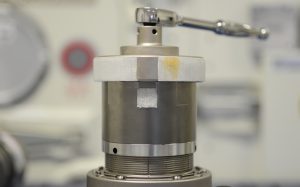
The FixBox is a piece of equipment used in the International Space Station (ISS) for vegetal biology experiments.
This is a joint NASA and ESA research project consisting of investigating the growth of Arabidopsis Thaliana seeds to study the effects of microgravity and light on their development. It will be carried out in the European Modular Cultivation System of the Columbus module and will use experiment containers and cartridges developed by NASA for a previous experiment.
Once they have germinated, the seeds must be treated with fixatives to preserve them until they return to Earth,
The FixBox is a piece of equipment used in the International Space Station (ISS) for vegetal biology experiments.
This is a joint NASA and ESA research project consisting of investigating the growth of Arabidopsis Thaliana seeds to study the effects of microgravity and light on their development. It will be carried out in the European Modular Cultivation System of the Columbus module and will use experiment containers and cartridges developed by NASA for a previous experiment.
Once they have germinated, the seeds must be treated with fixatives to preserve them until they return to Earth, where they will be scientifically evaluated. However, neither the experiment container nor the cartridges have the capacity to fixate biological samples. Therefore, a device, the FixBox, had to be developed to provide this chemical fixation.
Contact us to find out how we can help you.