





Sener Aerospace & Defense leads COMMANDS

Sener Aerospace & Defense leads COMMANDS

01/02/2023

“Convoy Operations with Manned-unManneD Systems” (COMMANDS), a European Defence Fund 2021 project, aims to provide a solution to face most of the challenges in the use of unmanned ground systems (UGS) in combination (swarming) with manned military vehicles and air systems.


COMMANDS is under the umbrella of a System of Systems able to provide an intelligent and effective cooperation of the different assets, identifying the technological gaps to be covered in order to strengthen the European military operations supported by unmanned or remotely piloted vehicles, under the European independent strategy principle.
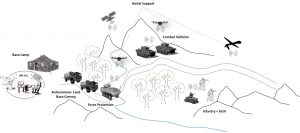
 

The results will not only enable to upgrade current ground vehicles of the EU inventory for specific missions, but also to be integrated in future vehicles in development.

A multidisciplinary team, led by Sener Aerospace and Defense, will cover the different aspects of the activity, incorporating 21 Consortium Partners from 10 member States that provide a multidisciplinary and complementary approach (OEMs, midcaps, specialised SMEs, renowned universities and both puplic and private research centres and laboratories to answer the needs of the European Commission and the Member States, strenghteing the European Industry and Technological Base.

The proposal is developed in the context of PESCO project iUGS, and is strongly aligned with the Ground Combat Capabilities of EU Capability Development Priorities (CDP), addressing modular, open and scalable architecture for manned and unmanned joint capabilities, developed in cooperation.

The European Commission awarded €24.8 million funding to the COMMANDS project led by Sener Aerospace and Defense, will have a total cost of €26.8 million during a three-year execution, and counts with the support of seven Ministries of Defense that as end-users have provided common requirements for the project.

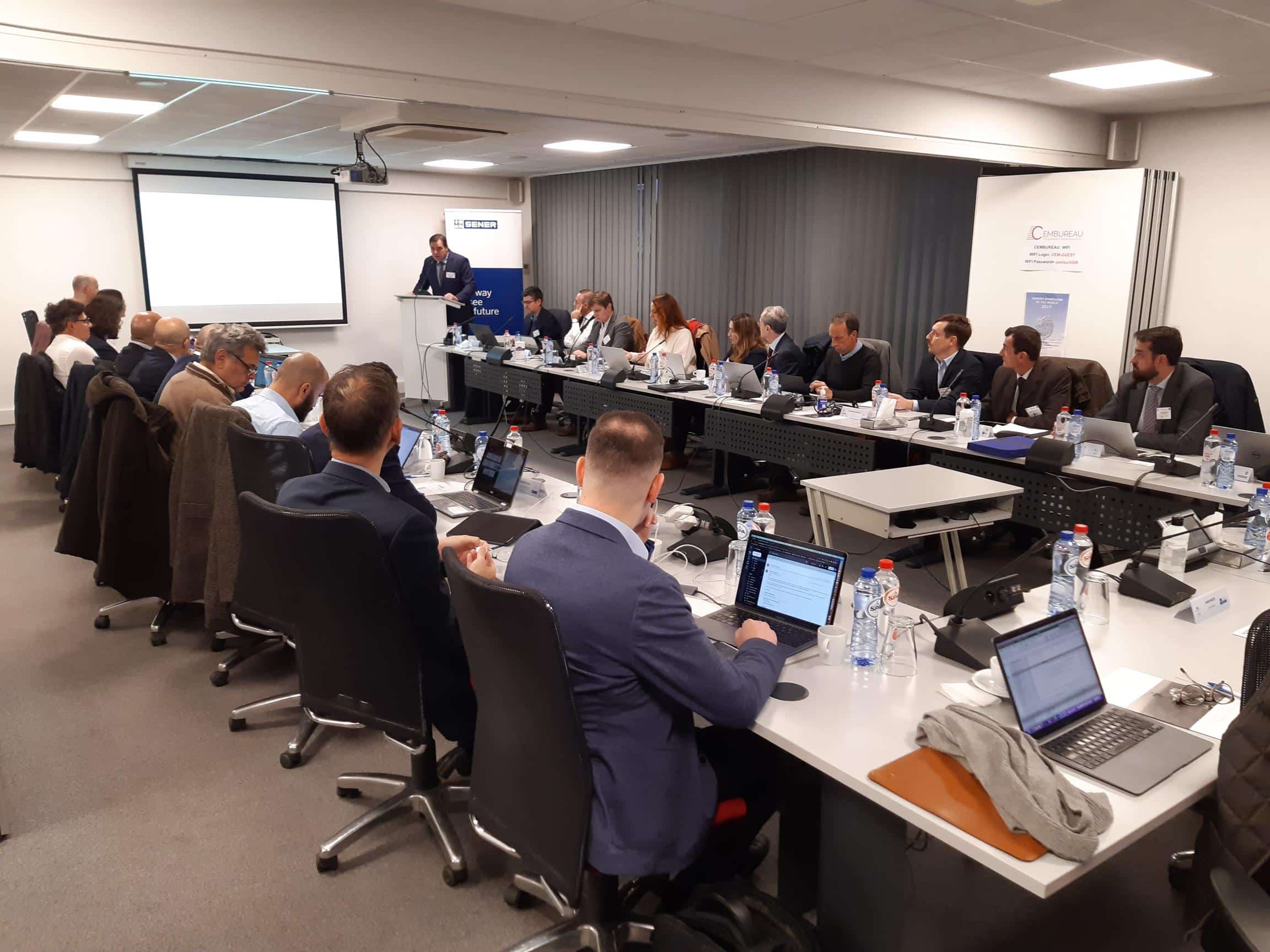
The “COMMANDS” European Defence Fund 2021 project was officially launched at a Kick-Off-Meeting chaired by the European Commission DG DEFIS at Sener Aerospace and Defense Brussels office last December 2022.

Sener Aeroespacial will supply scanner mechanisms for the Forum mission

Sener Aeroespacial will supply scanner mechanisms for the Forum mission

31/01/2023

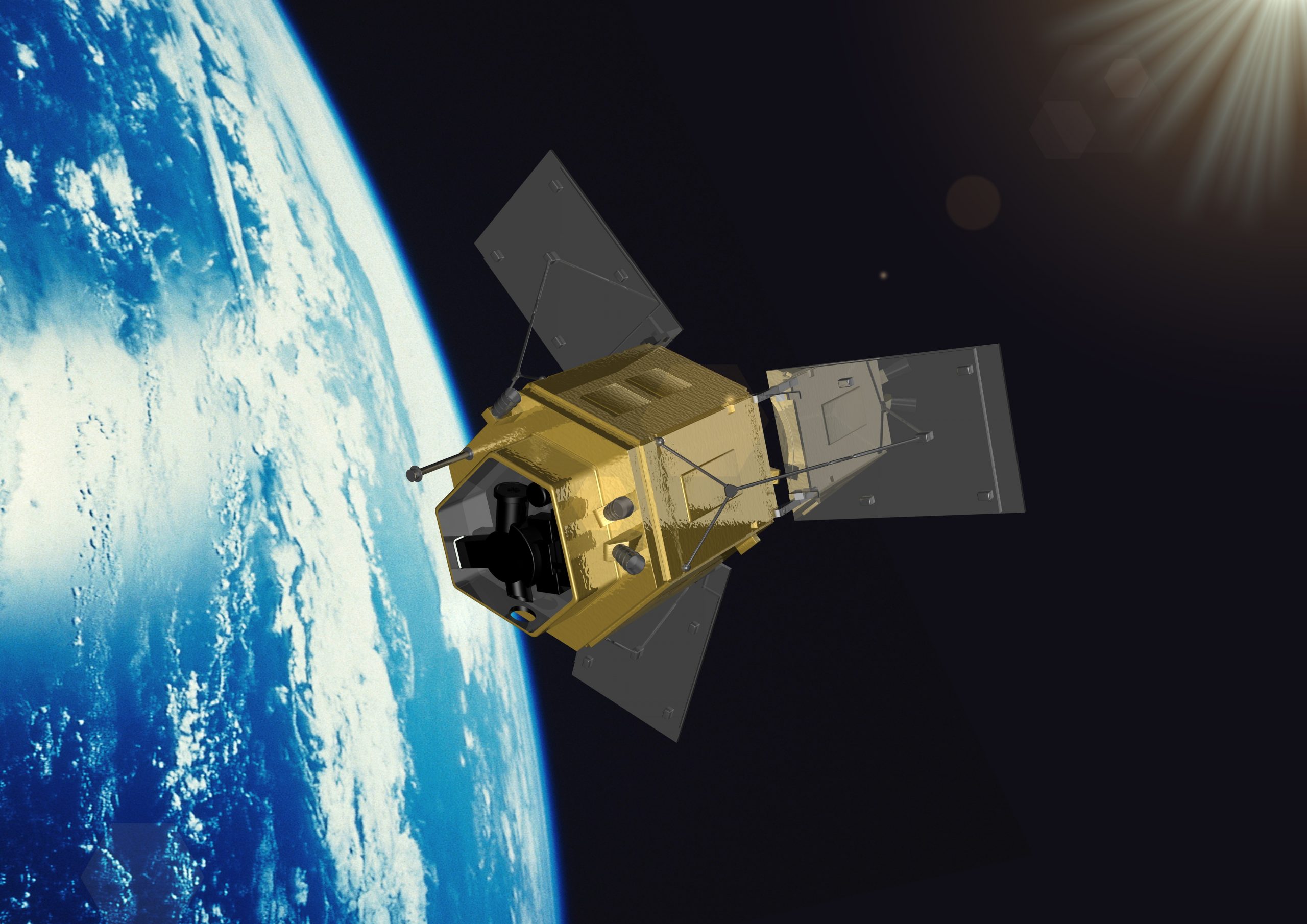
Sener Aeroespacial has signed a contract to supply scanner and calibration mechanisms and electronics for the Forum mission (Far-Infrared Outgoing Radiation Understanding and Monitoring), which will be the ninth Earth Explorer mission by the European Space Agency (ESA).

By measuring the radiation emitted to space by the Earth, this mission will provide new insights into the amount of planetary radiation and how to control it. This will lead to improvements in the climate models and, thus, to further precision in climate change assessments and climate prediction.

The mechanisms supplied by Sener Aeroespacial will allow sequencing the regular calibration and scanning points of the atmosphere’s surface in an automated way. As a result, it will allow building a complete map of the surface and monitoring its evolution over time, with the aim of understanding how temperature is regulated on the surface.

Pablo Campo, Project Manager of the Forum’s mechanisms, comments that “the aim of this mission is to obtain unknown information on the behavior of the climate and global warming. It involves studying an infrared band that is not covered by any other Earth observation satellite, in order to regulate the climate. We will be able to map the heat balance of the atmosphere and see, layer by layer and component by component, how much heat the Earth receives and stores from the Sun and how much it emits back into space. ESA has made this mission urgent.

Sener Aerospace has experience in similar mechanisms, such as the Meteosat Third Generation (MTG) satellite’s scanner. The insights obtained in this program will enable the team at Sener Aerospace to develop this system in an extremely short time, in line with the mission’s urgency.

Sener Aerospace has been a benchmark in the international space industry since 1967 and has provided equipment and systems to over 1,500 satellites and space vehicles on the Telecom market, as well as nearly 300 devices and systems to on board NASA, ESA, JAXA and Roscosmos missions, with a 100% reliability rate. Among its main programs, important ESA and NASA missions stand out, such as HRE, SEOSAT/Ingenio, CHIME, LSTM, Hubble, Rosetta, SMOS, Pléiades, Herschel&Planck, JUICE, Athena, Solar Orbiter, Proba-3, Gaia, BepiColombo, ExoMars, Curiosity, Euclid, LISA Pathfinder, MTG, FLEX, LOP Gateway, Mars2020, Earth Explorers, COPERNICUS and Galileo; in Science, with the European Southern Observatory (ESO) and the telescopes William Herschel, EST and ELT are particularly noteworthy; and in the commercial market, as the supplier of the main international manufacturers of communications satellites, as well as in New Space (constellations Spainsat NG, Globalstar 2G, O3B, Iridium NEXT, OneWeb, OneSat) and in launchers and vehicles like ATV, IXV, ARIANE 6, VEGA, Verta and Space Rider.

Sener Aerospace and Defense, founding partner of the Quantum Technologies Center Association

Sener Aerospace and Defense, founding partner of the Quantum Technologies Center Association

24/01/2023

Sener Aerospace and Defense is one of the founding partners of the Quantum Technologies Center Association.

This is a quantum communications laboratory attached to the University of Vigo (Spain), of which Sener, represented by Demetrio Zorita, is also a member of the Business Advisory Board.

The laboratory aims to be one of the spearheads of the Spanish quantum technology ecosystem. Its main objectives are the conception, production, promotion, dissemination, application and exploitation of scientific and technological knowledge in the area of photonics, through the achievement of excellence in research and technological development. It will soon evolve into AEPHOS, Centro de Tecnologías Fotónicas.

The main motivation for being in this project is that Sener is currently developing technologies for quantum key distribution (QKD) in free space, which is considered the only way to establish secure communications in the future, once quantum supercomputers are able to break, by brute force attack, any cryptographic key.

Along with Sener Aerospace and Defense, Gradiant, Keysight, VLC Photonics, Sparc Foundry and Alter Technology are also founding partners. In December, the Association’s Articles of Incorporation were signed in a formal ceremony, but held remotely, with electronic registration.

Spanish Government grants Sener an aid of 10 million euros for its electrolyzer technological development and manufacturing project

Spanish Government grants Sener an aid of 10 million euros for its electrolyzer technological development and manufacturing project

12/01/2023

Sener carries out the technological development of hydrogen generation solutions from 100% renewable energy with zero CO2 emissions. Some of Sener’s solutions will complement the use of H2 wherever sufficient renewable electricity generation is available or in mobility applications where it is not possible to ship large volumes of compressed hydrogen, such as the marine sector.

Sener’s technological development and manufacturing project for new generation electrolysers has been one of the four projects chosen by the Government, as announced on Tuesday 10 by the Council of Ministers. In total, the Government has allocated 74 million euros to four renewable hydrogen projects, as explained by the third vice president of the Government and Minister for the Ecological Transition and the Demographic Challenge, Teresa Ribera.

This nominative state subsidy is the mechanism for financing the Important Project of Common European Interest (IPCEI) for renewable hydrogen research and industry, which selected the four projects, including Sener’s project for the technological development and manufacture of new generation electrolyzers, in July 2022. The IPCEI Hy2Tech program will finance R+D and industrial deployment activities. In total, an investment of more than 245 million euros will be mobilized.

It is expected that this project of technological development and manufacture of new generation electrolyzers of Sener, will generate at least 300 direct jobs, to which will be added another 500 indirect, by developing the supply chain with national companies.

This is one of Sener’s projects in hydrogen generation from 100% renewable energy with zero CO2 emissions. Sener carries out the technological development of hydrogen generation solutions, such as electrolysis, the most interesting solution for the mass generation of green hydrogen. It also works on the integration of electrolysis equipment with a complete H2 generation system, including from the generation of hydrogen, the adaptation and supply of water and electricity to the subsequent phases of compression, storage and use, as well as its possible transformation into other products. Likewise, Sener develops technology for generating green H2 from bioalcohols or ammonia, as possible hydrogen carriers. These solutions will complement the use of H2 where sufficient renewable electricity generation is available or in mobility applications where it is not possible to ship large volumes of compressed hydrogen, such as the marine sector.

As indicated in the note released by the Spanish Government, renewable hydrogen is considered essential for the decarbonization of the economy and achieve the objectives set for climate neutrality, so it is acquiring a very important weight in the new energy model worldwide. “It is also a great opportunity for innovation, employment and the modernization of the productive fabric,” stressed Ribera. The Vice President said that Spain is “at the forefront” in this race for the hydrogen economy, both for professional and industrial capabilities and for the orientation of public policies: “We should feel enormously proud.”

In this sense, in October 2020 the “Hydrogen Roadmap: a commitment to renewable hydrogen” was approved, which set for 2030 the objectives of 4 gigawatts of installed power of electrolysers (10% of the objective set by the European Commission for the whole of the EU); a minimum of 25% of hydrogen consumption by the industry of renewable origin, and the implementation of hydrogenerators, trains and heavy transport vehicles powered by this renewable vector. A year later, in December 2021, the PERTE of renewable energy, hydrogen and storage was presented, which has already called for aid for 400 million euros for pioneering and unique renewable hydrogen projects and for the value chain.


Project funded by:

Sener is part of the design team for the Scarborough Metro Extension Stations, Rail and Systems project in Toronto

Sener is part of the design team for the Scarborough Metro Extension Stations, Rail and Systems project in Toronto

10/01/2023

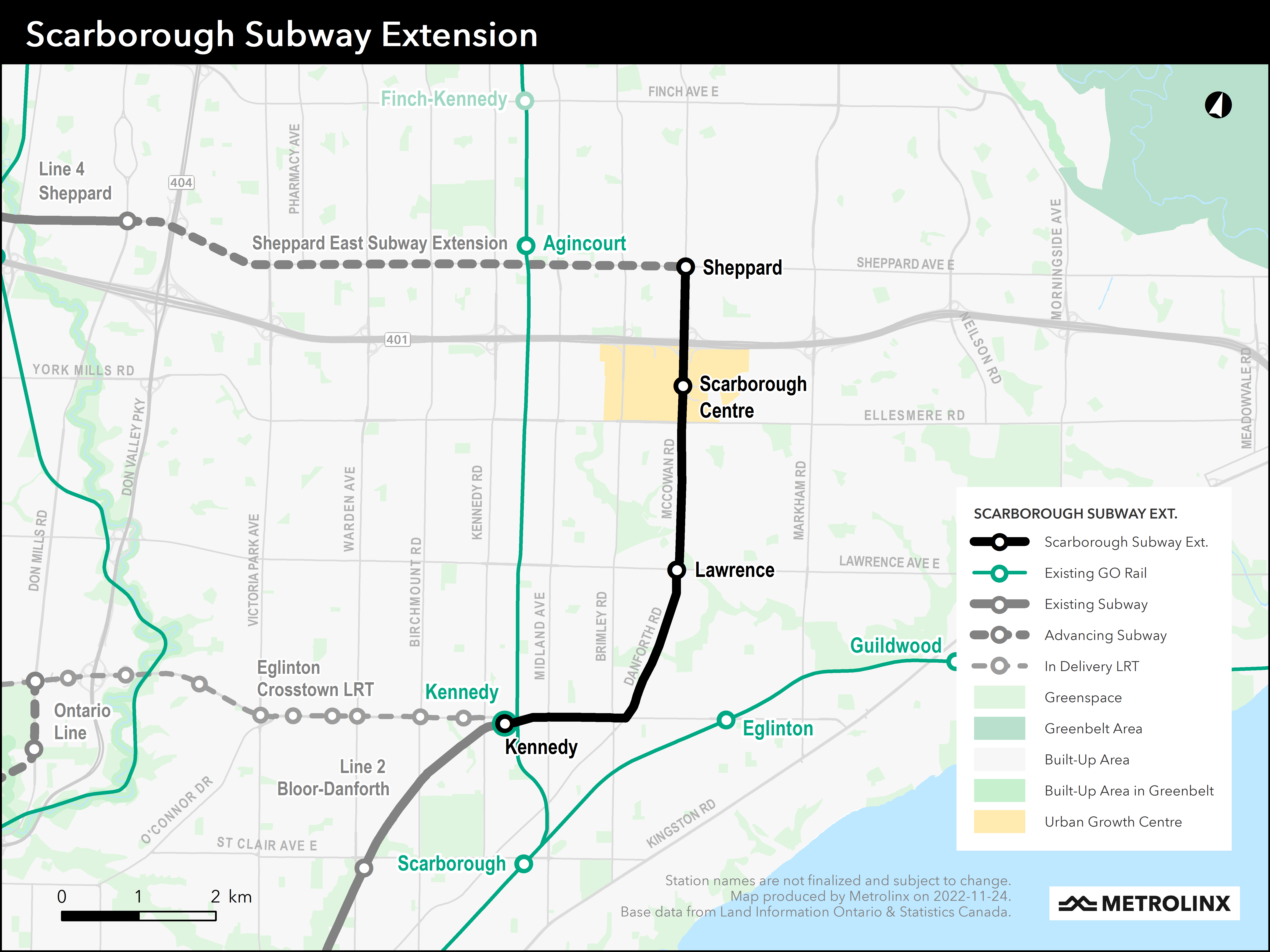
The proposed Scarborough Subway Extension will bring the TTC’s Line 2 subway service nearly eight kilometres farther into Scarborough.

Sener is part of the design team for the Scarborough Subway Extension Stations, Rail and Systems (SRS) project. The project will extend the Toronto Transit Commission (TTC) Line 2 subway service nearly eight kilometers farther from the existing Kennedy Station northeast to McCowan Road and Sheppard Avenue.

Scarborough Transit Connect (STC), a consortium between Aecon and FCC Canada Limited (FCC) selected by Metrolinx and Infrastructure Ontario (IO) to deliver the project using a Progressive Design-Build (PDB) model, includes Sener, Mott McDonald, and local architects as the designers.

Key features of a PDB model include the opportunity for greater collaboration between the project owner, the successful bidder, project partners, and communities.

The proposed extension will include three new stations with connections to Line 5 (the Eglinton Crosstown LRT), GO train and bus services, TTC bus service and Durham Region Transit – connecting to several transit systems to make it easier to travel within the city and beyond.

Sener has been very active in the Canadian Rail & Transit Sector, currently working on significant projects in 5 different cities. Ontario Line South Civil, Finch West LRT, Eglinton Crosstown West Extension and GO Expansion On-Corridor Works projects in Toronto; the Réseau Express Métropolitain in Montreal; the Confederation Line and Trillium Line in Ottawa; and Valley Line West Extension in Edmonton.

Dublin Airport North Runway Project awarded Engineering Endeavours of 2022

Dublin Airport North Runway Project awarded Engineering Endeavours of 2022

21/12/2022

Sener has been part of the design joint venture, along with Arup.

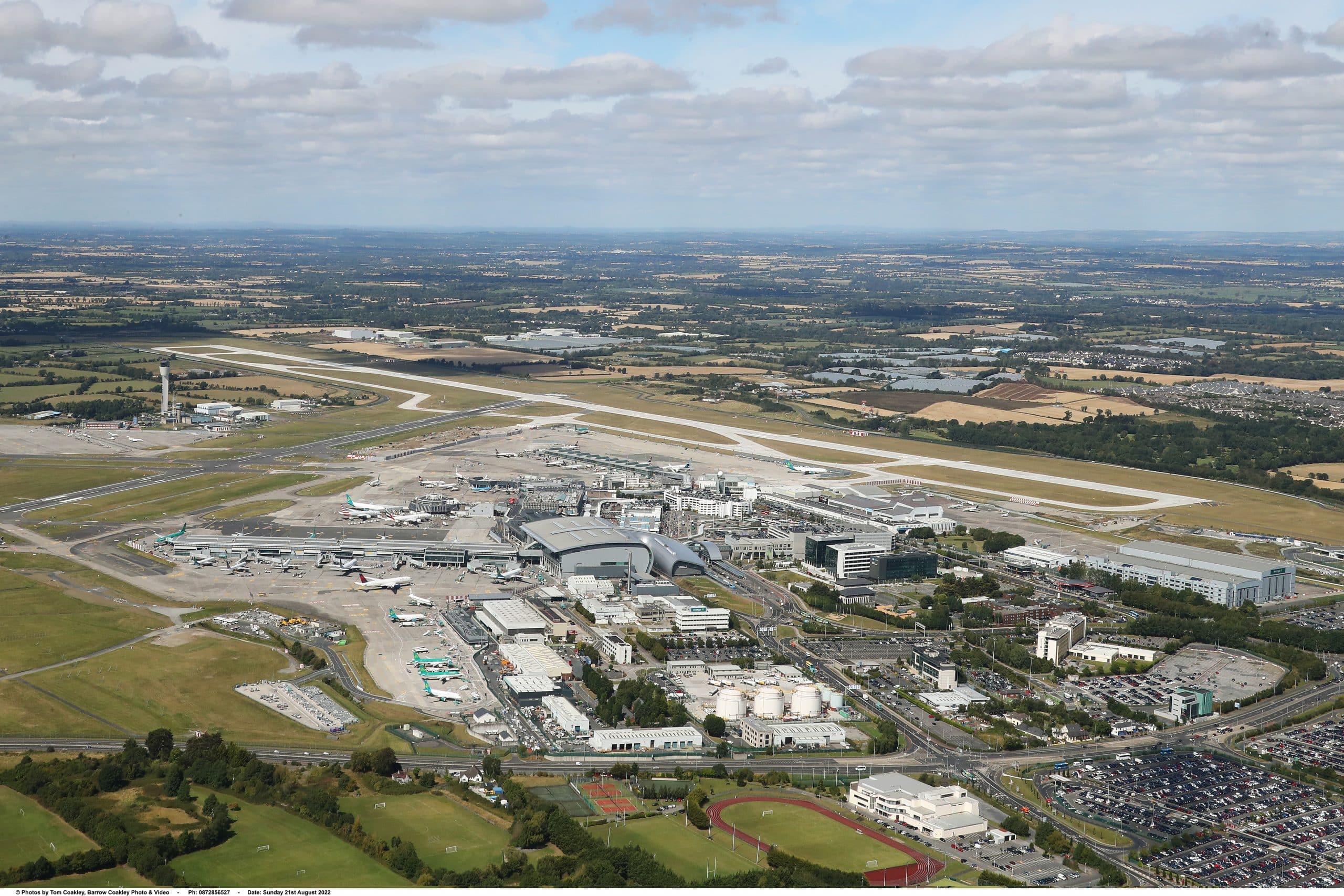
On December 19, 2022, Engineers Ireland awarded the prestigious Engineering Endeavours of 2022 award to the Dublin Airport North Runway Project (NRCP2) built by the Spanish company FCC Construcción and the Irish Roadbridge.

Sener has been part of the design joint venture, along with Arup. Within the JV, Sener has played a key role in the design engineering of pavements, visual aids (airfield ground lighting, AGL), affected services, air navigation assistance systems (NAVAIDS), perimeter enclosures and structures, as well as technical support throughout the work.

The project, promoted by the Dublin Airport Authority (DAA), is a key element for the growth of Dublin Airport’s connectivity with Europe and North America. With a total investment of more than 330 million euros, it has involved the construction of more than 340,000 sqm of aeronautical pavements on runways and taxiways for 4F aircraft, 6 km of roads and the installation of more than 425 km of electrical cable and 2500 aeronautical lights to allow CAT-III operations.

The entire design was carried out under premises of safety, efficiency and reliability, minimizing the costs of operation and maintenance of the infrastructure and its systems throughout its useful life.

Six projects from Horizon Europe

Six projects from Horizon Europe

21/12/2022

Sener Aeroespacial awarded six projects from Horizon Europe in the area of Space

Sener Aeroespacial is currently signing the Grant Agreements for six awarded projects from Horizon Europe (European Commission) in the area of Space, corresponding to the calls for 2021 and 2022 (HORIZON-CL4-2021-SPACE and HORIZON-CL4-2022-SPACE).

Sener Aeroespacial presented proposals for 7 different topics, for which award has been already secured on 6 of them. Sener Aeroespacial leads four of the six awarded projects.

The projects span from modular spacecrafts to flight units for safer launcher trajectories, covering as well new Gallium Nitride (GaN) space applications.

The complete list is the following:

  • Smart Avionics for Flight termination SysTems (SAFEST). The project will lead to a demonstrator of a modular Autonomous Flight Termination Unit (AFTU) for micro/small launchers, validated in a representative flight processor (execution) and emulated environment (dynamics), reaching TRL 5-6. This solution will differentiate from other developments tightly linked to a specific launch site, safety regulation and oriented (cost and mass) to institutional launchers. The proposed AFTU segregates the general-purpose sensors and functions (e.g. localisation) from the mission abort rules which are launcher and spaceport dependant, allowing customisation for a given launcher and site. This strategy is deemed a game changer for the reduction of launch service cost, availability, flexibility, enabling a more responsive access to space.
  • Space Application GaN transistor (SAGAN). SAGAN addresses a crucial element in future satellite platforms and payloads: GaN devices for power applications and use in Spacecraft Electrical Power Systems (EPS). Power transistors are key elements of electrical units used for example in power conversion. During the last decade, several technological advancements have enabled a new type of transistors based on Gallium Nitride over Silicon. GaN transistors allow a reduction in mass of the equipment that uses them and a reduction in power consumption. Currently, in Europe there is no 650V GaN process suitable for space applications therefore responding to specific requirements in terms of reliability, robustness and compatibility with rush environments. SAGAN will establish a non-dependent supply chain (design, manufacturing, and qualification testing) for GaN transistors and complement other R&D developments supported by the EU focused on low voltage GaN for space applications.
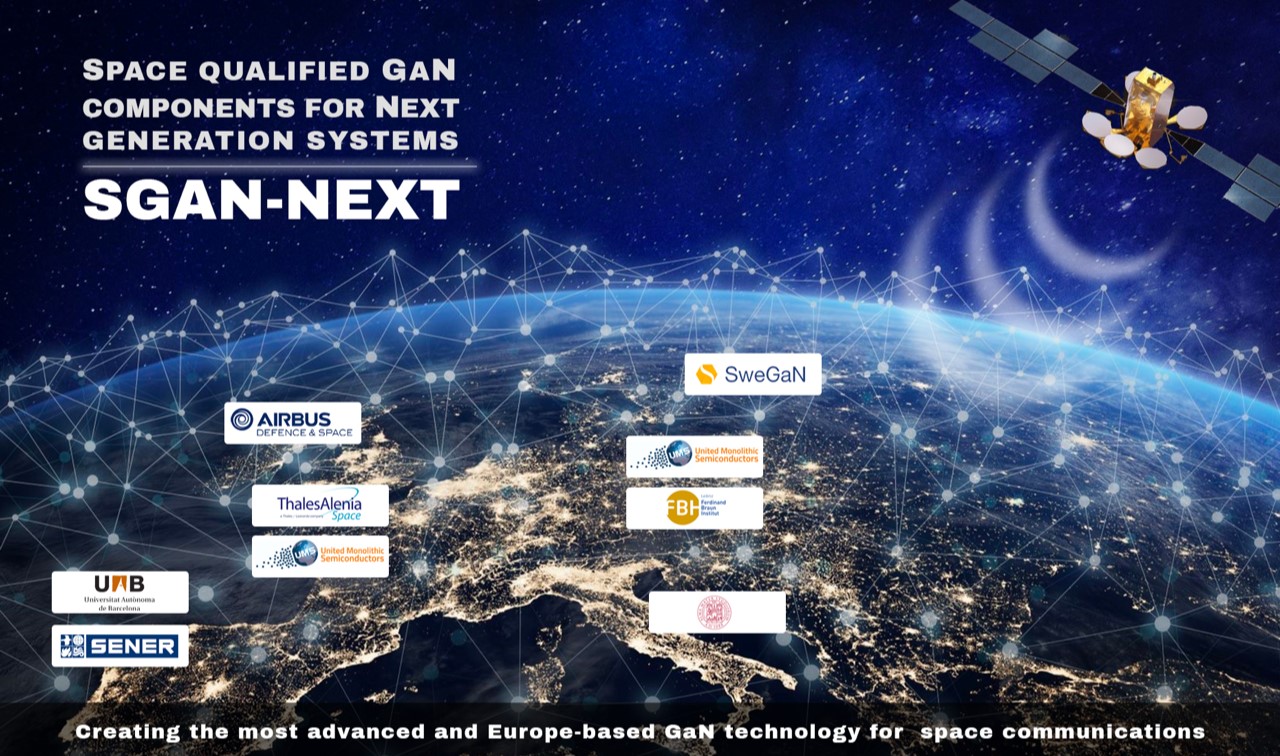
  • Space qualified GAN Components for Next generation systems (SGAN-Next). The main objective of SGAN-Next is to develop a fully European GaN on SiC foundry process and demonstrate outstanding performance at high frequency beyond Q-band, through the design of efficient and robust SSPA, LNA and switch devices for flexible LEO/GEO payloads. For this purpose, the project led by Sener as satellite equipment manufacturer, includes an epitaxy manufacturer (SweGaN), an industrial foundry (UMS), a research foundry (FBH) and two Universities (UNIBO and UAB). Moreover, the consortium count on the two main European satellite prime contractors (ADS and TAS) for the conceptual definition of services and the required system to answer market demand.
  • Orbital Replaceable Unit (ORU) based on Building blocks for Advanced Assembly of Space Systems (ORU-BOAS). The Orbital Replaceable Unit (ORU) will develop and demonstrate an ORU concept based on the building blocks developed in previous calls of the Union. The main points to be indeed addressed are, among others, an ORU: compatible with different Standard Interfaces (SI), payloads and services; to be used as a PLUG&PLAY module for the In Orbit Demonstration mission (currently as well under development); based on a Satellite Construction Kit for future applications In Space Manufacturing and Assembly missions; finally, a design concept that will include an AppStore and Open-Architecture mentality for the different modules as avionics. The ORU-BOAS consortium is constituted by Sener Aeroespacial (coordinator), Thales Alenia Space France, Thales Alenia Space Italy, ISISPACE and DLR.
  • ReuSable strAtegic space Launcher Technologies & Operations (SALTO). SALTO will perform, for the first time in Europe, fly / recover / refly cycles of a reusable rocket first stage demonstrator. Operating a large-scale vehicle at low altitude, consistent with future European strategic needs, and embedding a set of critical technologies, the project will significantly boost the strategic launchers roadmap, enabling the vision of a future launch fleet improving by 50% space access costs and reducing environmental impacts. SALTO is led by ArianeGroup. Sener Aeroespacial will develop the active antenna to enable the communications from launcher to ground.
  • European Robotic Orbital Support Services In-Orbit Demonstration (EROSS IOD). Access to Space is now easier and easier, and is not possible anymore to design and launch disposable spacecraft without considering the consequences: On-Orbit Servicing (OOS) is a first step towards this change of paradigm, as the technologies, typically autonomous rendezvous, refuelling, Orbital Replaceable Unit (ORU) exchange, repair and waste management with autonomous robotic tools will be used in future smart, flexible and modular space infrastructures. The growing demand for satellite life extension from commercial customers, making OOS an emerging market, is an opportunity to support those developments. To that purpose, designing in a phase B2/C the right mission and maturing the technologies to enable a go-to-market for future OOS missions is the main goal for EROSS IOD. The objective is to enable the in-orbit demonstration of all the key capabilities: coordinated close rendezvous between two free flying spacecraft comparable in mass and inertia (a first in Europe) and autonomous robotic operations such as capture, refuelling and change of payload with a poly-articulated arm. EROSS IOD is led by Thales Alenia Space. Sener Aeroespacial main contribution is focused on our SIROM Standard Interface.

The projects will be kicked-off during these and the upcoming weeks.

GA-ASI flies new multi-use NATO Pod on MQ-9

GA-ASI flies new multi-use NATO Pod on MQ-9

20/12/2022

NATO Pod Development Brings Together International Partners to Meet Future Requirements.

General Atomics Aeronautical Systems, Inc. (GA-ASI) flew the new NATO Pod for the first time on Nov. 23, 2022. The NATO Pod is a joint development between GA-ASI and Sener Aeroespacial of Spain. The NATO Pod is built by Sener Aeroespacial in Europe to meet NATO airworthiness standards, while increasing configuration and payload options for MQ-9A and MQ-9B Remotely Piloted Aircraft produced by GA-ASI. The new product is designed for international customers that are interested in rapidly integrating sovereign payload capabilities to achieve specific mission objectives.

The test flight was performed at the Yuma Proving Grounds using a GA-ASI owned MQ-9A aircraft.

NATO Pod development was driven by GA-ASI’s desire to provide customers with a customizable, multi-use pod for carriage of sovereign, cross-domain Intelligence, Surveillance and Reconnaissance (ISR) sensors for MQ-9A and MQ-9B RPA systems. GA-ASI is working with Sener and other European suppliers to integrate their sensor capabilities within this new pod. The NATO Pod is a flexible, scalable, certifiable enclosure with the structural features to host wide-ranging mission systems. The pod meets DEF STAN and STANAG certification standards for airworthiness, including lightning protection and bird impact.

The NATO Pod interfaces with common MQ-9 aircraft power and navigation interfaces, including the platform datalink connection to the Ground Control Station (GCS). Customer system integration is based on using a common set of interfaces to the aircraft and GCS systems.

“This is a truly momentous product design and implementation effort,” said GA-ASI Vice President of Mission Payloads and Exploitation, Satish Krishnan. “We’ve worked closely with Sener to meet requirements and keep our combined teams in sync to achieve this great outcome. Our successful test flight allows us to begin marketing this new capability to our international partner nations as a way to rapidly add sovereign payload capability.”

Rafael Orbe, Defence General Director at Sener Aeroespacial, said: “This first flight is the fruit of a long collaboration between GA-ASI and Sener and we are proud to have contributed to the success of the project. We look forward to continuing the good work together, which we are sure will bring us more successes in the future.”

This industrial cooperation effort introduces European manufacturing of GA-ASI designed mission hardware and opens the door to customer-specified mission payloads – including technologies that are built outside the U.S. – for deployment on MQ-9A and MQ-9B. The NATO Pod that was tested featured a payload built by Arpège S.A.S. France.

MQ-9As are operated by a number of European countries, including the United Kingdom, France, Italy, the Netherlands, and Spain. GA-ASI’s newer MQ-9B variant has been acquired by the UK and Belgium. Recently Poland announced that it will lease MQ-9A.

Sener’s corporate identity is evolving

Sener’s corporate identity is evolving

20/12/2022

The Sener engineering and technology group, a benchmark in the aerospace, infrastructure, energy and marine engineering sectors, is evolving its brand with the clear aim of continuing to offer solutions to the most complex challenges of clients and society. Sener also presents a new website, with this renewed corporate identity.

Sener, the group that is today an international benchmark in the engineering and technology sector, presents its new logo, an evolution from the previous one. This new logo offers a renewed image for its innovative and reliable solutions, while staying true to its tradition.

The new design maintains some elements from the previous one, such as the corporate color and the four elements, representing its traditional areas of activity – aerospace, infrastructure, energy and marine – which in recent years have been joined by other areas, such as digital and diagnostics.

The main differences compared to the previous logo are basically the loss of the boxes that framed both the symbols and the brand, as well as the change in the graphic design, which discards capital letters; the use of lowercase letters allows for a softer, more flexible and restrained font.

Sener has opted for adaptation of its foundational logo, which gives continuity to a brand that has 66 years of history and is a symbol of innovation and reliability. This renewed logo will be used to represent the entire Sener Group, which maintains the same purpose of continuing to provide innovative and sustainable solutions to its clients and society in general.

The latest news from the Sener Group can be found on its new website, www.group.sener, which offers agile, scrolling navigation and versatility in the presentation of content. In its different sections, the website shows the activity of the group and its numerous markets, its business lines and projects, news and events.


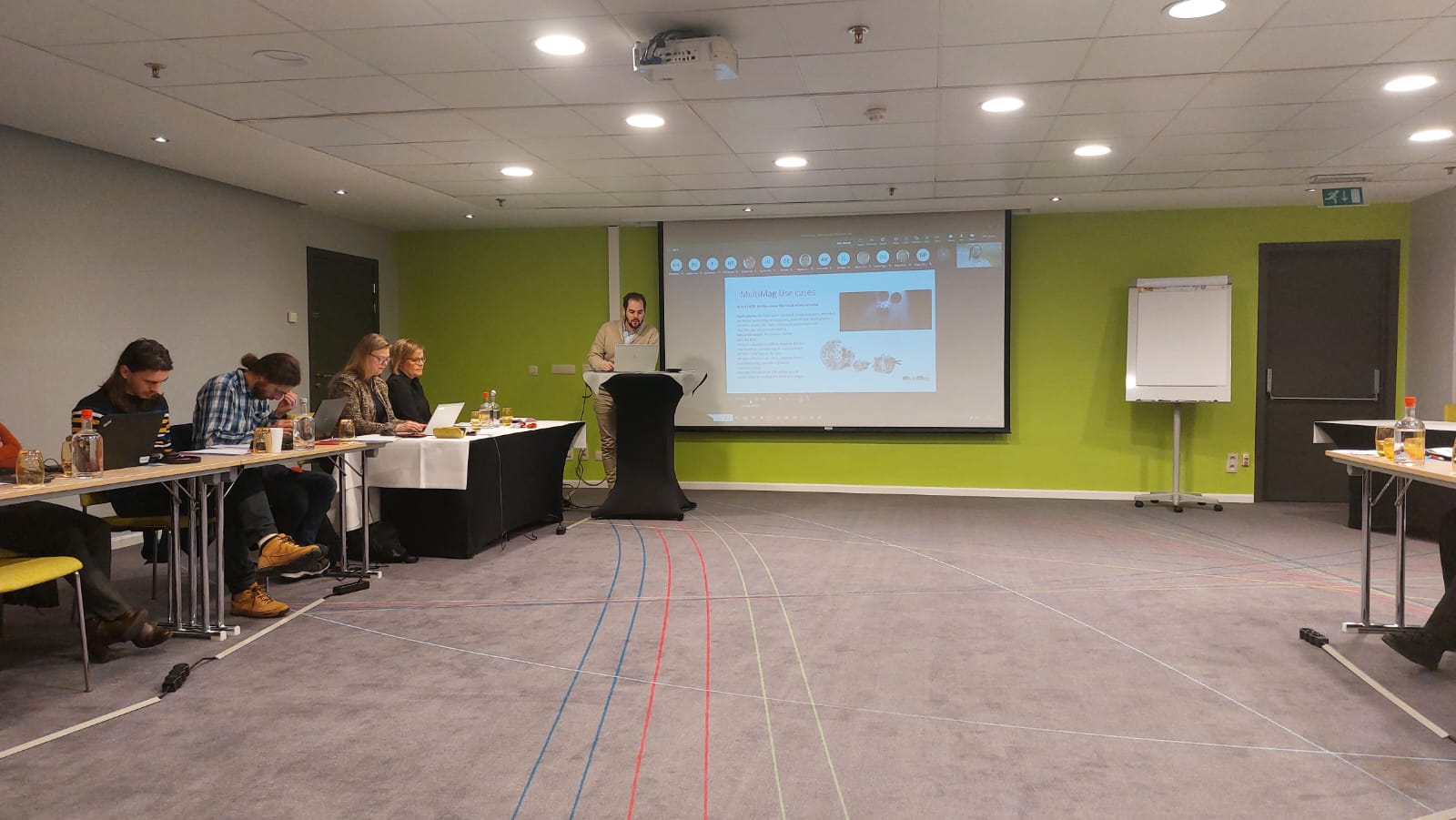
Sener Aeroespacial takes part in MultiMag project of multi-material additive manufacturing

Sener Aeroespacial takes part in MultiMag project of multi-material additive manufacturing

20/12/2022

Sener Aeroespacial is part of the consortium for the MultiMag project, funded by the European Union, to search for novel approaches in high performance sustainable materials and multi material manufacturing technologies suitable for complex geometrics and capabilities to design and simulate structures and components based on those.

Electric machines and drives, including various types of electric motors, play an ever-increasing role in our society. In the way of making Europe the first climate neutral continent in the world, electrification of mobility and other sectors is crucial for emission reduction. In addition, electric machines and drives are vital in green energy production.

MultiMag takes full advantage of multi-material additive manufacturing (MM-AM). Stacked rotor and stator structures, combining dissimilar magnetic and electric insulating materials and built layer upon layer, are developed and demonstrated. Optimized multi-material structures are developed, manufactured and validated to ensure mechanical, thermal, electrical and magnetic performance. Internal structures, enabling e.g., more efficient cooling, are studied and designed. Material savings by topology optimization is demonstrated for weight reduction and economizing the use of REEs in magnets. However, ambitious objectives of MultiMag cannot be achieved only by implementing MM-AM, but it requires a holistic approach and innovations in all sectors, namely in design, materials, manufacturing, use and end-of-life. Each of these vital areas are addressed by MultiMag activities.

In order to have a sharp approach and focus on real industrial issues, MultiMag consortium has defined the following three real-life use cases in the field of electric machines:

Use Case 1: General purpose induction motor:
MM-AM of the low voltage motor improves its thermal, mechanical and electromagnetic properties. Higher torque performance and weight reduction of multi-material magnetic component enables its use in advanced automation and mobility applications.

Use Case 2: Synchronous permanent magnet brushless motor with axially aligned stator poles:
Improve the implementation of the brushless motor construction and manufacturing of complex geometries and shapes of the stator poles by MM-AM for e-mobility.

Use Case 3: Multipurpose Electrical rotary actuator:
MM-AM allows manufacturing of the hybrid stepper motor technology at a low price with a certain customization between different products for the new space market.

Sener Aeroespacial is one of the UC owners in MultiMag and will provide their extensive expertise in the design of magnetic systems.

MultiMag consortium has partners from 9 different countries with a wide geographical distribution within the European continent. It is bringing together raw material suppliers, end-users and RTOs for joint development of novel solutions in the field of magnetic applications and electric machines. Participants from all parts of the value chain enable rapid development and uptake by the industry. It consists of three industrial, highly recognized electric machine OEMs (SIE, ICPE, SEN), out of which Siemens is one of the world leading electric motor manufacturer, three magnetic material suppliers (LCM, ELK, ESPD), also world’s leading providers in their sectors, four international RTOs and universities (VTT, CEA, MGEP, HTW) all well recognized, and three SME research actors (STAM, 3RC, TALOS), focusing on sustainability, recycling and exploitation, dissemination and communication.