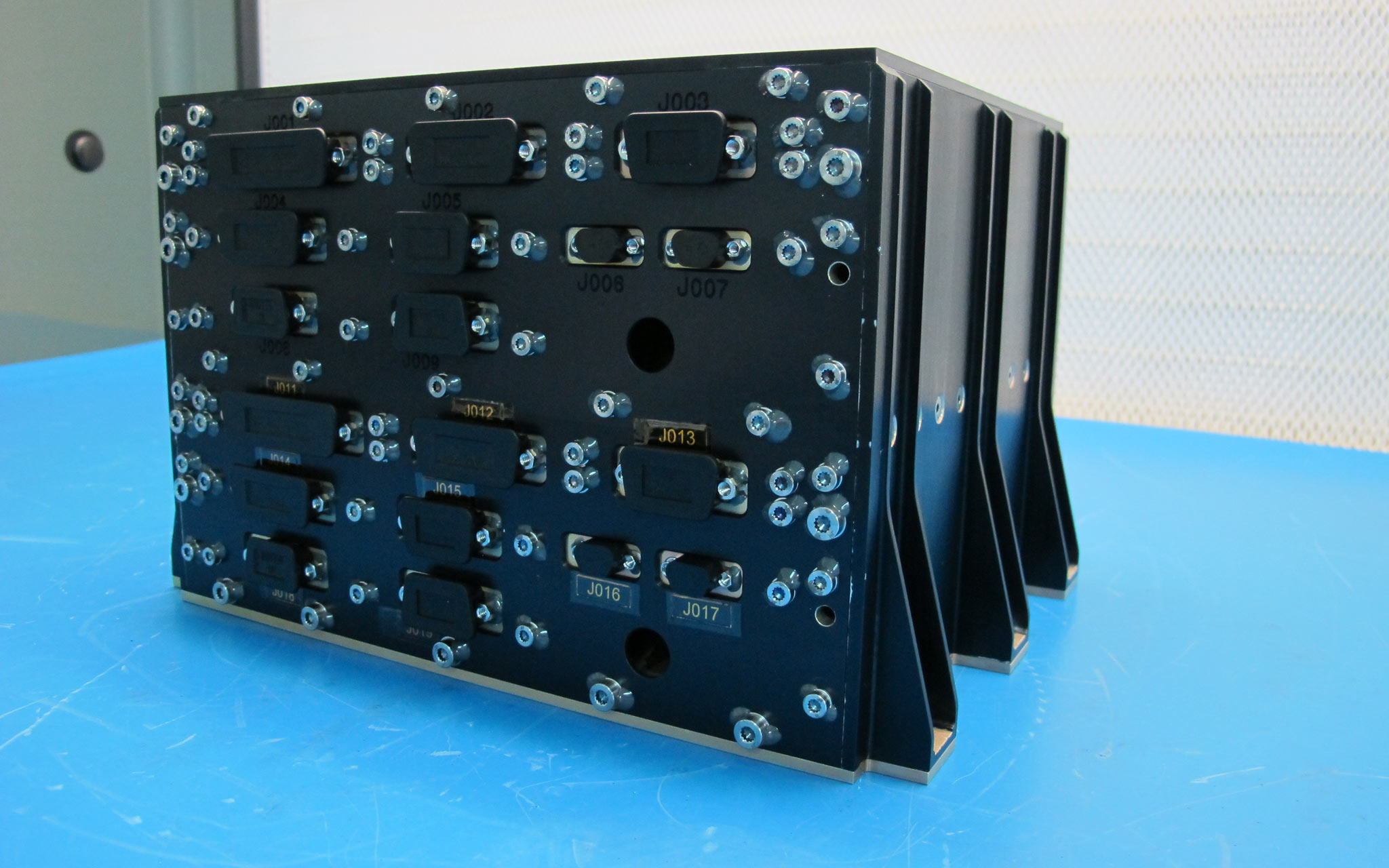
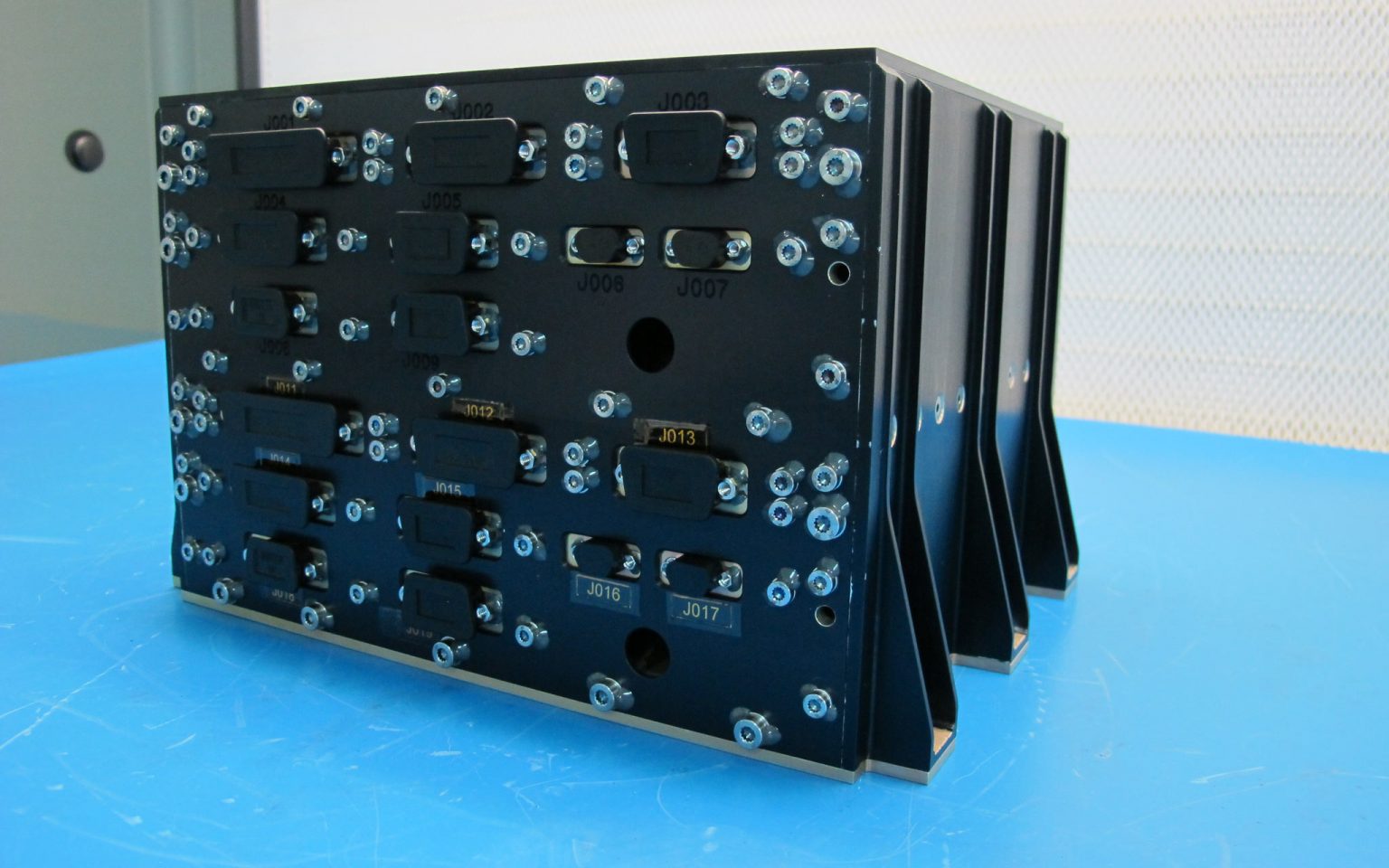
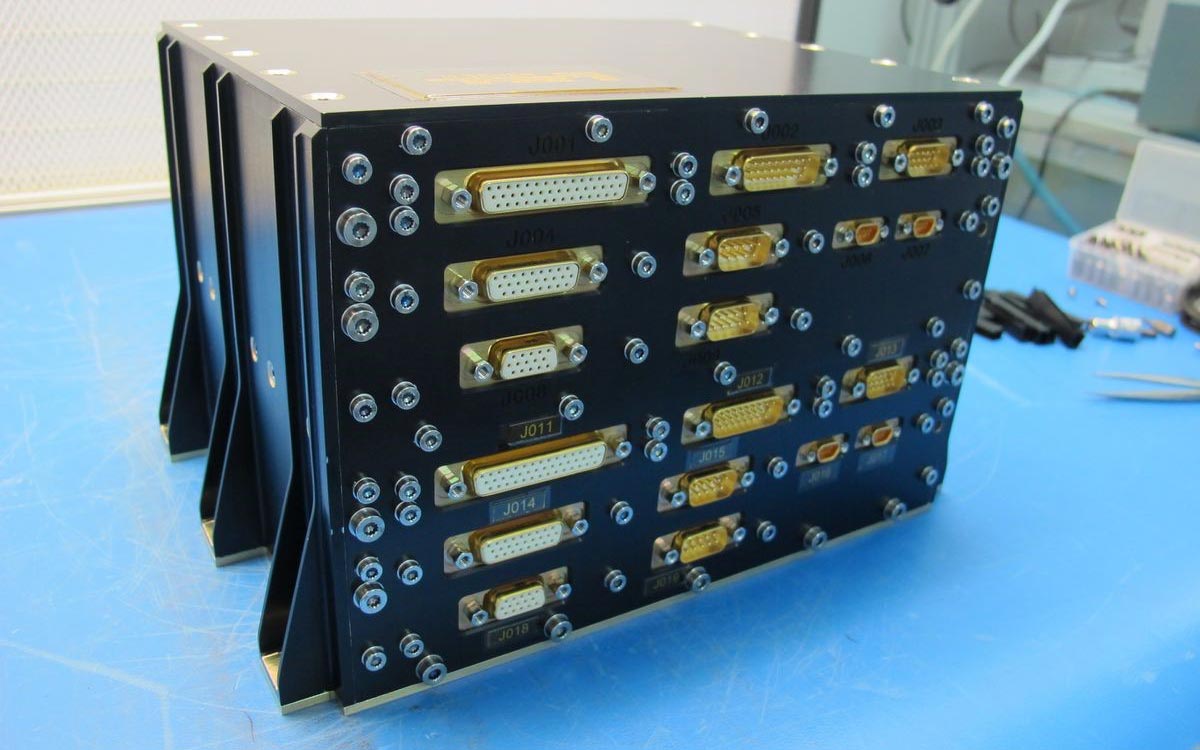
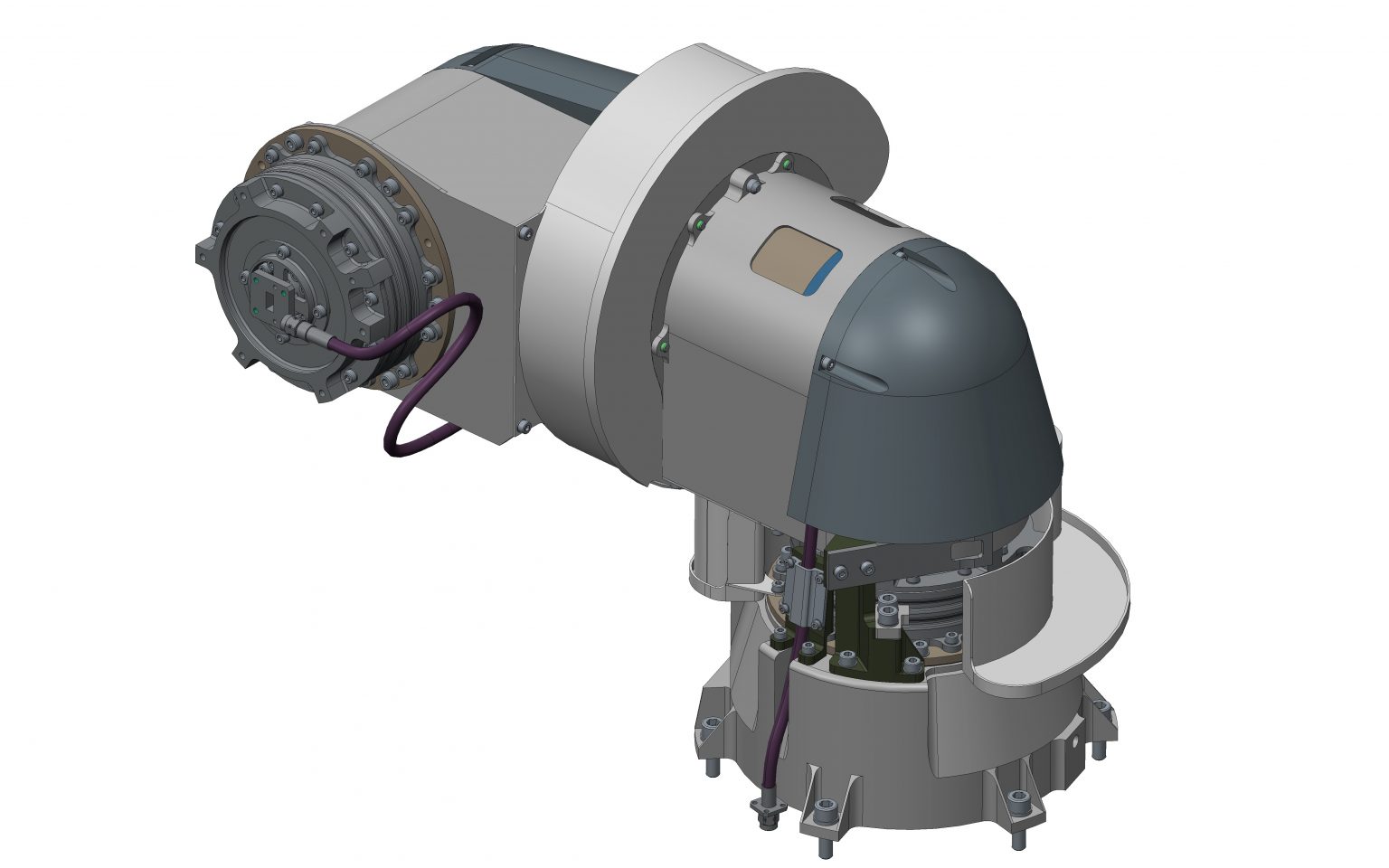
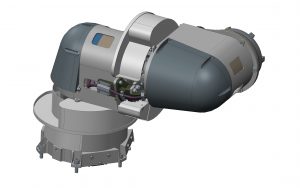
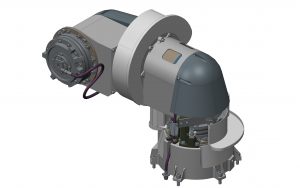
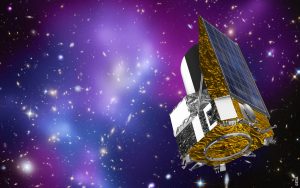
MTG. Scan assembly electronics (SCAE)

MTG. Scan assembly electronics (SCAE)

1 2
Sener Space / Science & Earth observation / Spain
MTG. Scan assembly electronics (SCAE)
Client: ESA
Country: Spain

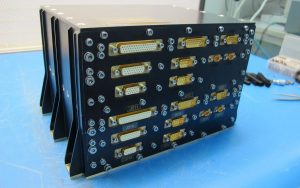
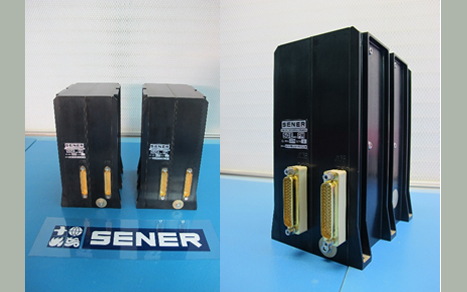
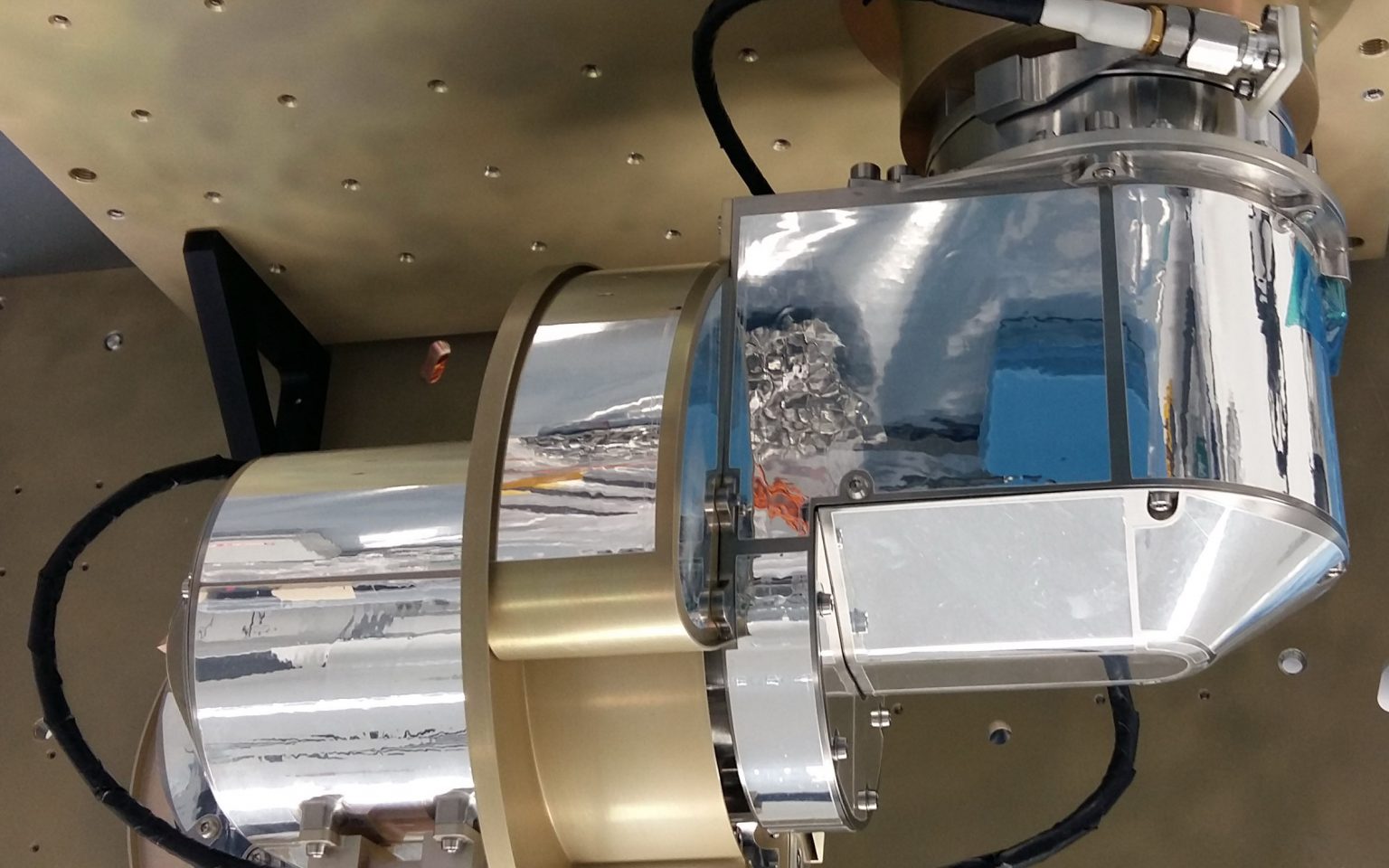
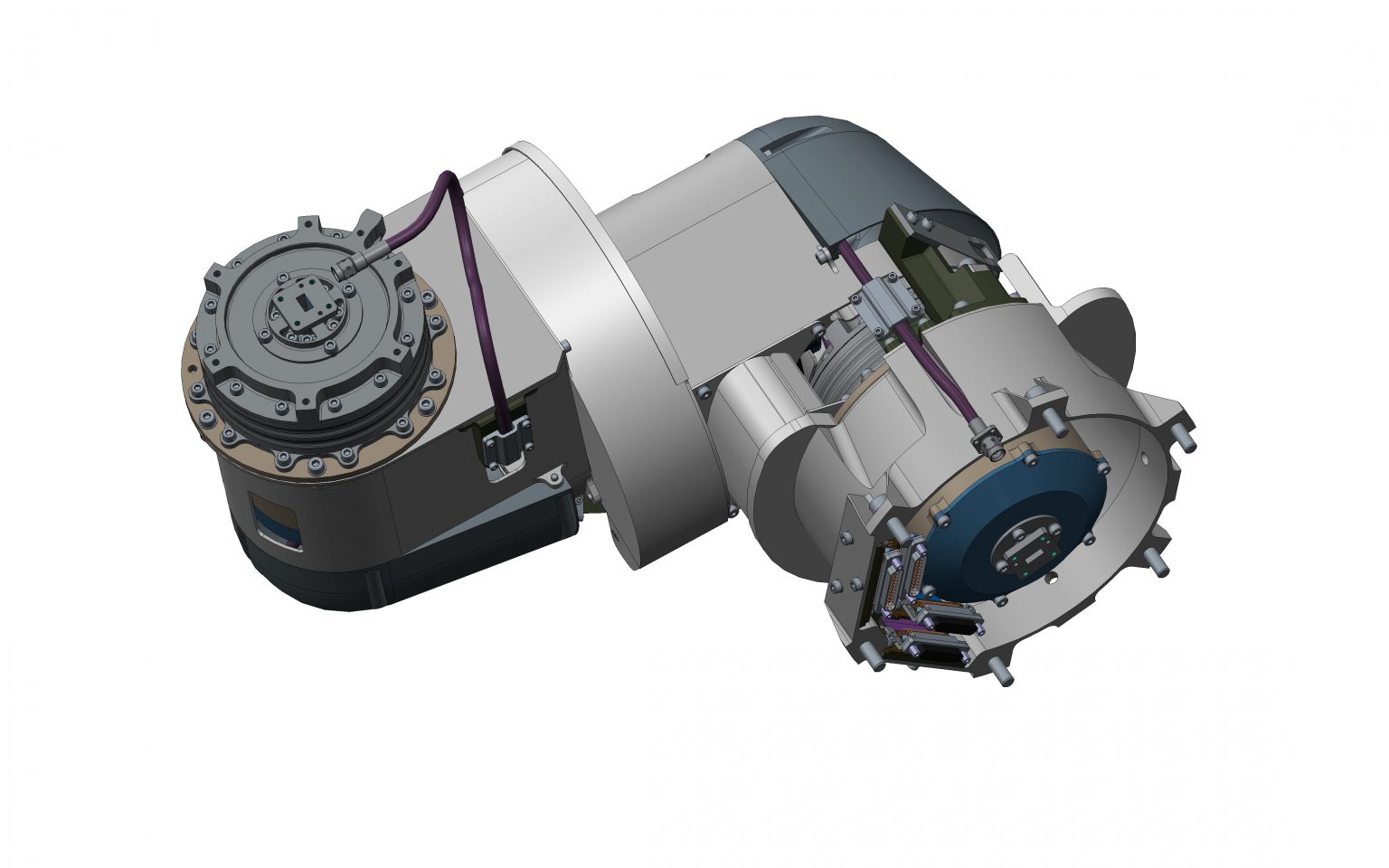
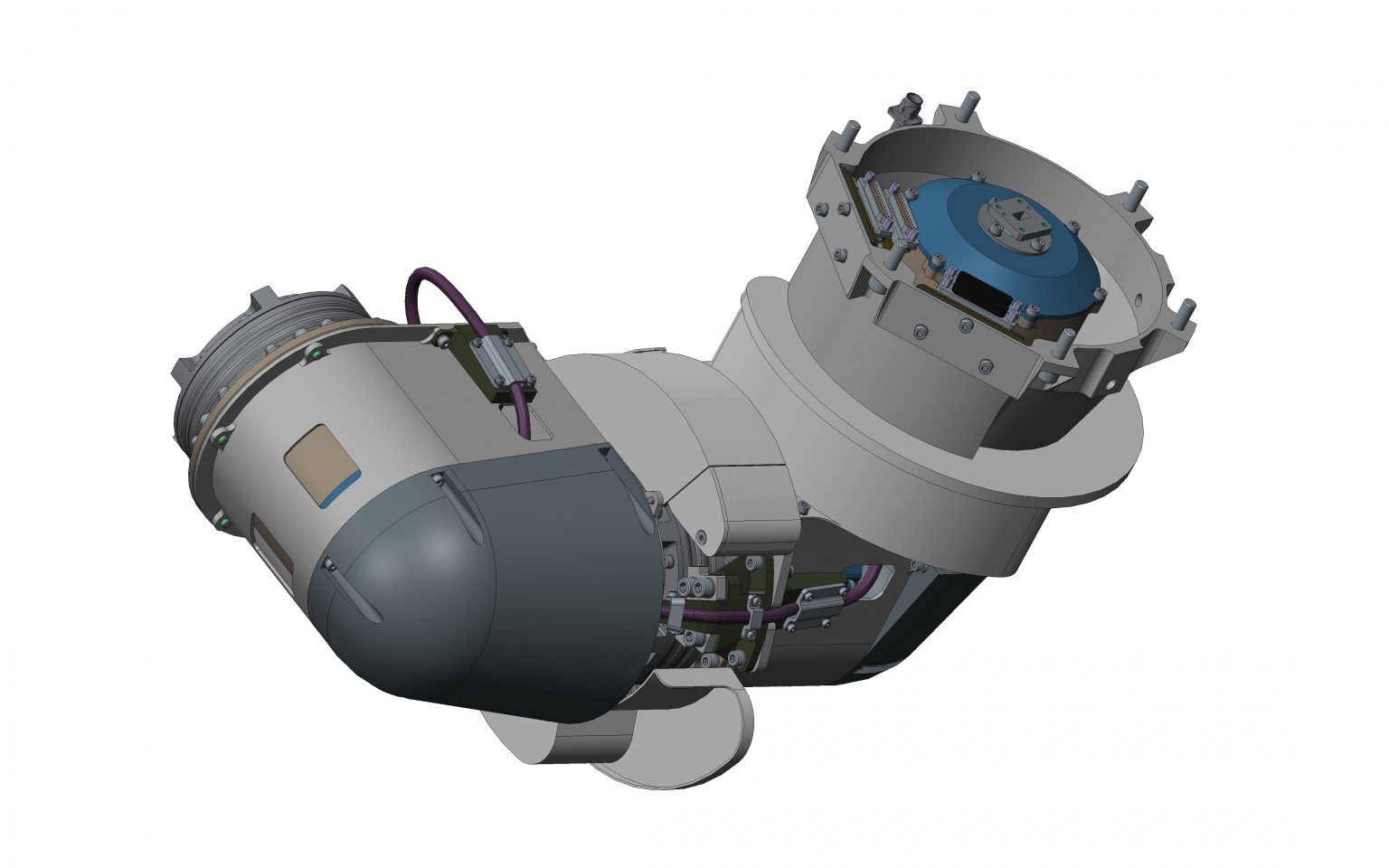
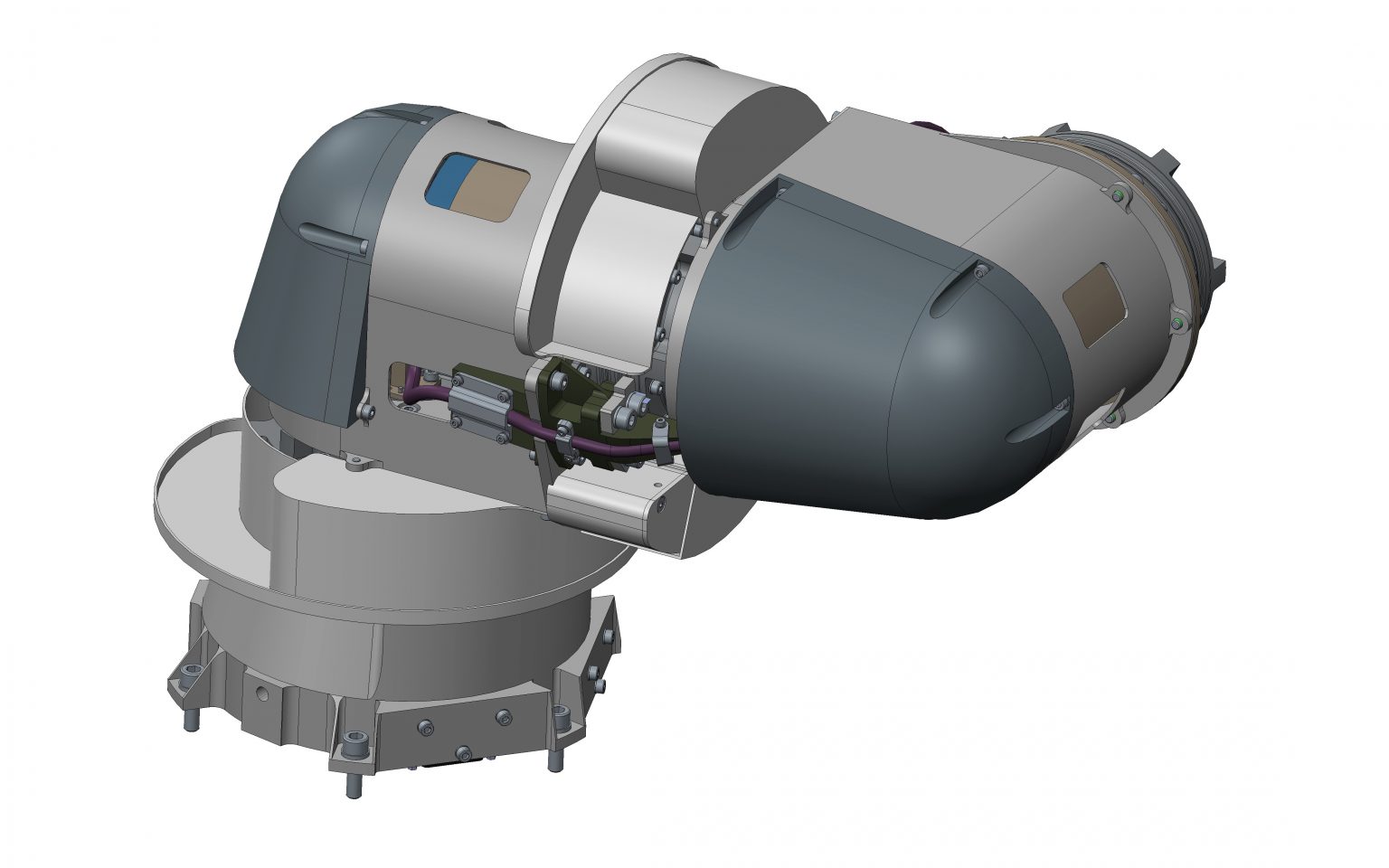
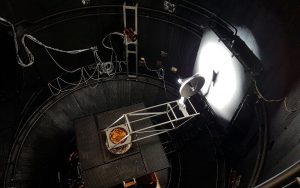
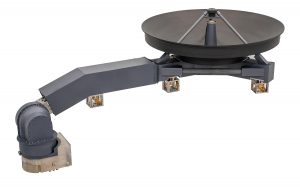
The main function of the MTG (Meteosat Third Generation) scan assembly electronics (SCAE) is to provide a controlled, high precision scan and sweep movement of the mirror of the main telescope.

To achieve this, the electronics house the following functions:

  • Accurate control and input of the dual axis motors: N/S (North/South) and E/W (East/West)
  • Control and input of blocking/unblocking motors of the mechanism
  • Monitoring and fault management
  • Communications with the spacecraft
  • Conditioning and internal distribution of power
  • Data processing and management 
Read more

The main function of the MTG (Meteosat Third Generation) scan assembly electronics (SCAE) is to provide a controlled, high precision scan and sweep movement of the mirror of the main telescope.

To achieve this, the electronics house the following functions:

  • Accurate control and input of the dual axis motors: N/S (North/South) and E/W (East/West)
  • Control and input of blocking/unblocking motors of the mechanism
  • Monitoring and fault management
  • Communications with the spacecraft
  • Conditioning and internal distribution of power
  • Data processing and management 

Most of these functions take place in SW developed by SENER on a LEON2 platform. 

The unit consists of a nominal and a redundant section, both identical. Each of these sections houses the modules:

  • Modules:
  • DC/DC converter
  • Backplane, to interconnect modules
  • Processing module
  • Acquisition and motor drive module 
  • Mass: 5 Kg
  • Size: Length: 247; height: 150; width: 175
  • Thermal power:
    • Operating range: -20ºC: +50ºC
    • With start at – 25ºC
  • Redundancy: Two fully redundant sections in a single box.
  • Input: Input bus: +28 V
    • Power consumption: 25-30 W (approximate values according to the operating mode)
  • Observability and controllability:
    • Each section has various 1553 MilBus and SpaceWire communication buses for control and monitoring and dispatch of data, respectively
    • The unit implements a reduced set of PUS services
  • Features of the processing module:
    • Processor: LEON2 AT913E
    • Link SpW up to 80 Mbit/s (with capacity of 200 Mbit/s)
    • PROM memory: 32 kB
    • EEPROM memory: 4Mbit
    • SRAM memory: 5 MB (including fault detection and correction (EDAC)
Read less

Related content

02.27.2017 Science & Earth observation / Space
12.15.2016 Science & Earth observation / Spain
06.12.2017 Science & Earth observation / Spain

Contact us

Contact us to find out how we can help you.

GAIA. Sunshield Drive Electronics (SDE)

GAIA. Sunshield Drive Electronics (SDE)

Sener Space / Science & Earth observation / Space
GAIA. Sunshield Drive Electronics (SDE)
Client: ADS GmbH / ESA
Country: Space

The Sunshield Drive Electronics (SDE) is an electrical unit designed to control a stepper motors per section (Main or Redundant) which shall actuate over the of the GAIA Deployable Sunshield Assembly (DSA) Structure.

During the qualification campaign of the GAIA Deployable Sunshield Assembly (DSA) it was identified the need of implementation of an active motorisation device apart and in addition to the implemented deployment springs on each of the 12 section that forms the Sunshield. The deployment of the DSA is actuated by those springs mounted on each DSA section at the deployment.

Read more

The Sunshield Drive Electronics (SDE) is an electrical unit designed to control a stepper motors per section (Main or Redundant) which shall actuate over the of the GAIA Deployable Sunshield Assembly (DSA) Structure.

During the qualification campaign of the GAIA Deployable Sunshield Assembly (DSA) it was identified the need of implementation of an active motorisation device apart and in addition to the implemented deployment springs on each of the 12 section that forms the Sunshield. The deployment of the DSA is actuated by those springs mounted on each DSA section at the deployment. The implementation of two actuators linked to two opposite frames through a four bar linkage provides braking capability during a nominal deployment as well as additional motorisation in case resistances to the deployment increase. This improves the reliability ae level of the hinges and provides motorisation to overcome the resistance forces acting against thnd motorisation of the deployment.

The DSA Drive Subsystem includes the following hardware :

  • Two Sunshield Bar-linkaje Mechanisms (SBM) with stepper motor actuator
  • Two Sunshield Drive Electronics (SDE) one for each actuator
  • The two harnesses connecting the Sunshield Bar-linkaje Mechanisms and the Sunshield Drive Electronics

The SDE are formed by two electronic boxes that contains two electronic sections each one. These units are recurrent units from M2MM MDE of GAIA.

The SDE is an electrical unit designed to control a stepper motors per section (Main or Redundant) which shall actuate over the DSA Structure. The stepper motor mechanisms shall allow the DSA deployment.

Each SDE unit is housed in a single aluminum box, and it is internally divided in two fully similar sections, denoted as main and redundant, which are working in cold redundancy. The spacecraft is in charge of selection the nominal or redundant section. Every section is comprised of a hybridised DC/DC converter with integrated EMI filter, and one semi-rigid board. Each section shall command the motor using a current control loop. This scheme allows reducing the power deliver to the motor in the low temperatures where the motor resistance is lower.

A MIL-STD-1553 bus is used to manage the communication between the SDE units and the spacecraft. This link shall be used to send and receive all the telecommands and telemetries involving the motor commanding.

The Sunshield Drive Electronics (SDE) interfaces with the Power Control and Distribution Unit of GAIA satellite for the power and with the CDMU of GAIA satellite for the command control and housekeeping data. The SDE interfaces with nominal and redundant channels of mechanism actuators.

The main functions of the SDE are:

  • DC/DC power conversion to provide secondary supplies to internal electronic part and to actuator drivers
  • Acquisition of command to be applied to the actuators from 1553B bus of GAIA SVM
  • House-keeping Monitoring and status transmission to 1553B bus of GAIA SVM
  • Provision of power to drive the actuator
  • Provision of excitation voltage to actuator potentiometers

The redundancy philosophy is a cold redundancy, i.e. Two electronic parts (main and redundant) drive one actuator on its nominal and redundant interfaces, however the activation of main and redundant parts will have a short overlap period. Both redundant and nominal electronics are kept within one SDE electronics box.

  • cHARACTERISTICS:
  • Mass: 2.2 kg.
  • Size: 175 high, 130 long and 95 wide.
  • Thermal: SDE unit is designer to have an operating range from 250K to 313K and non operating range of 230K to 313K. The MDE shall manage the M2MM that will have an operating range from 110K to 313K.
  • Power:
       – Power input bus: +28V
    – 
    Power Consumption: 15W (Duty cycle 100%); 12W (Duty cycle 75%); 9W (Duty cycle 50%)
    – 
    The max. dissipation by conduction for SDE < 8W
    – 
    The max. dissipation by radiation for SDE < 2W.
  • Radiation environment: The unit is designed to tolerate a uniformly distributed total dose of 22 krad inside the box.
  • Redundancy: Two fully redundant sections in a single box.
  • Power conditioning: Every section has to be provided with an isolation converter with an integrated EMI filter
  • Control: Every section is to be provided with an “intelligent” device capable of decoding all telecommands received via serial channels, providing the switching sequences required by the motors, and encoding the status information to provide serial telemetry.
  • Motors drive: Up to ten independently biphased motors (with main and redundant wiring) can be managed by MDE main and redundant section in cold redundancy.

Read less

Related content

12.04.2013 Germany
12.13.2013 Innovation in Space / Germany
05.16.2016 Science & Earth observation

Contact us

Contact us to find out how we can help you.

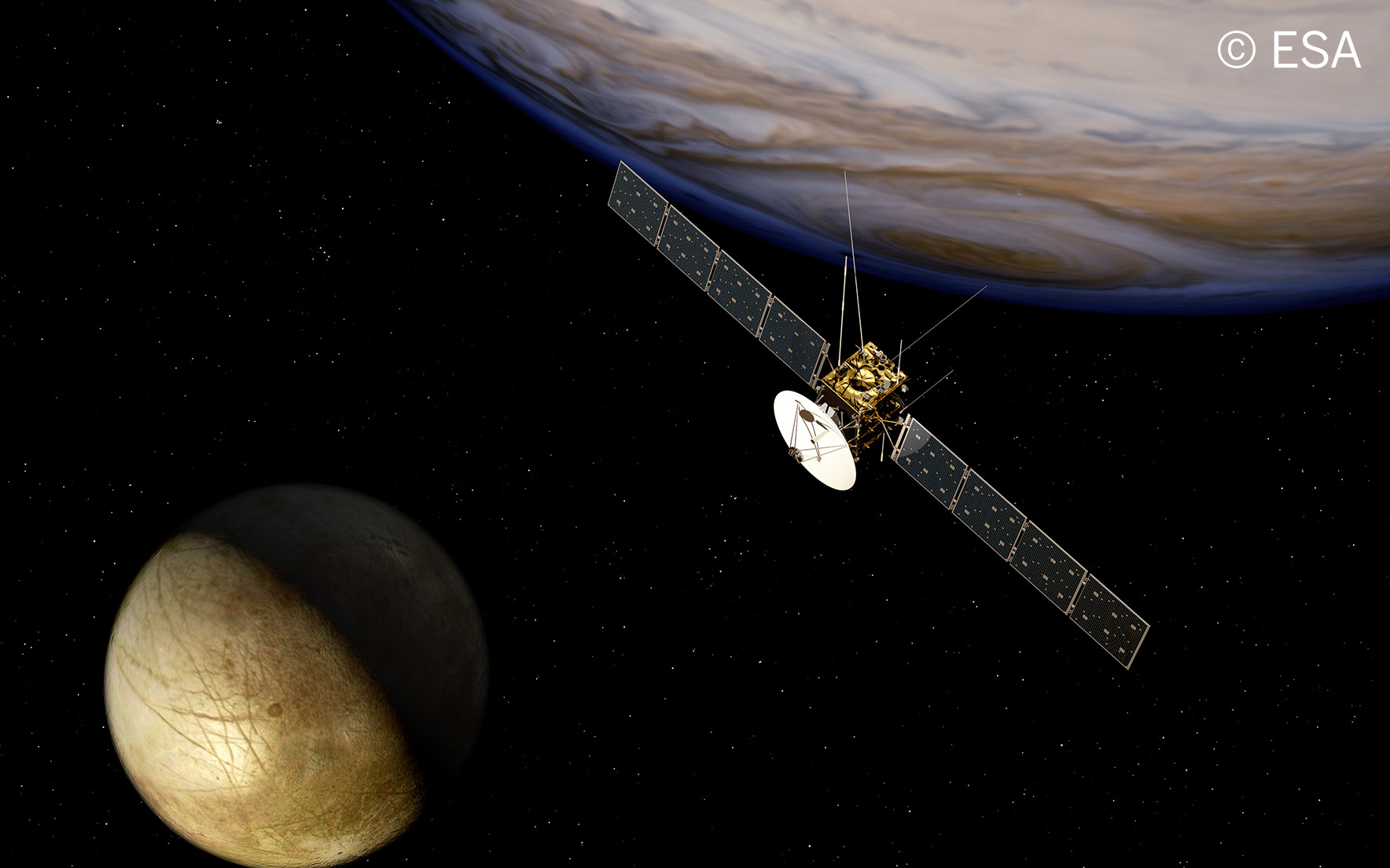
JUICE’s Medium Gain Antenna Subsystem (MGAMA)

Space

Communications in Space

JUICE’s Medium Gain Antenna Subsystem (MGAMA)

Case of success

Related content

05.30.2017 Science & Earth observation / Space
02.27.2017 Science & Earth observation / Space

Contact us

Contact us to find out how we can help you with your projects of

High gain Antenna Deployment and Pointing Mechanism of the Euclid probe

High gain Antenna Deployment and Pointing Mechanism of the Euclid probe

1 5
Sener Space / Communications in Space / Space
High gain Antenna Deployment and Pointing Mechanism of the Euclid probe
Client: TAS-E / TAS-I / ESA
Country: Space

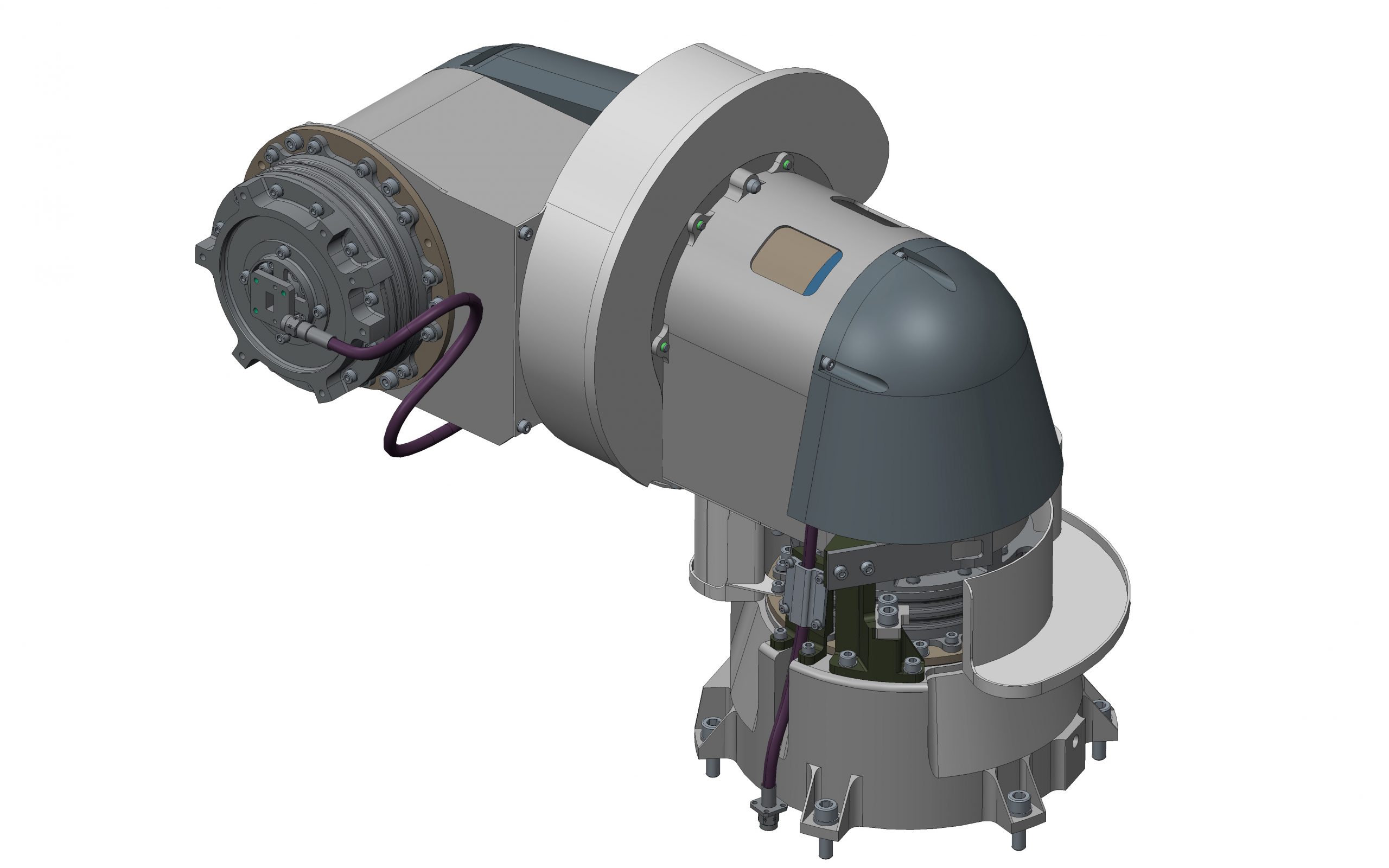
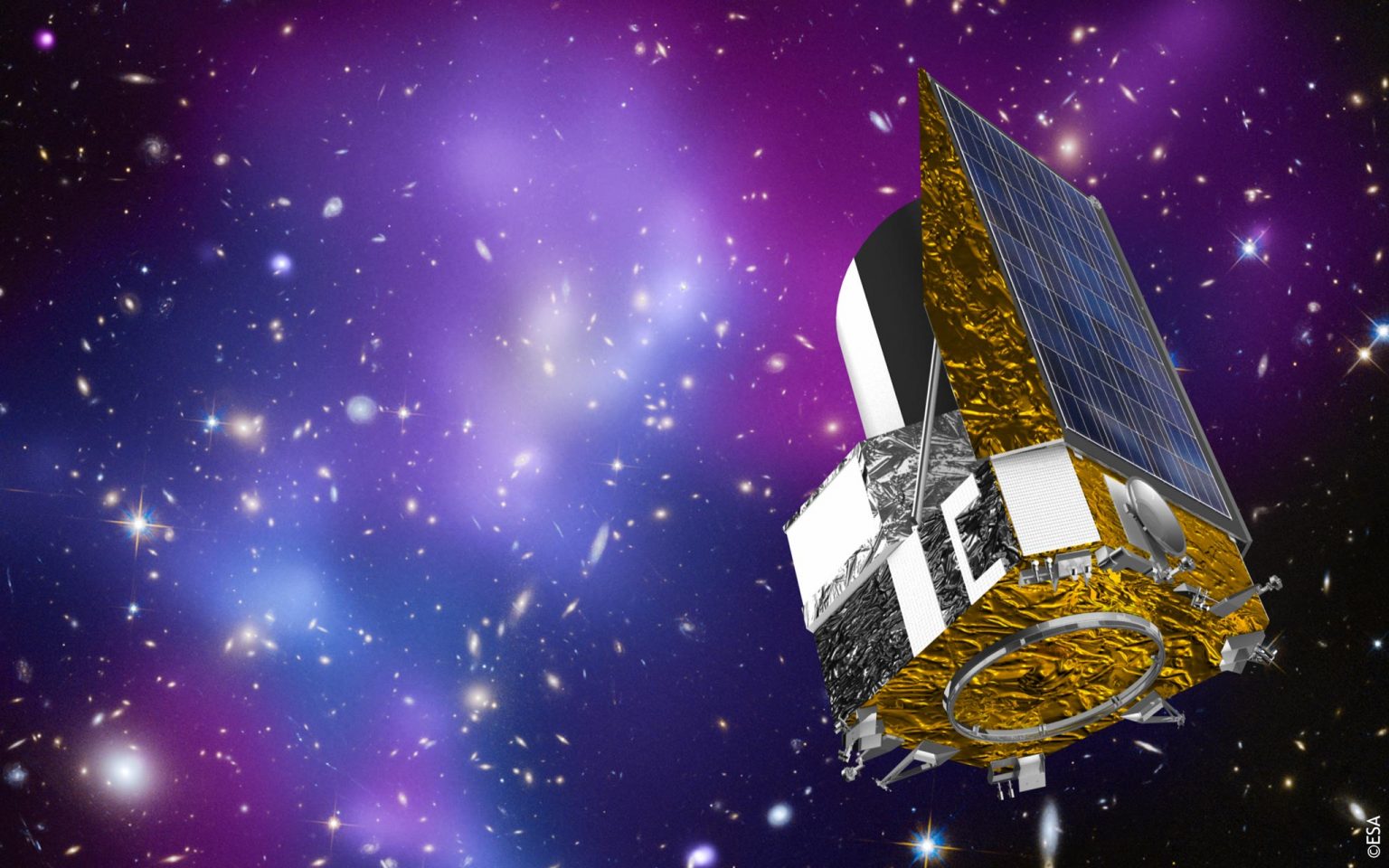
Sener is developing the high gain antenna deployment and pointing mechanism (HGA ADPM) for the Euclid scientific space probe. It is a precision assembly comprised of three axes, one for antenna deployment and the other two for pointing. The assembly transmits two radio-frequency signals from the satellite to the antennae. The signals are on the K band (between 25.5 and 27 GHz) for the high gain antenna, and on the X band (between 7.1 and 8.5 GHz) for the low gain antenna.

Main mechanism components:

  • Actuators: The number of actuators and rotation axes are the same.
Read more

Sener is developing the high gain antenna deployment and pointing mechanism (HGA ADPM) for the Euclid scientific space probe. It is a precision assembly comprised of three axes, one for antenna deployment and the other two for pointing. The assembly transmits two radio-frequency signals from the satellite to the antennae. The signals are on the K band (between 25.5 and 27 GHz) for the high gain antenna, and on the X band (between 7.1 and 8.5 GHz) for the low gain antenna.

Main mechanism components:

  • Actuators: The number of actuators and rotation axes are the same. In this case there are three: for deployment, azimuth, and elevation. Each one of them comprises among others:
  • Stepper motor
  • Integrated bearing system
  • Gear (harmonic)
  • Positioning sensors (fine and coarse potentiometers for each Az. & El.))
  • Machined parts
  • Internal ball bearing
  • K band rotary joint: a rigid joint used to transmit the radiofrequency single despite the assembly”s rotation. There is one on each actuator.
  • X band cable: used to transmit the X band signal.
  • Flexible cable: used to send the electric signals and power to the actuator, sensors, thermistors and thermal resistances.
  • L-structure: the structural element that joins the actuators.
  • Support: the structural element that joins the deployment actuator to the interface with the satellite.
  • The K band rotary joint and the actuator are specific Sener developments.


Characteristics:

  • Mass: 10.5 kg.
  • Power: 6.5 W per moving axis (steer).
  • Pointing precision: ±0.005º in open loop.
  • Speeds: 0.3º/s per axis.
  • Radio frecuency (RF):
    · Insertion Loss (K band/X band): < 1.2 dB / 1.5 dB
    · Return Loss (K band/X band): > 18 dB / > 16.5 dB
    · Radio-frequency power handling (K band/X band): min. 100 W/ min. 20 W
Read less

Related content

Contact us

Contact us to find out how we can help you with your projects.

SENTINEL-2. MSI Instrument Calibration & Shutter mechanism (CSM)

SENTINEL-2. MSI Instrument Calibration & Shutter mechanism (CSM)

Sener Space / Science & Earth observation / Space
SENTINEL-2. MSI Instrument Calibration & Shutter mechanism (CSM)
Client: ADS F / ESA
Country: Space

Sener developed the Calibration and Shutter Mechanism (CSM) for the Multi-Spectral Instrument (MSI) for the Sentinel-2.

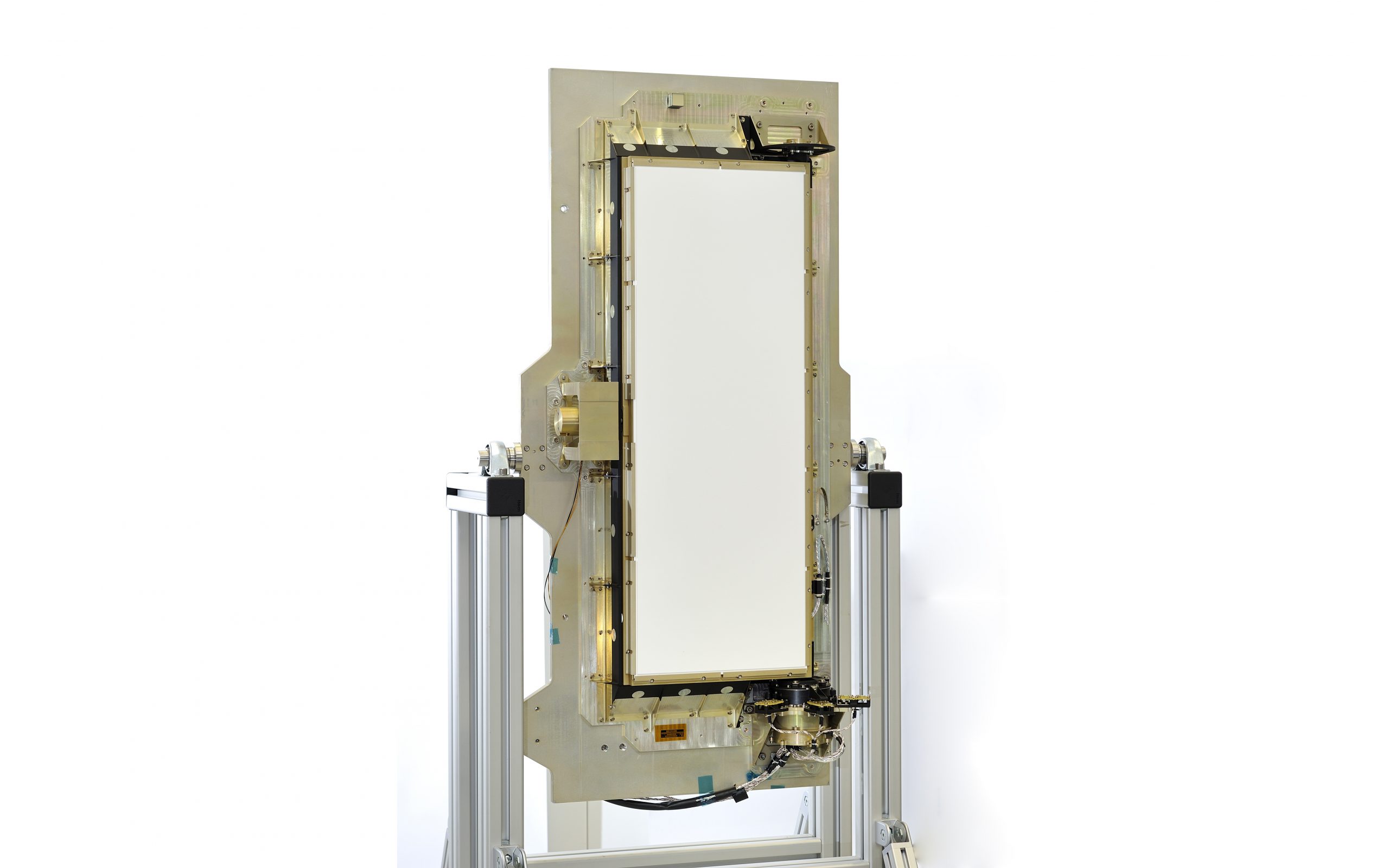
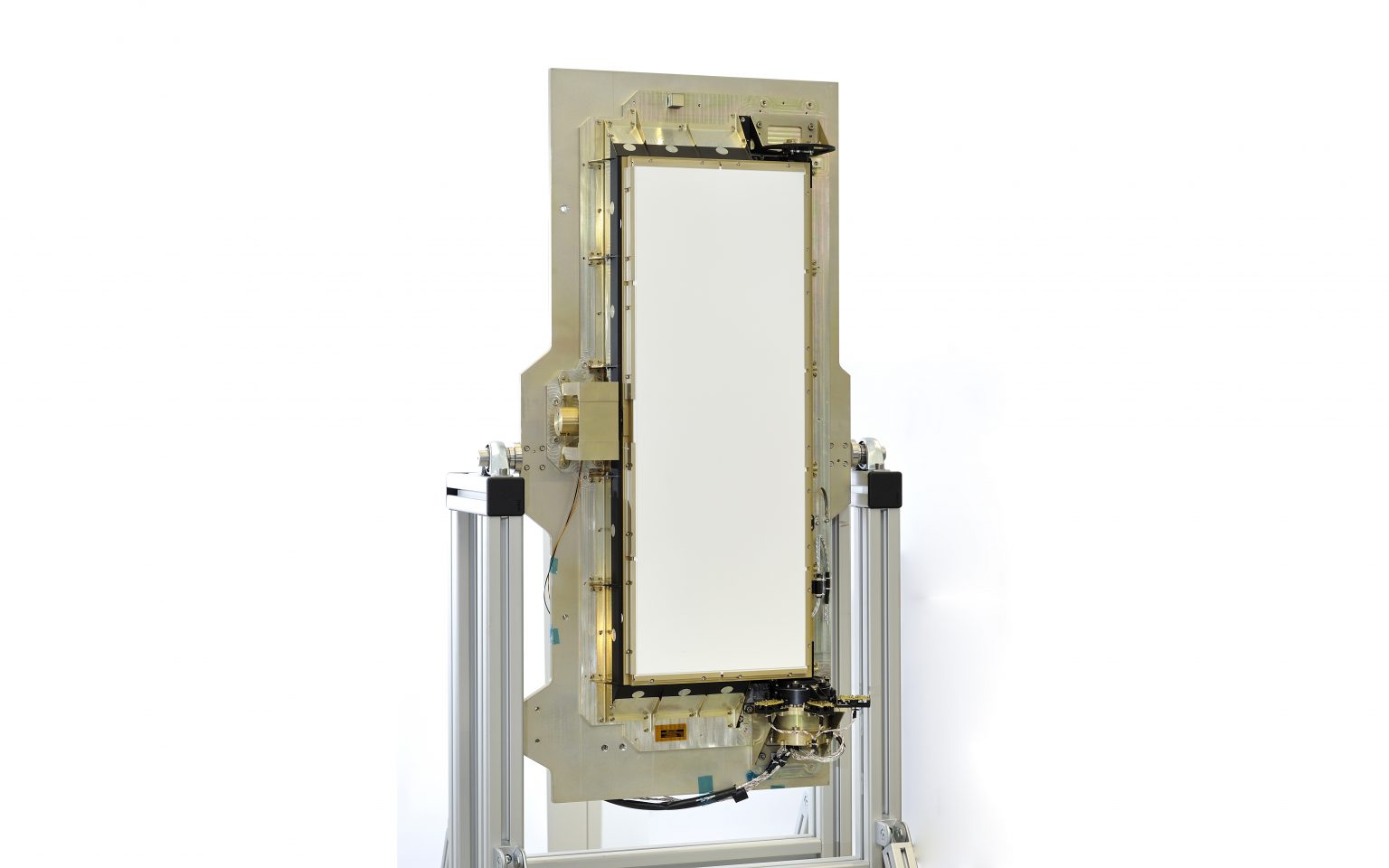
The Calibration and Shutter Mechanism (CSM) is located at the entrance to the optical instrument. During launch, it protects the instrument from sunlight and contamination, covering its entrance with a rectangular plate. This is the mechanism’s closed position, which must remain fixed under the action of the launch forces. Once in orbit, the mechanism performs the following functions:

  • In order to permit observation mode,
Read more

Sener developed the Calibration and Shutter Mechanism (CSM) for the Multi-Spectral Instrument (MSI) for the Sentinel-2.

The Calibration and Shutter Mechanism (CSM) is located at the entrance to the optical instrument. During launch, it protects the instrument from sunlight and contamination, covering its entrance with a rectangular plate. This is the mechanism’s closed position, which must remain fixed under the action of the launch forces. Once in orbit, the mechanism performs the following functions:

  • In order to permit observation mode, the plate rotates from the closed position 63° towards the inside of the instrument and keeps it in that position, without any power supply.
  • Occasionally, in calibration mode, the mechanism inserts a solar diffuser in front of the primary mirror that receives direct sunlight. This position must also be maintained without any power supply.
  • From any position, in the event of an emergency, the mechanism must rotate the plate to the closed position in order to prevent the sunlight from heating sensitive parts of the optical instrument.

In order to accomplish the aforementioned functions, the plate, which is a rectangular metal structure, is supported on one of the longest sides at both ends. At one end by means of an electromechanical rotary actuator, and at the other end by means of a ball bearing system. Both of them make up the plate’s axis of rotation.

At the opposite end, the plate is blocked during launch by means of an electromechanical component that inserts a pinpuller into a bushing installed on the plate. In orbit, the component releases the pin and the plate can rotate in both directions around the axis of rotation through the action of the electromechanical actuator.

The actuator comprises a stepper motor, a ball bearing system, and a harmonic gear that avoids play in the transmission of movement.

The control of rotation from one position to another is performed in an open cycle with a logic that cuts the power to the motor (halting the plate) when it receives a signal from a simple system of switches placed in each position and activated by magnets. The motor winding and switches are redundant.

  • Characteristics:
  • General dimensions: CSM: 1102 x 445 x 177 mm3 / Door: 815 x 320 x 47 mm3.
  • Mass: CSM: 12.4 kg / Rotating mass: 5.6 kg.
  • Launch configuration stiffness: 91 Hz.
  • Step angle (resolution). 0.02°
  • Step rate: 135 Hz
  • Nominal angular range: 118º
  • Actuator power consumption: 4.3 W
  • LLD release power consumption: 27 Watts @ / 2.75 Amps < 300 ms
  • Thermal range: -30°C ÷ +60°C
  • Lifetime: 2460 opening/closing cycles.
  • Quasi-static acceleration 50 g
Read less

Contact us

Contact us to find out how we can help you.

Solar Orbiter High Gain Antenna Subsystem (HGA S/S)

Solar Orbiter High Gain Antenna Subsystem (HGA S/S)

1 5
Sener Space / Communications in Space / Space
Solar Orbiter High Gain Antenna Subsystem (HGA S/S)
Client: Airbus DS UK / ESA
Country: Space

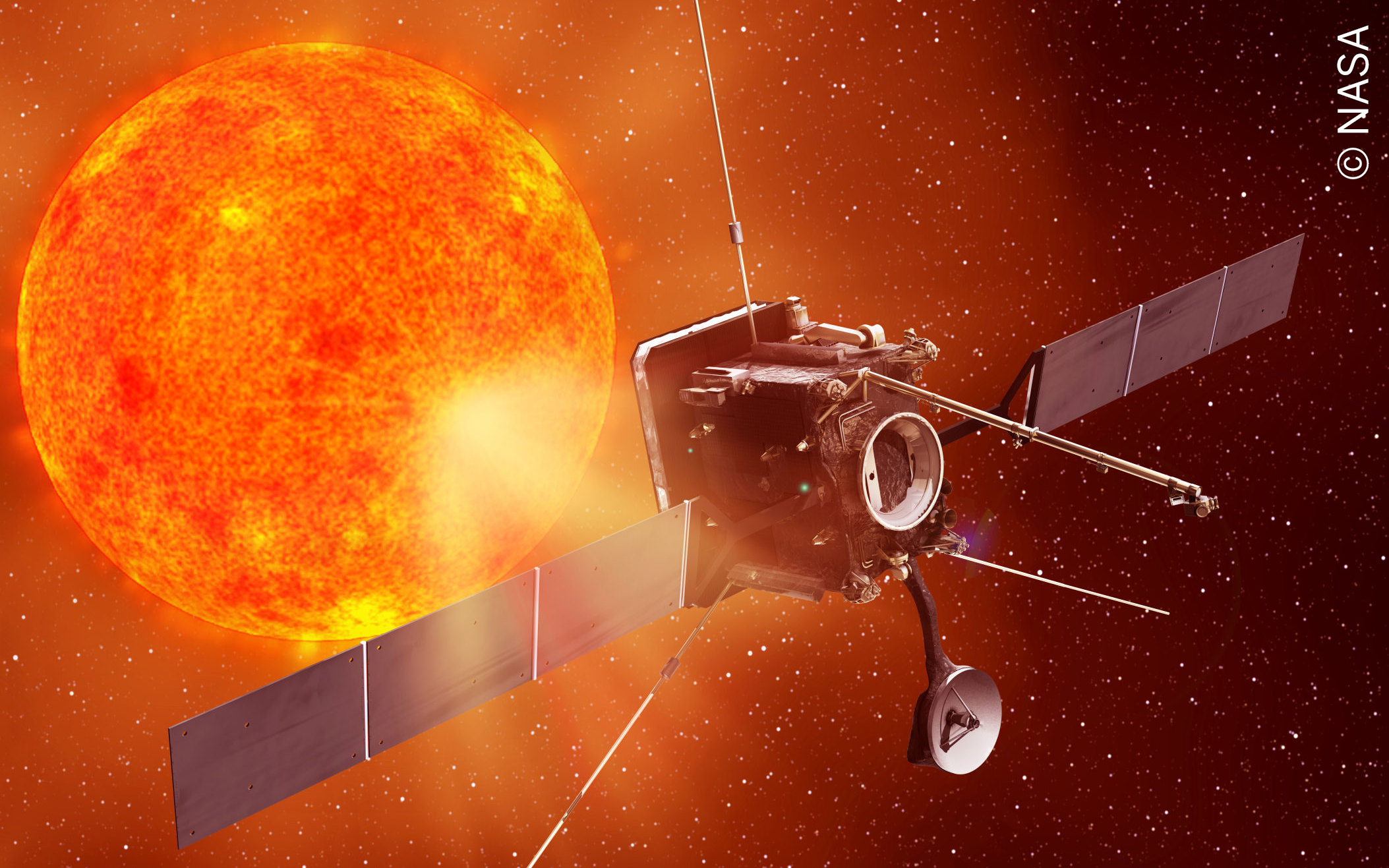
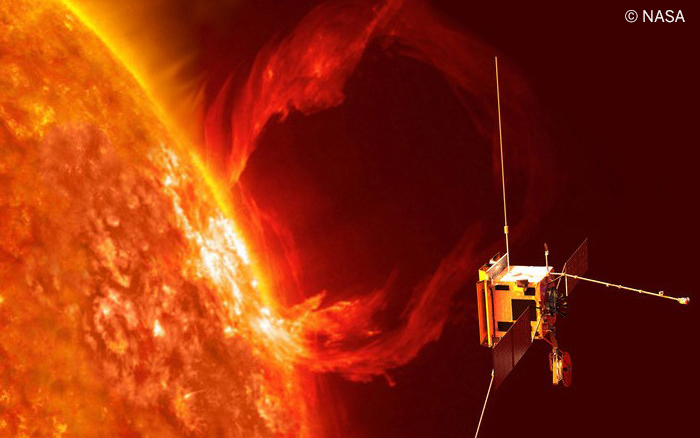
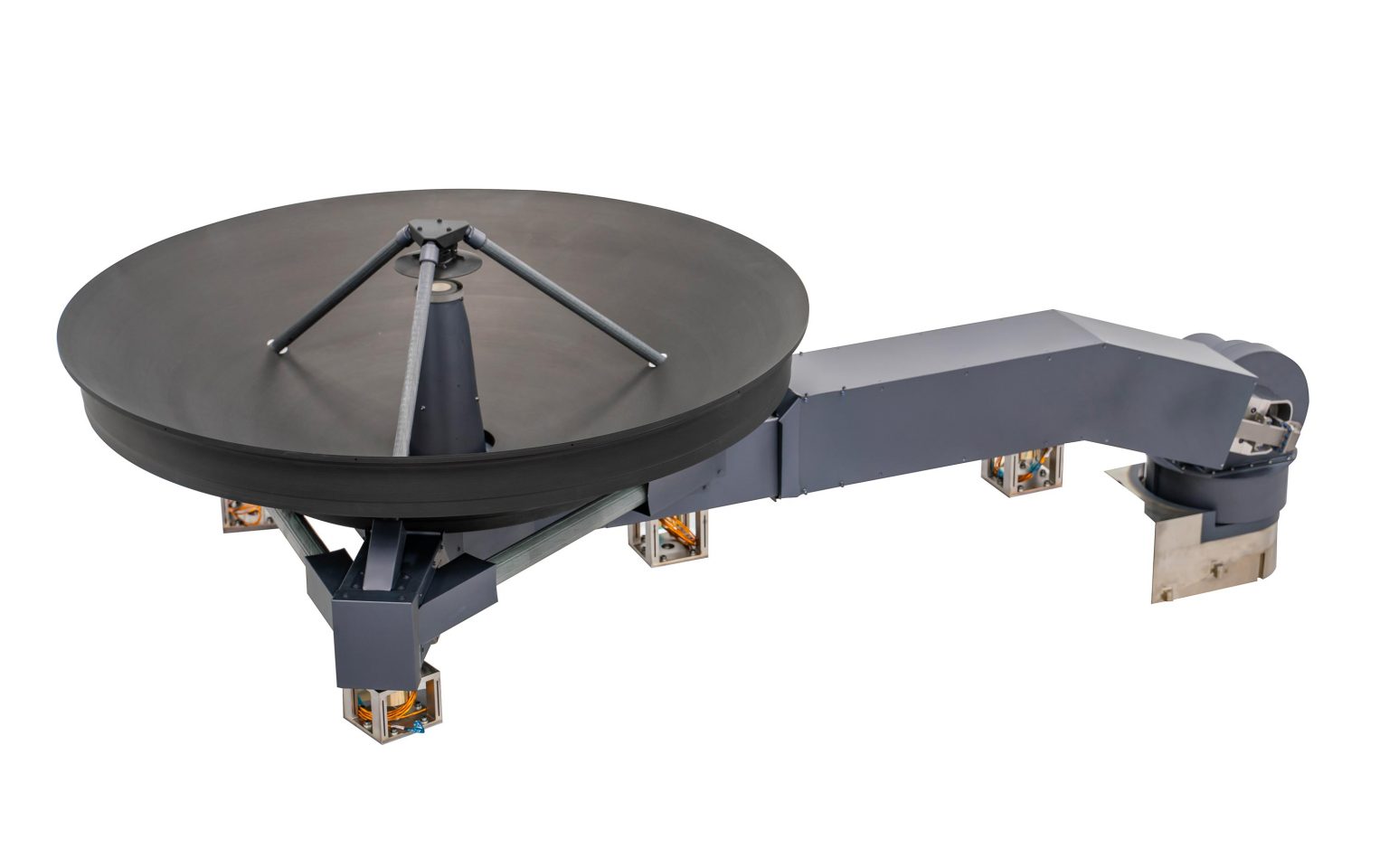
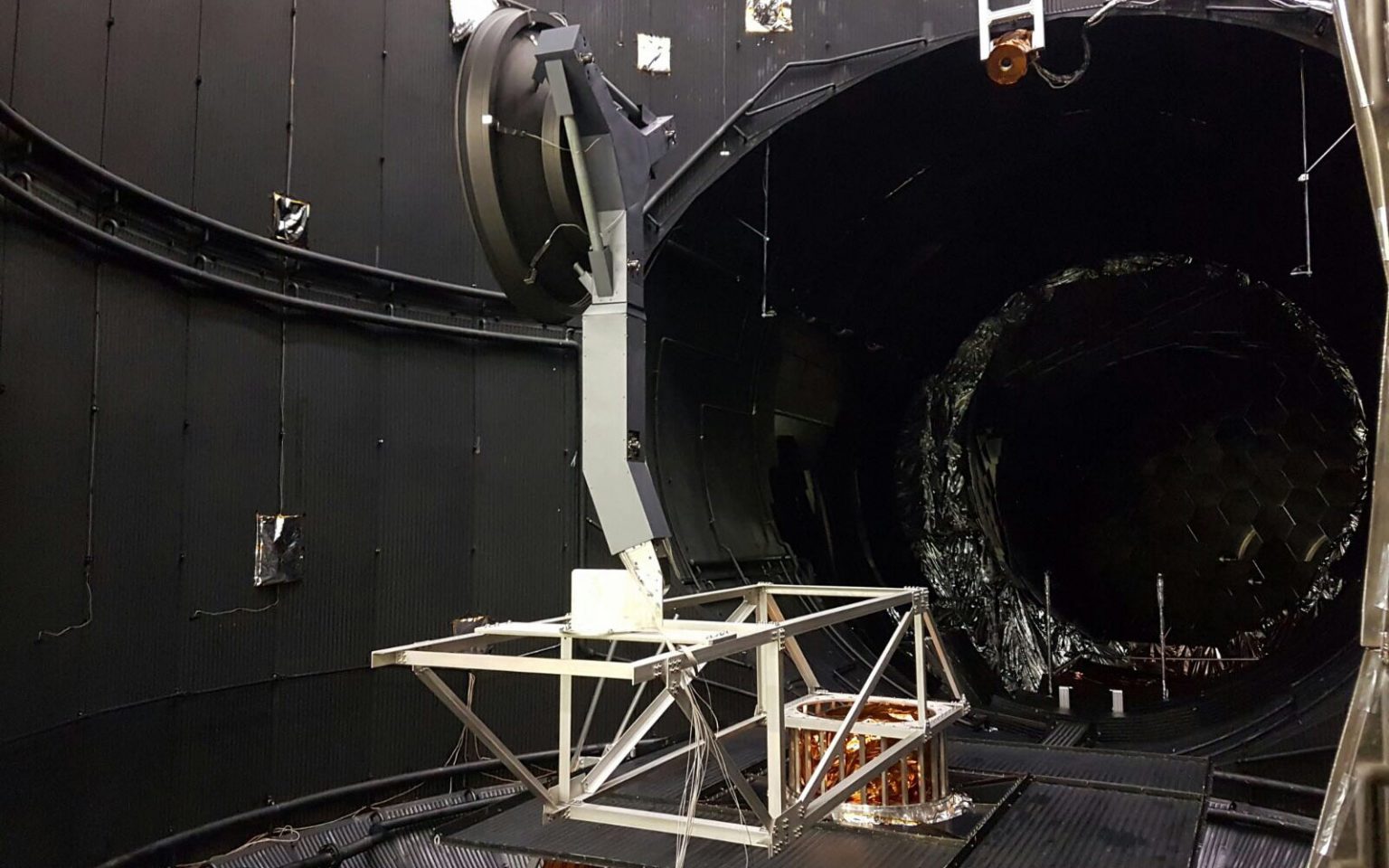
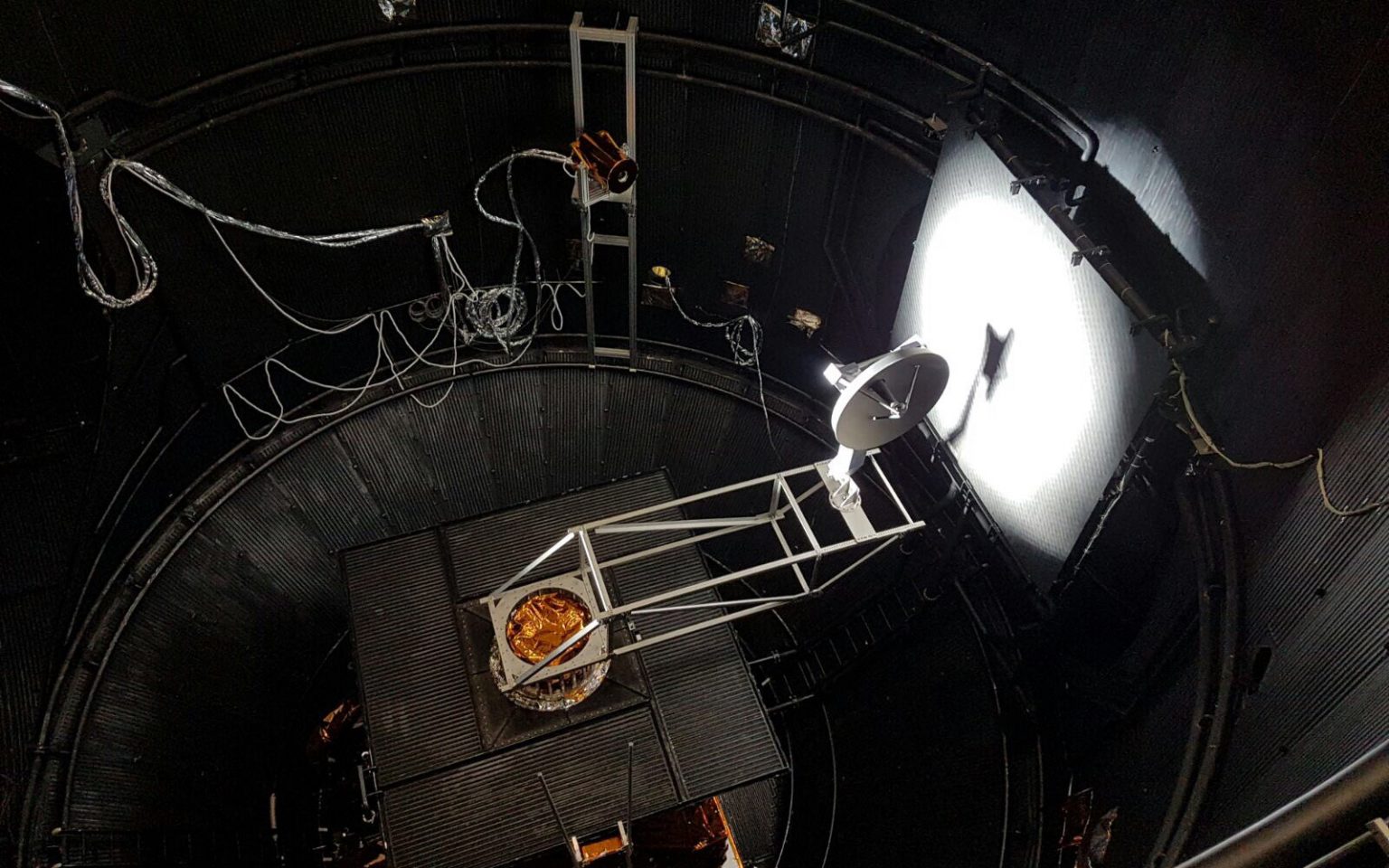
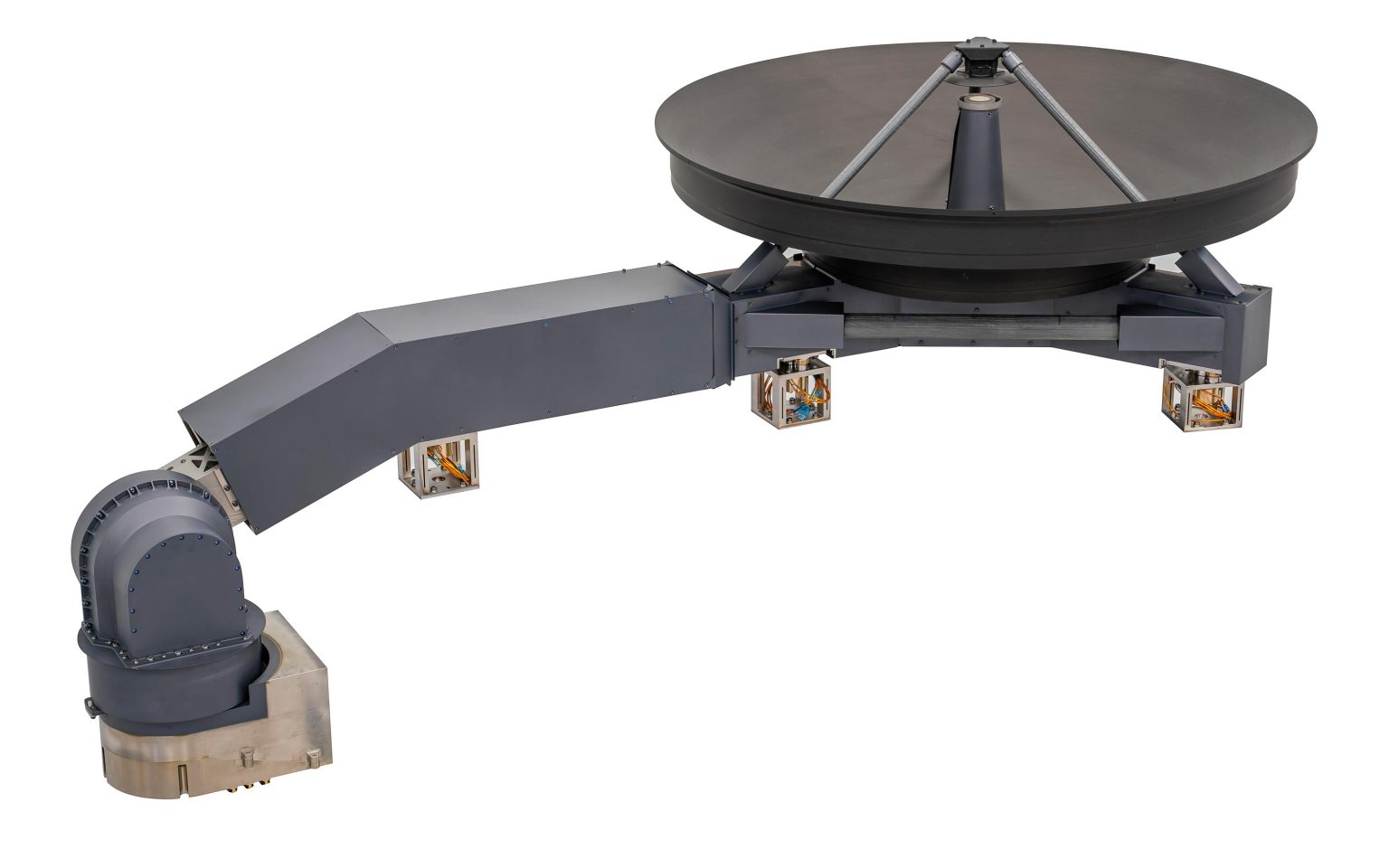
The main objective of the project was to design, manufacture, integrate, test and deliver the satellite’s complete antenna subsystem. This subsystem comprises four independent devices:

High Gain Antenna Major Assembly (HGAMA)

In turn, the HGAMA consists of:

  • An “axially displaced ellipse” reflector antenna made of titanium whose main reflector has a diameter of 1100 mm.
  • A boom that permits antenna operation separately from the satellite.
  • A two-axis antenna pointing mechanism (APM).
  • Thermal shields and blankets to protect the entire assembly.
Read more

The main objective of the project was to design, manufacture, integrate, test and deliver the satellite’s complete antenna subsystem. This subsystem comprises four independent devices:

High Gain Antenna Major Assembly (HGAMA)

In turn, the HGAMA consists of:

  • An “axially displaced ellipse” reflector antenna made of titanium whose main reflector has a diameter of 1100 mm.
  • A boom that permits antenna operation separately from the satellite.
  • A two-axis antenna pointing mechanism (APM).
  • Thermal shields and blankets to protect the entire assembly.
  • Four Hold-down and Release Mechanisms
  • Antenna Pointing Mechanism Electronics (APME) located inside the satellite to control antenna pointing.

Medium Gain Antenna Major Assembly (MGAMA)

In turn, the MGAMA consists of:

  • A horn antenna
  • A 700-mm boom to articulate the antenna.
  • Heat shield for the boom and thermal protection blankets of the APM.
  • A Hold-down and Release Mechanism
  • A single-axis Antenna Pointing Mechanism (APM) at the end of the boom.
  • Antenna Pointing Mechanism Electronics (APME) located inside the satellite.

The MGAMA has certain similarities with the assembly of the same name being developed at Sener for the BepiColombo Mission.

Low Gain Antennas (LGAs)

Two Low Gain Antennas (LGAs) with semi-omnidirectional coverage, the combination of which allows the satellite to establish a communications link with the Earth in emergences or loss of attitude.

  • Characteristics:
  • The high gain antenna operates on the X band with gains of more than 36.5 dBi in downlink and more than 35.0 dBi in uplink.
  • The antenna operates at a power of 48.45 dBm in the required setting at less than 0.28 AU (astronomical units). The temperatures it must withstand during the science phase are 585ºC in areas exposed to the sun, and it has a special coating developed specially to guarantee that it will operate even in such a harsh environment.
  • The unit operates on two axes at speeds of 0.5º/seconds with pointing stabilities compatible with the radio-frequency requirements.
  • The medium gain antenna also operates on the X band with a gain of 22.3 dBi in downlink and 20.5 dBi in uplink with a power of 48.48 dBm. The antenna also operates during the science phase at the minimum distance from the sun, withstanding temperatures of 550ºC.
  • The low gain antenna operates during the phase closest to Earth on the X band, transmitting the satellite’s telemetry data.  
Read less

Related content

10.22.2025 Science & Earth observation / Space
05.16.2016 Science & Earth observation / International

Contact us

Contact us to find out how we can help you.

Secondary Mirror Refocusing Mechanism (M2M) of the Euclid telescope

Secondary Mirror Refocusing Mechanism (M2M) of the Euclid telescope

1 3
Sener Space / Science & Earth observation / Space
Secondary Mirror Refocusing Mechanism (M2M) of the Euclid telescope
Client: ADS F / TAS-I / ESA
Country: Space

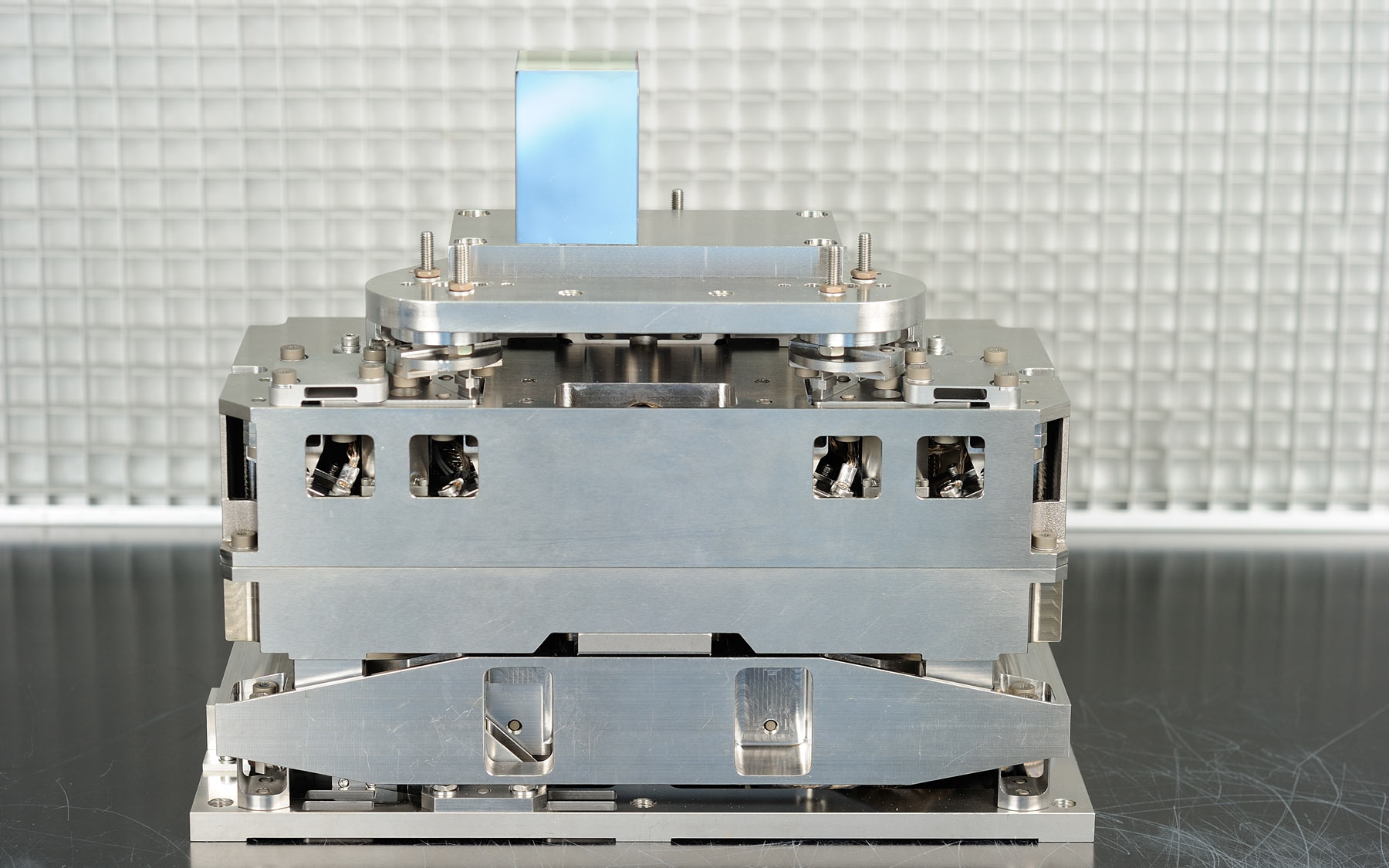
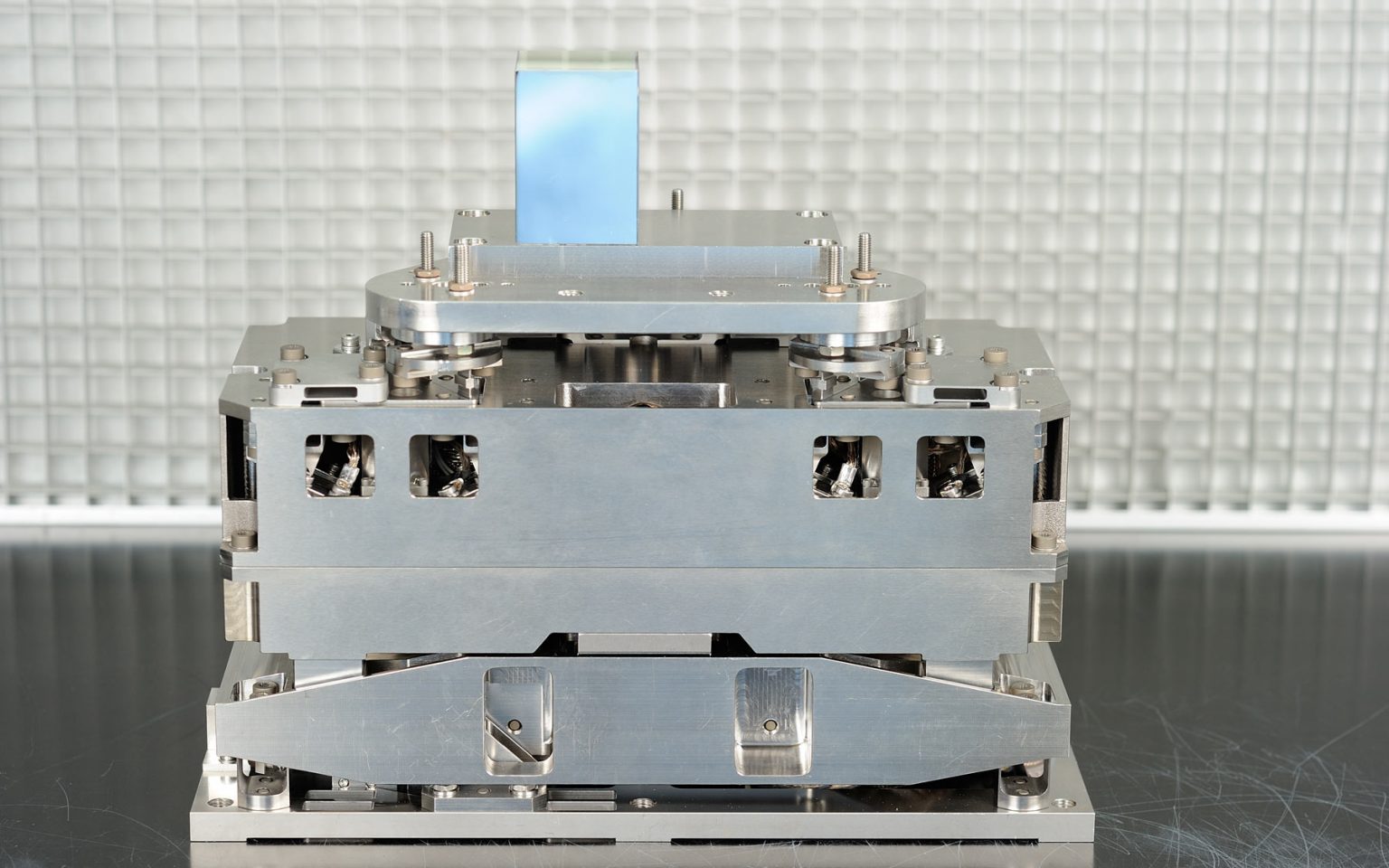
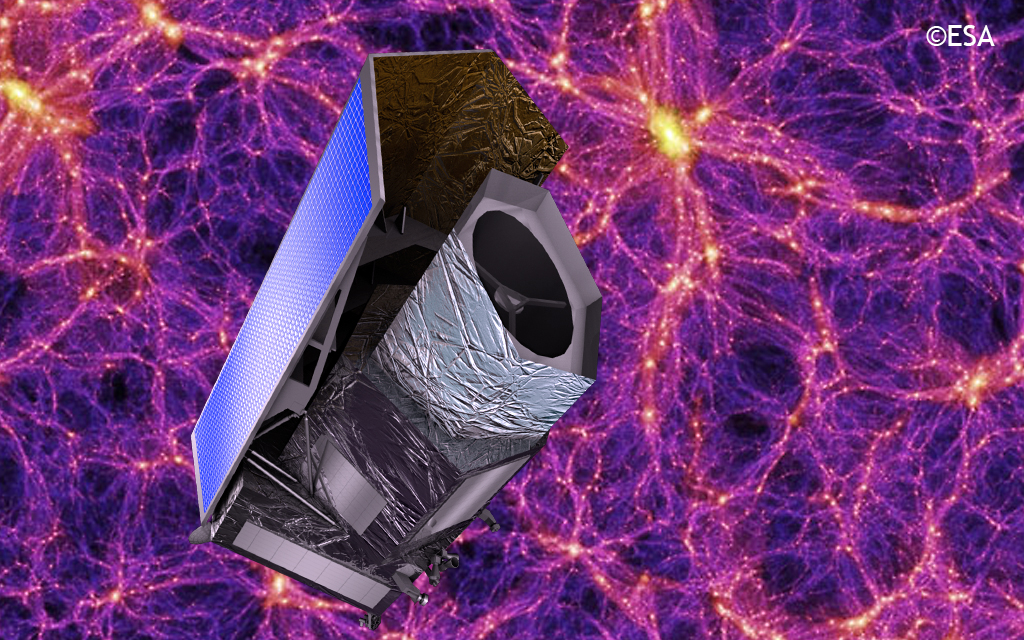
At Sener, we develop the Secondary Mirror Refocusing Mechanism (M2M). The M2MM is a positioning mechanism with 5 degrees of freedom which allows the movement and adjustment of the secondary mirror (M2M) of the Euclid telescope to guarantee the optical quality required in orbit, necessary to recover telescope misalignment caused by the difference in conditions between the earth and space.

Characteristics:

  • Radiation environment: The unit is designed to tolerate a uniformly distributed total dose of 22 krad inside the box.
Read more

At Sener, we develop the Secondary Mirror Refocusing Mechanism (M2M). The M2MM is a positioning mechanism with 5 degrees of freedom which allows the movement and adjustment of the secondary mirror (M2M) of the Euclid telescope to guarantee the optical quality required in orbit, necessary to recover telescope misalignment caused by the difference in conditions between the earth and space.

Characteristics:

  • Radiation environment: The unit is designed to tolerate a uniformly distributed total dose of 22 krad inside the box.
  • Mass: MDE 2.1 kg. Harness 1.6Kg. Mechanism 4.45 kg
  • Thermal:
       – MDE operating range: 250K – 313K; non operating range: 230K – 313K.
    – M2MM operating range: 110K – 313K.
    – Harness operating range from 110K to 313K and support a gradient of 203K.
    – Special cabling to connect the mechanisms to the electronics with low thermal conductivity.
    – Max. dissipation by conduction for MDE < 8W .
    – Max. dissipation by radiation for MDE < 2W.
    – Harness transfer in cryogenic zone < 0.0005 W in non-operational mode
  • Functional: Mechanical Resolution is half micron resolution over a travel of +/- 225 µm with stable positions and high load capability to withstand launch loads without losing a given position in a compact volume.
    – Positioning method based on a stepper motor.
    – Adjustment in 3 degrees of freedom of translation.
    – Adjustment in 2 degrees of freedom of rotation.
    – Linear resolution <0.050 μm.
    – Angular resolution <5μrad.
    – Range of linear operation 300 μm.
    – Range of angular operation 2mrad.
    – Precision of 2 μm for linear adjustments.
    – Precision of 30 μrad for angular adjustments.
  • Redundancy: Two fully redundant sections in a single box.
  • Power:  Each section powered by a 10W isolation converter.
  • Control: Each section provided with an “intelligent” device capable of decoding all telecommands received via serial channels, (MIL-STD-1553, preferred) providing the switching sequences required by the motors, and encoding the status information to provide serial telemetry.
    Compact electronics for the operation and control of the twin mechanisms (up to 10 degrees of freedom).
  • Motors drive: Ten independently biphased motors (with main and redundant wiring) can be managed by MDE main and redundant section in cold redundancy.

Read less

Related content

Contact us

Contact us to find out how we can help you with your projects.