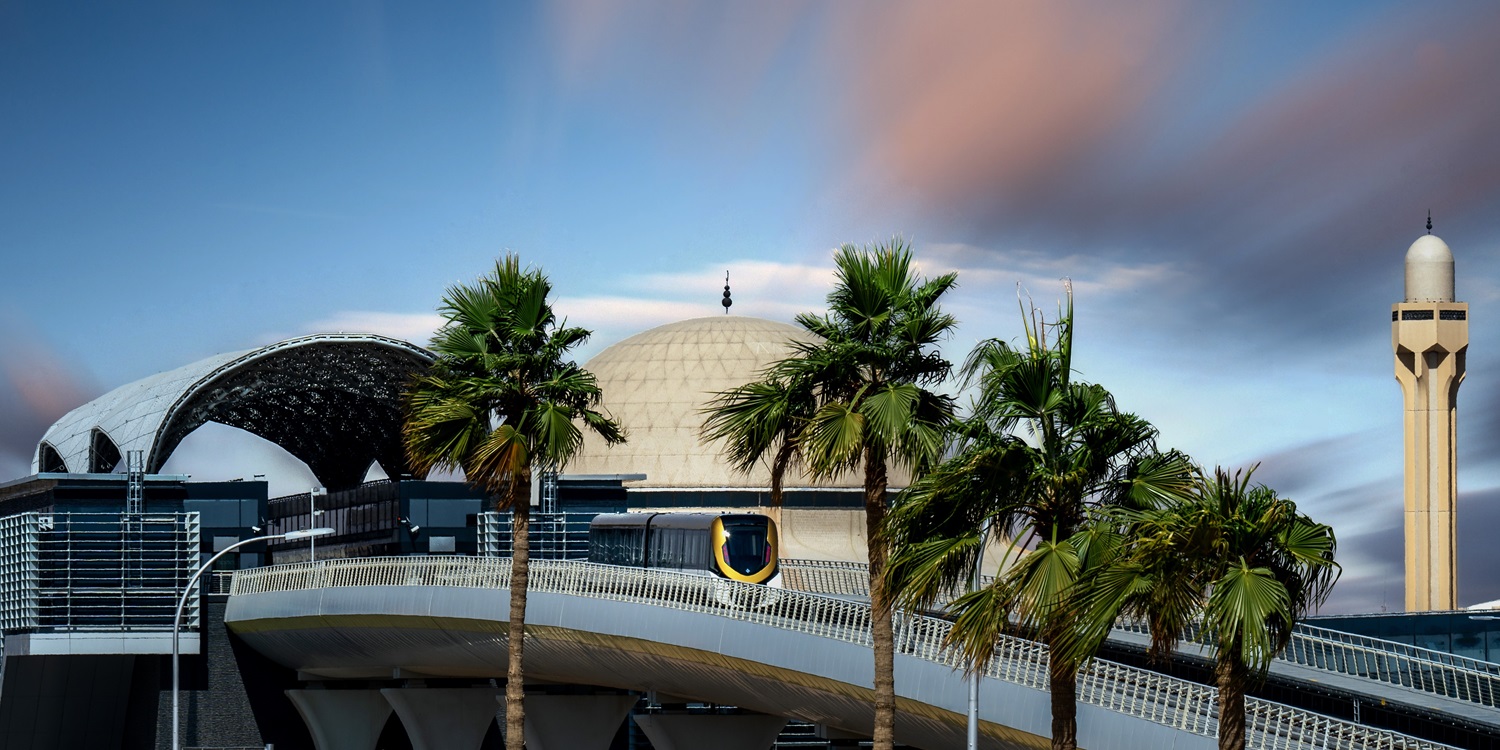






Riyadh Metro yellow, green and purple lines (lines 4, 5, 6), in which Sener participated as Independent Checker Engineer, officially inaugurated

Riyadh Metro yellow, green and purple lines (lines 4, 5, 6), in which Sener participated as Independent Checker Engineer, officially inaugurated

28/11/2024

The engineering and technology group Sener has participated in the development of the Riyadh Metro, in the Kingdom of Saudi Arabia. The Riyadh Metro network, including its yellow, green, and purple lines (also known as lines 4, 5 and 6) designed and built by the FAST consortium (led by FCC and with support from Samsung C&T, Alstom, Freyssinet Saudi Arabia, Atkins, Typsa and Setec), was officially inaugurated today. As the largest construction project ever developed by a Spanish company globally, the Riyadh Metro spans over 176 kilometers across a total of 6 lines, 85 stations and 7 workshops and depots, representing one of the world’s largest urban transport infrastructure projects ever realized.

The metro will operate in phases, with the first three lines – the blue line (line 1), the yellow line (line 4), and the purple line (line 6) – commencing passenger operations on December 1st, followed by the red and green lines (2 and 5) on December 15th and the orange line (line 3) on January 5th.

As a key player in the project, since 2014, Sener has led the ICE services for package 3 of the Riyadh Metro, which includes metro lines 4, 5 and 6. The ICE services are critical for the project, given the challenges it faced, such as a tight schedule of the design and construction, or harsh environmental conditions, which place exceptional demands on installation, operation, and maintenance. Sener led the ICE Services for the design and construction of 3 metro lines, with a total of 29 stations, over 70 kilometers of tracks, 24 viaducts, 28 underground tracks and 13 above-ground tracks. As the backbone of the city’s public transport system, the Riyadh Metro stands as a key milestone of the Kingdom’s ambitious plans to improve mobility and enhance quality of life for all.

As the leader of the ICE services, Sener has contributed to the consortium with a group of more than 240 technical experts of recognized experience and prestige who have carried out, among other things, the checking, supervision, and technical inspection of the design; the interfaces between civil works, installations, track and systems; the verification of contractual requirements, construction methods of the infrastructure,  facilities, architectural finishes, railway systems, etc.; the quality assurance and quality control as built; and the integrated and operational testing, commissioning, temporary operation and transfer to operation.

The Riyadh Metro network, part of the visionary project for Riyadh Public Transport, was inaugurated by His Majesty King Salman bin Abdulaziz Al Saud on 27 November, representing an important milestone in enabling the realization of the Kingdom’s Vision 2030 goals. This landmark national project reflects the work of the world’s leading design, planning, and construction conglomerates from over 13 countries, joining forces to provide integrated solutions that meet the needs of residents and visitors alike.

Working closely with the local community, Sener ensured best practices in employee health and safety throughout the duration of the project. The implementation of proactive social initiatives, including the Joint Technology Transfer Program, allowed for fruitful exchanges with local universities on health and safety protocols, environmental protection, and quality assurance, amongst others. Through workshops, seminars and scholarship programmes aimed at Saudi university students in the Kingdom, over 50 students benefited from the programme over a period of 10 weeks.

Using the latest technological advances in railway systems, Sener successfully contributed with the ICE services to the design and construction of a world-class automated and driverless network at the heart of the Kingdom’s capital city, responding to the current and future needs of residents and visitors alike. Destined to transform urban life in the capital, Riyadh Metro will also enhance the capital city’s mobility ecosystem to address current demands and meet future needs, generating significant economic and sustainability benefits.

Underpinned by 4 iconic stations, which will serve as major hubs in the city’s public transport system, the Riyadh Metro network will connect several strategic sites, including King Khalid International Airport, King Abdullah Financial District (KAFD), universities, and the downtown area, enhancing access and integration with other transport means such as buses.

Embodying the project’s artistic vision, all stations will offer modern amenities such as internet connectivity, air conditioning, and passenger information systems to enhance the overall experience.

Significant facts about the project

  • For the construction of the green line (line 5), the FAST consortium used two TBMs (tunnel boring machines), with a diameter of 9.77 metres, which have enabled full-section tunnels to be excavated, achieving world records for daily excavation progress.
  • Among the three consortia (FAST, BACS and ANM) that have participated in the development of the Riyadh metro network, the FAST consortium, led by FCC, was the first to bring a 9.8-metre diameter TBM to Riyadh. Two TBMs were used to bore 10.8 km of tunnels on L5 San’ah and Zafrah, and the first to pass through Salah Al-din station on 4 October 2015, breaking speed records worldwide.
  • More than 12.2 kilometres of girders were installed over two spans in a record time of 1 year and 9 months, with an average construction and installation rate of 2.5 days/span.
Sener and Modelical to Develop Virtual Models of the Guadiana Hydrographic Confederation Dams

Sener and Modelical to Develop Virtual Models of the Guadiana Hydrographic Confederation Dams

28/11/2024

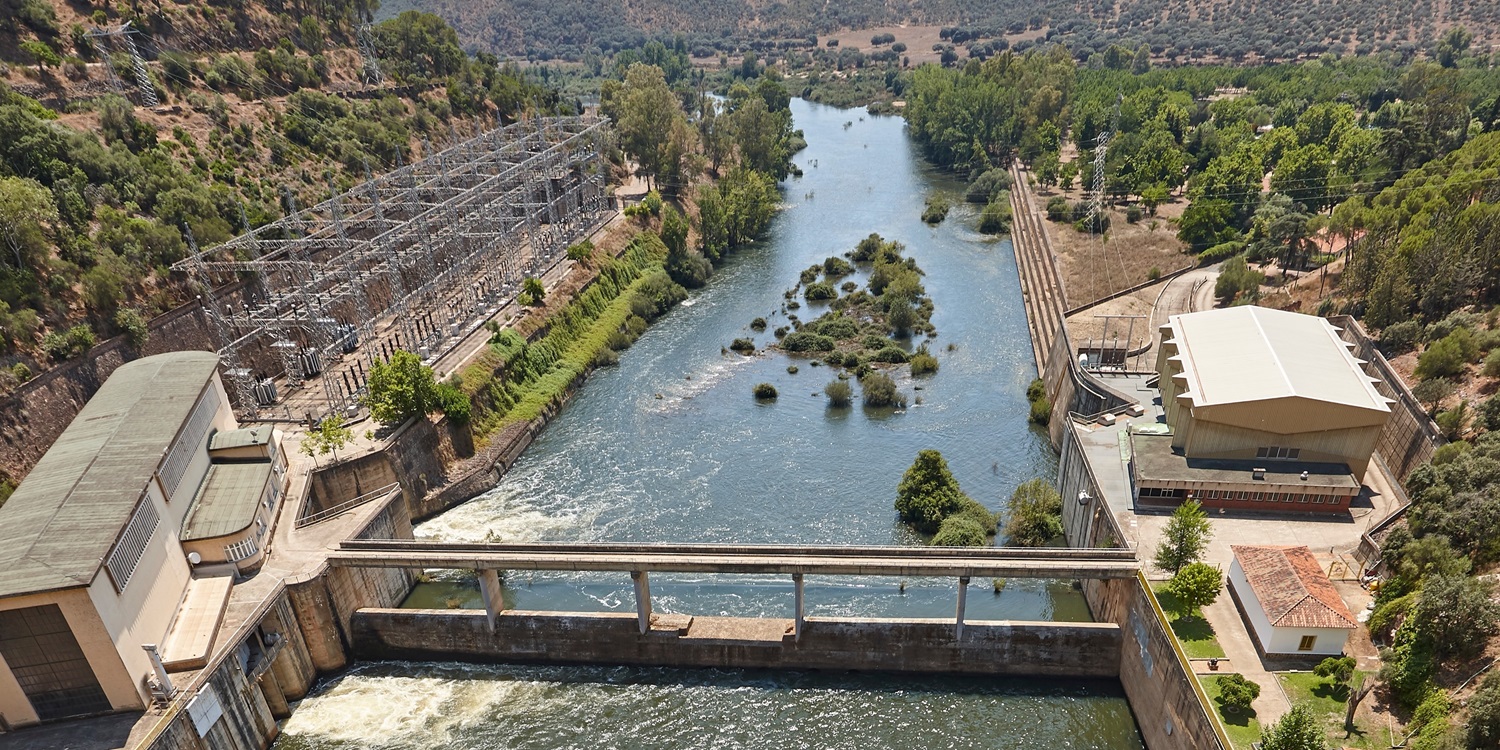
La UTE Sener-Modelical ha sido adjudicataria del lote 6 del contrato de Implementación de Metodología BIM licitado por la Secretaría de Estado de Medio Ambiente para realizar los modelos BIM de diecisiete presas de titularidad estatal en la Confederación Hidrográfica del Guadiana. El consorcio aplicará tecnologías de escaneo láser terrestre y drones para obtener nubes de puntos y fotografías de 360 grados de las infraestructuras y de sus edificios auxiliares. La UTE proveerá los modelos 3D con información para la gestión de las presas en las diferentes fases de su ciclo de vida.

La UTE formada por el grupo de ingeniería y tecnología Sener y por Modelical, consultora especializada en transformación digital, ha sido adjudicataria del lote 6 del contrato de Implementación de Metodología BIM licitado por la Secretaría de Estado de Medio Ambiente para desarrollar los modelos virtuales de las presas de la Confederación Hidrográfica del Guadiana.

Los trabajos adjudicados forman parte del Contrato de servicios para el desarrollo, coordinación, implementación y formación de la metodología BIM en las presas estatales, en el Marco del Plan de Recuperación, Transformación y Resiliencia (PRTR). Este proyecto permitirá generar modelos digitales en tres dimensiones de las infraestructuras con información para apoyar la toma de decisiones y facilitar su operativa y mantenimiento.

Sener y Modelical combinarán su experiencia en ingeniería y creación de gemelos digitales de infraestructuras para desarrollar los modelos BIM de las presas del Guadiana.

En una fase inicial, el consorcio se encargará de digitalizar las diecisiete presas, sus instalaciones, así como sus edificios auxiliares aplicando tecnologías de escaneo láser terrestre y aéreo. El empleo de drones y dispositivos similares permitirá obtener nubes de puntos y fotografías de 360 grados.

En una segunda fase, Sener y Modelical moldearán las infraestructuras codificando cada elemento para su vinculación con otros sistemas. De esta manera los gemelos digitales se integrarán con sistemas como los de información geográfica (GIS) o de gestión del mantenimiento asistido por ordenador (GMAO). La clasificación y la codificación de los elementos facilitarán la incorporación de documentación asociada. Adicionalmente, entornos tridimensionales permitirán visitas virtuales de las instalaciones.

En paralelo, la UTE realizará varias formaciones para que los equipos técnicos de la Confederación Hidrográfica del Guadiana puedan usar los modelos para la gestión de operaciones y mantenimiento.

Estos trabajos de digitalización y agregación de información cambiarán muchos aspectos en la gestión de las presas y permitirán:

  • Trabajar a partir de modelos virtuales que serán la fuente de información única y fiable para todas las partes implicadas.
  • Asegurar la trazabilidad de la información.
  • Mejorar la coordinación entre disciplinas en la operativa y mantenimiento.
  • Proveer información detallada y agregada a todos los niveles implicados.
  • Apoyar la toma de decisiones.

La digitalización de estas infraestructuras aportará beneficios para los equipos técnicos, la Dirección General del Agua (DGA) y la ciudadanía.

Sener participates in ESA’s Hera mission

Sener participates in ESA’s Hera mission

10/10/2024

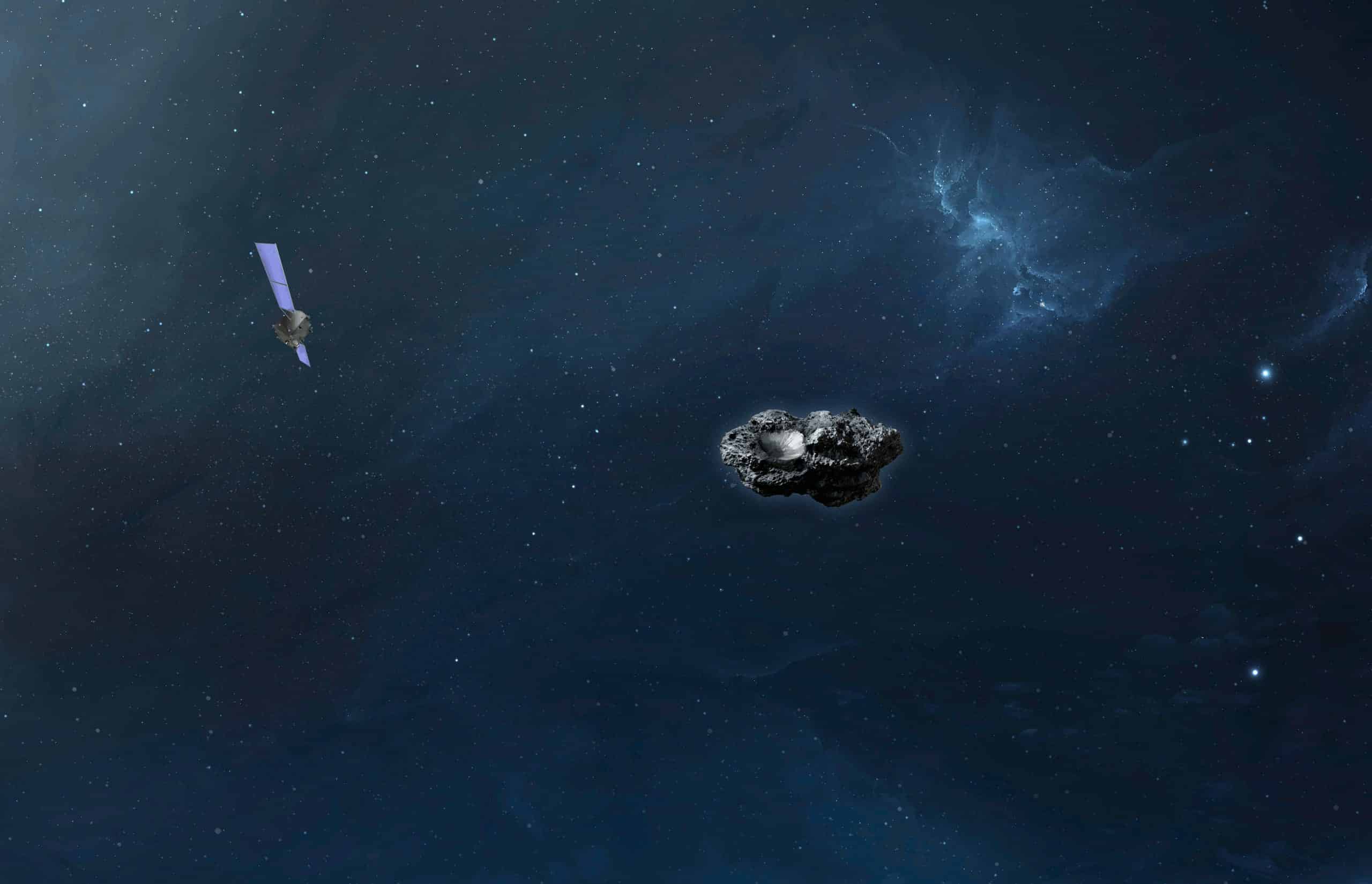
The mission, which was launched on Monday, will travel to the asteroid Dimorphos to study the satellite deflection technique as a planetary defence strategy, being the first ESA mission in this field.

Sener has been responsible for the mission’s low gain antenna, collaborating with companies from Spain, Portugal, Romania, France, Germany, the Netherlands, and Ireland.

The Hera mission of the European Space Agency (ESA), which was launched on Monday from Cape Canaveral (Florida), has included the participation of Sener, responsible for its low gain antenna or LGA (Low Gain Antenna). Hera is the first ESA planetary defence mission and will carry out a detailed study of the impact of the asteroid Dimorphos, the moon put into orbit of the binary asteroid system known as Didymos.

The objective of Hera is to demonstrate the reliability of kinetic deflection as a planetary defence technique. Through its approach, Hera will collect and expand crucial missing data on Didymos and its asteroid Dimorphos following NASA’s DART mission and its impact on the asteroid Dimorphos in 2022, which caused an alteration in its orbit.

The antenna provided by Sener will help establish the ship’s communication with the tracking stations on Earth to send scientific data. The company has extensive experience in the design of fixed and steerable antennas, used for communication with satellites in all Earth orbits, and for probes and observatories sent into deep space. In this way, it has participated, for example, in the development of the low-gain antenna for the BepiColombo mission.

ESA’s Proba-3 mission, led by Sener, ready for launch after final tests of its two satellites

ESA’s Proba-3 mission, led by Sener, ready for launch after final tests of its two satellites

08/10/2024

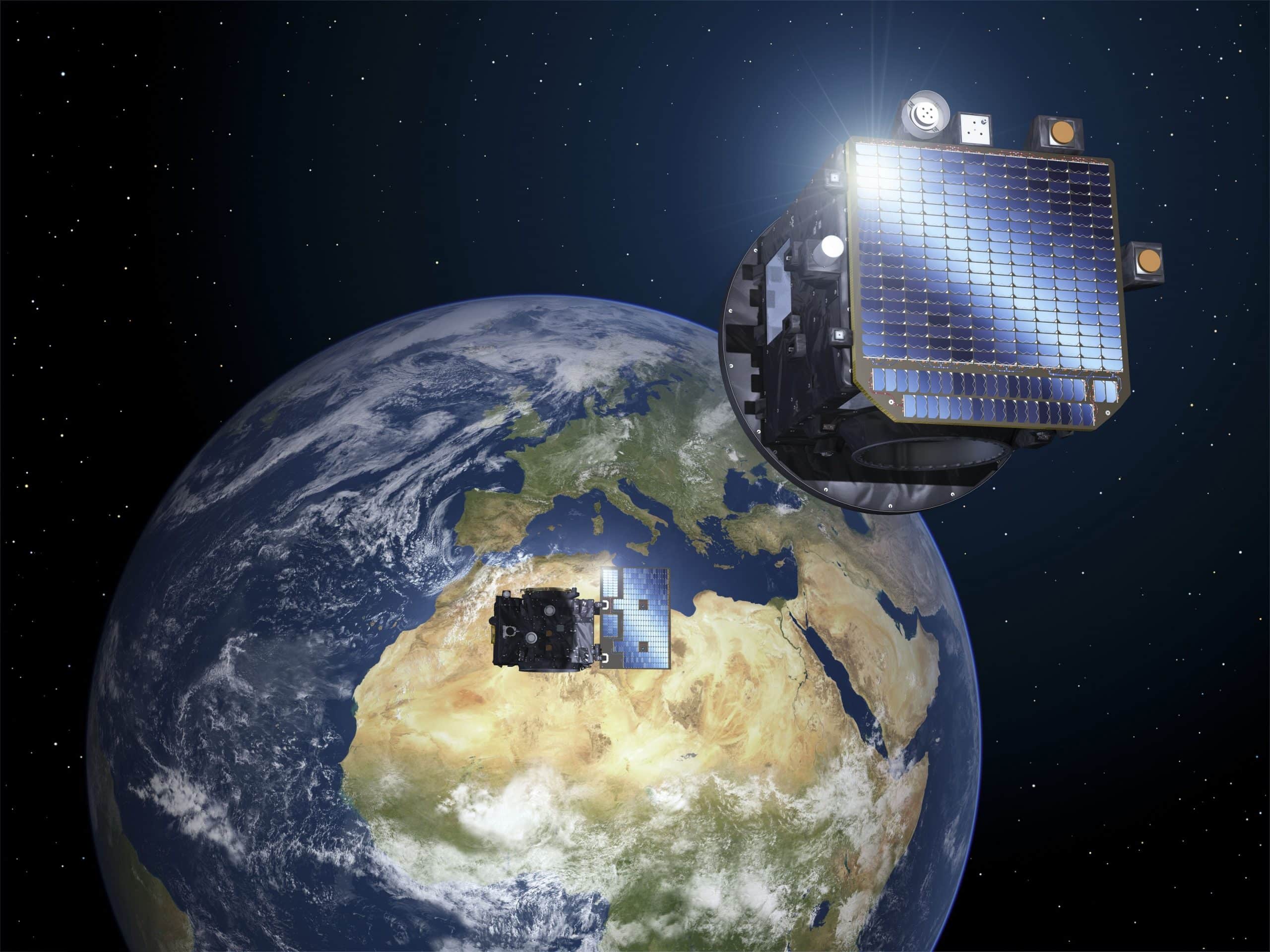
Led by Sener in close collaboration with an industrial team made up of a large consortium of more than 29 companies from 17 countries, Proba-3 will demonstrate the viability of high-precision formation flight between satellites in space. Sener is the prime contractor for the mission and responsible for both flight and ground segments.

In a final test before its shipping to its Indian launch site, ESA’s eclipse-making double-satellite Proba-3 mission has received commands from its science team and transmitted images back, exactly as it will operate in orbit.

Led by Sener in close collaboration with an industrial team made up of a broad consortium of more than 29 companies from 17 countries, Proba-3 will demonstrate the feasibility of high-precision formation flight between satellites in space. Sener is the prime contractor for the mission and is responsible for both the flight and ground segments.

Proba-3 is an extremely technically and scientifically ambitious mission. Through exquisite, millimetre-scale, formation flying, its dual satellites will accomplish what was previously a space mission impossible: one platform will cast a precisely held shadow onto the other, in the process blocking out the fiery Sun to observe its ghostly surrounding atmosphere on a prolonged basis.

The last in a series of five ‘System Validation Tests’ for the mission involved scientists at the Royal Observatory of Belgium in Brussels sending payload operation requests to the mission’s control centre at ESA ESEC, the European Space Security and Education Centre, across the country at Redu.

The control centre processed these requests then sent telecommands to the science instruments aboard the Proba-3 spacecraft, currently located in a cleanroom in Kruibeke, to manage the requested scientific observations in a fully automated fashion.

Now its testing is complete, Proba-3 will now be shipped to the Satish Dhawan Space Centre in India on 21 October for a planned launch by PSLV-XL launcher on 29 November.

Its latest test spanned 12 hours in all, replicating part of Proba-3’s highly elliptical 19.5-hour orbit around Earth, with its formation flying for observing the solar corona taking place over a six-hour period around apogee, meaning the top of its 60 000 km orbit.

The two satellites’ formation flying will take place on a fully autonomous basis, but the testing included the sending of commands to science instruments for both in-flight calibration scenario and nominal scientific observation, as well as the update of some commands to be replaced with others. That latter functionality provides flexibility to the scientists to quickly react to exceptional solar events.

The only element of Proba-3’s ground segment not involved in the SVT testing is the actual ground stations dotted around the globe that will maintain contact with the satellites during each high-climbing orbit: Santiago in Chile, Yatharagga in Australia, Maspalomas on Gran Canaria and Villafranca near Madrid.

Made up of Coronograph and Occulter satellites, Proba-3 is the latest in an ESA family of experimental minisatellites dating back to 2001, the name coming from the Latin for ‘Let’s try!’.

The Palmdale-Burbank section of the San Francisco-Los Angeles high-speed line obtains environmental certification

The Palmdale-Burbank section of the San Francisco-Los Angeles high-speed line obtains environmental certification

02/10/2024

The Palmdale-Burbank section of the high-speed line between San Francisco and Los Angeles, led by Sener, has recently obtained environmental certification from the California High Speed ​​Rail Authority (CHSRA). The section between Palmdale and Burbank is part of Phase 1 of the California high-speed system and covers approximately 70 kilometers, crossing urban, rural and natural areas.

Sener has leaded this project since 2015, when the CHSRA awarded the group the engineering and environmental services for the section. More specifically, Sener has been responsible for the preliminary design and analysis of the alternatives until identifying the solution preferred by the CHSRA. Additionally, Sener has also been responsible for the environmental impact analysis, the conceptual design of the Palmdale and Burbank stations and the identification of the rights of way to be acquired for the track layout, stations and auxiliary elements, and for supporting the CHSRA during the public information of the entire process.

As main consultant, Sener has led a group of more than 30 companies, including some of the most important North American engineering and environmental companies, and has achieved consensus among the different interested parties of the project, which is of great technical complexity. The Palmdale-Burbank section has 45 kilometers of tunnel, including two tunnels of more than 20 kilometers in length in seismic zones, crossing faults such as the San Andres, San Gabriel and Sierra Madre faults.

The Palmdale-Burbank section will provide a sustainable mobility alternative between the main metropolitan areas of California. It will feature state-of-the-art signalling and traffic safety technology (positive train control (PTC), anti-intrusion barriers, and earthquake early warning systems, among others).

The California High-Speed ​​Line is the first high-speed rail system under construction in the United States. It will connect the major Californian urban centers (San Francisco, Sacramento, Los Angeles, and San Diego) over a total length of 1,287 km and 24 stations. Once inaugurated, it is expected to connect San Francisco and the Los Angeles basin in less than 3 hours, at speeds of up to 400 km/h.

The Sener Foundation presents the award for the Best Doctoral Thesis in Engineering 2022 to a PhD from Carlos III University of Madrid for his work on measurements from satellite navigation systems

The Sener Foundation presents the award for the Best Doctoral Thesis in Engineering 2022 to a PhD from Carlos III University of Madrid for his work on measurements from satellite navigation systems

30/09/2024

The Sener Foundation has presented the Sener Foundation Award for the Best Doctoral Thesis in Engineering for works submitted in 2022. In this edition, the award-winning author was Daniel Arias Medina, a PhD from the Carlos III University of Madrid, for his work entitled Robust GNSS Carrier Phase-based Position and Attitude Estimation: Theory and Applications. The thesis was directed by Jesús García Herrero, Jordi Vilà-Valls and Ralf Ziebold.

The prize is worth 12,000 euros for the author of the thesis and a further 3,000 euros to be divided among the thesis supervisors.

The jury had a difficult task in choosing the winning thesis, given the high quality of the works presented. In particular, it described the winner as “having a remarkable analytical and mathematical depth, being well organized, relevant and technically complete; the objectives are well defined and the text is clear. In short, this is a great work that represents a clear advancement of our knowledge.”

For its part, the Board of Trustees of the Sener Foundation noted that “it is an honor for the Sener Foundation to receive in each edition of these awards an increasing number of doctoral theses, and to continue to encourage in this way young people to contribute to society through research in engineering.”

The author of the thesis recognized “the work of the Sener Foundation for its efforts to acknowledge the effort and merit of young researchers.” He also thanked “his thesis directors, as well as his family and his partner, for their support.” For their part, the directors of the work pointed out that “the doctoral thesis combines theoretical and applied work with contributions in different fields such as the theory of estimation, the fusion of sensor data and robust signal processing.” The work, they point out, “proposes limits for estimation errors and new algorithms applied to today’s challenges involving multi-sensor navigation systems, exhibits a rigorous approach to formalization, and is directly related to problems of relevance to the industry and the academic community in this area.”

The results of the work Robust GNSS Carrier Phase-based Position and Attitude Estimation: Theory and Applications fall within the scope of Aerospace Engineering and are related to the use of Global Navigation Satellite System (GNSS) measurements to provide precise navigational estimates for vehicles that cross areas where signal propagation conditions are particularly difficult. In addition to providing location data for applications related to Intelligent Transportation Systems (ITS), there is an increasing reliance on GNSS for timing purposes, which are crucial for the distribution of the electrical grid, finance, and emergency response.

Through its Best Engineering Doctoral Thesis Award, the Sener Foundation aims to stimulate research at the highest level in the areas of science and technology in which the Sener group is active, namely, in the aerospace and defense, energy, mobility, advanced facilities for data centers, digital and marine sectors.

The Sener Foundation is now evaluating the theses presented to the Sener Foundation Award for the Best Doctoral Thesis for works presented in 2023 and expects to announce the winner of the 2023 edition in December 2024.

Sener will work on the Scholven 1 energy transition process

Sener will work on the Scholven 1 energy transition process

26/09/2024

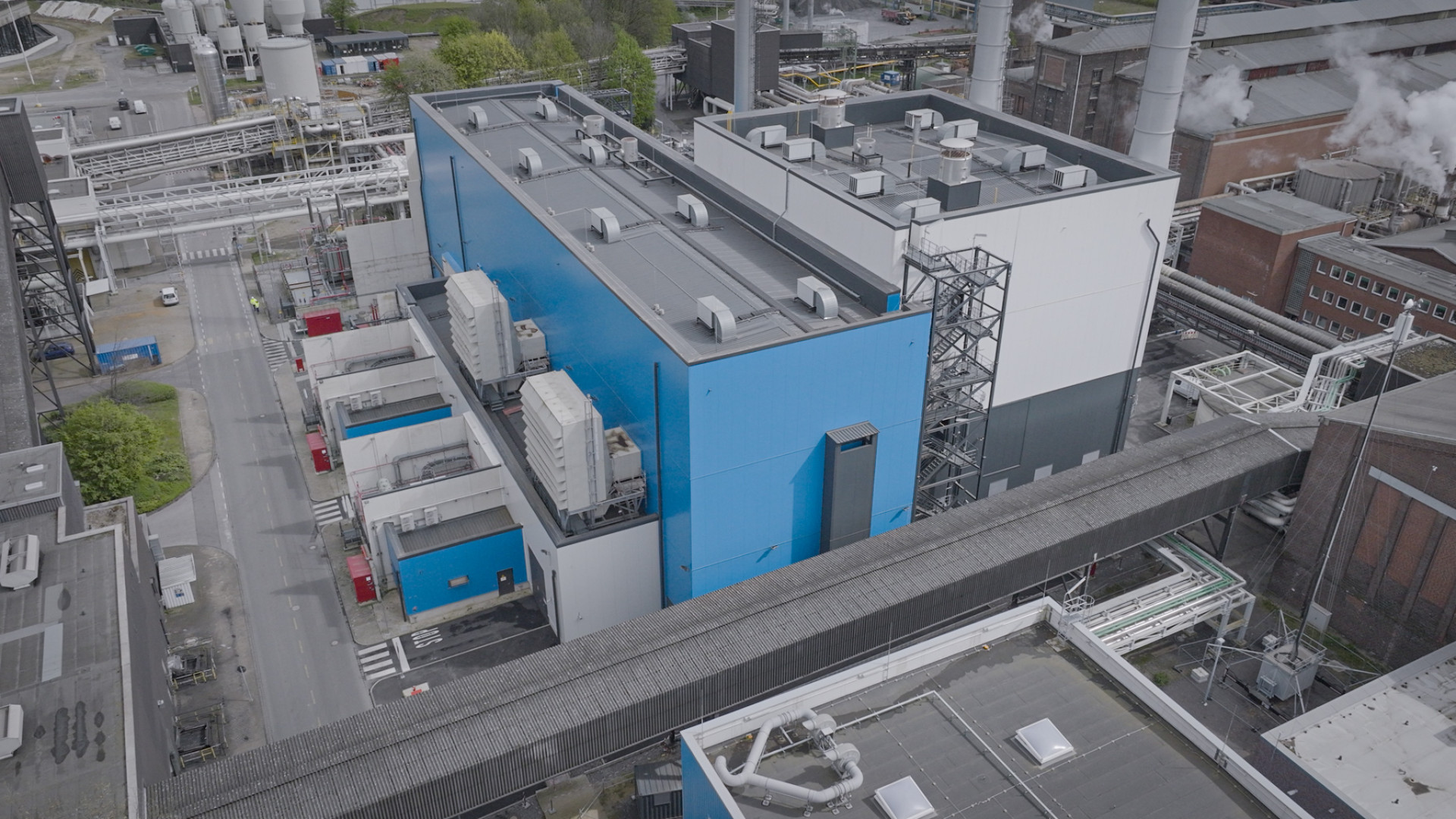
Sener and Siemens Energy have been selected by Uniper to conduct a feasibility study. After the commissioning of Scholven 1, combined cogeneration plant built by Sener under the EPC (engineering, purchasing and construction) modality in Gelsenkirchen, Germany, Sener will study the feasibility of this plant’s transformation, which is currently consuming natural gas, so it can use hydrogen (H2) as a fuel source for gas turbines and boilers.

This is a new step into the energy transition process of Uniper’s plant. “At Sener, we are firmly committed to developing alternative energy sources that enable our society to advance towards the energy transition and self-sufficiency. Aware of the major challenge this poses for Europe, we promote innovation to provide effective solutions,” states Álvaro Lorente, Energy Managing Director at Sener.

Sener chosed as “Company of the Year 2024” by the Spanish Chamber of Commerce in Belgium and Luxembourg

Sener chosed as “Company of the Year 2024” by the Spanish Chamber of Commerce in Belgium and Luxembourg

26/09/2024

The Official Spanish Chamber of Commerce in Belgium and Luxembourg highlights Sener’s cutting-edge work in these markets in the aerospace and defence industries.

Sener actively collaborates with Belgian companies on the PROBA-3 project of the European Space Agency (ESA), which the firm leads, and with Luxembourg companies on the VLEO project of the European Defence Agency (EDA).

The Official Spanish Chamber of Commerce in Belgium and Luxembourg has selected Sener as the winning company in the 10th Edition of its “Company of the Year” awards, in recognition of its cutting-edge work in the aerospace and defence sector in these countries.

Through this award, the Chamber hopes to contribute one more year to the promotion of Spanish economic and business development in Belgium and Luxembourg, rewarding the experience and demonstration of leadership and competitiveness of companies in their sector of activity.

With this award, the Chamber seeks to reward the trajectory of Sener, founded in 1956 as the first Spanish engineering company registered as such. More than 60 years later, the company has a workforce of nearly 4,000 professionals, offices on five continents, a permanent presence in 18 countries and production centres for the aerospace and defence markets in Spain and Poland. In addition to the aerospace and defence markets, Sener has a recognised track record in energy, mobility, data centre, digital and naval projects.

Since opening its Brussels office in 2019, Sener has actively collaborated with Belgian companies on 17 European defence projects and 5 European space projects.

As an example of these collaborations, Sener is currently leading an important European Space Agency (ESA) mission being developed under the name Proba-3. This is the first space mission in which two satellites will orbit together in formation, with launch scheduled for the end of 2024. It also leads Commands (for the development of technology that facilitates smart cooperation between manned and unmanned systems) and has actively participated in programs such as HYDEF (for the development of a hipersonic missile interceptor system).

In Luxembourg, Sener is leading a multinational very low orbit satellite project, coordinated by the European Defence Agency (EDA) and called VLEO. Among others, the Luxembourg companies SPARK and LIST are participating, as well as the Luxembourg Institute of Science and Technology. On December 2, the award will be presented to Sener at an event that will bring together a hundred people from European institutions and the community innovation ecosystem.

“We are honoured that our activity is recognized with this award, which confirms our track record in Belgium and Luxembourg. It also encourages us to continue collaborating with institutions and companies in Belgium and Luxembourg to continue offering innovative and cutting-edge technological solutions that help us reach the next frontier in strategic areas for Europe, such as space and defence,” says Fernando Horcada, director of EU and NATO Programs and of the Aerospace and Defence Representation Office of Sener in Brussels.

Sener, selected to develop the first demonstrator for a quantum key distribution system from LEO orbit

Sener, selected to develop the first demonstrator for a quantum key distribution system from LEO orbit

25/09/2024

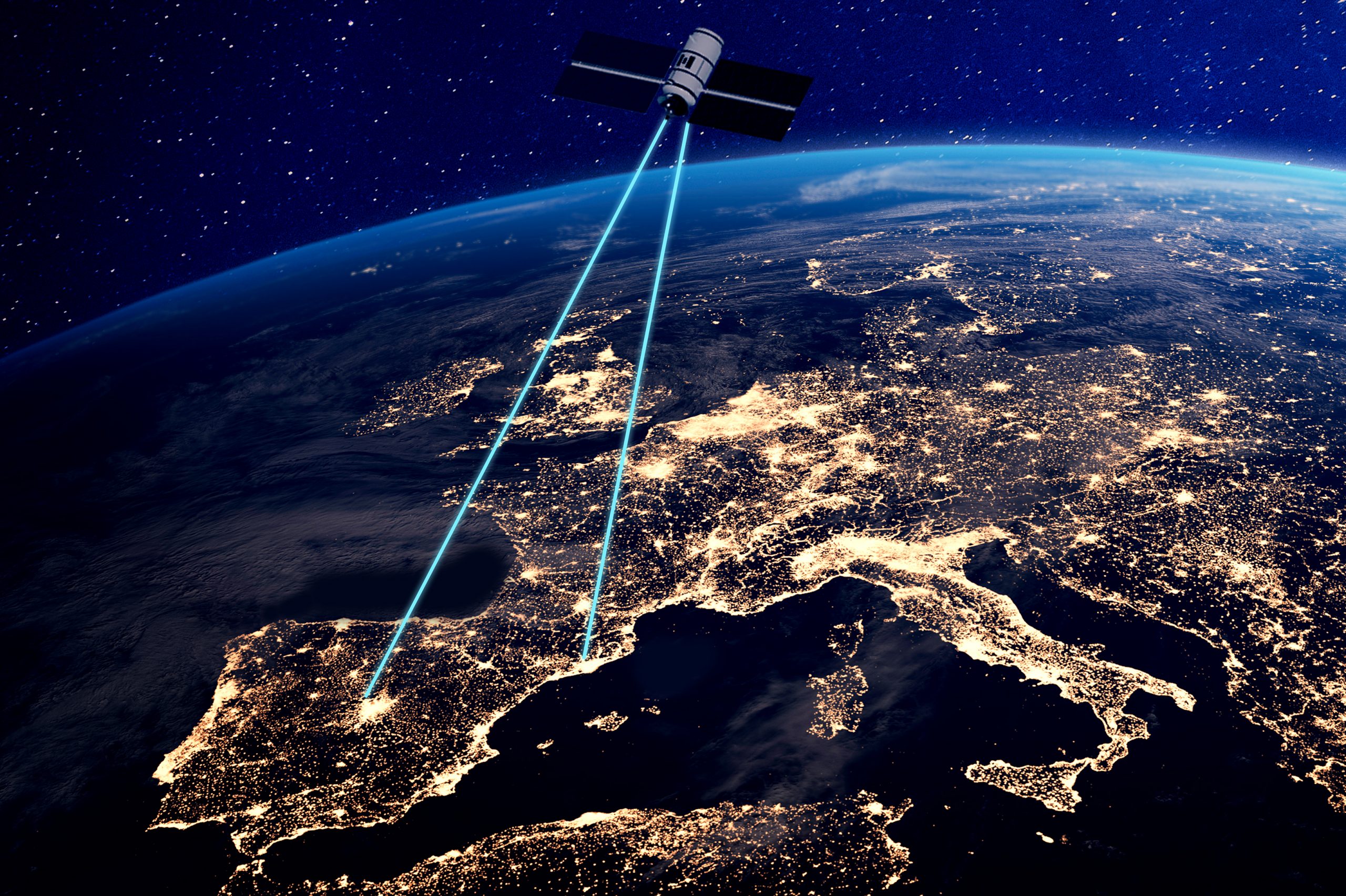
The CDTI (Centre for Technological Development and Innovation) awards Sener the phase 2 contract to develop a quantum key demonstrator for LEO orbits, within the scope of PERTE Aerospace. This is the first Spanish quantum key distribution (QKD) mission, and its development is critical for the future of communications security.

Thanks to the award of this contract, Sener leads low-orbit quantum distribution technology in Spain and is at the head of a Spanish consortium of top-tier companies, SMEs and Public Research Organisations. With a budget obtained from PERTE Aerospace, it will enable Spain to strengthen its position in quantum technology, and its results could be applied to the EU secure satellite communication constellation (IRIS2).

The CDTI (Centre for Technological Development and Innovation), an agency under the Ministry of Science, Innovation and Universities, has awarded Sener the phase 2 contract to develop a QKD demonstrator for low earth orbits (LEO). This is a precursor of what could be the first Spanish QKD-LEO mission, which will enable us to move forward in communications security.

Phase 2 was awarded this summer. Sener previously completed a first phase involving a feasibility study, leading a Spanish consortium made up of the top-tier companies Hisdeat, Hispasat and Deimos; the SMEs Quside and Luxquanta; and the Public Research Organisations ICFO and IEEC. In phase 2 other leading Spanish companies and institutions will join in the quantum field. The R&D solution proposed by the consortium led by Sener has obtained a very high score in the assessment of phase 1. Now kicks off the prototype’s development, construction, verification and validation phase, which is estimated to span 20 months and has been funded with 18 million euros.

Quantum key distribution is a secure communications method based on the inherent properties of photons according to quantum mechanics, specifically on the no-cloning theorem, which states that it is impossible to create an identical copy of an arbitrary quantum state. In essence, it allows creating a secure coded key in the polarisation of an extremely attenuated light beam, in such a way that it is only shared and known by the message’s emitter and receiver. It is considered to be the only way to ensure the invulnerability of communications in the future, once super quantum computers acquire the capacity to decode any encrypted message.

Sener will produce the demonstrator for a LEO mission at an altitude of 500-700 kilometres, by developing a useful load to be onboarded a low earth orbit satellite and its associated ground segment, including the optical ground station.

There are currently no technological solutions on the market that address the technological challenge of quantum key distribution. Therefore, this project has a considerable innovative component that will help Spain strengthen its position in the field of quantum technology. Similarly, the results could be applied to the EU secure satellite communication constellation (IRIS2).

Sener’s contribution in the field of communications, ground-based telescopes and space

Sener will offer its knowledge and experience in the aerospace market in the field of onboarded optical instrumentation, with their required pointing and which will emit the key, and in the field of optical ground-based telescopes, which will receive it. In both fields, Sener is a renowned contractor for the main leading satellite manufacturers and space agencies for use in navigation, telecommunications, exploration and Earth observation, and it has supplied equipment to the main ground-based astronomical observatories and for their large optical telescopes for over 23 years.

A project framed within PERTE Aerospace

The project is framed within the scope of Action 8 “Satellite and ground systems for quantum communications” of PERTE Aerospace, and it has been allocated a budget from the European funds for the Spanish Recovery, Transformation and Resilience Plan of the Ministry for Digital Transformation and Public Service, through the State Secretariat for Telecommunications and Digital Infrastructure (SETELECO). It is managed by the CDTI through the pre-commercial public procurement system, in coordination with the Spanish Space Agency. QKD is also funded by the European Union – NextGenerationEU.

Funded by the EU

CDTI

Sener holds an EDI TalkS on generational and cultural diversity in London

Sener holds an EDI TalkS on generational and cultural diversity in London

17/09/2024

On Monday, September 9, the Sener team in the United Kingdom, led by Moisés Jimenez, as Head of Section, participated in a face-to-face EDI TalkS on generational and cultural diversity, given by Ana Úsar, from People Management.

Understanding diversity from individuality was a key aspect of the session. With this approach, it was an opportunity to reflect as a group on the advantages of having diverse people in teams, with cognitive diversity being of vital importance due to its relationship with innovation. Cultural differences and cultural intelligence competence were some of the aspects addressed, understanding them as tools that allow thriving personal and professional relationships, with a positive impact on teamwork and projects.

Regarding generational diversity, a debate was established on what motivates us and what we can learn between the different generations. Some conclusions were:

  • The importance of B and X generations, due to their high degree of experience and technical knowledge, their confidence and understanding of the company and a global vision that must be established.
  • Generation X is a pivotal generation, that understands both the offline and online world, with the ability to make decisions, as well as the need to achieve a balance between work and professional life. They are professional models to learn from.
  • Generation Y brings remarkable capacities to manage crises, as well as resilience and acceptance of change. They push towards conciliation.
  • Finally, generation Z contributes with its understanding of the digital and technological world, as well as being familiar with changing environments, dynamic and capable of raising their voice.

By focusing on common points, with an open mind and a desire to connect, we can consolidate strong, high-performance teams.