





SENER in Poland provides security for the scientific instrument of the European Space Agency’s satellite

SENER in Poland provides security for the scientific instrument of the European Space Agency’s satellite

29/04/2021

SENER in Poland, a company of SENER Aeroespacial, is developing a project for containers for transporting and storing the payload of a satellite for the European Space Agency’s Fluorescence Explorer (FLEX) «green» mission, which will monitor the condition of plants from space. The contract with Leonardo results from the company’s investment in Research and Development of containers for space missions.

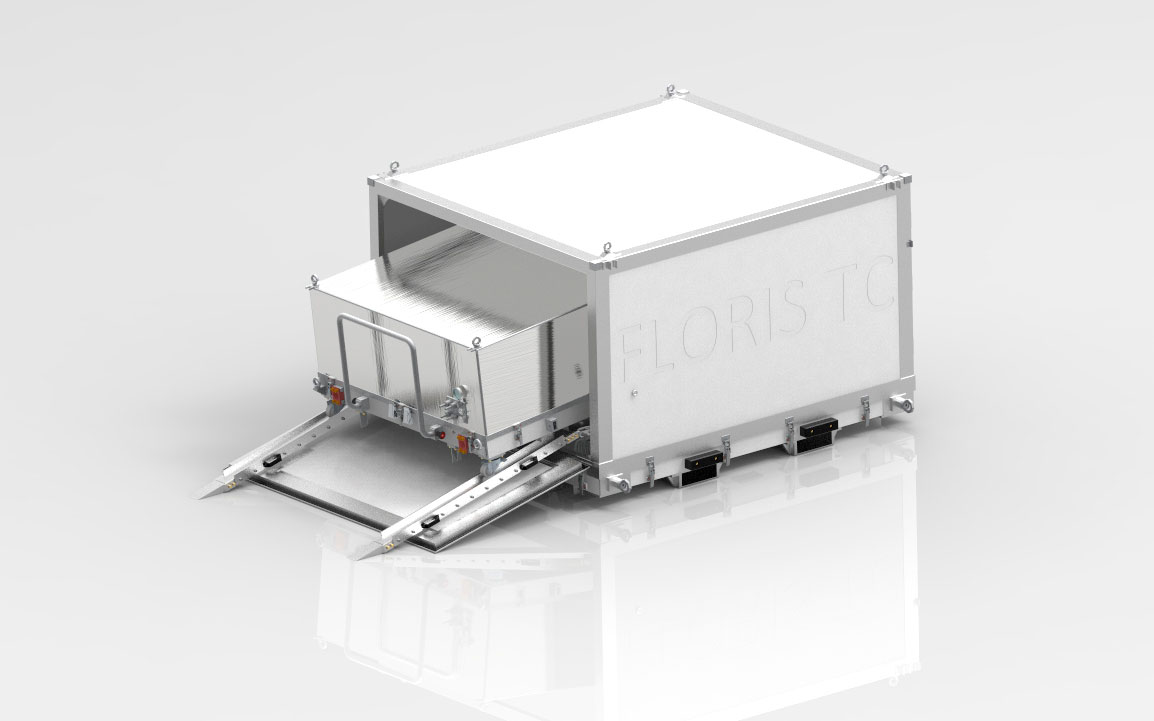
SENER in Poland will design and develop a container to transport the FLORIS scientific instrument, a key component of the mission, which will be used to map the fluorescence of the Earth’s vegetation in order to quantify photosynthetic activity. SENER Aeroespacial is also in charge of FLORIS’ optical bench or IOMS (Instrument Optical Module Structure) that includes the Optical Bench Assembly (OBA), which houses and supports the optical instruments, and the thermal hardware (THW), responsible for keeping the module at a controlled temperature.

Although the container will first be designed and constructed for the FLEX mission, the experience gained from this program will allow the production of these complex and precise devices for other missions as well. This is an important goal in terms of product standardisation in the space industry, i.e. using the same components for different space vehicles. The success of the project will enable further development of the space sector on the Vistula, based on more mass production than so far: contrary to popular belief, containers for transporting such precise and at the same time delicate devices as satellite payloads are extremely complex devices. Among the ground support equipment for assembling satellite instruments – collectively referred to as MGSE (Mechanical Ground Support Equipment) products – it is the transport containers that are most crucial, completely isolating the satellites from the influence of external factors. This does not only mean weather factors, but also shocks and vibrations occurring during loading and transport, e.g. by air,» says Pawel Pako, Project Manager at SENER in Poland, who has already managed R&D projects for space exploration systems developed within the framework of the ESA and cooperated, among others, with the Space Research Centre of the Polish Academy of Sciences and the Max Planck Institute for Solar System Research in Göttingen.

SENER will design two containers: an outer container that is watertight and provides ISO 8 clean room level, and an inner container: watertight and gas-tight, it will provide ISO 5 clean room level. The container will be able to carry a payload of up to 200 kg, but the design is easily scalable to other values.

In response to the needs of space agencies and satellite manufacturers, the container has to undergo numerous endurance tests to ensure it can withstand the rigors of transport. It is also important to ensure that the instruments in transit have adequate ventilation, temperature and humidity. In the case of Flex missions, all these factors must also comply with the stringent requirements of the European Space Agency (ESA).

In the process of developing the container for the FLEX mission, the SENER in Poland team will have to develop new competences, which will involve looking for new business partners on the Polish market.

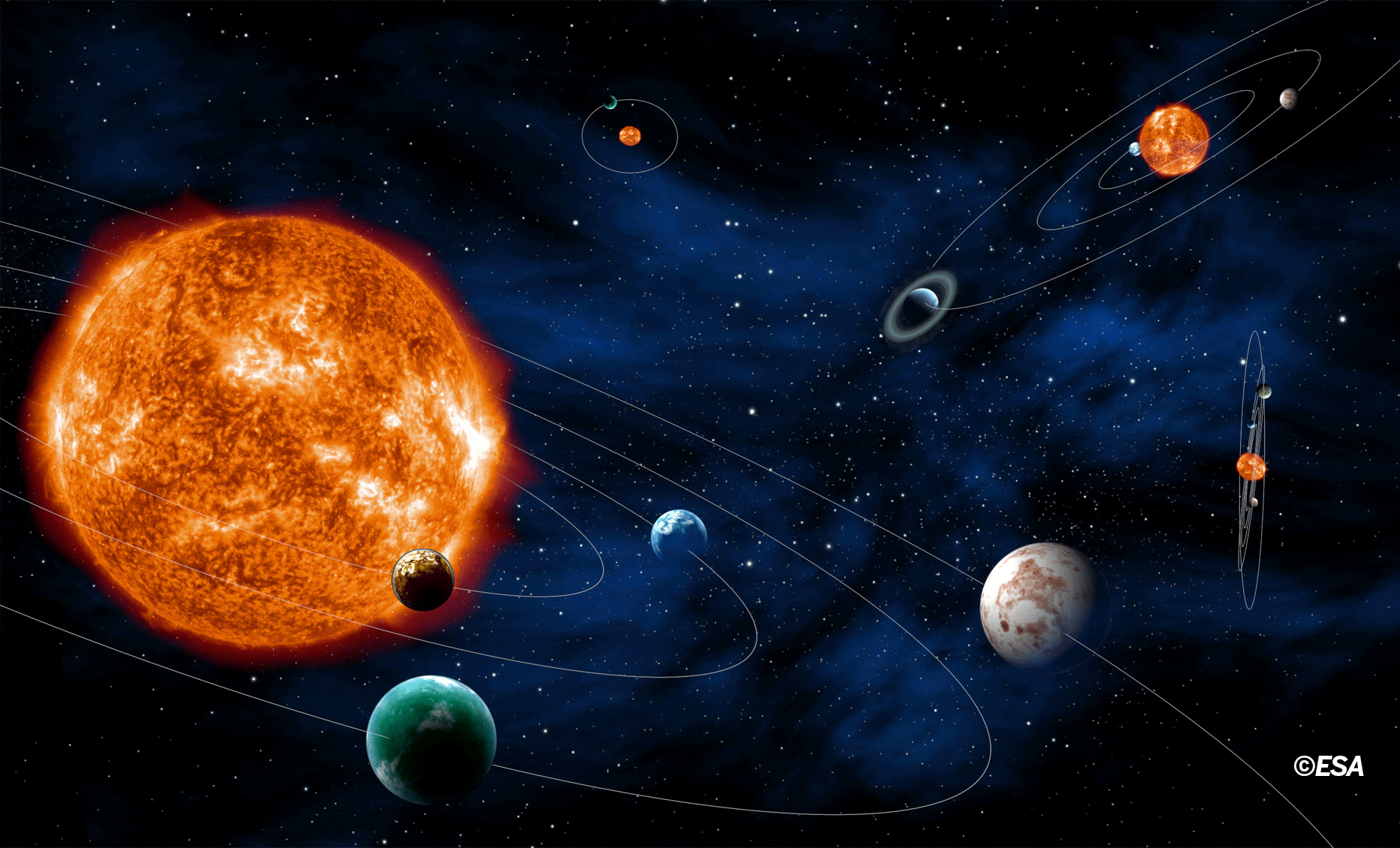
The current project for the FLEX mission is due to be completed in September this year. The experience gained in developing the container will complement SENER in Poland’s extensive portfolio in the MGSE field, which includes missions such as Euclid, JUICE and PLATO in the field, and will be used in the construction of similar equipment for future missions.

The European Space Agency’s FLEX mission, for which a satellite transport container will be built in Poland, has the task of mapping the fluorescence of the Earth’s vegetation in order to quantify photosynthetic activity with the Floris instrument. The main contractor for the program is Thales Alenia Space, with other leading European space companies involved in the project: Leonardo, OHB Systems AG and RUAG. The FLEX satellite, which is due to be launched in 2024, will carry out its mission for three and a half years working in tandem with the Sentinel-3 satellite, which is part of ESA’s Copernicus Earth observation program.
PDF

Press Release

Format: PDF

119,67 KB

SENER Aeroespacial has delivered qualification models for the ESA’s PROBA-3 mission, which will study the Sun’s corona

SENER Aeroespacial has delivered qualification models for the ESA’s PROBA-3 mission, which will study the Sun’s corona

30/03/2021

SENER in Poland, a company of SENER Aeroespacial, is developing a project for containers for transporting and storing the payload of a satellite for the European Space Agency’s Fluorescence Explorer (FLEX) «green» mission, which will monitor the condition of plants from space. The contract with Leonardo results from the company’s investment in Research and Development of containers for space missions.

SENER in Poland will design and develop a container to transport the FLORIS scientific instrument, a key component of the mission, which will be used to map the fluorescence of the Earth’s vegetation in order to quantify photosynthetic activity. SENER Aeroespacial is also in charge of FLORIS’ optical bench or IOMS (Instrument Optical Module Structure) that includes the Optical Bench Assembly (OBA), which houses and supports the optical instruments, and the thermal hardware (THW), responsible for keeping the module at a controlled temperature.

Although the container will first be designed and constructed for the FLEX mission, the experience gained from this program will allow the production of these complex and precise devices for other missions as well. This is an important goal in terms of product standardisation in the space industry, i.e. using the same components for different space vehicles. The success of the project will enable further development of the space sector on the Vistula, based on more mass production than so far: contrary to popular belief, containers for transporting such precise and at the same time delicate devices as satellite payloads are extremely complex devices. Among the ground support equipment for assembling satellite instruments – collectively referred to as MGSE (Mechanical Ground Support Equipment) products – it is the transport containers that are most crucial, completely isolating the satellites from the influence of external factors. This does not only mean weather factors, but also shocks and vibrations occurring during loading and transport, e.g. by air,» says Pawel Pako, Project Manager at SENER in Poland, who has already managed R&D projects for space exploration systems developed within the framework of the ESA and cooperated, among others, with the Space Research Centre of the Polish Academy of Sciences and the Max Planck Institute for Solar System Research in Göttingen.

SENER will design two containers: an outer container that is watertight and provides ISO 8 clean room level, and an inner container: watertight and gas-tight, it will provide ISO 5 clean room level. The container will be able to carry a payload of up to 200 kg, but the design is easily scalable to other values.

In response to the needs of space agencies and satellite manufacturers, the container has to undergo numerous endurance tests to ensure it can withstand the rigors of transport. It is also important to ensure that the instruments in transit have adequate ventilation, temperature and humidity. In the case of Flex missions, all these factors must also comply with the stringent requirements of the European Space Agency (ESA).

In the process of developing the container for the FLEX mission, the SENER in Poland team will have to develop new competences, which will involve looking for new business partners on the Polish market.

The current project for the FLEX mission is due to be completed in September this year. The experience gained in developing the container will complement SENER in Poland’s extensive portfolio in the MGSE field, which includes missions such as Euclid, JUICE and PLATO in the field, and will be used in the construction of similar equipment for future missions.

The European Space Agency’s FLEX mission, for which a satellite transport container will be built in Poland, has the task of mapping the fluorescence of the Earth’s vegetation in order to quantify photosynthetic activity with the Floris instrument. The main contractor for the program is Thales Alenia Space, with other leading European space companies involved in the project: Leonardo, OHB Systems AG and RUAG. The FLEX satellite, which is due to be launched in 2024, will carry out its mission for three and a half years working in tandem with the Sentinel-3 satellite, which is part of ESA’s Copernicus Earth observation program.
Sener develops the NAVIGA navigation unit for the VEGA-C launcher

Sener develops the NAVIGA navigation unit for the VEGA-C launcher

24/02/2021

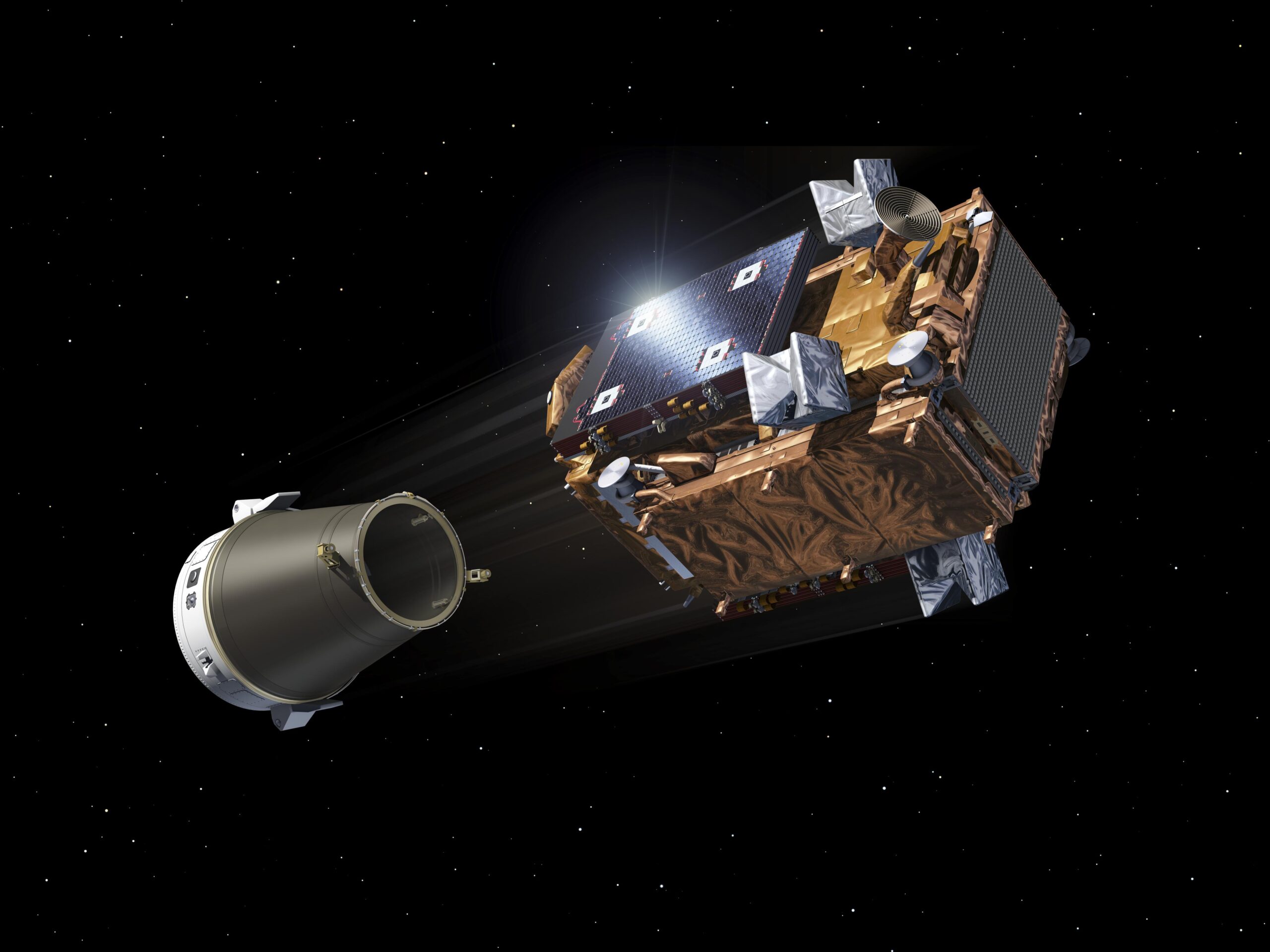
Sener is in the process of qualifying and manufacturing VNE/NAVIGA, a low-cost modular space navigation unit for space transportation, the first application of which will be in the European VEGA-C launcher. After the flight model is delivered in 2023, SENER Aeroespacial expects to close a ten-years contract with AVIO for the mass production for subsequent VEGA-C missions. Sener has designed a novel product, whose features make it the first of its kind in Europe. It can work as a hybrid unit, inertial-only unit or as a GNSS receiver, and will be able to be used on both launchers and satellites.

  • Sener is in the process of qualifying and manufacturing VNE/NAVIGA, a low-cost modular space navigation unit for space transportation, the first application of which will be in the European VEGA-C launcher.
  • After the flight model is delivered in 2023, SENER Aeroespacial expects to close a ten-years contract with AVIO for the mass production for subsequent VEGA-C missions.
  • Sener has designed a novel product, whose features make it the first of its kind in Europe. It can work as a hybrid unit, inertial-only unit or as a GNSS receiver, and will be able to be used on both launchers and satellites.

Sener has signed a contract with AVIO for the C/D phases of the navigation unit for the VEGA-C launcher, VNE (VEGA-C Navigation Equipment), after successfully completing phases A (feasibility study) and B (preliminary design). Phase C involves the development of the detailed design, and phase D is the qualification and delivery phase of the first flight model.

Sener is the design authority for this unit, which is delivered to the Customer as an integrated product. One of the main features of the unit is the reduction in the production cost by incorporating processes and materials from the world of defense. In addition, this contract paves the way for the mass production of navigation units for subsequent launches of VEGA-C and other space missions.

The navigation unit uses a six-axis compass (position and attitude of the launcher) to provide the rocket’s position to the Guidance, Navigation and Control (CNG) system, developed by AVIO, which is necessary to steer the rocket. NAVIGA is thus a critical component for the success of the mission.

NAVIGA combines an Inertial Measurement Unit (IMU) and a Global Navigation Satellite System (GNSS) receiver, and hybridizes the two readings to achieve a high-performance product – its software is Class A, the most critical in the space industry – but also low-cost compared to the inertial navigation units available on the market.

In the words of Sener Project Manager Silvia Díaz, «the development of this navigation unit puts us at the head of an emerging market in Europe, that of medium cost units with good performances and high reliability. We achieved this product by combining our 55-year experience in the traditional space market, with more than 270 devices and systems on board space missions without any faults, and our experience mass producing products for other markets such as defense and the telecommunications satellite commercial market, which involves lowering the costs of processes and components to adapt to the demands of a more competitive market.»

NAVIGA, a versatile and low-cost navigation unit

NAVIGA is a navigation unit that combines two key elements for future space transportation systems: low cost and versatility.

The design of a unit capable of achieving the same performance as other similar space navigation units at a lower cost was made possible by combining our know-how and experience in space navigation solutions, with our technical knowledge in the development of high-precision aviation and defense products for complex environments.

The three implementation aspects applied to the project to reduce the recurring cost of the unit, while maintaining the required performance, are: the use of sensor hybridization techniques to provide a robust navigation solution; the inclusion of radiation-tolerant parts from the automotive market (new in space); and the adoption of defense production processes to manufacture the unit.

The second key element, versatility, is achieved thanks to the modular and flexible design, which allows a complete and certified unit to be adapted, with minor modifications and testing, to other environments, such as short-duration space missions. The advantages of this versatility are significant in the current market, which is increasingly demanding new products in less time and with lower development costs.

Supplementing these two key elements is a third: NAVIGA is a fully European unit, which renders any ITAR restrictions irrelevant.

To develop this innovative product, Sener invested its own funds for the qualification for using components and processes from the defense and automotive markets and will be installing new and specific equipment within its facilities to test the units.

The project is the result of the partnership between the Italian companies AVIO and CIVITANAVI Systems and the Spanish company Elecnor DEIMOS. The VNE/NAVIGA project is funded by European Space Agency (ESA).

SENER Aeroespacial in Poland will provide MGSE equipment for the PLATO mission

SENER Aeroespacial in Poland will provide MGSE equipment for the PLATO mission

17/12/2020

SENER in Poland, a company of SENER Aeroespacial, is developing a project for containers for transporting and storing the payload of a satellite for the European Space Agency’s Fluorescence Explorer (FLEX) «green» mission, which will monitor the condition of plants from space. The contract with Leonardo results from the company’s investment in Research and Development of containers for space missions.

SENER in Poland will design and develop a container to transport the FLORIS scientific instrument, a key component of the mission, which will be used to map the fluorescence of the Earth’s vegetation in order to quantify photosynthetic activity. SENER Aeroespacial is also in charge of FLORIS’ optical bench or IOMS (Instrument Optical Module Structure) that includes the Optical Bench Assembly (OBA), which houses and supports the optical instruments, and the thermal hardware (THW), responsible for keeping the module at a controlled temperature.

Although the container will first be designed and constructed for the FLEX mission, the experience gained from this program will allow the production of these complex and precise devices for other missions as well. This is an important goal in terms of product standardisation in the space industry, i.e. using the same components for different space vehicles. The success of the project will enable further development of the space sector on the Vistula, based on more mass production than so far: contrary to popular belief, containers for transporting such precise and at the same time delicate devices as satellite payloads are extremely complex devices. Among the ground support equipment for assembling satellite instruments – collectively referred to as MGSE (Mechanical Ground Support Equipment) products – it is the transport containers that are most crucial, completely isolating the satellites from the influence of external factors. This does not only mean weather factors, but also shocks and vibrations occurring during loading and transport, e.g. by air,» says Pawel Pako, Project Manager at SENER in Poland, who has already managed R&D projects for space exploration systems developed within the framework of the ESA and cooperated, among others, with the Space Research Centre of the Polish Academy of Sciences and the Max Planck Institute for Solar System Research in Göttingen.

SENER will design two containers: an outer container that is watertight and provides ISO 8 clean room level, and an inner container: watertight and gas-tight, it will provide ISO 5 clean room level. The container will be able to carry a payload of up to 200 kg, but the design is easily scalable to other values.

In response to the needs of space agencies and satellite manufacturers, the container has to undergo numerous endurance tests to ensure it can withstand the rigors of transport. It is also important to ensure that the instruments in transit have adequate ventilation, temperature and humidity. In the case of Flex missions, all these factors must also comply with the stringent requirements of the European Space Agency (ESA).

In the process of developing the container for the FLEX mission, the SENER in Poland team will have to develop new competences, which will involve looking for new business partners on the Polish market.

The current project for the FLEX mission is due to be completed in September this year. The experience gained in developing the container will complement SENER in Poland’s extensive portfolio in the MGSE field, which includes missions such as Euclid, JUICE and PLATO in the field, and will be used in the construction of similar equipment for future missions.

The European Space Agency’s FLEX mission, for which a satellite transport container will be built in Poland, has the task of mapping the fluorescence of the Earth’s vegetation in order to quantify photosynthetic activity with the Floris instrument. The main contractor for the program is Thales Alenia Space, with other leading European space companies involved in the project: Leonardo, OHB Systems AG and RUAG. The FLEX satellite, which is due to be launched in 2024, will carry out its mission for three and a half years working in tandem with the Sentinel-3 satellite, which is part of ESA’s Copernicus Earth observation program.
PDF

Press Release

Format: PDF

119,67 KB

Sener is working with the Severo Ochoa Center for Molecular Biology (CSIC-UAM) to detect the SARS-CoV2 virus in enclosed spaces

Sener is working with the Severo Ochoa Center for Molecular Biology (CSIC-UAM) to detect the SARS-CoV2 virus in enclosed spaces

16/12/2020

Sener, responsible for the innovative RESPIRA® system to improve ventilation inside facilities, has signed a contract with the CSIC, and specifically with the Severo Ochoa Center for Molecular Biology, to use the capabilities of the RESPIRA® control system to verify how ventilation affects the risk of contagion in enclosed spaces and to detect SARS-CoV2 in air samples.


The Sener engineering and technology group and the Spanish Council for Scientific Research (CSIC) have signed a partnership agreement to jointly develop a project to identify the risk of contagion from SARS-CoV2 in enclosed spaces.

Under this agreement, Sener is providing its RESPIRA® artificial intelligence system, which can be used to dynamically control ventilation in enclosed spaces. The Severo Ochoa Center for Molecular Biology (CBMSO, CSIC-UAM) is providing its equipment for capturing airborne viruses and microorganisms, as well as its procedure for identifying SARS-CoV2 in filters using optimized PCR methods.

This collaboration between Sener and the CBMSO (CSIC-UAM) started in October, sponsored by the Deputy Office for Knowledge Transfer (VATC in its Spanish Acronym) of the CSIC. Since then, teams of engineers and scientists from both entities have been working together to produce an effective control system that reduces the risk of contagion from Covid-19 in enclosed spaces, which will be compared against measurements taken by the CBMSO (CSIC-UAM). If the system is shown to work correctly, it could be installed in spaces where large numbers of people congregate, such as airports, stations, public transport vehicles, shopping centers, sports stadiums, auditoriums, schools, hospitals, museums, exhibition centers, etc.

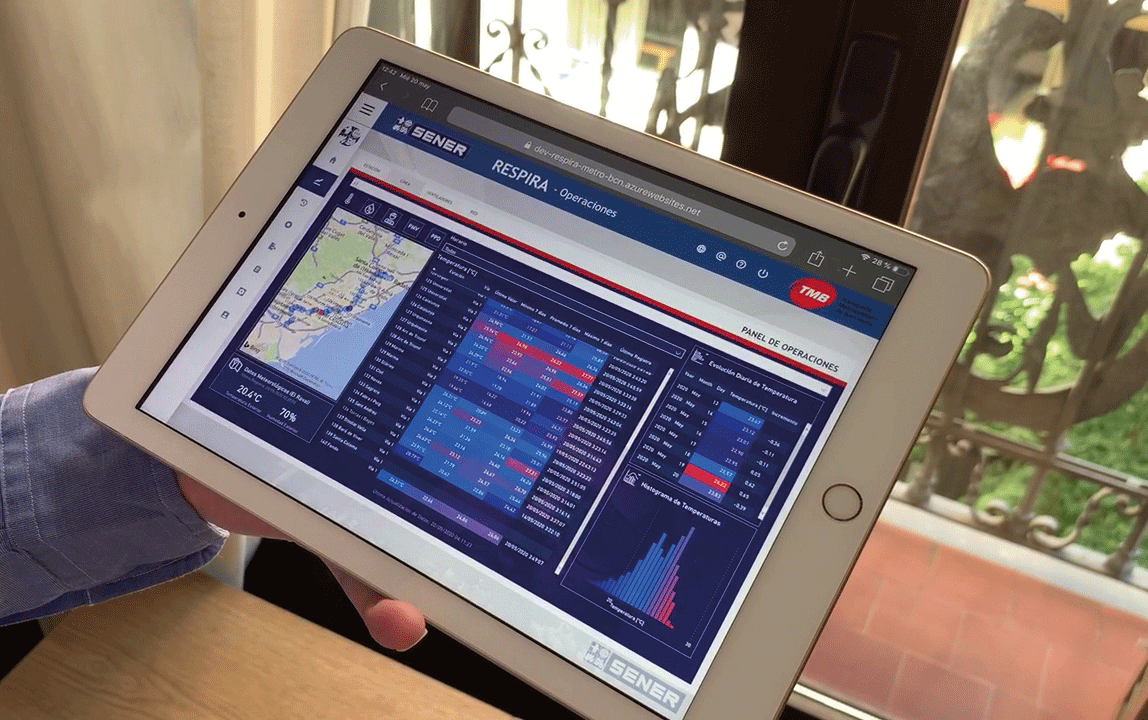
RESPIRA® is an artificial intelligence platform that is capable of improving the air quality inside an enclosed structure by defining several criteria and reading parameters in real time, such as the indoor temperature, humidity and air quality, and the efficiency of electrical consumption. These data are used by a dynamic algorithm to predict the environmental conditions (depending on the weather forecast, the service to be provided and other factors) and then apply a mode of operation to the ventilation units in order to ensure the air quality and lower the heat index, while also minimizing electricity consumption inside the structure.

Sener’s Innovation Director, Òscar Julià, says that «RESPIRA® applies smart ventilation control to maximize the supply of fresh, outside air to enclosed, complex spaces, such as shopping centers, airports, train stations and hospitals, reducing the risk of proliferation of microorganisms. In this regard, this collaboration with the CBMSO (CSIC-UAM) is going a step further in detecting the SARS-CoV2 virus in the air. As a result, we hope to be able to offer the users of these facilities a system to guarantee a safer space with the lowest possible risk of contagion.»

And he added: «At Sener, we view the digital transformation as integrating new technologies into the environment, the ultimate goal being to make them available to society. We are looking for sustainable and environmentally friendly innovations that can improve people’s lives. RESPIRA® is an example of how an Artificial Intelligence solution can help mitigate the impact of this pandemic.»

For Antonio Alcamí, a CSIC researcher involved in the project: «This collaboration is an opportunity to complement the system developed by Sener and the methods for detecting airborne SARS-CoV2 that we have optimized at the CSIC in order to reduce the risk of contagion and improve our health.»

The CBMSO (CSIC-UAM) has developed an air sampling system that can capture microorganisms and viruses, including SARS-CoV2, and it has optimized an advanced PCR method (PCR digital droplet) to quantify the exact number of virus particles present in the air at any given time.

For Ángela Ribeiro, Deputy Vice-President of the CSIC Knowledge Transfer: «The CSIC has once again shown its strong commitment to the effective transfer of the quality work carried out in its centers and institutes. In this case, we looked for the appropriate framework to establish an important public-private partnership that is already starting to yield results.»

PDF

Format: PDF

168,93 KB

Winner at the Architecture, Construction & Design Awards 2020 for our work on the Guadalajara Metro Line 3 and the Toluca-Mexico City train

Winner at the Architecture, Construction & Design Awards 2020 for our work on the Guadalajara Metro Line 3 and the Toluca-Mexico City train

28/10/2020

Sener won first place in the Architecture, Construction & Design Awards 2020 in the «Transportation (Built)» category for its work on the elevated stations of Line 3 of the Guadalajara metro (Mexico). Sener, together with Ten Architects, also received the third-place award in the same category of «Transportation (Built)» for the stations of the Toluca-Mexico City intercity train. Sener was heavily involved in both projects: in the new line 3 of the Guadalajara metro, it led the entire project, from the pre-feasibility study to its detailed design and project management throughout the building phase. In the Toluca-Mexico City intercity train, Sener was responsible for drafting the construction project and is currently working as a technical adviser for the SCT.

Sener has received two prizes in the Transport (Built) category of the Architecture, Construction & Design Awards 2020, organized by Re-Thiking the Future: the first prize for its comprehensive work on the elevated stations of the Guadalajara metro line 3 in Mexico, and the third prize for the stations of the Toluca-Mexico City interurban train line.

After receiving these awards, Sener’s Architecture Manager for both projects, Jorge Tejeda, said: «We are proud to have contributed to the implementation of two of Mexico’s most important projects in recent years: on the one hand, the Guadalajara metro line 3, one of the most modern in the world and the first in Latin America. And on the other, the Toluca-Mexico City intercity train, an example of integrating a railway line into the environment. With these projects, SENER has become the leading engineering company in transportation infrastructure projects in Mexico.»

First prize: Sener’s work on the elevated stations of the Guadalajara metro

Architecture, Construction & Design Awards 2020 recognized Sener for its comprehensive work on the elevated stations. For both these stations and the ones underground, Sener was responsible for the comprehensive design, from their layout, architecture and implementation, to their structure and electromechanical installations.

Sener sought volumetric simplicity in the design of the elevated stations through three structural elements: a main space consisting of a glazed box containing the platforms and trains; a second space in the form of a suspended black box containing the lobby; and two large concrete columns, one at each end of the main space, that house the duts in the transition between the viaduct and the technical premises, reducing the number of visible duts to almost zero. This meticulous architectural design combines structural beauty with operational efficiency.

Specifically, in awarding the prize, the organization noted that «The project consists of 13 elevated stations that meet all the functional requirements of a railway installation; designed with the aim of optimizing its integration into the urban environment, minimizing the impact on the infrastructure of a city with low-rise buildings and generating new public spaces.»

Sener’s work on the elevated stations involved the preliminary and construction phases, in which Sener was also responsible for the design of the underground stations, the structural design of tunnels (using a tunnel boring machine), structural design of the above-ground track, urban integration of the line, track design, electrification of railway installations, controls and communications, mobile equipment, railway operation model, financial model, design of train depots and workshops, and the design of transport hubs.

The Guadalajara Metro Line 3, opened on September 12, connects the municipalities of Zapopan, Guadalajara and Tlaquepaque. It has 18 stations, 5 of which are underground and 13 elevated, with a total route length of 22 km, of which 15 km is above ground, 2 km on the surface and 5 km underground.

Sener contributed significantly to every phase of this project, with nearly 650,000 engineering hours. Sener’s involvement began on August 15, 2012 with the award of the contract for the «pre-investment studies, related to the technical, economic, financial, legal and environmental feasibility analysis, cost-benefit analysis, preliminary design and executive project»; in October 2014, the company received a new contract for the «specialized technical consultancy (Project Management) for the construction project»; finally, in 2019 it signed the contract for the «certification and commissioning».

Third-place prize for Sener for the stations of the Toluca-Mexico City line

Architecture, Construction & Design Awards 2020 presented the third-place award to Sener, together with Ten Architects, in the «Transportation (Built)» category for the stations of the Toluca-Mexico City intercity train. The new network has six ground stations: Zinacantepec, Terminal de Autobuses, Metepec, Lerma, Santa Fe and Observatorio.

The stations were designed with the same structural system of the viaduct, as a continuation of it (columns and supported viaduct), which served to naturally integrate the structure, a feat that was awarded the third-place prize in the «Transportation (Built)» category of the Architecture, Construction & Design Awards 2020.

Sener’s work on the intercity train went beyond the stations: it included the definition of the operational model, the technological solution and the network operation simulations, as well as all the studies required to define the construction of the line: cartography and topography tasks; route studies; viaduct and tunnel calculation; geotechnical, hydrological and drainage studies; architectural and structural plans and the definition of station systems, as well as workshops and depots; environmental mitigation and urban planning studies; and studies of interfaces, RAMS (Reliability, Availability, Maintainability, and Safety) and railway and electromechanical facilities. Furthermore, as technical adviser to the Mexican Ministry of Communications and Transportation SCT, SENER carried out all the adaptations, updates and modifications necessary to the executive plan during the construction phase.

The Mexico-Toluca intercity train line is 57.8 km long, of which almost 50 km is above ground, with different types of solutions, each adapted to the route. This made it possible to cross the Sierra de las Cruces protected area while ensuring the preservation of the environment. Sener planned a 4.7-km bitube tunnel, connected with transversal galleries every 240 meters. This train will serve more than 300,000 passengers each day, although demand growth is expected to reach 500,000 daily users in 2047, who would make the journey in approximately 40 minutes. This is a highly viable alternative to the trip by road, which takes an average of 55 minutes by car and two and a half hours by bus.

Sener has an office in Mexico since 2006, staffed by a multidisciplinary team of nearly 350 Mexican professionals, Sener in Mexico develops engineering and technology projects in the infrastructure field with references such as: the Toluca-Mexico City passenger train, Guadalajara metro line 3, the Maya train, and the Monterrey suburban rail, as well as several projects in intelligent road transport systems throughout the country, for customers such as SCT, BANOBRAS and CAPUFE. Its portfolio of projects in the Energy sector is also outstanding, with the Agua Prieta II combined cycle plant, the La Cangrejera petrochemical plant, and the diesel hydrodesulphurizers at the Tula and Salamanca refineries, for PEMEX, the Empalme I combined cycle plant, and the compression stations in Frontera and Los Ramones for Gasoductos del Noreste.

SENER has provided equipment for the ESA satellite, which will study the green lungs of the world

SENER has provided equipment for the ESA satellite, which will study the green lungs of the world

21/10/2020

Researchers’ estimates leave no illusions: we have already lost more than half of the tropical forests that once covered the Earth. The Biomass satellite of the European Space Agency (ESA) is expected to help us to obtain accurate data on the state of the planet’s deforestation and related climate change. The devices supporting the installation of the satellite were designed, tested and supplied by SENER engineers in Poland.

SENER, commissioned by OHB Italia and as part of the mission of the European Space Agency, has designed, manufactured and tested the Mechanical Ground Support Equipment to support the installation of a satellite that is 12 meters wide and 20 meters long. The MGSE kit includes equipment for mounting and dismounting the satellite panels as well as structures for environmental testing of some of its instruments.

The Biomass mission is part of the “Earth Explorer” scientific program, under which ESA conducts research on Earth from space and seeks answers to questions about changes in the environment and man’s impact on the biosphere. Trees play a very important role in protecting the Earth’s ecosystem, producing oxygen and absorbing carbon dioxide, reducing its emission into the atmosphere. At the same time, data on the magnitude of deforestation is still inaccurate, because forest biomass in most areas of the Earth has never been accurately counted. The European Space Agency wants to change this by launching the Biomass satellite into orbit, which by scanning the planet from space will provide the first accurate maps of forest biomass for temperate, tropical and boreal (northern) regions.

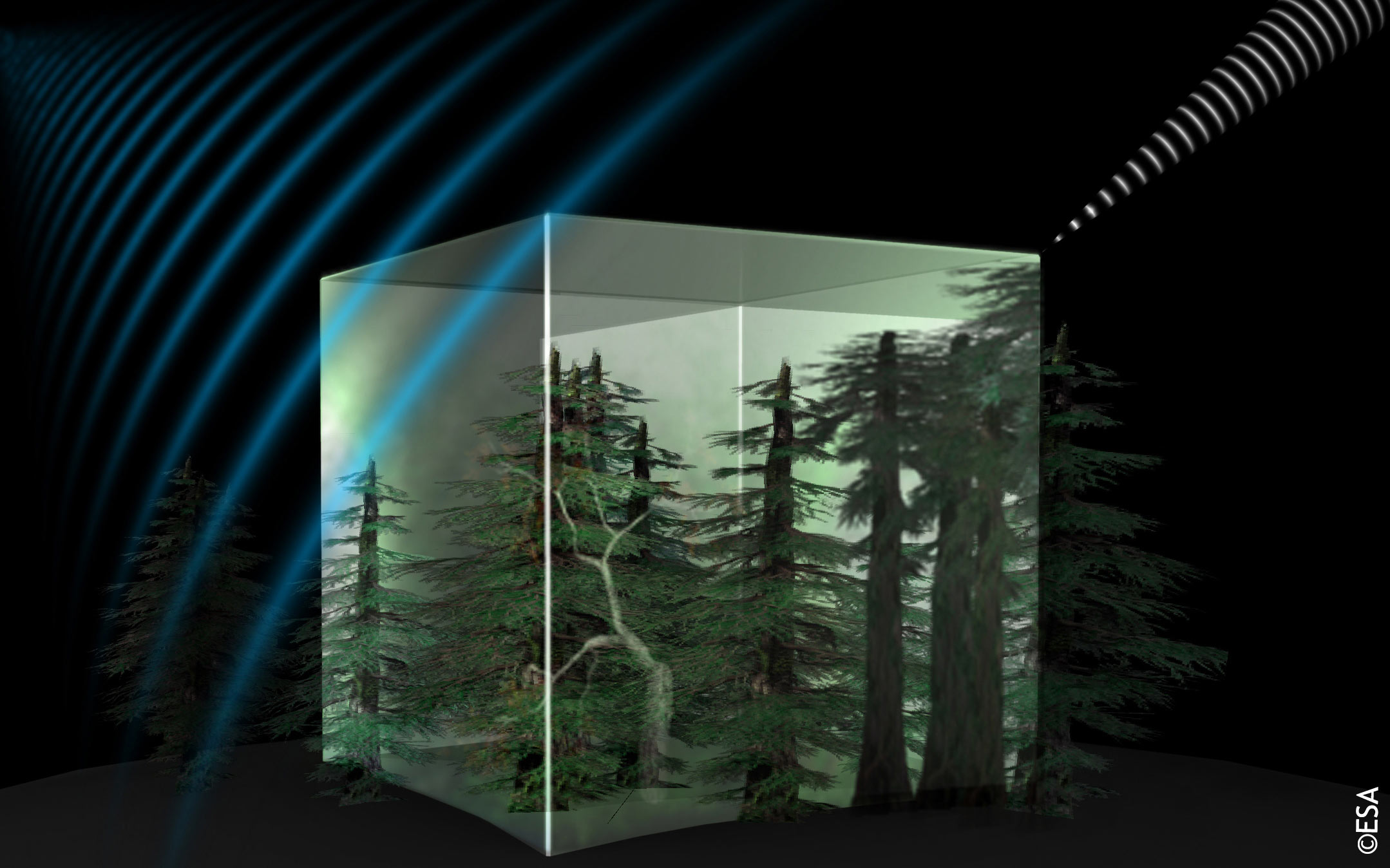
The main research instrument of the ESA satellite is the SAR radar with a powerful 12 meter diameter antenna, the waves of which will penetrate the branches of trees and scan trunks and branches. On this basis, a current three-dimensional map of the Earth’s forests will be created every six months. And that is not all. When the satellite will be ready in orbit, the possibilities of using its observation functions will be mainly limited by the imagination. The list of applications for SAR radar, in addition to “weighing” trees on the planet, may include, for example, monitoring glaciers and changes in the ice cap or scanning the land for archaeological buildings under the surface of the deserts.

Janusz Grzybowski, Project Manager for the Biomass mission at SENER in Poland says: “Missions such as Biomass not only bring us closer to understanding the most important phenomena taking place on our planet but can also help us to protect it in an invaluable way.” The launch of the Biomass mission is planned for 2022. The satellite will be launched into low Earth orbit on board the Vega rocket. The mission is planned for five years, during which time SAR radar data will be delivered to the ground station in Kiruna, Sweden. The budget of the whole mission is 420 million euros.

PDF

Press Release

Format: PDF

119,67 KB

The Barcelona metro implements smart ventilation control to prevent infection

The Barcelona metro implements smart ventilation control to prevent infection

30/06/2020

SENER in Poland, a company of SENER Aeroespacial, is developing a project for containers for transporting and storing the payload of a satellite for the European Space Agency’s Fluorescence Explorer (FLEX) «green» mission, which will monitor the condition of plants from space. The contract with Leonardo results from the company’s investment in Research and Development of containers for space missions.

SENER in Poland will design and develop a container to transport the FLORIS scientific instrument, a key component of the mission, which will be used to map the fluorescence of the Earth’s vegetation in order to quantify photosynthetic activity. SENER Aeroespacial is also in charge of FLORIS’ optical bench or IOMS (Instrument Optical Module Structure) that includes the Optical Bench Assembly (OBA), which houses and supports the optical instruments, and the thermal hardware (THW), responsible for keeping the module at a controlled temperature.

Although the container will first be designed and constructed for the FLEX mission, the experience gained from this program will allow the production of these complex and precise devices for other missions as well. This is an important goal in terms of product standardisation in the space industry, i.e. using the same components for different space vehicles. The success of the project will enable further development of the space sector on the Vistula, based on more mass production than so far: contrary to popular belief, containers for transporting such precise and at the same time delicate devices as satellite payloads are extremely complex devices. Among the ground support equipment for assembling satellite instruments – collectively referred to as MGSE (Mechanical Ground Support Equipment) products – it is the transport containers that are most crucial, completely isolating the satellites from the influence of external factors. This does not only mean weather factors, but also shocks and vibrations occurring during loading and transport, e.g. by air,» says Pawel Pako, Project Manager at SENER in Poland, who has already managed R&D projects for space exploration systems developed within the framework of the ESA and cooperated, among others, with the Space Research Centre of the Polish Academy of Sciences and the Max Planck Institute for Solar System Research in Göttingen.

SENER will design two containers: an outer container that is watertight and provides ISO 8 clean room level, and an inner container: watertight and gas-tight, it will provide ISO 5 clean room level. The container will be able to carry a payload of up to 200 kg, but the design is easily scalable to other values.

In response to the needs of space agencies and satellite manufacturers, the container has to undergo numerous endurance tests to ensure it can withstand the rigors of transport. It is also important to ensure that the instruments in transit have adequate ventilation, temperature and humidity. In the case of Flex missions, all these factors must also comply with the stringent requirements of the European Space Agency (ESA).

In the process of developing the container for the FLEX mission, the SENER in Poland team will have to develop new competences, which will involve looking for new business partners on the Polish market.

The current project for the FLEX mission is due to be completed in September this year. The experience gained in developing the container will complement SENER in Poland’s extensive portfolio in the MGSE field, which includes missions such as Euclid, JUICE and PLATO in the field, and will be used in the construction of similar equipment for future missions.

The European Space Agency’s FLEX mission, for which a satellite transport container will be built in Poland, has the task of mapping the fluorescence of the Earth’s vegetation in order to quantify photosynthetic activity with the Floris instrument. The main contractor for the program is Thales Alenia Space, with other leading European space companies involved in the project: Leonardo, OHB Systems AG and RUAG. The FLEX satellite, which is due to be launched in 2024, will carry out its mission for three and a half years working in tandem with the Sentinel-3 satellite, which is part of ESA’s Copernicus Earth observation program.

PDF

Press Release

Format: PDF

119,67 KB

The Barcelona metro network will feature intelligently controlled ventilation thanks to RESPIRA, the new AI platform developed by Sener

The Barcelona metro network will feature intelligently controlled ventilation thanks to RESPIRA, the new AI platform developed by Sener

02/04/2020

This year 2020, the Barcelona metro will have a new Artificial Intelligence (AI)-based ventilation system, developed by the Sener engineering and technology group, that will improve the comfort of the network’s passengers and workers alike while at the same time lowering energy costs. The goal of this initiative is to improve the efficiency of all the ventilation assets of the metro network, for which more than 400 million trips are made every year.

Sener and Ferrocarril Metropolità de Barcelona (FMB) have signed a collaboration agreement to launch a new initiative called RESPIRA®, whose main objective is to improve passenger comfort inside Barcelona’s metro stations through the efficient and optimised use of ventilation systems.

RESPIRA® is an artificial intelligence system that will make it possible to set up an ideal ventilation strategy for each of the metro lines, in terms of improving comfort and energy efficiency. The new system, developed by Sener, takes into account the temperature perceived by passengers and workers by using a comfort index, as well as various criteria and variables, such as temperature, humidity, air quality inside the stations and the electrical consumption of the ventilation. With these data, it implements a dynamic algorithm for predicting environmental conditions inside the stations. Additionally, the system can also be used to make long-term forecasts, thus allowing FMB to prioritize future investments and maintenance work.

Sener’s Director of Innovation, Òscar Julià, states that «RESPIRA® will be used to monitor and process over 500 million datapoints a year. Thanks to its self-learning process, the system will be able to adapt and act in advance.» By maximising the performance of the current shafts and fans with the help of artificial intelligence, the system will reduce the average temperature of the tunnel, improve air quality and thermal comfort for the more than 400 million journeys made by the Barcelona metro every year.

In the initial phase, the system will be installed in Line 1 in May of this year, where it will be used to control all the fans. In the remaining lines of the conventional network (lines 2, 3, 4, 5), the system will be phased in throughout 2020.

Main advantages of RESPIRA®

On the one hand, RESPIRA® will be used to monitor the environmental conditions inside the stations (temperature, humidity, heat index and air quality, among others) in real time, which will be useful in identifying problem spots within the metro network.

And, on the other, it will be used to monitor the operation of the fans and their effect on indoor temperatures, which will be of significant help to the maintenance activities required for the installation and to the efficient management of future investments.

This initiative is consistent with the following Sustainable Development Goals (SDGs) approved by the UN:

  • Enhance the health and well-being of metro users by improving the thermal comfort and air quality.
  • Help use energy more efficiently by saving up to 30%, and contribute to reducing the carbon footprint by more than 700 tons of CO2 a year.
  • Develop an advanced technology system with a distinctly innovative nature.
  • Offer an environmentally friendly product that promotes sustainable development by minimizing equipment operating hours, reducing wear and tear, the maintenance and/or replacement period of the equipment, all while helping manage future investments in the ventilation system.

The RESPIRA® project is one of the digitalisation initiatives of Sener, a technology group with more than 60 years of history, which has been a leader in innovation in many sectors of activity. For Sener, the digital transformation does not consist of using new technologies, but of integrating them into the business from its conception, and in line with the company’s founding vocation: to put technology at the service of society, providing innovations capable of improving people’s lives and that are sustainable and environmentally friendly.

04

Format: 04

153,12 KB

SENER Poland successfully completed the functional tests of a mechanism

SENER Poland successfully completed the functional tests of a mechanism

01/04/2020

SENER in Poland, a company of SENER Aeroespacial, is developing a project for containers for transporting and storing the payload of a satellite for the European Space Agency’s Fluorescence Explorer (FLEX) «green» mission, which will monitor the condition of plants from space. The contract with Leonardo results from the company’s investment in Research and Development of containers for space missions.

SENER in Poland will design and develop a container to transport the FLORIS scientific instrument, a key component of the mission, which will be used to map the fluorescence of the Earth’s vegetation in order to quantify photosynthetic activity. SENER Aeroespacial is also in charge of FLORIS’ optical bench or IOMS (Instrument Optical Module Structure) that includes the Optical Bench Assembly (OBA), which houses and supports the optical instruments, and the thermal hardware (THW), responsible for keeping the module at a controlled temperature.

Although the container will first be designed and constructed for the FLEX mission, the experience gained from this program will allow the production of these complex and precise devices for other missions as well. This is an important goal in terms of product standardisation in the space industry, i.e. using the same components for different space vehicles. The success of the project will enable further development of the space sector on the Vistula, based on more mass production than so far: contrary to popular belief, containers for transporting such precise and at the same time delicate devices as satellite payloads are extremely complex devices. Among the ground support equipment for assembling satellite instruments – collectively referred to as MGSE (Mechanical Ground Support Equipment) products – it is the transport containers that are most crucial, completely isolating the satellites from the influence of external factors. This does not only mean weather factors, but also shocks and vibrations occurring during loading and transport, e.g. by air,» says Pawel Pako, Project Manager at SENER in Poland, who has already managed R&D projects for space exploration systems developed within the framework of the ESA and cooperated, among others, with the Space Research Centre of the Polish Academy of Sciences and the Max Planck Institute for Solar System Research in Göttingen.

SENER will design two containers: an outer container that is watertight and provides ISO 8 clean room level, and an inner container: watertight and gas-tight, it will provide ISO 5 clean room level. The container will be able to carry a payload of up to 200 kg, but the design is easily scalable to other values.

In response to the needs of space agencies and satellite manufacturers, the container has to undergo numerous endurance tests to ensure it can withstand the rigors of transport. It is also important to ensure that the instruments in transit have adequate ventilation, temperature and humidity. In the case of Flex missions, all these factors must also comply with the stringent requirements of the European Space Agency (ESA).

In the process of developing the container for the FLEX mission, the SENER in Poland team will have to develop new competences, which will involve looking for new business partners on the Polish market.

The current project for the FLEX mission is due to be completed in September this year. The experience gained in developing the container will complement SENER in Poland’s extensive portfolio in the MGSE field, which includes missions such as Euclid, JUICE and PLATO in the field, and will be used in the construction of similar equipment for future missions.

The European Space Agency’s FLEX mission, for which a satellite transport container will be built in Poland, has the task of mapping the fluorescence of the Earth’s vegetation in order to quantify photosynthetic activity with the Floris instrument. The main contractor for the program is Thales Alenia Space, with other leading European space companies involved in the project: Leonardo, OHB Systems AG and RUAG. The FLEX satellite, which is due to be launched in 2024, will carry out its mission for three and a half years working in tandem with the Sentinel-3 satellite, which is part of ESA’s Copernicus Earth observation program.
PDF

Press Release

Format: PDF

119,67 KB