




Sener is one of four Spanish companies selected by the European Commission to develop hydrogen generation technology

Sener is one of four Spanish companies selected by the European Commission to develop hydrogen generation technology

20/07/2022

Sener is one of four Spanish companies selected to develop “important projects of common European interest” in the hydrogen sector.

The European Commission has announced the approval, in accordance with EU State aid rules, of an important project of common European interest (IPCEI) to support research and innovation, as well as the industrial deployment, in the hydrogen technology value chain. The project, called “IPCEI Hy2Tech“, is backed by industry in fifteen Member States: Germany, Austria, Belgium, Denmark, Czech Republic, Estonia, Finland, France, Greece, Italy, Netherlands, Poland, Portugal, Slovakia and Spain.

By virtue of this IPCEI Hy2Tech project, the Member States have committed to contributing up to 5.4 billion euros in public funding, which is expected to unlock an additional 8.8 billion euros in private investment. With this funding, 35 companies have been selected to develop 41 projects related to the entire hydrogen technology value chain, including the generation of hydrogen, fuel cells, storage, transportation and distribution of hydrogen, and end-user applications, in particular in the mobility sector.

Sener has been selected for its project for the technological development of next-generation and alkaline technology electrolyzers. The IPCEI Hy2Tech program will finance the R&D and industrial deployment activities. Sener expects this project to create at least 300 direct jobs, as well as a further 500 indirect jobs as it develops the supply chain with local companies.

In the words of the Director of Hydrogen Development and Investment at Sener Renewable Investments, Telmo Chávarri: “We are proud to be one of four Spanish companies, and 35 European companies, selected by the European Commission in IPCEI Hy2Tech, as it confirms that we are continuing to move in the right direction in the development of hydrogen technology. Our commitment to innovation and sustainability is solid in all our projects. Thanks to this financial boost, we hope to cement our position as technological leaders in the new and promising field of hydrogen technology.”

As part of the process of selecting industrial proposals, the Committee wanted to ensure that the projects financed will develop technologies and processes that go beyond what the market currently offers and will allow major improvements in performance, safety, environmental impact as well as in cost efficiencies. Similarly, the participating companies undertake to share the results of the project with the scientific community and with European industry as a whole, beyond the companies and countries that are part of the IPCEI.

In the words of the European Commission, IPCEI Hy2Tech “contributes to a common objective by supporting a key strategic value chain for the future of Europe, as well as the objectives of key EU policy initiatives such as the Green Deal, the EU Hydrogen Strategy and REPowerEU.”
Sener expands in Australian market with deal to acquire infrastructure consultancy Tactix

Sener expands in Australian market with deal to acquire infrastructure consultancy Tactix

18/07/2022

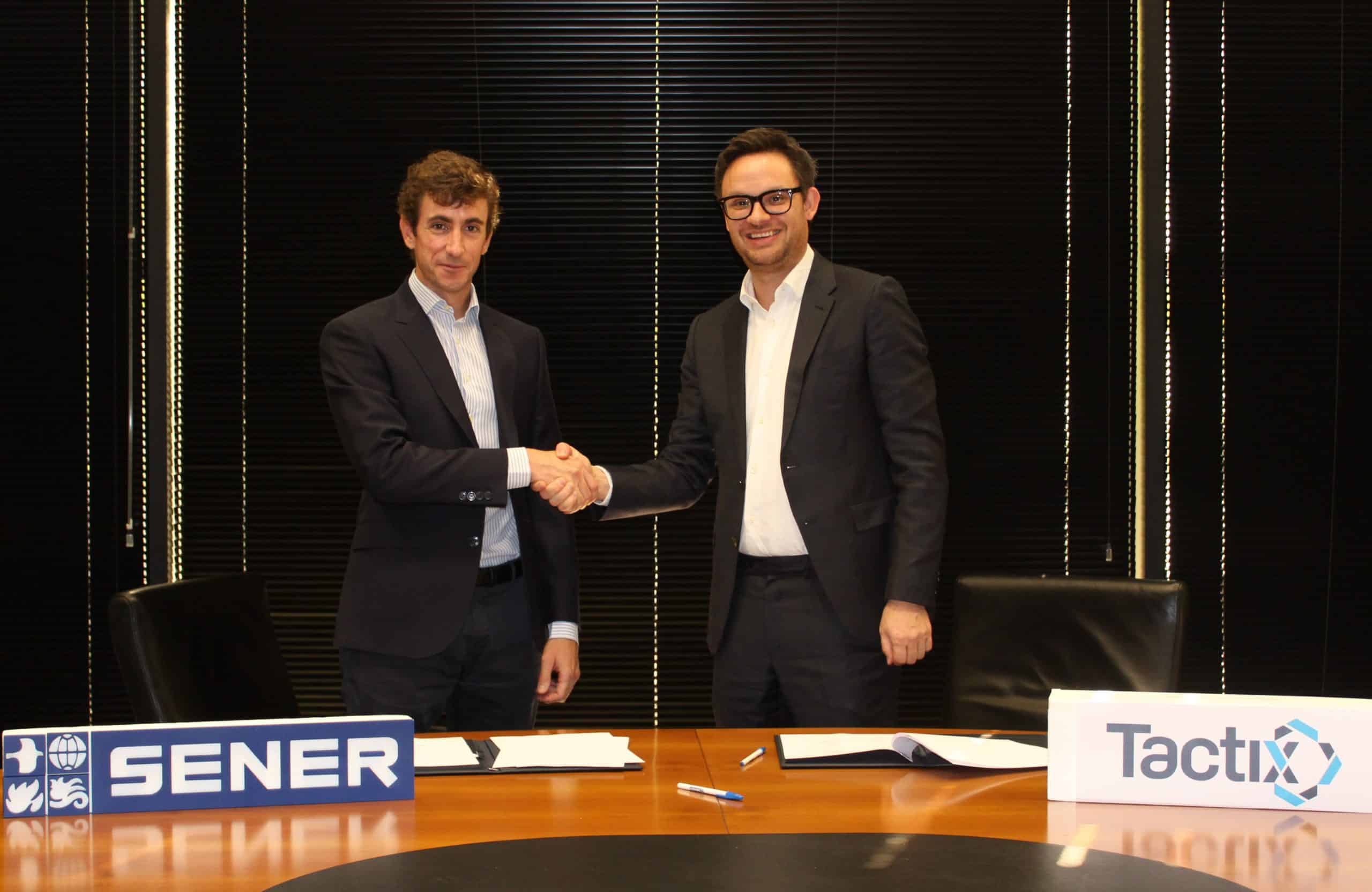
Sener has signed an agreement to acquire Australian consultancy Tactix Group with the aim of becoming a key player in Australian transport sector.

Sener, has signed a deal with Australian consultancy Tactix Group with the aim of becoming a major provider of mass transit, rail and roads project solutions across Australia. Sener has signed an agreement to acquire 60 per cent of Tactix, with the other 40 per cent to remain with current Australian shareholders. The acquisition means SENER will consolidate its presence in Australia, where it has operated an office since 2016, working on major railway projects such as Melbourne Metro, Cross River Railway in Brisbane and roads projects such as West Gate Tunnel in Melbourne. The agreement is subject to customary approvals, including by the Australian Government. If approved, it is expected the new company will be operational within several weeks.

Tactix has operated from its head office in Sydney since 2012 as a consultancy for the transport and infrastructure sectors, in project execution and resource management. It has grown to a team of 150 consultants offering primarily the delivery of road and rail engineering systems, design, project management and assurance to major transport and infrastructure projects across Australia.

Sener Group, with head office in Bilbao, is an international leader in urban transport, rail and roads. It has 2,700 staff working in aerospace, infrastructure, energy and marine sectors across five continents. It is currently working on major projects in Brazil, Canada, Colombia, Chile, the United Arab Emirates, Spain, the United States, Mexico and the United Kingdom.

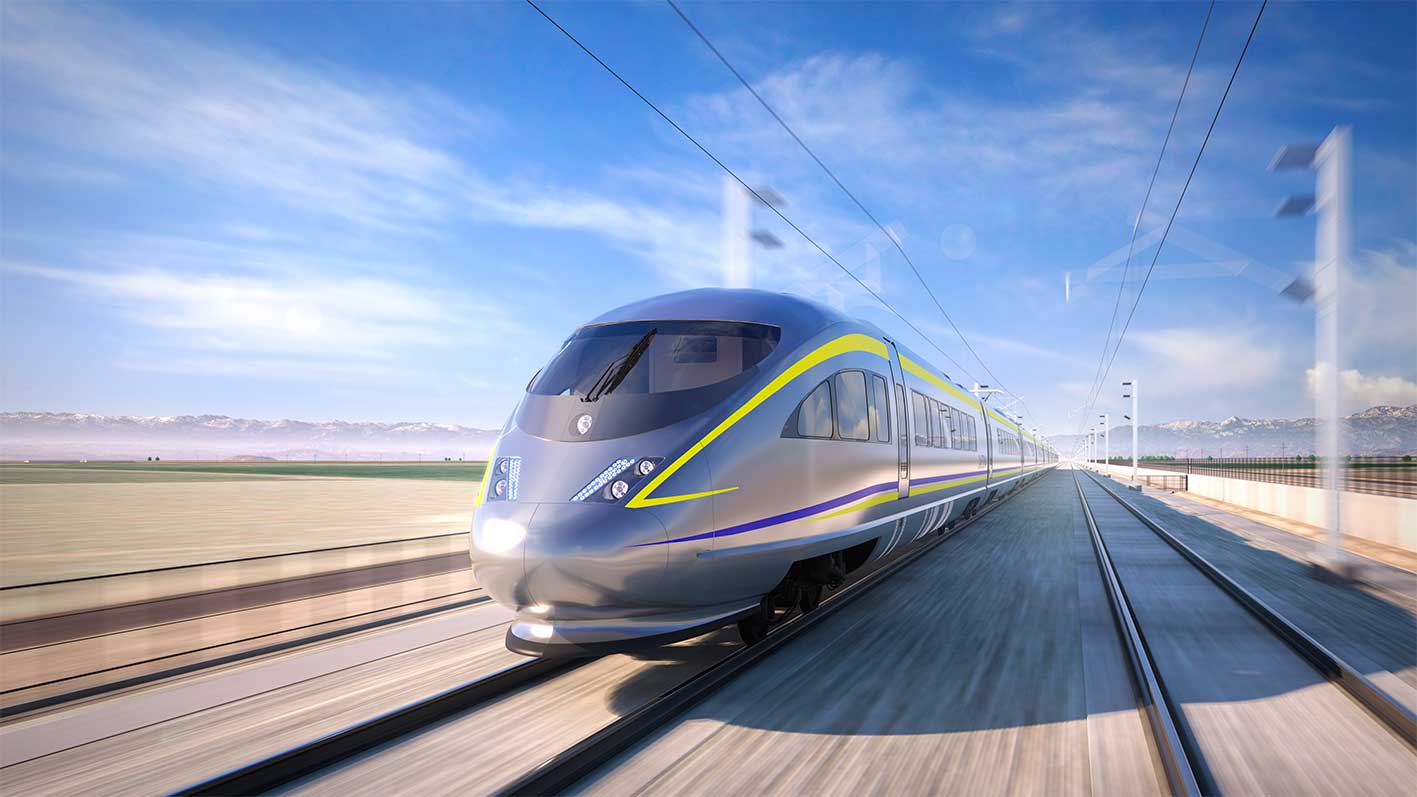
Some of its most notable projects include the California high-speed line, the HS2 high-speed line in the United Kingdom, the Toluca-Mexico City intercity train, the Doha metro and the Guadalajara metro. In total, it has worked on more than 15,000 km of railway studies and projects, 5,000 km in high-speed rail, making it one of the world’s leading companies in this sector.

The newly merged company will operate under the name Tactix, but with the benefit of SENER’s global resources and infrastructure. The new company will offer services from systems assurance and integration services to design activities across more than 15 disciplines, from design phase to construction supervision, procurement, testing and commissioning, operations and maintenance. Tactix’s management team will maintain the same roles and shareholding structure.

Jorge Sengadorta Cudós, CEO of Sener Group, said, “We have reached an agreement with Tactix’ shareholders to incorporate this innovative company in Sener’s Mobility business. Tactix has acquired a great position in the Australian infrastructure market and has proved some great capacities during the last decade. Together, we can jointly bring value to our clients and take on ambitious projects in the Australian infrastructures sector.”

Ben Neary, CEO of Tactix, adds: “Tactix’s entry into the Sener group will enable us to accelerate our growth strategy, as we can now offer a wider range of services and target larger projects together with Sener. With this reinforcement of capabilities, we aim to become, in the medium term, the leading company in the transport infrastructure sector in Australia.”

SENER is awarded by Gate terminal the EPCM contract for the expansion of the gas send-out capacity

SENER is awarded by Gate terminal the EPCM contract for the expansion of the gas send-out capacity

22/06/2022

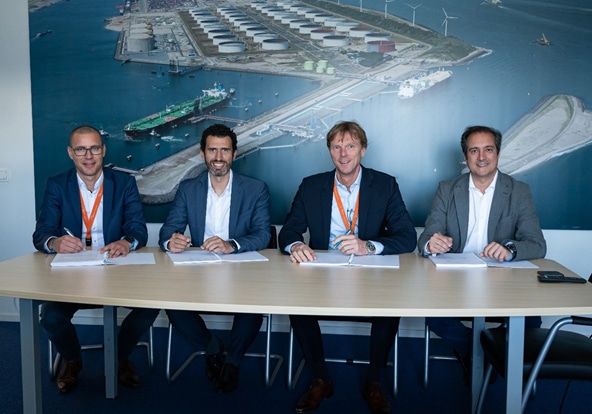
SENER has been once again contracted by Gate terminal BV. In this new contract SENER, one of the companies responsible for its turnkey construction of Gate terminal in 2011, will participate in the Extra Send-Out (ESO) project, which consists of increasing the plant’s natural gas send-out capacity with an additional 1.5 BCMA (billions of cubic meters per year), bringing the total nameplate capacity from 12 BCMA to 13.5 BCMA.

For this purpose, SENER will carry out the engineering services, as well as the procurement and construction management (EPCM) of the send-out capacity expansion works, which consist of the installation of a vaporizer and a high-pressure liquefied natural gas (LNG) pump together with all its associated facilities, such as equipment foundations, interconnection of piping and racks, power supply and process control. In addition, a new seawater pump will also be supplied. As part of the EPCM services, SENER will develop the required detailed engineering, together with the procurement management of all supplies, on behalf of Gate terminal, and will be in charge of the construction supervision.

This new contract is in addition to the previous one, signed in 2020, to carry out engineering services, as well as procurement and construction management (EPCM) of the Turn Around, successfully completed in 2021.

In the words of SENER’s Director of Engineering Services, Arturo Olivé, “Gate terminal is a key LNG hub located in Rotterdam, in which SENER has been closely involved since its inception, as it was part of the construction consortium and, since its commissioning, has continued to be a supplier of successive improvements services to the plant. This new project, for which the client Gate terminal B.V. once again relies on SENER, will increase the import capacity of natural gas via LNG to northwest Europe and, therefore, advance on the path to energy independence.”

About Gate terminal B.V.

Gate terminal, a Joint Venture between N.V. Nederlandse Gasunie (Gasunie) and Koninklijke Vopak N.V. (Vopak), is Europe’s LNG hub – a professional access gateway for LNG that is supplied from across the world. The import terminal on Maasvlakte in Rotterdam contributes to the natural gas supply in the Netherlands and Northwest Europe. Gate terminal receives LNG for its customers, stores it, regasifies it and then supplies it to the gas transport network for distribution to households and industry.


ProcuRE selects SENER within the Clarity consortium to achieve 100% sustainable buildings

ProcuRE selects SENER within the Clarity consortium to achieve 100% sustainable buildings

21/06/2022

The Clarity consortium, led by SENER, together with EURECAT and AGGITY, was one of the three chosen in the first phase of ProcuRE, an initiative funded by the European Union within the Horizon 2020 program. Clarity aims to integrate Artificial Intelligence solutions capable of converting buildings into sustainable infrastructure in a single platform.

SENER leads the Clarity consortium, one of the three winners of the first phase of the ProcuRE initiative. Comprising SENER, EURECAT and AGGITY, Clarity offers a single platform with artificial intelligence and digitalization solutions that can adapt a building or infrastructure to be sustainable, i.e. reduce CO2 emissions to a minimum, by achieving optimum efficiency and maximum self-consumption. Thanks to this solution, the European initiative ProcuRE – supported by public institutions from six cities – has selected Clarity as one of the three winning consortiums in the first phase of its proposal.

What is ProcuRE?

Within the framework of the European Union’s climate and energy policies, a group of cities and municipalities in Europe has launched the ProcuRE initiative, with the challenge of obtaining 100% renewable energy supplies (RES) in the existing public building stock through sustainability and innovation solutions.

The developer consortium includes entities such as the Savinjska, Šaleška and Koroška Regional Energy Agency (KSSENA), Slovenia, the Barcelona Metropolitan Area, in Spain; the institutions Stadt Nürnberg and Empirica in Germany; Energaia, the Energy Agency for the South of the Porto Metropolitan Area, Portugal; the Municipality of Eilat, in Israel; the Istanbul Metropolitan Municipality and Ozyegin University, Turkey; or Eurac Research in Italy. Between them, they manage more than 21,000 buildings.

ProcuRE is based on the following data: buildings are responsible for 40% of total energy consumption and 36% of CO2 emissions in the EU. Around 35% of buildings in the EU are over 50 years old and almost 75% of the building stock is energy inefficient. For 2050, it is expected that 90% of the existing building stock will remain in service. So refurbishment must be ramped up in Europe to achieve the EU’s climate goals, ensuring that existing buildings reach an optimum efficiency level and maximize self-consumption.

In this way, the ProcuRE developers have launched a tender, open to European suppliers, to design, develop and test innovative proposals, which allow a 100% renewable building to be created without the need to adopt invasive building measures. The initiative proposes carrying out pilot tests on buildings specific to the group of developers, to approve the proposed solution.

The ProcuRE initiative has received funding from the European Union’s Horizon 2020 research and innovation program under grant agreement no. 963648.

SENER’s solution, within the Clarity consortium

Within the Clarity consortium (also including EURECAT and AGGITY), SENER has presented a single platform, based on artificial intelligence software (AI), capable of calculating and designing the optimal scenario to achieve a 100% renewable solution. The optimum installation calculation results in a mix of renewable technologies that should be installed in the building, combining variables such as the economic, regulatory, technical and environmental impact, as well as the impact of operational management, and thus determining the optimum size according to the building’s conditions.

The processes included in the platform are developed through five modules, which are building evaluation, the calculation of renewable installations based on artificial intelligence, preparation of a feasibility report, the design and construction of an as-built BIM model, which allows integration of all information related to the building into a single database, and improvements to building operation and maintenance using digital tools.

Some components or modules proposed by the Clarity consortium in its single platform are R&D products or solutions developed in different innovation projects of the three companies, which have been tested in real-world scenarios with great results. These include: systems to analyze the renewable generation potential of a building, such as the system to help decide on renewable energy sources (RES), the energy asset sizing tool (EAS) or the SENER Energy Management System (EMS), which allows predictive and automatic control of all the energy assets of an installation; operation and maintenance systems such as the RESPIRA® intelligent ventilation system, the SIGMA platform for digital asset management or the methodology registered in BIM blockchain.


EnBW awards contract for hydrogen-ready combined cycle gas turbine plant to international consortium

EnBW awards contract for hydrogen-ready combined cycle gas turbine plant to international consortium

02/06/2022

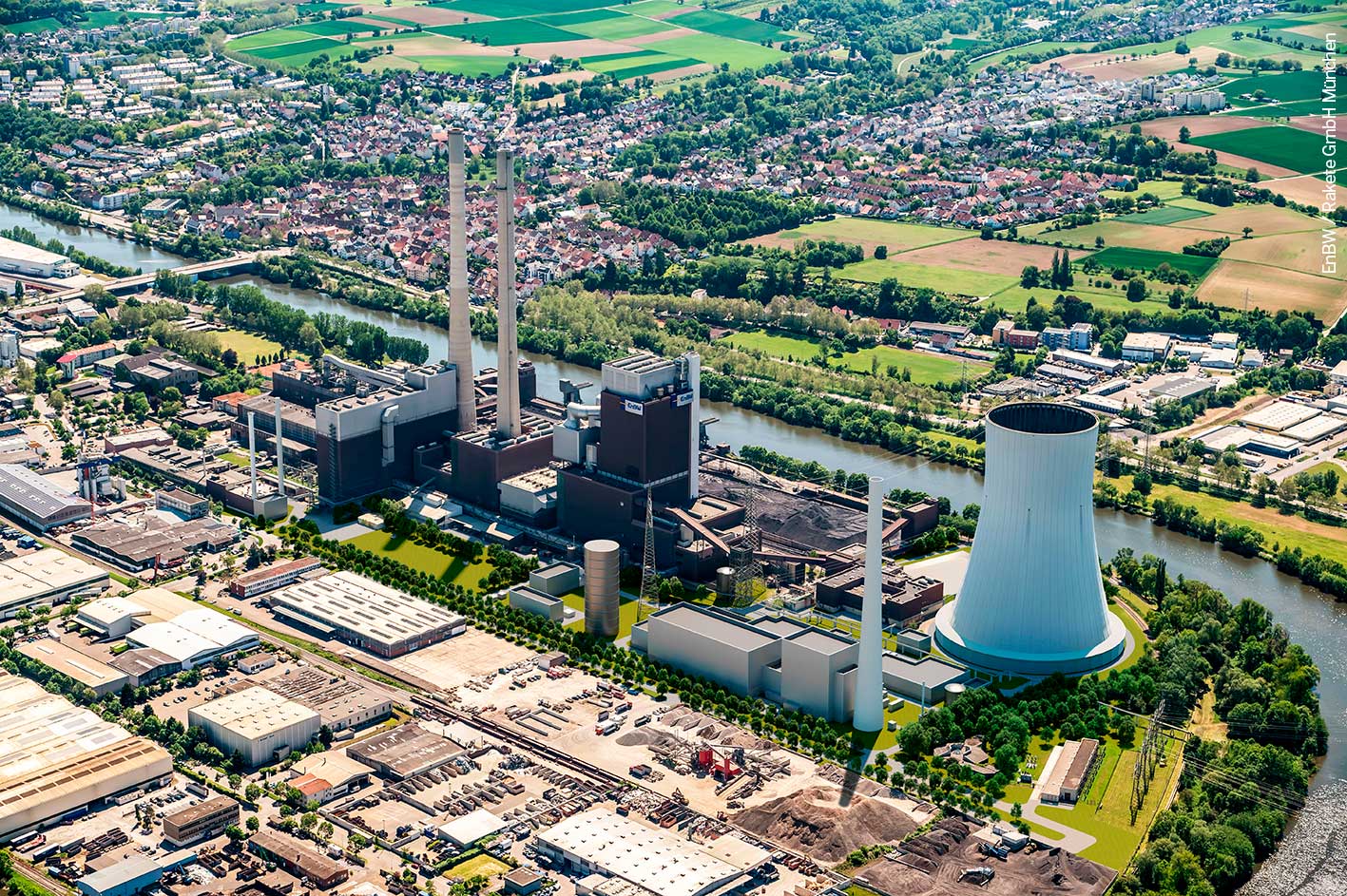
Pursuing its aim of becoming climate-neutral by 2035, EnBW has launched three major fuel switch projects in the past year to convert existing coal power plant sites in Altbach/Deizisau, Stuttgart-Münster and Heilbronn into natural gas and, from the 2030s, green hydrogen plants. This week, EnBW and a consortium consisting of General Electric, SENER and Bonatti signed contracts for the Heilbronn and Altbach/Deizisau sites. The major order, with a volume in the mid-three-digit million range per site, includes the construction of one combined heat and power plant each as well as the respective maintenance and servicing work.

Pursuing its aim of becoming climate-neutral by 2035, EnBW has launched three major fuel switch projects in the past year to convert existing coal power plant sites in Altbach/Deizisau, Stuttgart-Münster and Heilbronn into natural gas and, from the 2030s, green hydrogen plants.

This week, EnBW and a consortium consisting of General Electric, SENER and Bonatti signed contracts for the Heilbronn and Altbach/Deizisau sites.

The major order, with a volume in the mid-three-digit million range per site, includes the construction of one combined heat and power plant each as well as the respective maintenance and servicing work.

The contracts are being awarded in phases and in parallel with the planning approval process at the sites. The cooperation between the consortium and EnBW required the turbines to be H2-ready, i.e., already capable of generating electricity with hydrogen.

Until the necessary infrastructure is in place, the only option available within the energy transition is natural gas to fill the gap in controllable power available at the push of a button at any time of the day or night.

Signing of the contract for the combined cycles in Heilbronn and Altbach_Deizisau, Germany.From left to right: Donato Santomauro (Bonatti, Director Plants and Pipelines Business Unit), Andreas Mühlig (EnBW, Head of Generation Operation), Michael Class (EnBW, Head of Generation Portfolio Development), Brice Raisin (General Electric, Senior Executive Sales), Jorge Nicolas Barbagero (SENER, Operation Director). Photo credits: Source: EnBW/Photographer: Paul Gärtner.

“The current events in Ukraine clearly show the challenges associated with the European energy transition. Modern gas power plants play an indispensable role in maintaining sufficiently flexible power generation and thus guaranteeing security of supply. They must support the expansion of renewable energies”, explains Michael Class, Head of Generation Portfolio Development. “In the planning of the power plants, we already foresee the conversion to hydrogen today. This conversion to 100% hydrogen is already predefined through the plant technology.»

“While Germany is undertaking exemplary measures to increase energy security and independence through driving decarbonisation, GE is proud to lead a consortium with SENER & Bonatti and together with EnBW address the opportunities and challenges of the energy transition. We are committed to supporting these efforts with GE’s industry-leading H-Class gas turbines technology, a key enabler to increase the share of renewables, and to accelerate coal phase-out as we work towards zero-carbon gas-based power generation with hydrogen,” says Joe Anis, President & CEO, Europe, Middle East & Africa, GE Gas Power.

For their part, SENER and Bonatti state: “We are happy to join EnBW and contribute with our experience and know-how to the engineering and construction of these two large scale modern power plants that will eventually become green hydrogen units”. And they add: “This is also our way to boost the European and German energy transitions in line with the demanding present and, most importantly, future needs. This project further consolidates the profitable collaboration between SENER and Bonatti started about 10 years ago”.

A total of around 1,300 megawatts of electricity generation capacity is set to be produced at the two power plant sites. In addition, gas power plants contribute to efficient heat recovery as a by-product of electricity generation.

Fuel switch in Heilbronn

There are plans at the Heilbronn site to construct a combined cycle gas turbine (CCGT) power plant with an electrical output of approx. 680 MW and thermal output of up to 190 MW for heat extraction. The new plant will thus also secure the district heating supply in Heilbronn in the long term. Coal unit 7 and reserve units 5 and 6 at the power plant could be shut down following the commissioning of the CCGT plant. The land-use planning process is currently under way at the Heilbronn site. The expectation is that the land-use plan will be presented to the public at the end of 2022. The approval process in line with the Federal Immission Control Act will then take place.

Fuel switch in Altbach/Deizisau

There are plans at the Altbach/Deizisau site to construct a combined cycle gas turbine (CCGT) power plant with an electrical output of approx. 680 MW and thermal output of up to 180 MW for heat extraction. Two hard coal units at the power plant could be shut down following the planned commissioning of the CCGT plant in 2026. The submission of the approval application to the regional authority in Stuttgart in line with the Federal Immission Control Act is planned for the summer of 2022.

SENER joins the US High Speed Rail Coalition to help advance High Speed Rail in America

SENER joins the US High Speed Rail Coalition to help advance High Speed Rail in America

01/06/2022

Pursuing its aim of becoming climate-neutral by 2035, EnBW has launched three major fuel switch projects in the past year to convert existing coal power plant sites in Altbach/Deizisau, Stuttgart-Münster and Heilbronn into natural gas and, from the 2030s, green hydrogen plants. This week, EnBW and a consortium consisting of General Electric, SENER and Bonatti signed contracts for the Heilbronn and Altbach/Deizisau sites. The major order, with a volume in the mid-three-digit million range per site, includes the construction of one combined heat and power plant each as well as the respective maintenance and servicing work.

Pursuing its aim of becoming climate-neutral by 2035, EnBW has launched three major fuel switch projects in the past year to convert existing coal power plant sites in Altbach/Deizisau, Stuttgart-Münster and Heilbronn into natural gas and, from the 2030s, green hydrogen plants.

This week, EnBW and a consortium consisting of General Electric, SENER and Bonatti signed contracts for the Heilbronn and Altbach/Deizisau sites.

The major order, with a volume in the mid-three-digit million range per site, includes the construction of one combined heat and power plant each as well as the respective maintenance and servicing work.

The contracts are being awarded in phases and in parallel with the planning approval process at the sites. The cooperation between the consortium and EnBW required the turbines to be H2-ready, i.e., already capable of generating electricity with hydrogen.

Until the necessary infrastructure is in place, the only option available within the energy transition is natural gas to fill the gap in controllable power available at the push of a button at any time of the day or night.

Signing of the contract for the combined cycles in Heilbronn and Altbach_Deizisau, Germany.From left to right: Donato Santomauro (Bonatti, Director Plants and Pipelines Business Unit), Andreas Mühlig (EnBW, Head of Generation Operation), Michael Class (EnBW, Head of Generation Portfolio Development), Brice Raisin (General Electric, Senior Executive Sales), Jorge Nicolas Barbagero (SENER, Operation Director). Photo credits: Source: EnBW/Photographer: Paul Gärtner.

“The current events in Ukraine clearly show the challenges associated with the European energy transition. Modern gas power plants play an indispensable role in maintaining sufficiently flexible power generation and thus guaranteeing security of supply. They must support the expansion of renewable energies”, explains Michael Class, Head of Generation Portfolio Development. “In the planning of the power plants, we already foresee the conversion to hydrogen today. This conversion to 100% hydrogen is already predefined through the plant technology.»

“While Germany is undertaking exemplary measures to increase energy security and independence through driving decarbonisation, GE is proud to lead a consortium with SENER & Bonatti and together with EnBW address the opportunities and challenges of the energy transition. We are committed to supporting these efforts with GE’s industry-leading H-Class gas turbines technology, a key enabler to increase the share of renewables, and to accelerate coal phase-out as we work towards zero-carbon gas-based power generation with hydrogen,” says Joe Anis, President & CEO, Europe, Middle East & Africa, GE Gas Power.

For their part, SENER and Bonatti state: “We are happy to join EnBW and contribute with our experience and know-how to the engineering and construction of these two large scale modern power plants that will eventually become green hydrogen units”. And they add: “This is also our way to boost the European and German energy transitions in line with the demanding present and, most importantly, future needs. This project further consolidates the profitable collaboration between SENER and Bonatti started about 10 years ago”.

A total of around 1,300 megawatts of electricity generation capacity is set to be produced at the two power plant sites. In addition, gas power plants contribute to efficient heat recovery as a by-product of electricity generation.

Fuel switch in Heilbronn

There are plans at the Heilbronn site to construct a combined cycle gas turbine (CCGT) power plant with an electrical output of approx. 680 MW and thermal output of up to 190 MW for heat extraction. The new plant will thus also secure the district heating supply in Heilbronn in the long term. Coal unit 7 and reserve units 5 and 6 at the power plant could be shut down following the commissioning of the CCGT plant. The land-use planning process is currently under way at the Heilbronn site. The expectation is that the land-use plan will be presented to the public at the end of 2022. The approval process in line with the Federal Immission Control Act will then take place.

Fuel switch in Altbach/Deizisau

There are plans at the Altbach/Deizisau site to construct a combined cycle gas turbine (CCGT) power plant with an electrical output of approx. 680 MW and thermal output of up to 180 MW for heat extraction. Two hard coal units at the power plant could be shut down following the planned commissioning of the CCGT plant in 2026. The submission of the approval application to the regional authority in Stuttgart in line with the Federal Immission Control Act is planned for the summer of 2022.

SENER Aeroespacial strengthens its national leadership in COMINT systems

SENER Aeroespacial strengthens its national leadership in COMINT systems

30/05/2022

Pursuing its aim of becoming climate-neutral by 2035, EnBW has launched three major fuel switch projects in the past year to convert existing coal power plant sites in Altbach/Deizisau, Stuttgart-Münster and Heilbronn into natural gas and, from the 2030s, green hydrogen plants. This week, EnBW and a consortium consisting of General Electric, SENER and Bonatti signed contracts for the Heilbronn and Altbach/Deizisau sites. The major order, with a volume in the mid-three-digit million range per site, includes the construction of one combined heat and power plant each as well as the respective maintenance and servicing work.

Pursuing its aim of becoming climate-neutral by 2035, EnBW has launched three major fuel switch projects in the past year to convert existing coal power plant sites in Altbach/Deizisau, Stuttgart-Münster and Heilbronn into natural gas and, from the 2030s, green hydrogen plants.

This week, EnBW and a consortium consisting of General Electric, SENER and Bonatti signed contracts for the Heilbronn and Altbach/Deizisau sites.

The major order, with a volume in the mid-three-digit million range per site, includes the construction of one combined heat and power plant each as well as the respective maintenance and servicing work.

The contracts are being awarded in phases and in parallel with the planning approval process at the sites. The cooperation between the consortium and EnBW required the turbines to be H2-ready, i.e., already capable of generating electricity with hydrogen.

Until the necessary infrastructure is in place, the only option available within the energy transition is natural gas to fill the gap in controllable power available at the push of a button at any time of the day or night.

Signing of the contract for the combined cycles in Heilbronn and Altbach_Deizisau, Germany.From left to right: Donato Santomauro (Bonatti, Director Plants and Pipelines Business Unit), Andreas Mühlig (EnBW, Head of Generation Operation), Michael Class (EnBW, Head of Generation Portfolio Development), Brice Raisin (General Electric, Senior Executive Sales), Jorge Nicolas Barbagero (SENER, Operation Director). Photo credits: Source: EnBW/Photographer: Paul Gärtner.

“The current events in Ukraine clearly show the challenges associated with the European energy transition. Modern gas power plants play an indispensable role in maintaining sufficiently flexible power generation and thus guaranteeing security of supply. They must support the expansion of renewable energies”, explains Michael Class, Head of Generation Portfolio Development. “In the planning of the power plants, we already foresee the conversion to hydrogen today. This conversion to 100% hydrogen is already predefined through the plant technology.»

“While Germany is undertaking exemplary measures to increase energy security and independence through driving decarbonisation, GE is proud to lead a consortium with SENER & Bonatti and together with EnBW address the opportunities and challenges of the energy transition. We are committed to supporting these efforts with GE’s industry-leading H-Class gas turbines technology, a key enabler to increase the share of renewables, and to accelerate coal phase-out as we work towards zero-carbon gas-based power generation with hydrogen,” says Joe Anis, President & CEO, Europe, Middle East & Africa, GE Gas Power.

For their part, SENER and Bonatti state: “We are happy to join EnBW and contribute with our experience and know-how to the engineering and construction of these two large scale modern power plants that will eventually become green hydrogen units”. And they add: “This is also our way to boost the European and German energy transitions in line with the demanding present and, most importantly, future needs. This project further consolidates the profitable collaboration between SENER and Bonatti started about 10 years ago”.

A total of around 1,300 megawatts of electricity generation capacity is set to be produced at the two power plant sites. In addition, gas power plants contribute to efficient heat recovery as a by-product of electricity generation.

Fuel switch in Heilbronn

There are plans at the Heilbronn site to construct a combined cycle gas turbine (CCGT) power plant with an electrical output of approx. 680 MW and thermal output of up to 190 MW for heat extraction. The new plant will thus also secure the district heating supply in Heilbronn in the long term. Coal unit 7 and reserve units 5 and 6 at the power plant could be shut down following the commissioning of the CCGT plant. The land-use planning process is currently under way at the Heilbronn site. The expectation is that the land-use plan will be presented to the public at the end of 2022. The approval process in line with the Federal Immission Control Act will then take place.

Fuel switch in Altbach/Deizisau

There are plans at the Altbach/Deizisau site to construct a combined cycle gas turbine (CCGT) power plant with an electrical output of approx. 680 MW and thermal output of up to 180 MW for heat extraction. Two hard coal units at the power plant could be shut down following the planned commissioning of the CCGT plant in 2026. The submission of the approval application to the regional authority in Stuttgart in line with the Federal Immission Control Act is planned for the summer of 2022.

SENER selected as part of design consortium to deliver A303 upgrade past Stonehenge

SENER selected as part of design consortium to deliver A303 upgrade past Stonehenge

26/05/2022

Pursuing its aim of becoming climate-neutral by 2035, EnBW has launched three major fuel switch projects in the past year to convert existing coal power plant sites in Altbach/Deizisau, Stuttgart-Münster and Heilbronn into natural gas and, from the 2030s, green hydrogen plants. This week, EnBW and a consortium consisting of General Electric, SENER and Bonatti signed contracts for the Heilbronn and Altbach/Deizisau sites. The major order, with a volume in the mid-three-digit million range per site, includes the construction of one combined heat and power plant each as well as the respective maintenance and servicing work.

Pursuing its aim of becoming climate-neutral by 2035, EnBW has launched three major fuel switch projects in the past year to convert existing coal power plant sites in Altbach/Deizisau, Stuttgart-Münster and Heilbronn into natural gas and, from the 2030s, green hydrogen plants.

This week, EnBW and a consortium consisting of General Electric, SENER and Bonatti signed contracts for the Heilbronn and Altbach/Deizisau sites.

The major order, with a volume in the mid-three-digit million range per site, includes the construction of one combined heat and power plant each as well as the respective maintenance and servicing work.

The contracts are being awarded in phases and in parallel with the planning approval process at the sites. The cooperation between the consortium and EnBW required the turbines to be H2-ready, i.e., already capable of generating electricity with hydrogen.

Until the necessary infrastructure is in place, the only option available within the energy transition is natural gas to fill the gap in controllable power available at the push of a button at any time of the day or night.

Signing of the contract for the combined cycles in Heilbronn and Altbach_Deizisau, Germany.From left to right: Donato Santomauro (Bonatti, Director Plants and Pipelines Business Unit), Andreas Mühlig (EnBW, Head of Generation Operation), Michael Class (EnBW, Head of Generation Portfolio Development), Brice Raisin (General Electric, Senior Executive Sales), Jorge Nicolas Barbagero (SENER, Operation Director). Photo credits: Source: EnBW/Photographer: Paul Gärtner.

“The current events in Ukraine clearly show the challenges associated with the European energy transition. Modern gas power plants play an indispensable role in maintaining sufficiently flexible power generation and thus guaranteeing security of supply. They must support the expansion of renewable energies”, explains Michael Class, Head of Generation Portfolio Development. “In the planning of the power plants, we already foresee the conversion to hydrogen today. This conversion to 100% hydrogen is already predefined through the plant technology.»

“While Germany is undertaking exemplary measures to increase energy security and independence through driving decarbonisation, GE is proud to lead a consortium with SENER & Bonatti and together with EnBW address the opportunities and challenges of the energy transition. We are committed to supporting these efforts with GE’s industry-leading H-Class gas turbines technology, a key enabler to increase the share of renewables, and to accelerate coal phase-out as we work towards zero-carbon gas-based power generation with hydrogen,” says Joe Anis, President & CEO, Europe, Middle East & Africa, GE Gas Power.

For their part, SENER and Bonatti state: “We are happy to join EnBW and contribute with our experience and know-how to the engineering and construction of these two large scale modern power plants that will eventually become green hydrogen units”. And they add: “This is also our way to boost the European and German energy transitions in line with the demanding present and, most importantly, future needs. This project further consolidates the profitable collaboration between SENER and Bonatti started about 10 years ago”.

A total of around 1,300 megawatts of electricity generation capacity is set to be produced at the two power plant sites. In addition, gas power plants contribute to efficient heat recovery as a by-product of electricity generation.

Fuel switch in Heilbronn

There are plans at the Heilbronn site to construct a combined cycle gas turbine (CCGT) power plant with an electrical output of approx. 680 MW and thermal output of up to 190 MW for heat extraction. The new plant will thus also secure the district heating supply in Heilbronn in the long term. Coal unit 7 and reserve units 5 and 6 at the power plant could be shut down following the commissioning of the CCGT plant. The land-use planning process is currently under way at the Heilbronn site. The expectation is that the land-use plan will be presented to the public at the end of 2022. The approval process in line with the Federal Immission Control Act will then take place.

Fuel switch in Altbach/Deizisau

There are plans at the Altbach/Deizisau site to construct a combined cycle gas turbine (CCGT) power plant with an electrical output of approx. 680 MW and thermal output of up to 180 MW for heat extraction. Two hard coal units at the power plant could be shut down following the planned commissioning of the CCGT plant in 2026. The submission of the approval application to the regional authority in Stuttgart in line with the Federal Immission Control Act is planned for the summer of 2022.

SENER receives the “Outstanding Marine Engineering Project” FINE award for HiveWind

SENER receives the “Outstanding Marine Engineering Project” FINE award for HiveWind

26/05/2022

Pursuing its aim of becoming climate-neutral by 2035, EnBW has launched three major fuel switch projects in the past year to convert existing coal power plant sites in Altbach/Deizisau, Stuttgart-Münster and Heilbronn into natural gas and, from the 2030s, green hydrogen plants. This week, EnBW and a consortium consisting of General Electric, SENER and Bonatti signed contracts for the Heilbronn and Altbach/Deizisau sites. The major order, with a volume in the mid-three-digit million range per site, includes the construction of one combined heat and power plant each as well as the respective maintenance and servicing work.

Pursuing its aim of becoming climate-neutral by 2035, EnBW has launched three major fuel switch projects in the past year to convert existing coal power plant sites in Altbach/Deizisau, Stuttgart-Münster and Heilbronn into natural gas and, from the 2030s, green hydrogen plants.

This week, EnBW and a consortium consisting of General Electric, SENER and Bonatti signed contracts for the Heilbronn and Altbach/Deizisau sites.

The major order, with a volume in the mid-three-digit million range per site, includes the construction of one combined heat and power plant each as well as the respective maintenance and servicing work.

The contracts are being awarded in phases and in parallel with the planning approval process at the sites. The cooperation between the consortium and EnBW required the turbines to be H2-ready, i.e., already capable of generating electricity with hydrogen.

Until the necessary infrastructure is in place, the only option available within the energy transition is natural gas to fill the gap in controllable power available at the push of a button at any time of the day or night.

Signing of the contract for the combined cycles in Heilbronn and Altbach_Deizisau, Germany.From left to right: Donato Santomauro (Bonatti, Director Plants and Pipelines Business Unit), Andreas Mühlig (EnBW, Head of Generation Operation), Michael Class (EnBW, Head of Generation Portfolio Development), Brice Raisin (General Electric, Senior Executive Sales), Jorge Nicolas Barbagero (SENER, Operation Director). Photo credits: Source: EnBW/Photographer: Paul Gärtner.

“The current events in Ukraine clearly show the challenges associated with the European energy transition. Modern gas power plants play an indispensable role in maintaining sufficiently flexible power generation and thus guaranteeing security of supply. They must support the expansion of renewable energies”, explains Michael Class, Head of Generation Portfolio Development. “In the planning of the power plants, we already foresee the conversion to hydrogen today. This conversion to 100% hydrogen is already predefined through the plant technology.»

“While Germany is undertaking exemplary measures to increase energy security and independence through driving decarbonisation, GE is proud to lead a consortium with SENER & Bonatti and together with EnBW address the opportunities and challenges of the energy transition. We are committed to supporting these efforts with GE’s industry-leading H-Class gas turbines technology, a key enabler to increase the share of renewables, and to accelerate coal phase-out as we work towards zero-carbon gas-based power generation with hydrogen,” says Joe Anis, President & CEO, Europe, Middle East & Africa, GE Gas Power.

For their part, SENER and Bonatti state: “We are happy to join EnBW and contribute with our experience and know-how to the engineering and construction of these two large scale modern power plants that will eventually become green hydrogen units”. And they add: “This is also our way to boost the European and German energy transitions in line with the demanding present and, most importantly, future needs. This project further consolidates the profitable collaboration between SENER and Bonatti started about 10 years ago”.

A total of around 1,300 megawatts of electricity generation capacity is set to be produced at the two power plant sites. In addition, gas power plants contribute to efficient heat recovery as a by-product of electricity generation.

Fuel switch in Heilbronn

There are plans at the Heilbronn site to construct a combined cycle gas turbine (CCGT) power plant with an electrical output of approx. 680 MW and thermal output of up to 190 MW for heat extraction. The new plant will thus also secure the district heating supply in Heilbronn in the long term. Coal unit 7 and reserve units 5 and 6 at the power plant could be shut down following the commissioning of the CCGT plant. The land-use planning process is currently under way at the Heilbronn site. The expectation is that the land-use plan will be presented to the public at the end of 2022. The approval process in line with the Federal Immission Control Act will then take place.

Fuel switch in Altbach/Deizisau

There are plans at the Altbach/Deizisau site to construct a combined cycle gas turbine (CCGT) power plant with an electrical output of approx. 680 MW and thermal output of up to 180 MW for heat extraction. Two hard coal units at the power plant could be shut down following the planned commissioning of the CCGT plant in 2026. The submission of the approval application to the regional authority in Stuttgart in line with the Federal Immission Control Act is planned for the summer of 2022.

SENER Aeroespacial joins the Net Zero Space initiative

SENER Aeroespacial joins the Net Zero Space initiative

26/05/2022

Pursuing its aim of becoming climate-neutral by 2035, EnBW has launched three major fuel switch projects in the past year to convert existing coal power plant sites in Altbach/Deizisau, Stuttgart-Münster and Heilbronn into natural gas and, from the 2030s, green hydrogen plants. This week, EnBW and a consortium consisting of General Electric, SENER and Bonatti signed contracts for the Heilbronn and Altbach/Deizisau sites. The major order, with a volume in the mid-three-digit million range per site, includes the construction of one combined heat and power plant each as well as the respective maintenance and servicing work.

Pursuing its aim of becoming climate-neutral by 2035, EnBW has launched three major fuel switch projects in the past year to convert existing coal power plant sites in Altbach/Deizisau, Stuttgart-Münster and Heilbronn into natural gas and, from the 2030s, green hydrogen plants.

This week, EnBW and a consortium consisting of General Electric, SENER and Bonatti signed contracts for the Heilbronn and Altbach/Deizisau sites.

The major order, with a volume in the mid-three-digit million range per site, includes the construction of one combined heat and power plant each as well as the respective maintenance and servicing work.

The contracts are being awarded in phases and in parallel with the planning approval process at the sites. The cooperation between the consortium and EnBW required the turbines to be H2-ready, i.e., already capable of generating electricity with hydrogen.

Until the necessary infrastructure is in place, the only option available within the energy transition is natural gas to fill the gap in controllable power available at the push of a button at any time of the day or night.

Signing of the contract for the combined cycles in Heilbronn and Altbach_Deizisau, Germany.From left to right: Donato Santomauro (Bonatti, Director Plants and Pipelines Business Unit), Andreas Mühlig (EnBW, Head of Generation Operation), Michael Class (EnBW, Head of Generation Portfolio Development), Brice Raisin (General Electric, Senior Executive Sales), Jorge Nicolas Barbagero (SENER, Operation Director). Photo credits: Source: EnBW/Photographer: Paul Gärtner.

“The current events in Ukraine clearly show the challenges associated with the European energy transition. Modern gas power plants play an indispensable role in maintaining sufficiently flexible power generation and thus guaranteeing security of supply. They must support the expansion of renewable energies”, explains Michael Class, Head of Generation Portfolio Development. “In the planning of the power plants, we already foresee the conversion to hydrogen today. This conversion to 100% hydrogen is already predefined through the plant technology.»

“While Germany is undertaking exemplary measures to increase energy security and independence through driving decarbonisation, GE is proud to lead a consortium with SENER & Bonatti and together with EnBW address the opportunities and challenges of the energy transition. We are committed to supporting these efforts with GE’s industry-leading H-Class gas turbines technology, a key enabler to increase the share of renewables, and to accelerate coal phase-out as we work towards zero-carbon gas-based power generation with hydrogen,” says Joe Anis, President & CEO, Europe, Middle East & Africa, GE Gas Power.

For their part, SENER and Bonatti state: “We are happy to join EnBW and contribute with our experience and know-how to the engineering and construction of these two large scale modern power plants that will eventually become green hydrogen units”. And they add: “This is also our way to boost the European and German energy transitions in line with the demanding present and, most importantly, future needs. This project further consolidates the profitable collaboration between SENER and Bonatti started about 10 years ago”.

A total of around 1,300 megawatts of electricity generation capacity is set to be produced at the two power plant sites. In addition, gas power plants contribute to efficient heat recovery as a by-product of electricity generation.

Fuel switch in Heilbronn

There are plans at the Heilbronn site to construct a combined cycle gas turbine (CCGT) power plant with an electrical output of approx. 680 MW and thermal output of up to 190 MW for heat extraction. The new plant will thus also secure the district heating supply in Heilbronn in the long term. Coal unit 7 and reserve units 5 and 6 at the power plant could be shut down following the commissioning of the CCGT plant. The land-use planning process is currently under way at the Heilbronn site. The expectation is that the land-use plan will be presented to the public at the end of 2022. The approval process in line with the Federal Immission Control Act will then take place.

Fuel switch in Altbach/Deizisau

There are plans at the Altbach/Deizisau site to construct a combined cycle gas turbine (CCGT) power plant with an electrical output of approx. 680 MW and thermal output of up to 180 MW for heat extraction. Two hard coal units at the power plant could be shut down following the planned commissioning of the CCGT plant in 2026. The submission of the approval application to the regional authority in Stuttgart in line with the Federal Immission Control Act is planned for the summer of 2022.