The Sener Foundation sponsors the Air and Space Army Award for University Aerospace Research

The Sener Foundation sponsors the Air and Space Army Award for University Aerospace Research

09/12/2022

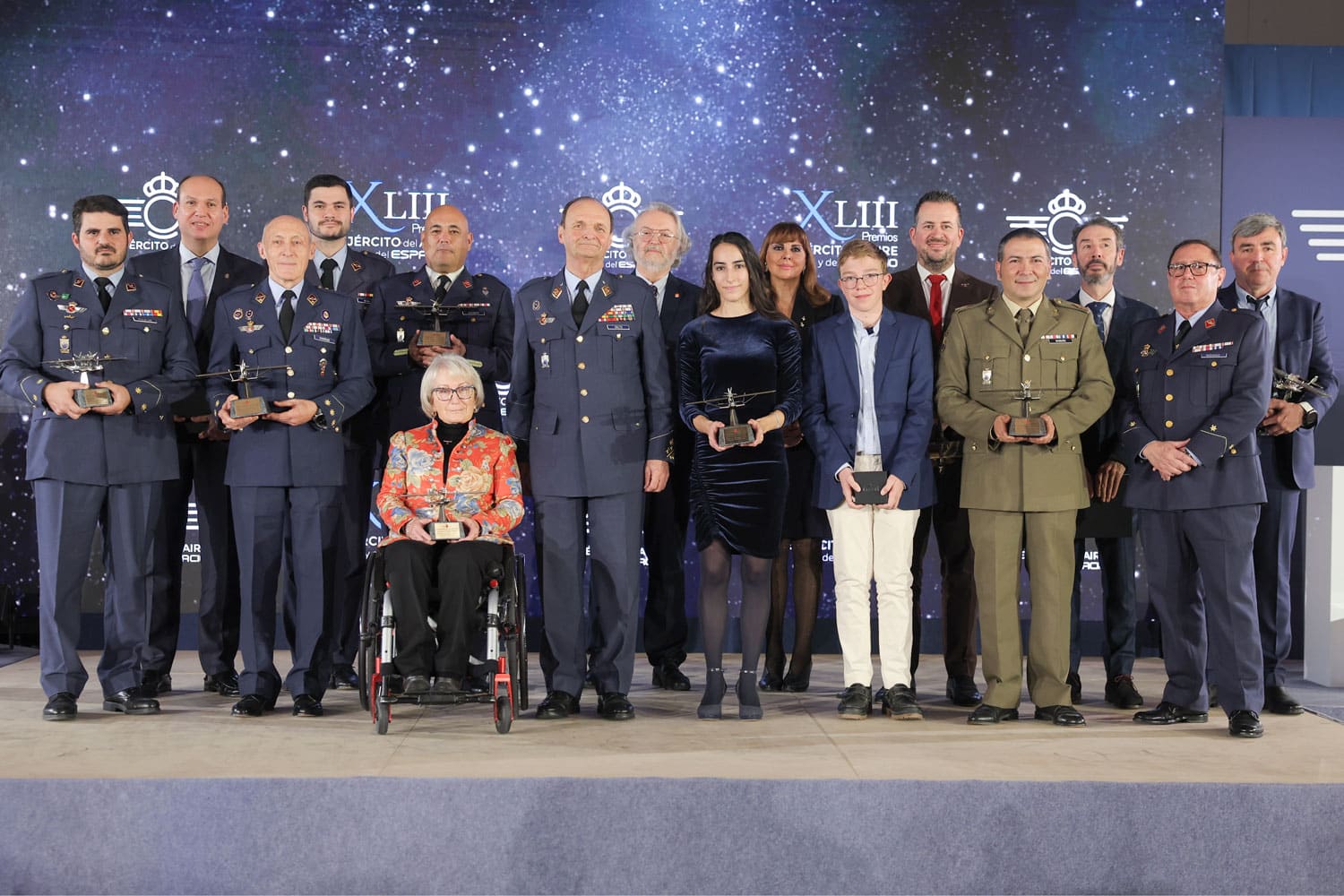
On December 1, the Air and Space Army Awards ceremony took place, which this year was sponsored by the Sener Foundation in the category of University Aerospace Research.

The meeting, presided by the Chief of Staff of the Spanish Air and Space Army, Javier Salto Martínez-Avia. The event was also attended by Sener Aerospacial’s General Manager of Defense, Rafael Orbe, and Fernando Horcada, Director of EU and NATO Programs at Sener Aeroespacial and Head of the Spanish Delegation to NATO’s Industrial Advisory Group.

In the category sponsored by the Sener Foundation, the winner was Meritxell Díaz, for her work ‘Study of the viability of Dispersed Regression Techniques (Sparse) in Aircraft Trajectory Models’. The work incorporates prediction methods from simple trajectories, applying the SINDy algorithm techniques, which allow considerably reducing flight tests and estimating their future application to the equations that model other aerial vehicles such as drones and rockets.

With these awards, which this year celebrate their 18th edition, the Air and Space Army and the Sener Foundation aim to highlight the work of researchers and scientists as the main agents for the advancement of society and drivers of development and innovation in the aerospace industry. The sponsorship of the Air and Space Army Awards by the Sener Foundation is one more example of the entity’s commitment to promoting scientific research to improve people’s lives.

“A challenge for science” receives the Educaweb Award for Academic and Professional Guidance

“A challenge for science” receives the Educaweb Award for Academic and Professional Guidance

02/12/2022

The project “A challenge for science” encourages young people to pursue careers in science and technology by proposing innovative challenges in engineering. The Companies category is endorsed by the Bertelsmann Foundation.

The “A challenge for science” project was recognized in the 15th edition of the Educaweb Awards for Academic and Professional Guidance in the Companies category. The initiative, developed by the Sener Foundation in collaboration with Sener, aims to promote science and technology careers among high school students by presenting and solving innovative challenges in engineering.

The jury determined that “A challenge for science” is suited to the target audience, achieves its goals and is a project that is expected to continue.

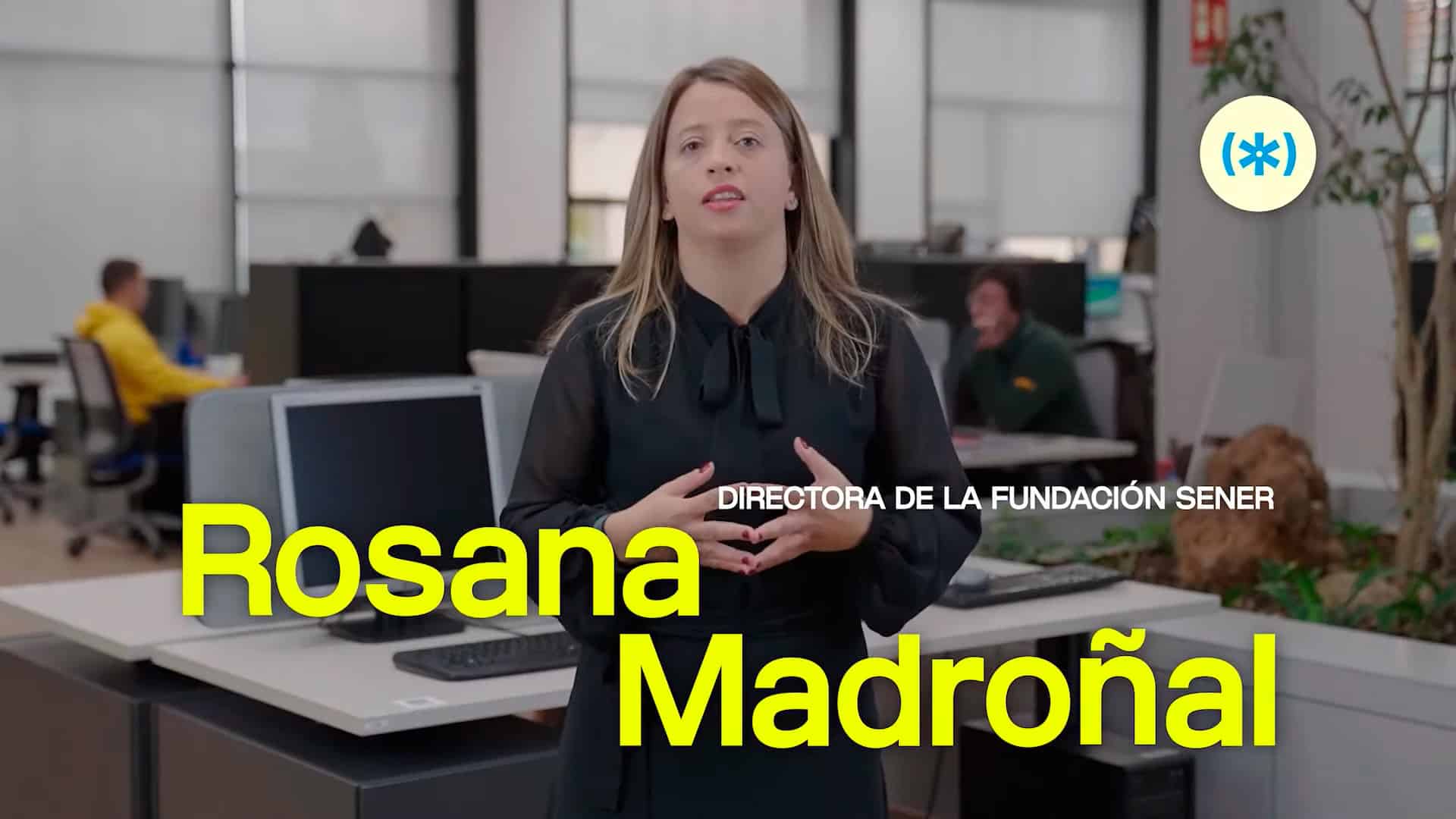
The presentation ceremony took place on December 1 at a virtual event attended by the Director of the Sener Foundation, Rosana Madroñal, who thanked Educaweb for the award. She also noted that “we are proud to receive this award from Educaweb, an entity that specializes in academic and professional guidance, for A Challenge for Science. This is a project where, through real engineering challenges, we try to show students what an engineer’s average workday is like and, in short, what their work could be like tomorrow if they decide to study engineering in college.”

During the award ceremony, the CEO of Educaweb, Josep Lluis Segú, stressed that these awards recognize “those projects that are laying the foundations for the future and that really serve to meet the needs of the citizens of this society, which is facing new challenges.” And he added that “the challenge of guidance is to make available to people, both young and old, the information and itineraries that will be used to train the professionals we are going to need.

What is “A challenge for science”?

“A challenge for science” is a project of the Sener Foundation in collaboration with Sener that seeks to promote science and technical careers among young people. It involves presenting actual engineering challenges to high school students. The students then have to find solutions to the problems faced daily by an engineering company. The students’ solutions are subsequently evaluated by Sener personnel and other external collaborators with expertise in these areas of engineering, and the best ones face off in a final between schools.

It is Sener employees who, through a voluntary program with the Sener Foundation, take the project to the school where their children study, or where they themselves studied, present the project and the challenges to the participants, and monitor the students throughout the entire process of designing the solution.

The innovation of the project lies in the types of problems or challenges presented to the students. These are real challenges, the same ones faced by professional engineers, but tailored to the intended audience. By presenting these challenges and developing their own solutions, we make students aware of the typical problems we face as a society and how they can be solved by applying engineering and technology.

Some of the challenges posed to the students involve implementing the circular economy, improving health through engineering, reducing the carbon footprint, alleviating the problem of space trash or issues related to smart cities. This way, the young participants are able to see first-hand how science, technology and engineering serve people in order to improve their quality of life.

This project is being done in collaboration with the Spanish Foundation for Science and Technology (FECYT), which is part of the Ministry of Innovation and Science.

Educaweb Awards 2022

The Educaweb Awards for Academic and Professional Guidance were launched in 2008 to mark the 10th anniversary of Educaweb. Their goal is to reward the best academic and professional orientation projects in order to highlight and showcase the work done, often anonymously, by guidance professionals.

In this year’s edition, the following awards were presented:

  • IMPLIKA-Educaweb Award for Professional Training for the Integrated Polytechnic Vocational Training Center of Cartagena, in Murcia, for its Orienta vocational project: Looking to the Future.
  • The Dualiza-Educaweb Award in the Professional category, sponsored by CaixaBank Dualiza, went to The (in)visible engineer, by Núria Salán Ballesteros.
  • The Educaweb Award in the Institutions category went to neoSKILLS VR, a virtual reality simulator for diagnosing and developing soft skills, developed by neoCK.
  • The Human Revolution, an organization from Extremadura.
  • The Guiding City Honorable Mention, which acknowledges and shines the spotlight on a city in the world that has a comprehensive and coordinated project for academic and professional orientation, went to for Bologna (Italy) for its Centro Risorse per l’Orientamento Maria Luisa Pombeni. Cittá Metropolitana de Bologna.
  • The 10th Enric Renau i Permanyer Honorable Mention for applied social research in education, training and work went to the Barcelona Open Data Initiative.

AIRIS Synchro at the Port of Seville

Transportation

Ports & Marine

AIRIS Synchro at the Port of Seville

Synchromodality to integrate all types of transportation that converge at the port: ships, trains and trucks.

Case of success

BIRPLAST, industrial research to make progress towards a circular model of the plastics value chain

BIRPLAST, industrial research to make progress towards a circular model of the plastics value chain

23/11/2022

The BIRPLAST project is developing improved processes for obtaining circular raw materials from the thermochemical recycling of complex plastic waste.

Twelve Basque companies are collaborating on BIRPLAST, a strategic industrial research project to develop technologies to supply fuels and products with a lower carbon footprint and contribute to the recovery of plastic waste through circular economy processes.

According to the latest data from Plastic Europe, 29.5 million tons of post-consumer plastic waste were collected in Europe (UE27+3) in 2020, of which 42% went toward energy recovery, 35% was managed through recycling processes and 23% was sent to controlled dumps. Recycling plastics is a priority within the European Green Deal strategy to transition to a green and circular European market, one that will require investments and innovation to develop the new business models needed to achieve the goals set by Europe for this stream, which include recycling 55% of plastic packaging by 2030. Currently, European industry only uses 10% recycled plastic in its products, around 5.5 million tons, meaning there is still substantial room for improvement.

This waste stream is also a priority in the 2030 Circular Economy Strategy of the Basque Country and the new 2030 Waste Prevention and Management Plan of the Basque Country, which aim to enable new value chains through recycling and waste recovery processes to increase the use of recycled raw materials by 30% (Basque industry currently imports 77% of its raw materials); increase corporate turnover to 10 billion euros through more circular products, create 3,000 new jobs and reduce the carbon emissions associated with consumption by 26%. In the Basque Country, nearly 640,000 tons of complex plastic waste have been identified annually, which could be used to generate new raw materials and for which there is currently no material recovery route.

BIRPLAST Project

The main goal of the project is to generate a knowledge base for developing improved thermochemical recycling processes for complex plastic waste. This waste stream is created primarily in the treatment of other waste, such as light packaging, disused vehicles, and waste electrical and electronic equipment (WEEE). Due to the problems that its composition and characteristics pose to current recycling models, the reuse of these plastic waste remains very low compared to other materials such as paper, glass and metals. This makes it a potential source of raw materials that cannot be salvaged using state-of-the-art techniques.

BIRPLAST will contribute to the development of new processes for obtaining raw materials from this waste fraction by transforming it into new plastics (Plastic2Plastic) and other high-value chemicals (Plastic2Chemicals), ensuring that materials are kept in a circular process, replacing non-renewable raw materials in the industry.

Technologies to improve thermochemical recycling processes for complex plastic waste

BIRPLAST seeks to play a part in achieving these strategic objectives, while also creating competitive advantages for the companies that make up the consortium, through the following lines of industrial research:
• Improve advanced pre-treatment and separation processes that include drying technologies and optical and robotic systems, combined with Machine Learning algorithms.
• Improve thermochemical recovery processes based on pyrolysis, gasification and solvolysis, including product quality control and the development of advanced purification processes.
• Validate the use of circular raw materials obtained in thermochemical recovery processes, such as polyols, oils, synthesis gases, and polymers, in the manufacture of new plastics and other high-value products.
• Assess the technical-economic feasibility and scalability of the solutions proposed.

The project includes industrial research in 25 new processes, 26 new products and 12 patentable developments. The expected results of the project are:
• The recovery of material resources (€12.4M/year) in the form of waste with a high plastic content,
• New technological solutions to recover complex plastic waste (500,000 t/year),
• Increase the efficiency of separation and sorting processes (10% increase compared to current ones) and couple them to prepare the waste for pyrolysis and gasification processes.

The technologies being developed by BIRPLAST will yield fuels and products with a lower carbon footprint and aid in the recovery of plastic waste through circular economy processes. This is a key contribution to the waste-to-end-product value chain that will also help decarbonize today’s economy while contributing to the Sustainable Development Goals and the 2030 Agenda.

BIRPLAST is a strategic industrial research project that has received funding from the HAZITEK 2022 program, an initiative of the Basque Government’s Department of Economic Development, Sustainability and Environment to help corporate R&D.

Project consortium

The consortium is made up of 12 partners, led by SENER. The companies involved are: PETRONOR, TRADEBE, EIFORSA, GLOBAL FACTOR, FIDEGAS, ROBOKIDE, ROTOBASQUE, SBS, SADER, SENER, TRIENEKENS, and ZORROZA GESTIÓN; It is also supported by three members of the Basque Science and Technology Network: GAIKER, TECNALIA and ACLIMA, Basque Environment Cluster.


Solgest-1

Energy

Renewable and Low-Carbon Solutions Generation

Solar

Solgest-1

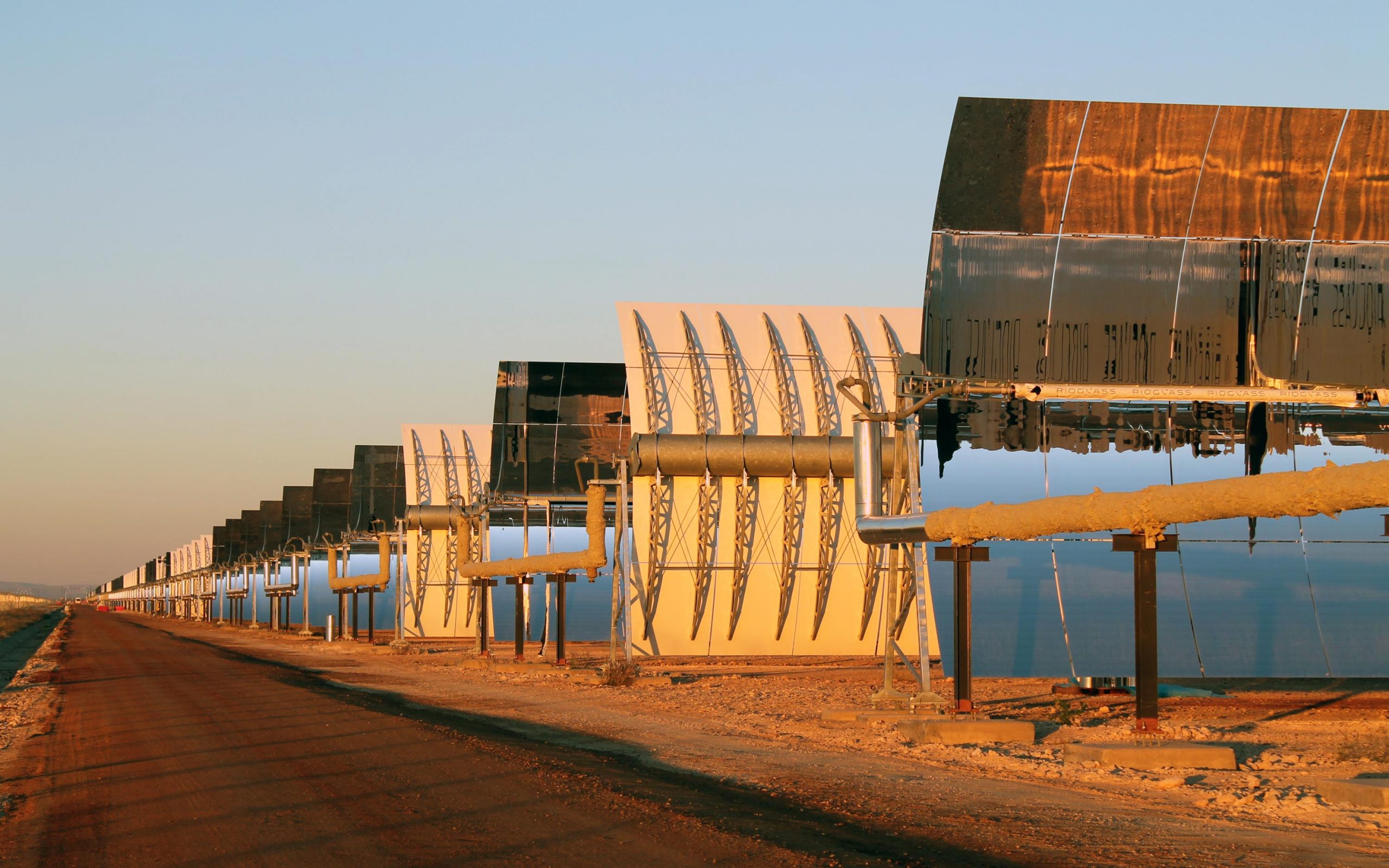
The first hybrid concentrated solar power with storage and photovoltaic plant in Spain

Case of success

AIRIS Synchro, a European project to promote synchromodality at the Port of Seville

AIRIS Synchro, a European project to promote synchromodality at the Port of Seville

16/11/2022

Sener was the technical manager for this innovative project, promoted by the Seville Port Authority, which applied technology to synchromodality to integrate all the modes of transportation that converge at the port: ships, trains and trucks

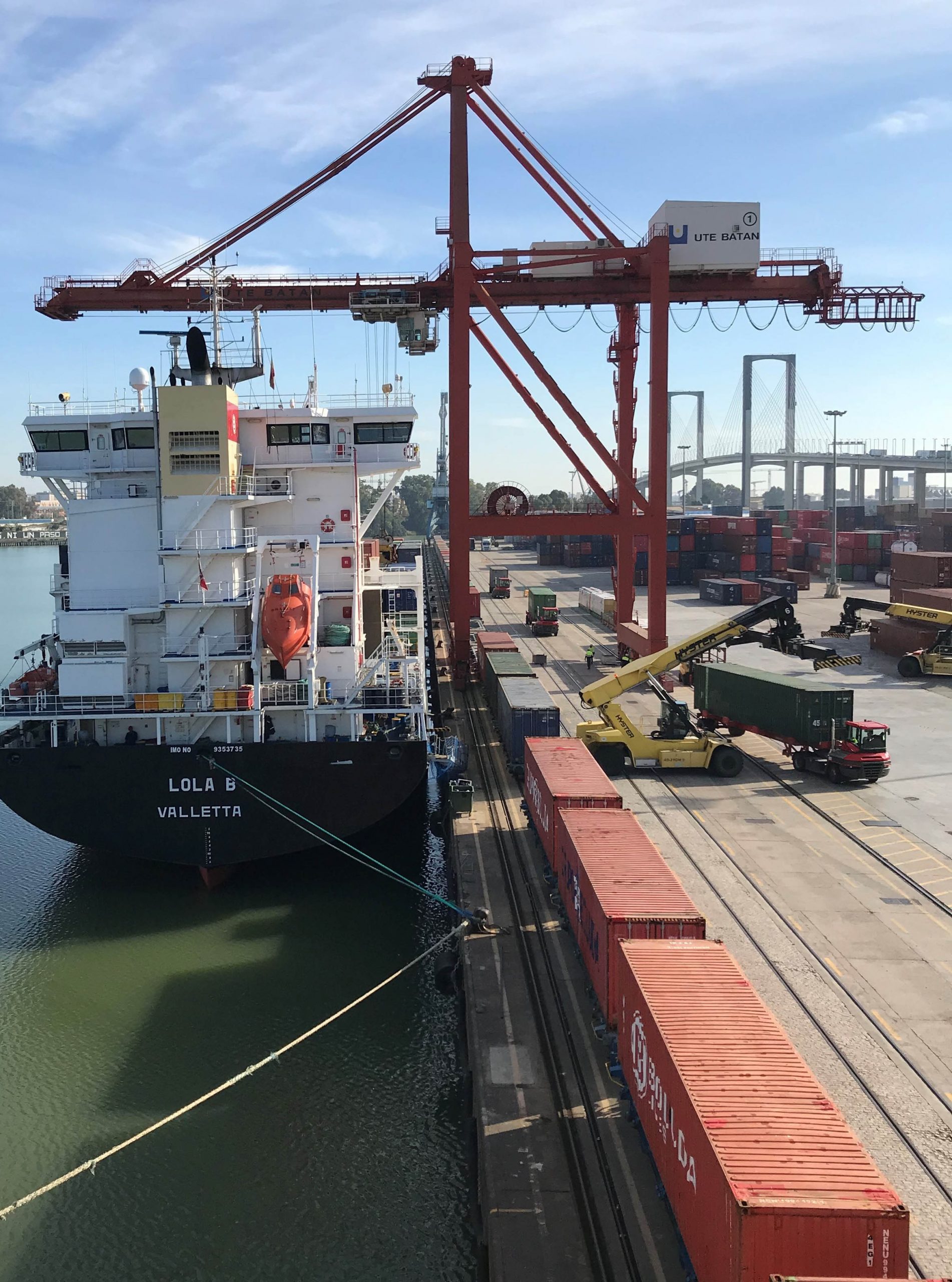
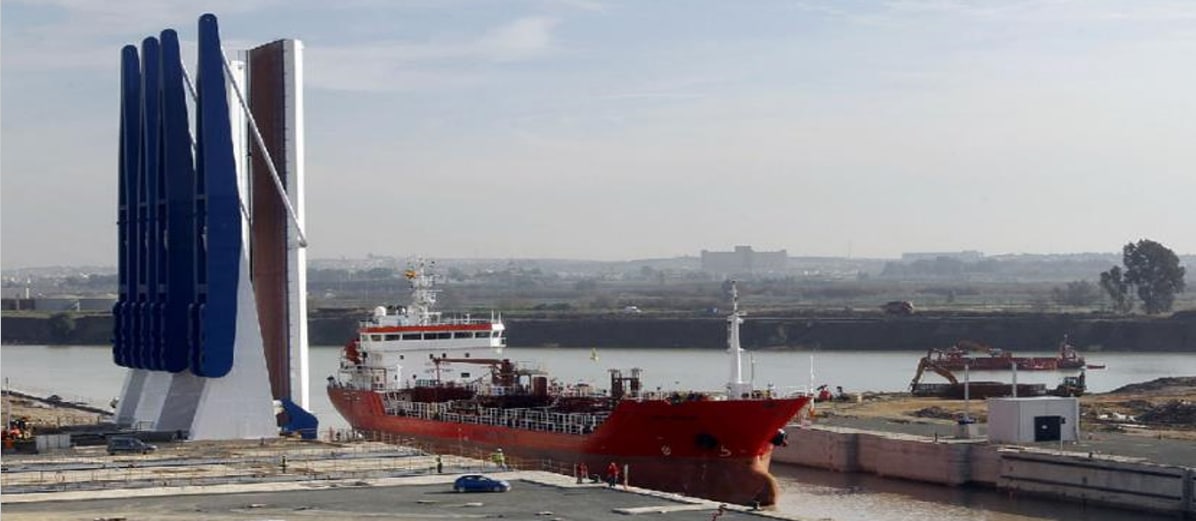
In August, the AIRIS Synchro project came to a close. Led by the Seville Port Authority (APS) and based on technology pilot programs, it integrates synchromodality between maritime and land transport (ship, railway and truck) with monitoring of the waterway and the management of operations on the docks. As an inland seaport, the Port of Seville has excellent connections between ships, trains and trucks, making it a multimodal port and a fundamental link in logistics chains.

AIRIS Synchro integrates synchromodality between maritime, land and rail transport with monitoring of the waterway and operations at the docks. It does so through pilot programs and technology solutions to optimize the control and coordination of different modes of transportation in real time, and to develop multimodal planning. To this end, it integrates systems and databases extracted from the digitization of the waterway, from Smart Transport Systems (STS) and port terminals, and provides the Port of Seville with tools for managing and planning land traffic, and also to conduct navigation studies to optimize speeds and maximize the use of the channel; as well as to learn more about tides and better plan mooring times.

In this innovative project, Sener was responsible for the technical management, working together with the universities of Seville and Málaga and the technology companies Serviport and Siport21.

On the technological side, Sener contributed its experience in digitization, as well as in the field of designing and integrating STS systems, both road and rail, but, above all, its knowledge of port operations. Notable among the pilot programs proposed as part of the project are:

  • A truck slot system. A mobile app that allows carriers to reserve the time slot when they plan to arrive at the terminal.
  • A railway operations planner. This system plans the optimal route on the rail-port network, taking into account all the operations during the journey.
  • A system to monitor the daily planning of transportation modes that collects and displays data to synchronize processes throughout the logistics chain.
  • A module that can work with the travel planner developed in AIRIS I, which integrates tide predictions due to weather phenomena and external factors along the Guadalquivir River.
  • A module related to ship navigation and optimal entrance and exit slots. The solution consists of updating the table with maximum allowable drafts for port entry and exit based on ship length.

With AIRIS Synchro, the port of Seville is further digitizing with better coordinated operations, lower logistics costs and shorter freight movement times. It is also making progress in sustainability and energy savings.

This modernization is the result of long-term planning by the Port of Seville, which previously launched initiatives such as AIRIS-PS (Advanced Implementation of RIS in the Port of Seville). In this project, the Seville Port Authority awarded Sener the design and supervision of pilot projects to implement the European RIS (River Information Services) standard, and thus expand its knowledge of the waterway and improve its management.

AIRIS Synchro has a budget of 1.7 million euros, 50% of which is provided by the European CEF (Connecting Europe Facility) mechanism, announced in 2018. The European program “Connecting Europe” prioritizes initiatives that help digitize maritime transportation and reduce carbon emissions within the Trans-European Transportation Network.

Sener joins RAI’s Women in Engineering program

Sener joins RAI’s Women in Engineering program

20/10/2022

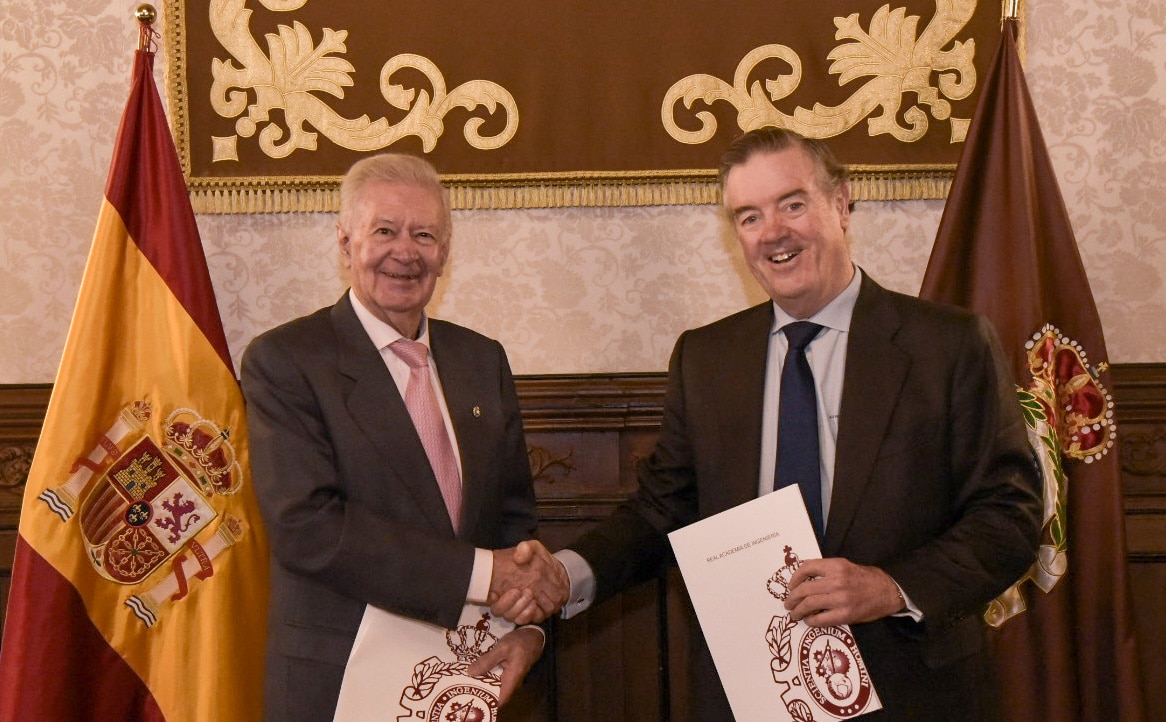
On October 19, the signing of the framework collaboration agreement for the Women and Engineering program was held at the headquarters of the Spain’s Royal Academy of Engineering, RAI. This agreement was signed by SENER’s President, Andrés Sendagorta, and the President of RAI, Antonio Colino.

Rosana Madroñal, Director of the SENER Foundation, and Ana Úsar, Head of Equality, Diversity and Inclusion at SENER, also participated in the signing ceremony.

The Women and Engineering program aims to promote STEM careers (Science, Technology, Engineering and Mathematics) among the female public, in addition to including various actions and programs such as “Mentoring of Excellence” or “Engineering with social purpose”, aimed at promoting STEM vocations.

This agreement is another step forward in the measures supported by the SENER group to promote equal opportunities between women and men, faithful to its corporate commitment and its policies to advance in the elimination of gender, age, disability, culture and sexual orientation biases in all people management processes.

SENER, AIDHOS, Estudio Lamela, and ARCS will carry out the construction project for a new hospital in Malaga

SENER, AIDHOS, Estudio Lamela, and ARCS will carry out the construction project for a new hospital in Malaga

19/10/2022

The Regional Government of Andalusia has awarded the contract to plan and construct a new hospital in Malaga to the Malaka temporary joint venture (TJV), consisting of the architecture studio AIDHOS Arquitec, specializing in hospital architecture, Estudio Lamela, and the SENER and ARCS Estudios engineering firms.

The Malaka TJV was also responsible for the draft version of the new hospital in Malaga, intended to be the new leading health center in Malaga for acute care, highly specialized and offering sophisticated healthcare technologies.

The building will be bioclimatic, efficient and highly technological, and will serve the people of Malaga for the next several decades. It has a flexible design so that it can easily adapt to the constant changes that occur in medical technology, and to provide new medical treatments that are much more personalized than today’s. In this sense, principles and design improvements aimed at the humanization of spaces will be implemented and corrective measures will be developed against the sound condition and its impact. The hospital will also be completely digitized through robustly implemented Information and Communication Technologies.

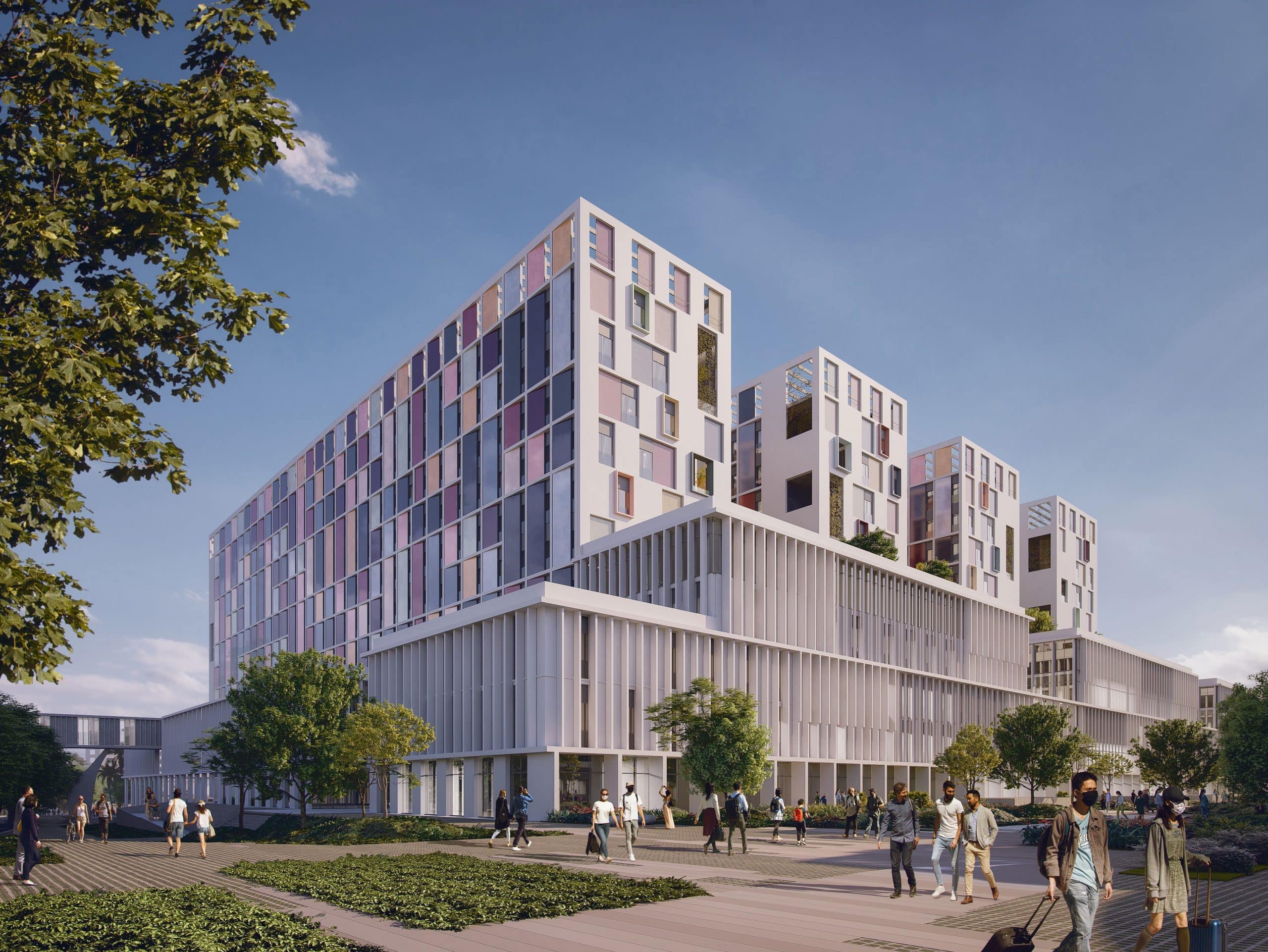
The new complex, located next to the Civil Hospital, will entail an estimated investment of 380 million euros and will have a total built area of 270,300 square meters (197,600 dedicated to the hospital building proper and 73,600 to the parking lot and loading and unloading dock). The approximate project construction time is 60 months.

It will be divided into four towers, with 15 floors, 12 above ground and three basements. The hospitalization area, which takes up eight full floors, will have an area with 27 hospitalization units, 810 rooms and a day hospital with 108 positions, as well as four ICU units with 66 rooms, 42 operating rooms, 48 major outpatient surgery posts, 189 external consultations, 31 special examination rooms and a teaching and research area.

The combined experience of the various companies in the TJV guarantees that the facility will be an efficient, innovative and sustainable building equipped with the technologies needed to offer patients maximum comfort.

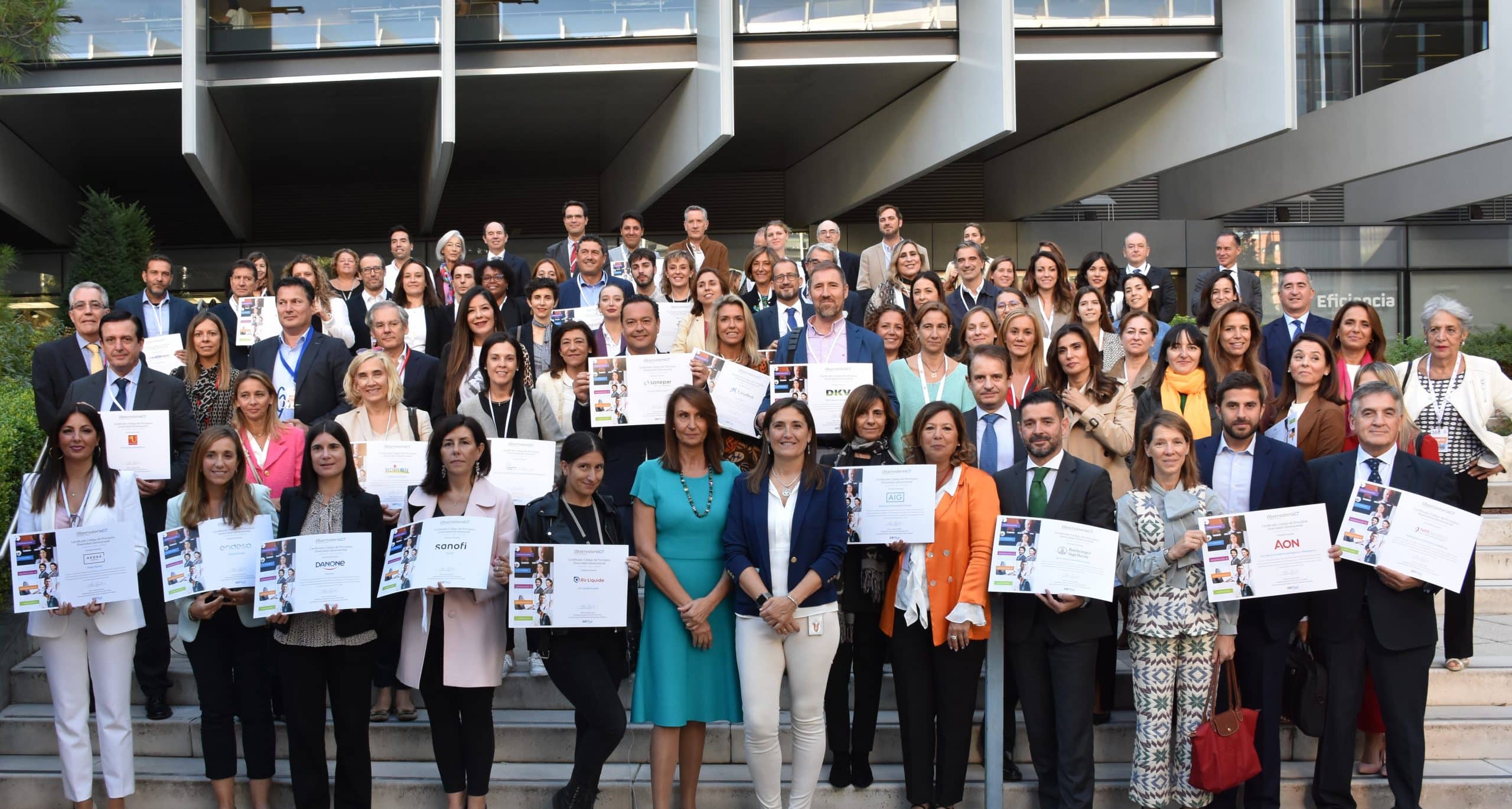
SENER receives the Generational Diversity award from the Generation & Talent Observatory.

SENER receives the Generational Diversity award from the Generation & Talent Observatory.

13/10/2022

SENER has been one of the signatories of the Code of Generational Diversity Principle promoted by the Spanish Generation & Talent Observatory.

This code recognizes as a strategic objective the favorable development of the management of people based on equal opportunities regardless of their age, non-discrimination and respect for generational diversity, promoting a favorable environment and respecting in each case the current legislation and the best business and social practices.

In this way, SENER reaffirms its commitment to the diversity of its teams, a value that enhances creativity and, with it, innovation. In this sense, SENER works on policies and measures that favor equal opportunities in all processes of people management, eliminating gender, age, disability, culture and sexual orientation biases, as well as in programs or initiatives with a generational approach.

SENER has collected the certificate that confirms the company as an entity committed to Generational Diversity at an event that took place in Madrid on September 27, and in which Ana Úsar, Equality, Diversity and Inclusion Manager of People Management, participated.

SENER recibe el distintivo de Diversidad Generacional

SENER Aeroespacial, EINSA and INTA present the ALANO platform

SENER Aeroespacial, EINSA and INTA present the ALANO platform

11/10/2022

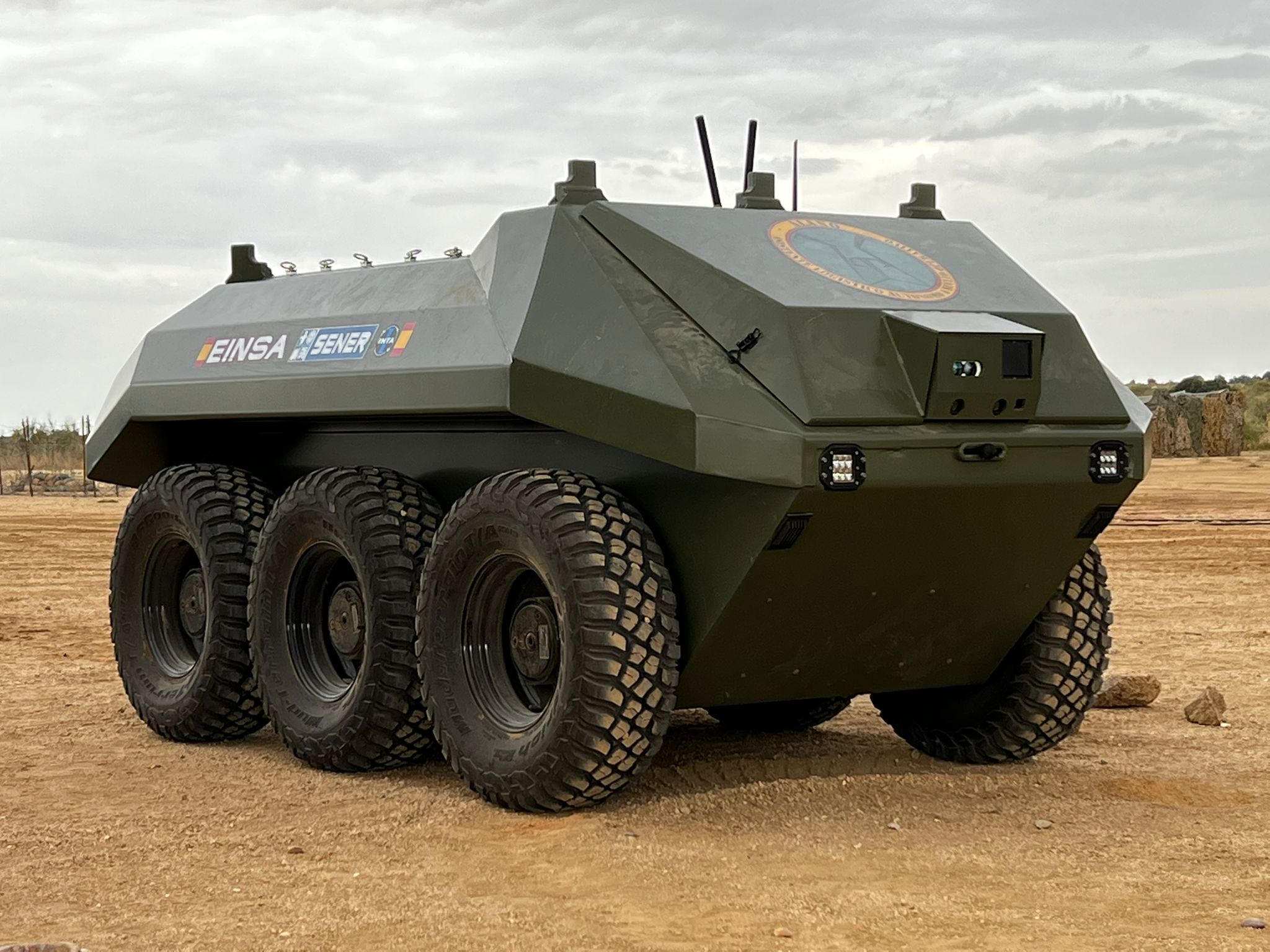
The companies Equipos Industriales de Manutención S.A. (EINSA) and SENER Aeroespacial, in collaboration with INTA, have developed the ALANO (Autonomous Logistics Assistant to Operating Core) platform, an unmanned ground vehicle (UGV) designed entirely in Spain to support tactical dismounted units.

ALANO must initially cover the logistical support needs of a platoon or of medical evacuation operations (MEDEVAC). The vehicle was first presented to Spanish Defense Ministry officials on Monday, October 10, at the Alijares Proving Ground (Toledo), as part of the 2E+I Forum.

The ALANO project hopes to meet the needs of Spain’s Army and was carried out under the auspices of Force 35 of the Army Logistics Support Command, and consolidates the initiative that resulted in these companies being chosen for this project as part of the DGAM’s (Directorate General of Armaments and Matériel) COINCIDENTE R&D program.

The ALANO vehicle is approximately 3 m long and has a payload capacity of 650 kg. The vehicle has also been designed to reach 20 km/h, and it can travel on vertical slopes of up to 70%, and lateral slopes of up to 40%. ALANO offers a standardized, modular and open architecture and is able to integrate future work or payload modules to acquire new capabilities that will let it take part in security, surveillance and protection missions

The platform works both in remote operated mode and in autonomous navigation mode, and has the capacity to detect obstacles thanks to a combination of sensors that allow it to have a multimodal sensing system. When operating autonomously, it has both tracking mode (“follow-me”) and return mode (“go-back-home”).

In this project, EINSA is responsible for the design and manufacture of the platform, which is made of light-weight materials using additive manufacturing techniques. The vehicle has outstanding off-road capabilities on all types of surfaces, thanks to its independent 6×6 electric drive. It has been designed as an open multi-mission robotic platform that is able to adapt to the mission needs of its users.

In addition to high mobility, EINSA focused its efforts on offering a vehicle with a long-range capability by implementing optimal energy flow control through the different systems. The platform has also been equipped with a range extender, offering the platoon up to 10 hours of independence.

SENER Aeroespacial is responsible for developing the platform’s onboard real-time navigation system, which handles the geolocation of the platform and detects and identifies the position, in real time, of environmental elements, such as the road, other vehicles, obstacles, signals, etc.

It does so through a combination of multiple sensors. The data collected by these sensors is processed in real time in a processing unit, where it is merged to provide a more reliable and robust solution than that calculated by each sensor independently. Advanced data management techniques, information merging and artificial intelligence algorithms are used during the image processing.

INTA, through the Platforms and Vehicles Department of the General Sub-Directorate of Terrestrial Systems, is responsible for defining the user requirements and the system’s operational concept, and is providing support in the integration, testing and verification phases. It is doing so by offering the project its testing methods and the experience of its personnel in certifying military vehicles and in UGV projects.