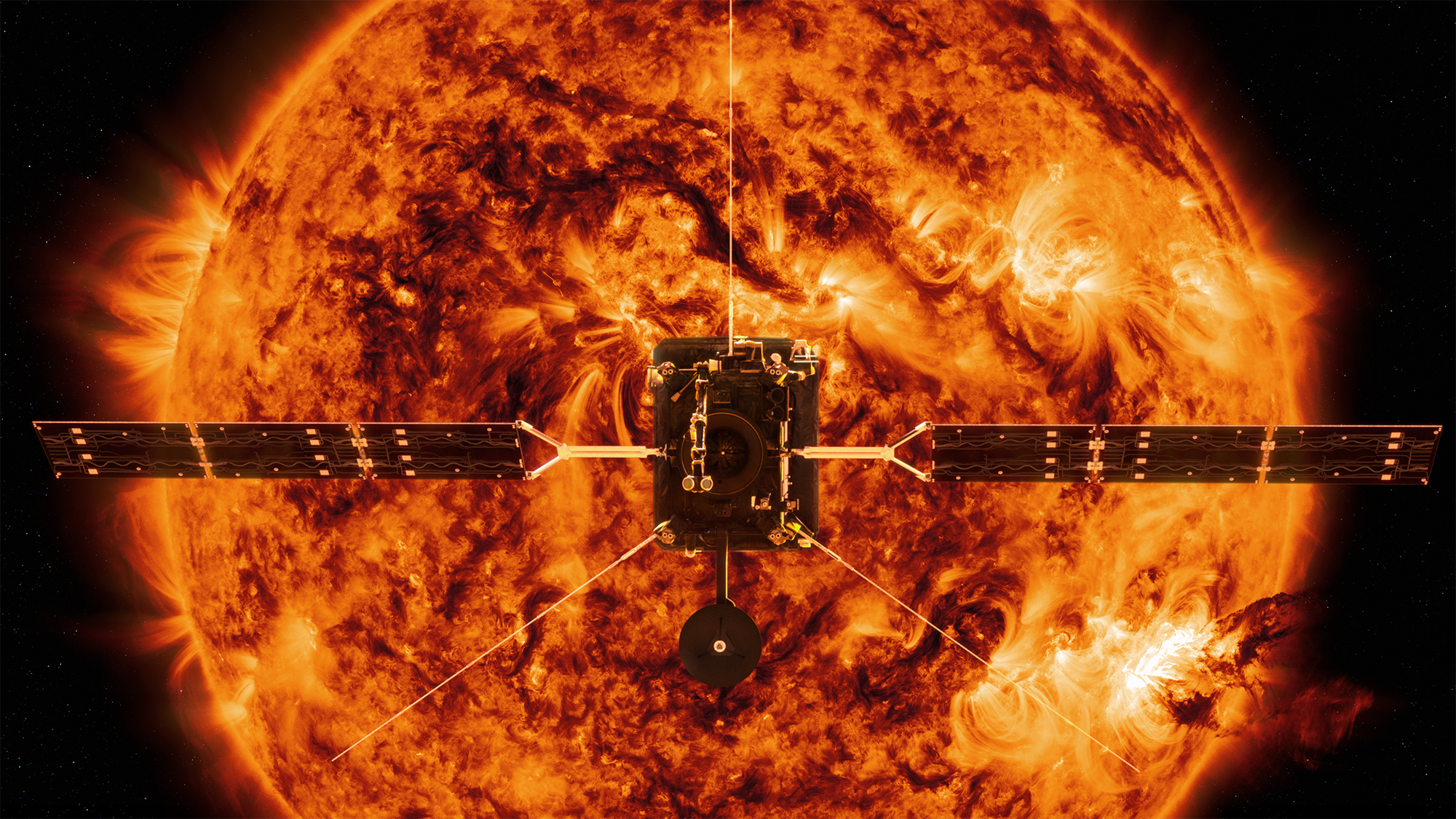
SOLar Orbiter mission (SOLO)

Space

Science & Earth observation

SOLar Orbiter mission (SOLO)

Case of success

Related projects in Science & Earth observation

10.22.2025 Science & Earth observation / Space
05.23.2018 Science & Earth observation / Space

Contact us

Contact us to find out how we can help you.

Sener strengthens Spain’s technological sovereignty in secure communications with its participation in SpainSat NG II

Sener strengthens Spain’s technological sovereignty in secure communications with its participation in SpainSat NG II

21/10/2025

The second satellite of the SpainSat NG programme will be launched on 22 October, completing Europe’s most advanced secure communications constellation.

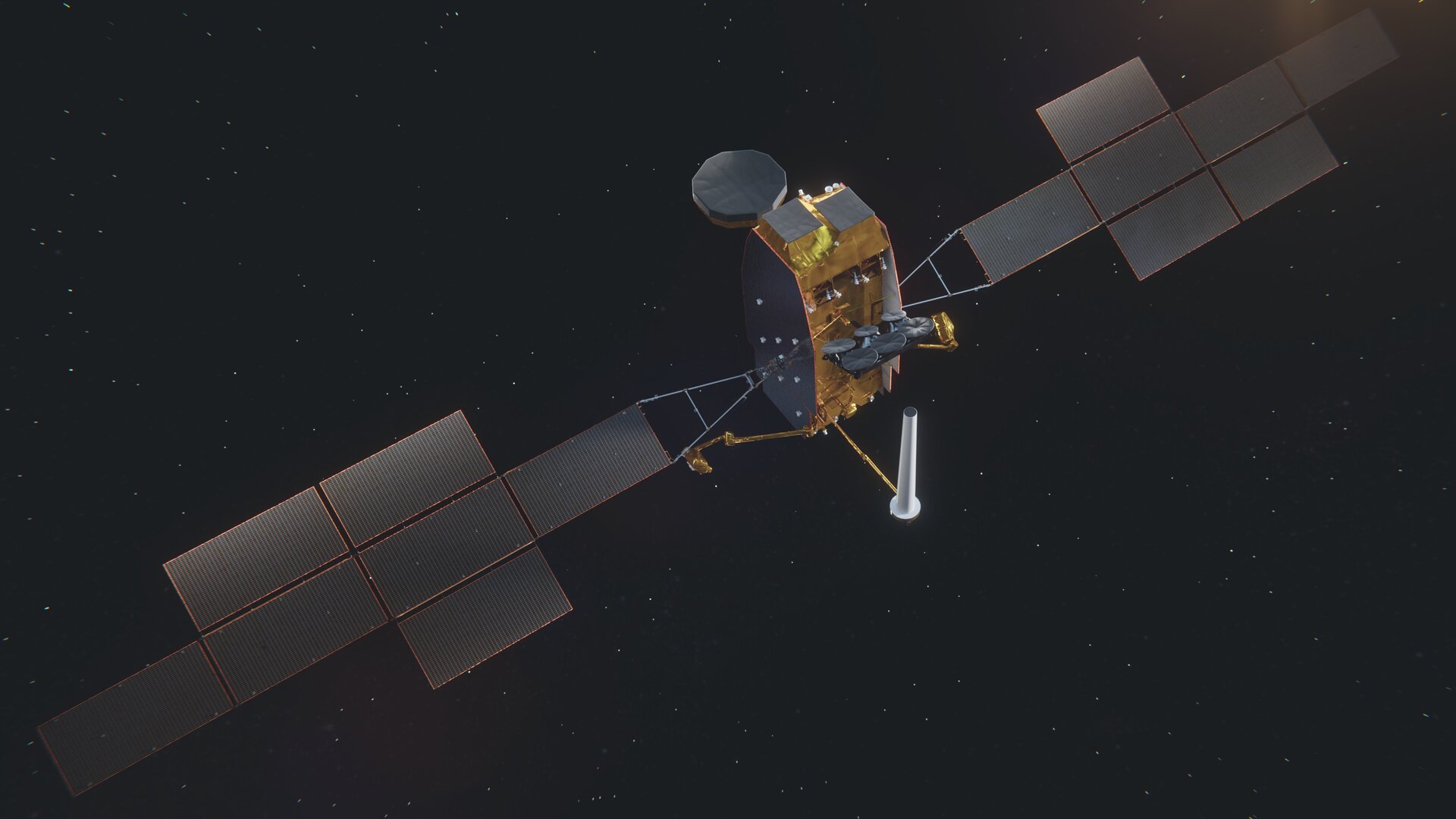
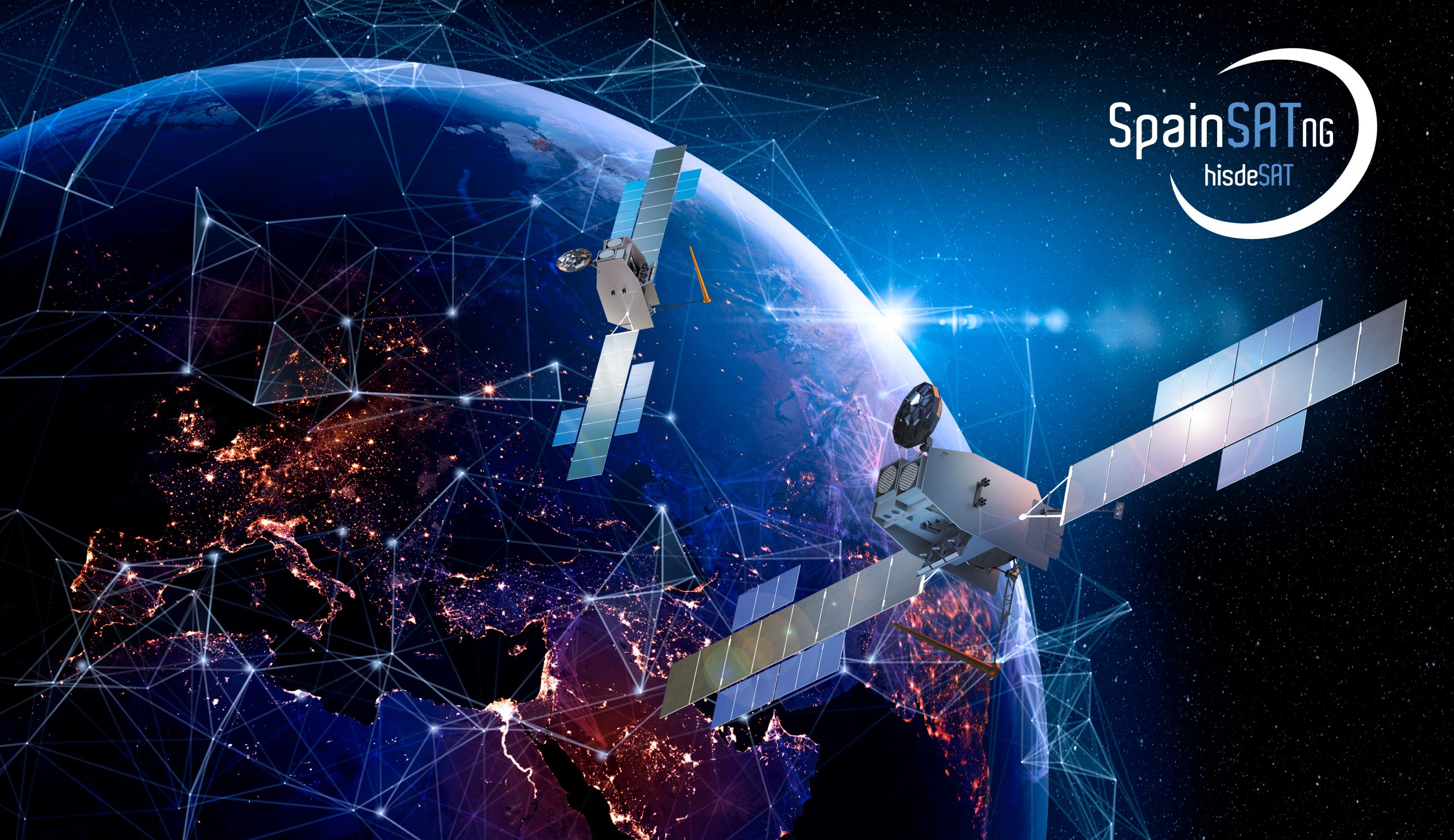
The engineering and technology group Sener has been involved in SpainSat NG II, the second satellite in Hisdesat’s secure communications programme, scheduled for launch on 22 October from Cape Canaveral, United States. This milestone will complete the SpainSat NG constellation, following the successful launch and commissioning of its twin satellite, SpainSat NG I, last January, on which Sener also worked.

SpainSat NG II, identical to its predecessor (already successfully operating in orbit), will provide secure and reliable communications for the Spanish Armed Forces, strengthening the nation’s technological and strategic capability in space. The satellite will incorporate advanced technologies to protect against jamming and spoofing attempts and will be shielded against high-altitude nuclear events.

Sener was responsible for the design, manufacture and testing of critical components for SpainSat NG II, replicating its successful contribution to the first satellite in the series:

  • Sener designed, manufactured and tested over one hundred complete chains for both the active transmit antenna and the X-band receive antenna. Each chain integrates a radiating front end with a DSSPA (dual solid-state power amplifier) for the transmit antenna or a DLNA (dual low-noise amplifier) for the receive antenna.
  • In addition, Sener supplied six mechanically steerable reflector systems for the Ka-band communications payload, mounted on a deployable panel, with three types of antenna and an angular movement system for each reflector. These reflectors are fed by radiating chains, also provided by Sener, including a horn, polariser and waveguides for signal distribution.
  • Furthermore, for each satellite, Sener delivered the telemetry and telecommand antennas: a pair of S-band hemispherical antennas and a global coverage antenna with dual polarisations and integrated transmit-and-receive functionality.
  • Finally, Sener played an active role in the satellite’s UHF payload, developing the three-channel OMUX, which filters and combines the outputs of the corresponding amplifiers before feeding the satellite’s UHF antenna. Handling high power at this frequency for space applications made the design of this unit a first-class challenge.

Once in orbit, SpainSat NG II will operate alongside SpainSat NG I to provide extended coverage spanning from the United States and South America to the Middle East, including Africa, Europe and reaching as far as Singapore. With an operational lifetime of 15 years, both satellites will ensure the continuity of Spain’s military and governmental communications.

“With the imminent launch of SpainSat NG II, we complete our involvement in one of the most advanced satellite programmes in the world”, said Diego Rodríguez, Space and Science Director at Sener.“The operational success of SpainSat NG I since its launch in January validates our technological solutions and reinforces our commitment to Spain’s technological sovereignty in space”.

Proven track record in the space sector

Sener has a well-established history in satellite communications, having supplied antennas and radiofrequency equipment—both active and passive—to leading satellite manufacturers and space agencies for applications in navigation, telecommunications, exploration and Earth observation. The company has delivered over 10,000 units of equipment and subsystems, which have flown on 1,400 satellites in LEO, GEO and MEO orbits, as well as on launchers.

Sener’s involvement in the SpainSat NG programme further consolidates its role as a strategic partner in defence space programmes and demonstrates the capability of Spanish industry to develop cutting-edge space technology.

SpainSat NG-I: Spain’s next generation secure communications satellite

Defence

Space for Security (defence)

SpainSat NG-I: Spain’s next generation secure communications satellite

Case of success
Watch

FAQ about SpainSat NG

When were SpainSat NG satellites launched?

SpainSat NG-I was launched from Cape Canaveral (Florida) on a Falcon 9 rocket at 20.34 local time (02.34 Spanish time).

Its twin satellite, SpainSat NG II, is expected to be launched into orbit in October 2025.


Who leads SpainSat NG?

The SpainSat programme is an example of public-private collaboration, as it is supported by the Ministry of Defence and other governmental institutions.

The programme is led by the Spanish company Hisdesat, which is responsible for monitoring the project and will carry out the operation and commercial exploitation of the programme during its useful life, as well as having been responsible for the flight segment and the ground segment for the control and operation of the satellites.

Who are the main contractors for SpainSat NG?

The programme is led by a consortium formed by Airbus DS España (as prime contractor) and the French and Spanish subsidiaries of Thales Alenia Space.

What has been Spain’s participation in the SpainSat NG I satellite?

More than 40 % of the satellites have been developed by Spanish companies that are members of Tedae, the Spanish Association of Defence, Security, Aeronautics and Space Technology Companies. These include: Hisdesat, Aibus Defence and Space, Thales Alenia Space, Airbus Crisa, Alter Technology, Arquimea, GMV, HV Sistemas, Indra, Tecnobit-Grupo Oesía, Sener and Inventia.

Rosalind Franklin Mission

Space

Communications in Space

Rosalind Franklin Mission

Rosalind Franklin Mission to Mars in 2028

Case of success

Spain drives the future of the space industry developing a unique engine

Spain drives the future of the space industry developing a unique engine

09/04/2025

A consortium led by ITP Aero, with the participation of Pangea Aerospace, the engineering and technology industrial group Sener, and Aenium Engineering, will complete the development of the Aerospike engine, an innovative propulsion technology, and integrate it with its European customers. This contract is the second largest project in the Space Technology Plan of the CDTI Innovation and the Spanish Space Agency, with a budget of more than €11 million from the R&D Support Plan for Space Technologies, whose total budget is €70 million.

The MERLIn project (Efficient and Reusable Engine for International Launchers) has received the second largest grant from the Space Technology Plan (PTE), with a budget of €11.6 million, representing more than 10% of the total R&D support plan for space technology awarded by CDTI Innovation and the Spanish Space Agency, through the Ministry of Science and the Ministry of Defense.

This investment within the Space Technology Program reinforces the Government’s commitment to boosting the national aerospace industry and strengthening its position in space propulsion over the next decade, with innovation in key technologies for the future of space exploration. The PTE is an action within the Aerospace PERTE (Aerospace Program), endowed with €70 million in subsidies from the Recovery and Resilience Facility of the PRTR Addendum. The project aims to promote the competitiveness of the Spanish aerospace industry as a key player in the sector’s upcoming challenges and opportunities through the development of technological capabilities based on R&D.

The project, led by ITP Aero and with the participation of Pangea Aerospace, the industrial engineering and technology group Sener, and Aenium Engineering, focuses on the manufacturing and integration of the world’s first flight-ready aerospike engine. Pangea Aerospace, a Barcelona and Toulouse-based startup specializing in space propulsion, thus secures the second largest project in the Space Technology Program with MERLIn. It is also the main funded company in the project, after receiving a €3.9 million grant within the project, representing more than 50% of the total budget.
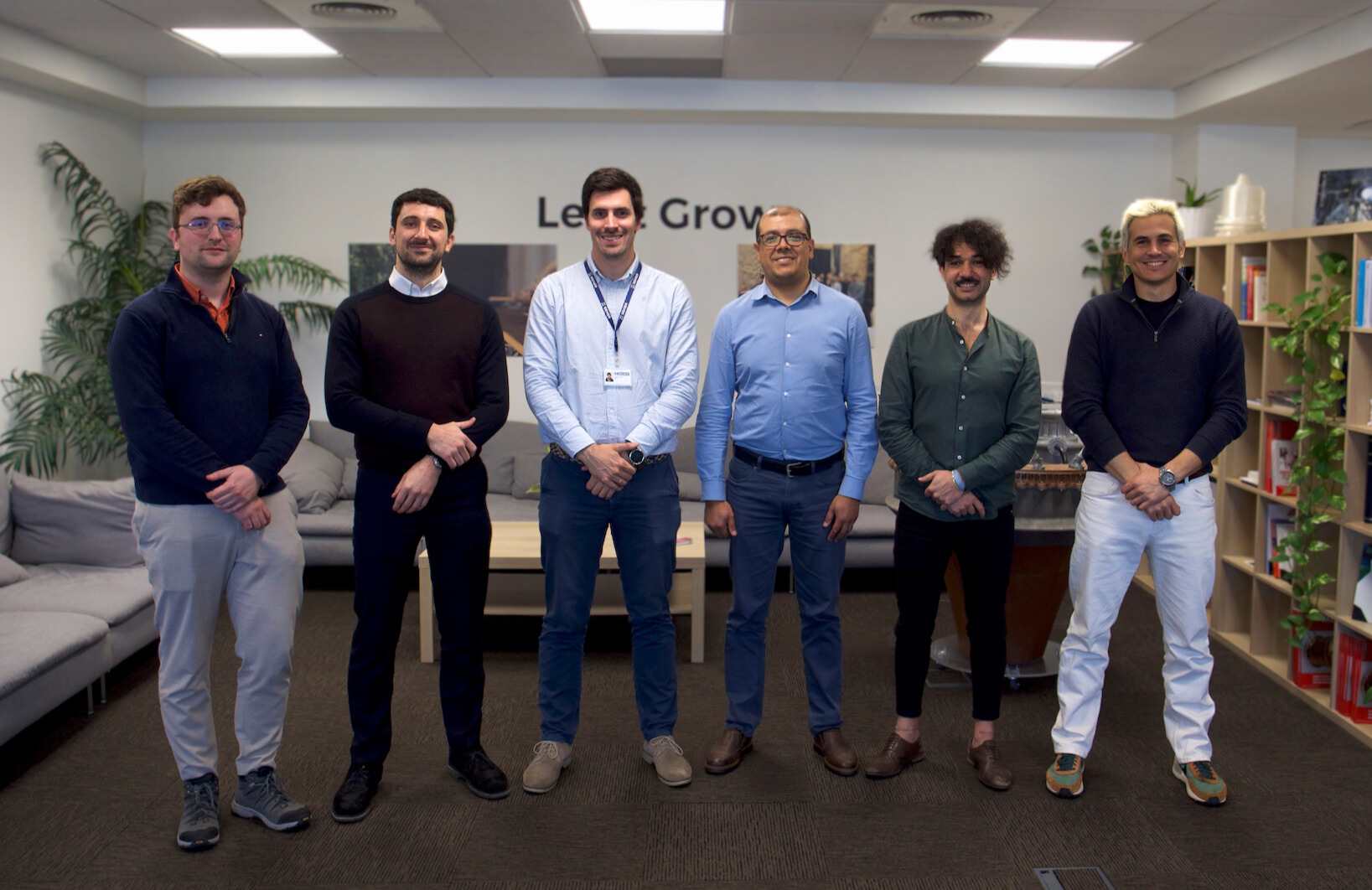
Consorcio Proyecto Merlin: ITP Aero, Sener, Pangea, Aenium

Representatives of the companies participating in the MERLIn consortium.

The MERLIn consortium, made up of other leading participating companies in the Spanish aerospace and technology sector, such as Aenium Engineering, ITP Aero, and Sener, is a clear example of successful public-private collaboration between Spanish companies to boost the competitiveness of the national aerospace industry and prepare it for the major challenges of the future.

Each consortium member contributes key expertise: Pangea Aerospace, responsible for the complete development of the engine from design to testing; ITP Aero, as the consortium leader and a global leader in propulsion technologies; Sener, a leading engineering and technology group with a strong industrial focus, provides the aerospike engine’s TVS control and actuation system; and Aenium Engineering contributes its expertise in advanced materials and additive manufacturing.

ARCOS, a highly efficient and cost-effective engine

The MERLIn project funding will be the first Pangea Aerospace will receive to support all subsystems of its ARCOS engine. With this, the aerospace startup aims to advance the development of the ARCOS rocket engine, an innovative propulsion technology, with the goal of having the fully integrated engine ready for ground testing simulating a launch, and to be able to integrate it with its European customers.

The engine to be developed in the MERLIn project will have a thrust of 750 kN and is designed for use in the upper stage of space rockets, providing superior performance and strengthening the competitiveness of the Spanish space sector. The aerospike engine enables the reentry and reuse of upper stages of medium and heavy launchers, opening the door to new business models and the complete reuse of launchers, something that only SpaceX has tested in the world.

ARCOS is a high-efficiency rocket engine with an aerospike nozzle, designed to be reused in multiple space missions. It runs on methane and liquid oxygen, a cleaner and more sustainable combination that reduces CO2 emissions by up to 50% compared to traditional kerosene-powered engines. Thanks to its aerospike geometry, it achieves an efficiency of up to 15%, higher than that of traditional bell-shaped engines, significantly increasing launch profitability.


Watch the launch of the European Space Agency’s Proba-3 on streaming

Watch the launch of the European Space Agency’s Proba-3 on streaming

28/11/2024

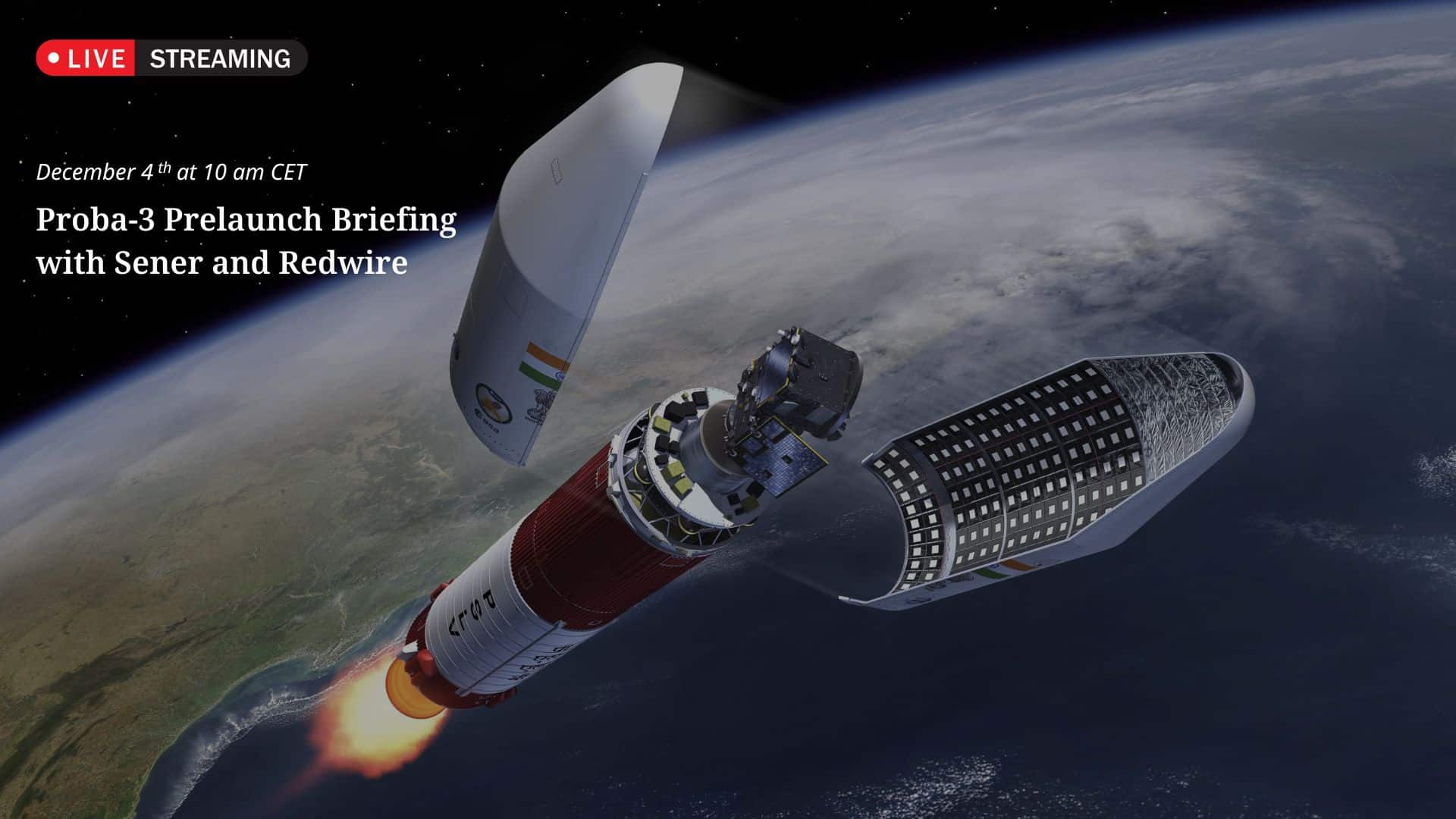
Follow the live launch of Proba-3, the European Space Agency (ESA) mission led by Spain through Sener that will demonstrate that formation flight between satellites is possible and will provide interesting scientific knowledge about the behaviour of the solar corona.

On December 4, join our streaming broadcast, through Sener’s YouTube channel, to experience the moments leading up to this milestone for the aerospace industry, a key technological demonstration for future space observation missions and scientific studies.

During the event, you will be able to learn about the mission first-hand, through the interventions of our experts from the mission control centre, in REDU (Belgium):

  • Diego Rodriguez, Space and Science Director at Sener.
  • Yann Scoarnec, Proba-3 Project Manager at Sener.
  • Sandra Mingot, Head of EU and Defence Programmes at Sener.
  • Erik Masure, President of Redwire Space Europe.
  • Akos Haasz, Proba-3 Project Manager, Redwire Space Europe.
  • Austin Jordan, VP, Marketing & Communications, Redwire Space Europe.

Don’t miss this milestone in the aerospace industry, in which two satellites will autonomously maintain an exact alignment of less than 1 millimetre apart at a distance of 150 metres, to generate up to 1,000 hours of artificial eclipses during the life of the mission. With Proba-3, Spain demonstrates its world leadership in guidance, navigation and control (GNC) systems, in an initiative that is the result of years of work and collaboration between 40 companies from 16 countries and institutions such as ESA, CDTI and the Ministry of Science, Innovation and Universities, the Spanish Space Agency (AEE).

Follow the streaming on December 4, at 10:00 AM CET

Sener participates in ESA’s Hera mission

Sener participates in ESA’s Hera mission

10/10/2024

The mission, which was launched on Monday, will travel to the asteroid Dimorphos to study the satellite deflection technique as a planetary defence strategy, being the first ESA mission in this field.

Sener has been responsible for the mission’s low gain antenna, collaborating with companies from Spain, Portugal, Romania, France, Germany, the Netherlands, and Ireland.

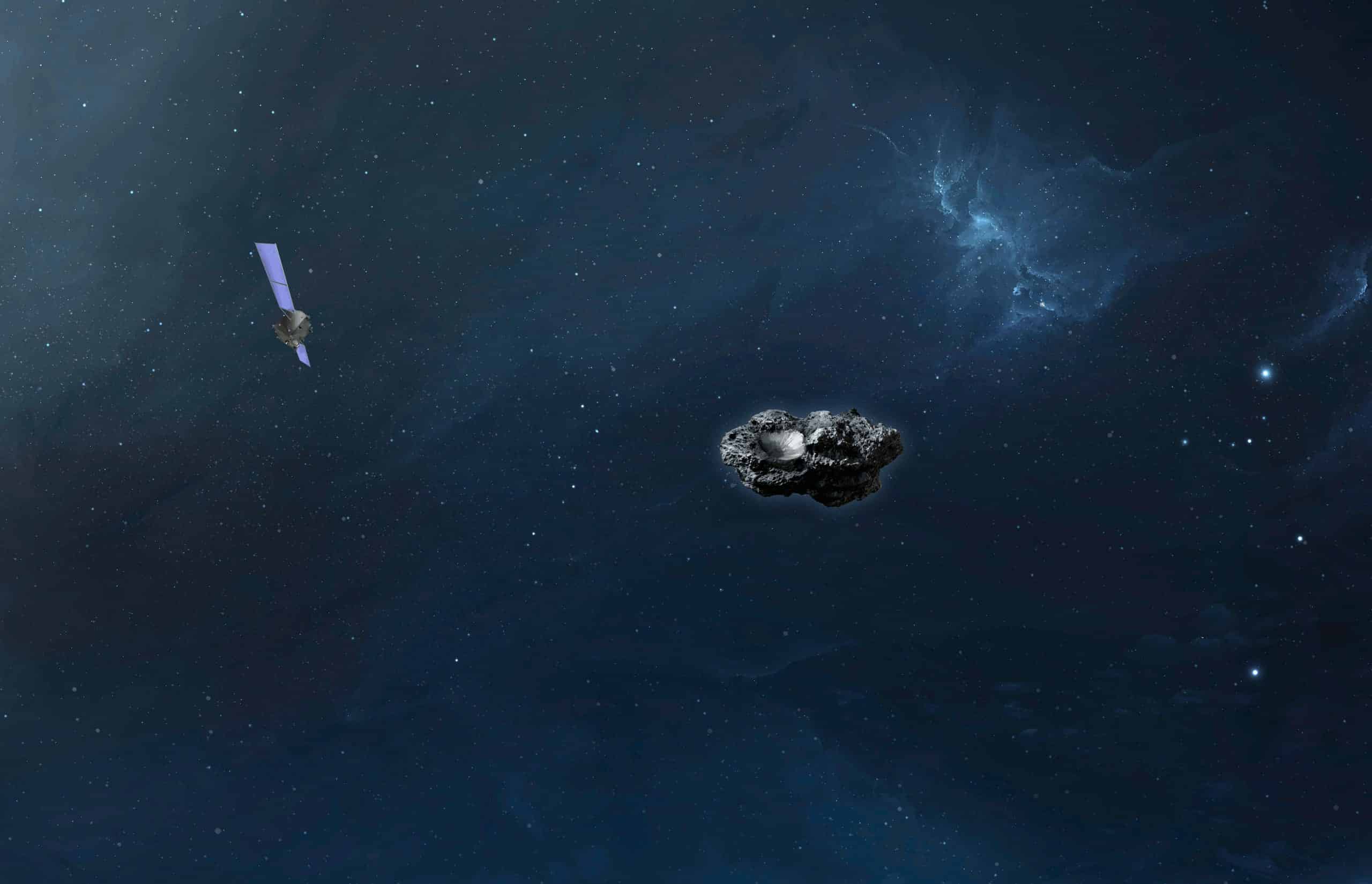
The Hera mission of the European Space Agency (ESA), which was launched on Monday from Cape Canaveral (Florida), has included the participation of Sener, responsible for its low gain antenna or LGA (Low Gain Antenna). Hera is the first ESA planetary defence mission and will carry out a detailed study of the impact of the asteroid Dimorphos, the moon put into orbit of the binary asteroid system known as Didymos.

The objective of Hera is to demonstrate the reliability of kinetic deflection as a planetary defence technique. Through its approach, Hera will collect and expand crucial missing data on Didymos and its asteroid Dimorphos following NASA’s DART mission and its impact on the asteroid Dimorphos in 2022, which caused an alteration in its orbit.

The antenna provided by Sener will help establish the ship’s communication with the tracking stations on Earth to send scientific data. The company has extensive experience in the design of fixed and steerable antennas, used for communication with satellites in all Earth orbits, and for probes and observatories sent into deep space. In this way, it has participated, for example, in the development of the low-gain antenna for the BepiColombo mission.

ESA’s Proba-3 mission, led by Sener, ready for launch after final tests of its two satellites

ESA’s Proba-3 mission, led by Sener, ready for launch after final tests of its two satellites

08/10/2024

Led by Sener in close collaboration with an industrial team made up of a large consortium of more than 29 companies from 17 countries, Proba-3 will demonstrate the viability of high-precision formation flight between satellites in space. Sener is the prime contractor for the mission and responsible for both flight and ground segments.

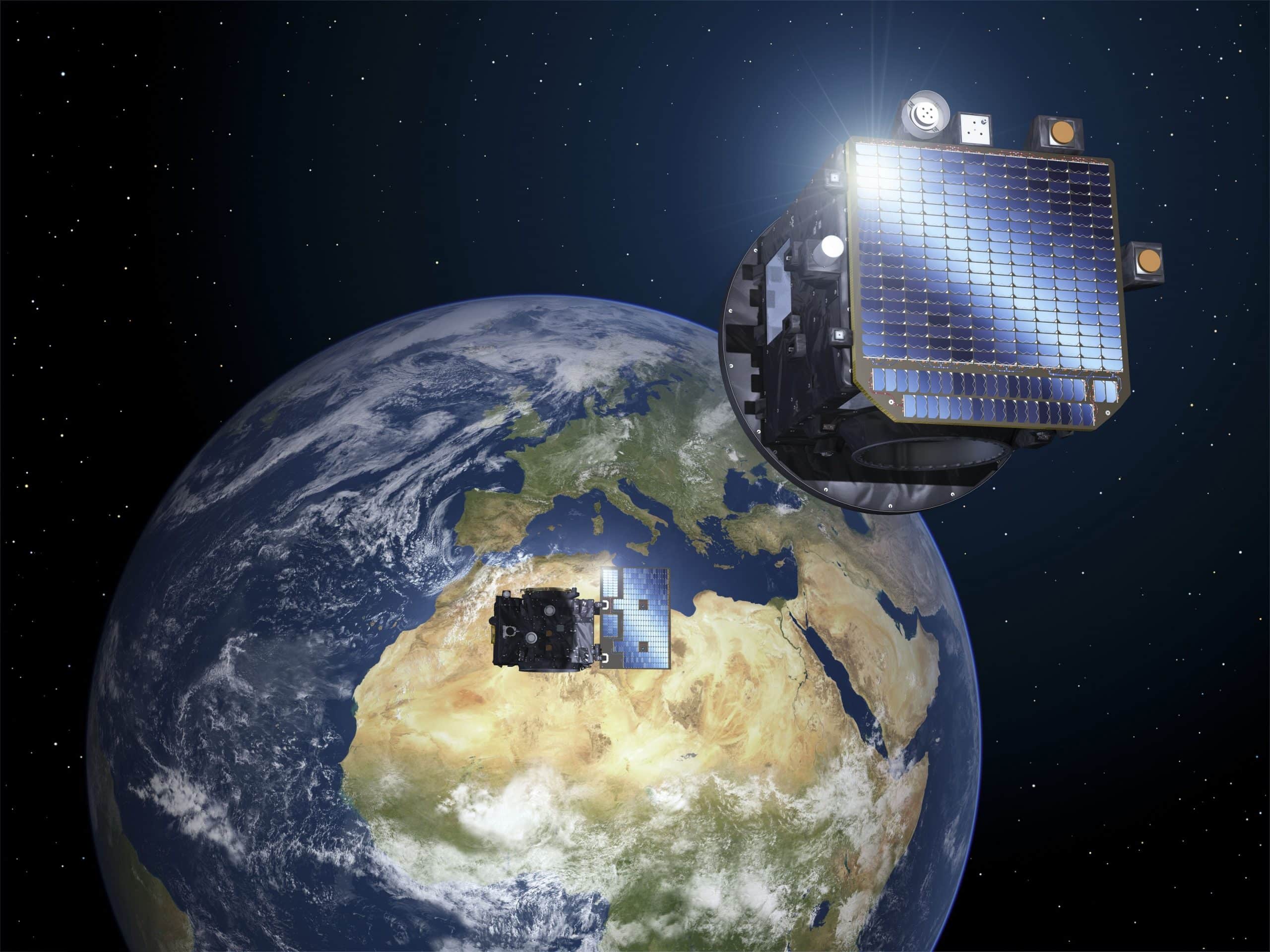
In a final test before its shipping to its Indian launch site, ESA’s eclipse-making double-satellite Proba-3 mission has received commands from its science team and transmitted images back, exactly as it will operate in orbit.

Led by Sener in close collaboration with an industrial team made up of a broad consortium of more than 29 companies from 17 countries, Proba-3 will demonstrate the feasibility of high-precision formation flight between satellites in space. Sener is the prime contractor for the mission and is responsible for both the flight and ground segments.

Proba-3 is an extremely technically and scientifically ambitious mission. Through exquisite, millimetre-scale, formation flying, its dual satellites will accomplish what was previously a space mission impossible: one platform will cast a precisely held shadow onto the other, in the process blocking out the fiery Sun to observe its ghostly surrounding atmosphere on a prolonged basis.

The last in a series of five ‘System Validation Tests’ for the mission involved scientists at the Royal Observatory of Belgium in Brussels sending payload operation requests to the mission’s control centre at ESA ESEC, the European Space Security and Education Centre, across the country at Redu.

The control centre processed these requests then sent telecommands to the science instruments aboard the Proba-3 spacecraft, currently located in a cleanroom in Kruibeke, to manage the requested scientific observations in a fully automated fashion.

Now its testing is complete, Proba-3 will now be shipped to the Satish Dhawan Space Centre in India on 21 October for a planned launch by PSLV-XL launcher on 29 November.

Its latest test spanned 12 hours in all, replicating part of Proba-3’s highly elliptical 19.5-hour orbit around Earth, with its formation flying for observing the solar corona taking place over a six-hour period around apogee, meaning the top of its 60 000 km orbit.

The two satellites’ formation flying will take place on a fully autonomous basis, but the testing included the sending of commands to science instruments for both in-flight calibration scenario and nominal scientific observation, as well as the update of some commands to be replaced with others. That latter functionality provides flexibility to the scientists to quickly react to exceptional solar events.

The only element of Proba-3’s ground segment not involved in the SVT testing is the actual ground stations dotted around the globe that will maintain contact with the satellites during each high-climbing orbit: Santiago in Chile, Yatharagga in Australia, Maspalomas on Gran Canaria and Villafranca near Madrid.

Made up of Coronograph and Occulter satellites, Proba-3 is the latest in an ESA family of experimental minisatellites dating back to 2001, the name coming from the Latin for ‘Let’s try!’.

The European Space Agency Recognises Sener’s Excellent Performance in the EUCLID Mission

The European Space Agency Recognises Sener’s Excellent Performance in the EUCLID Mission

31/07/2024

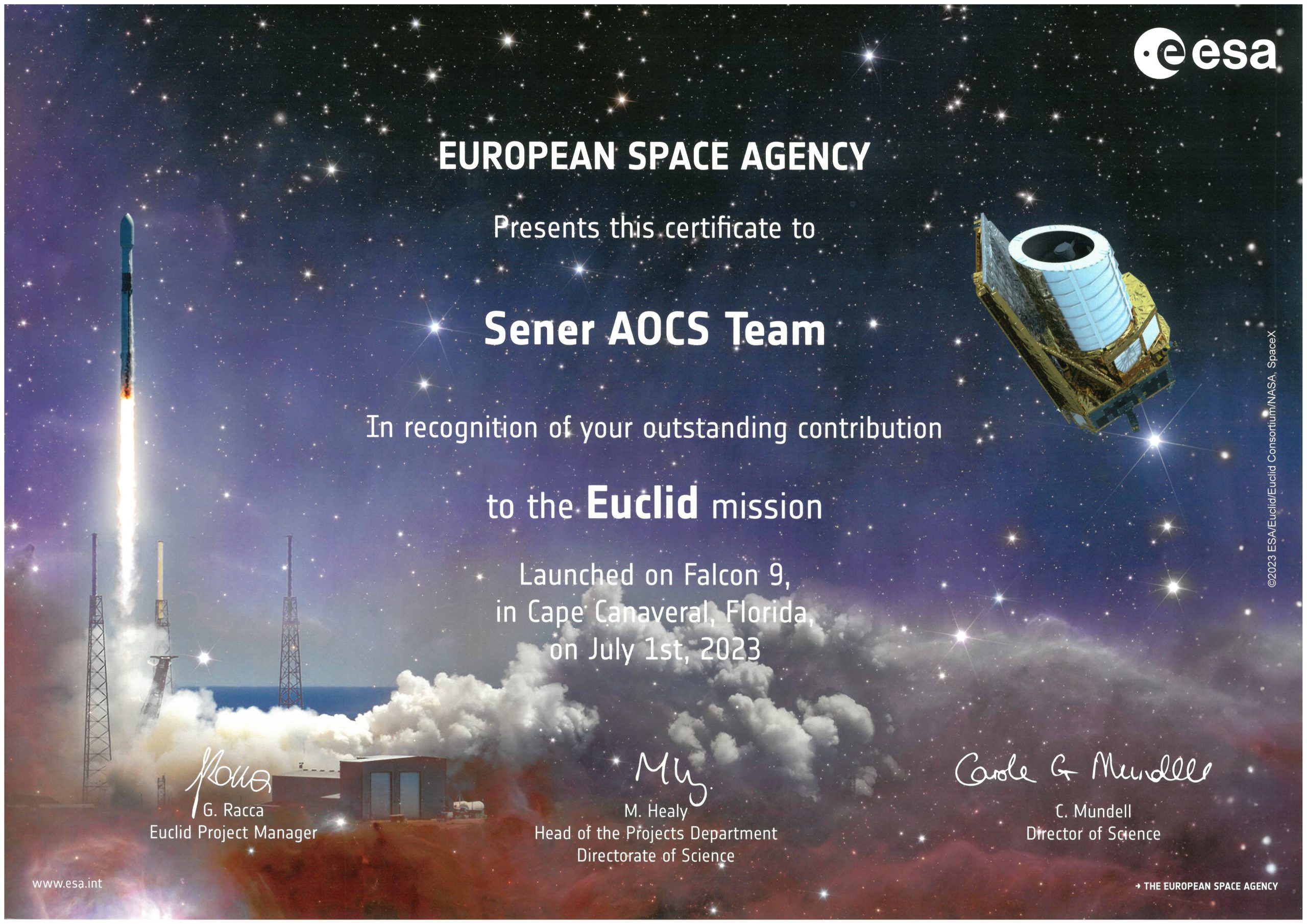
The AOCS and LGA teams from Sener that participated in the European space observatory EUCLID have received formal recognition from the European Space Agency (ESA) for their outstanding work. 

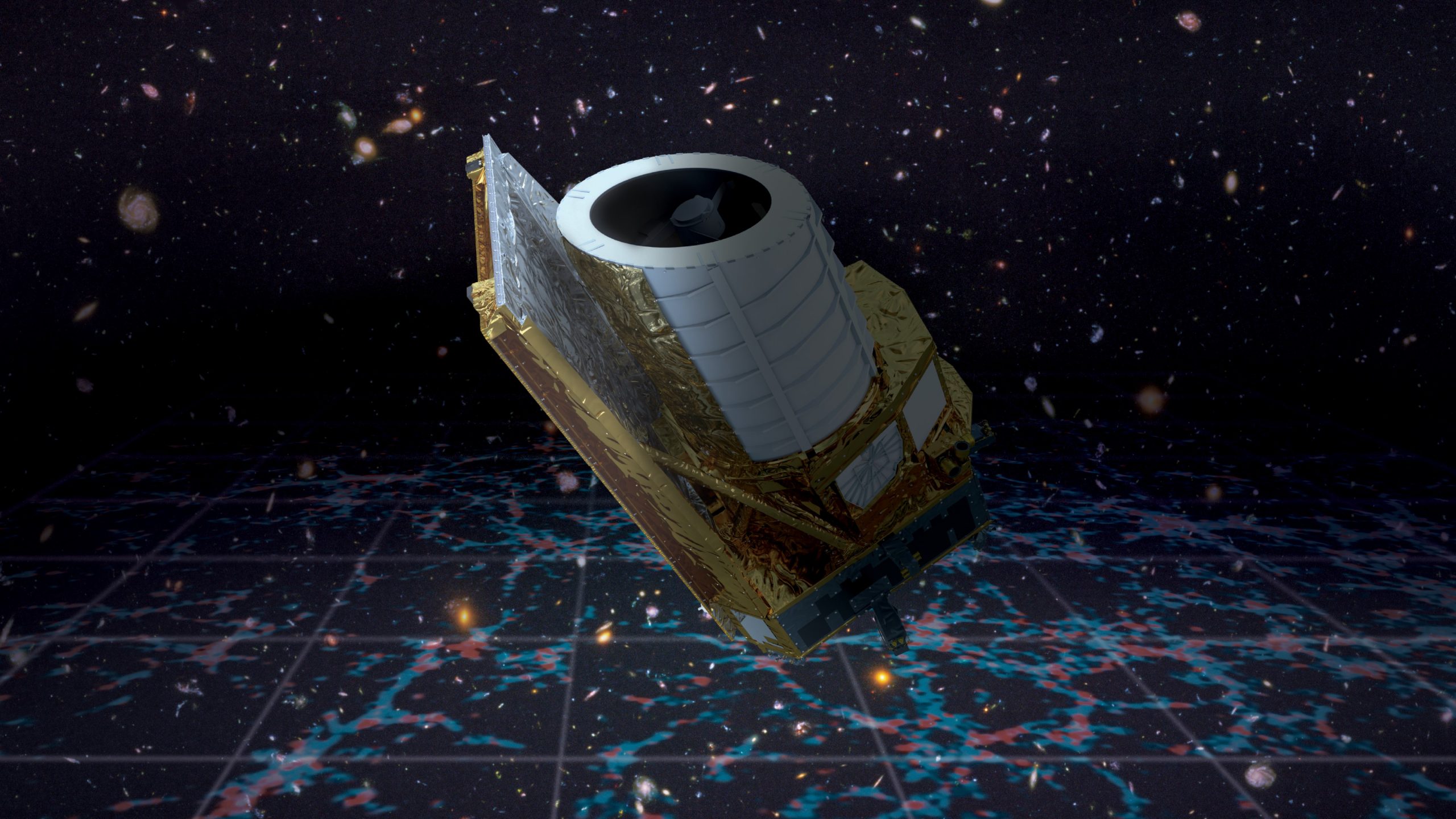
The EUCLID AOCS (Attitude and Orbit Control System) is an exceptional system, unprecedented in its concept, design, and operation. It provides pointing stability (75 milliarcseconds with 99.7% confidence) never achieved, enabling the acquisition of images and scientific knowledge that the EUCLID mission is generating following its successful launch in mid-2023.

In EUCLID, Sener has been the main contractor for the AOCS system, leading its design and development, a task of critical importance to achieve the mission’s objective: to create a three-dimensional map of large-scale structures, with the third dimension being time. This will be the most comprehensive map of the universe to date, collecting data that will help understand why it is expanding at the observed rate or the nature of dark energy and dark matter, which make up approximately 95% of the universe.

In addition, Sener designed, manufactured and tested in its facilities the LGA (Low Gain Antennas in X-Band) integrated by Thales Alenia Space in the TT&C (Telemetry and Telecommand) subsystem, which has a vital function in the satellite. These antennas allow data communication from the ground stations and the satellite itself, in both directions during the LEOP (Launch and Early Orbit Phase). The information transmitted from the satellite, known as telemetry, includes its health status and data from experiments and instruments. On the other hand, the information transmitted to the satellite, known as Telecommand, includes data and configuration parameters or commands to change the status of the subsystems in real time or delayed time.

The work carried out by the people at Sener was truly challenging, and the impact of the mission is very positive for the scientific community, aligning with Sener’s purpose: transforming the world by pushing the boundaries of technology.

Certificado AOCS Euclid ESA

Sener will design one of the main systems for ESA’s TRUTHS mission, which will improve precision of climate measurements from space

Sener will design one of the main systems for ESA’s TRUTHS mission, which will improve precision of climate measurements from space

14/02/2024

Project leader Airbus Defence and Space Ltd (UK) awarded Sener the design and prototyping of the Sun Polychromator (SPC), a key instrument for the TRUTHS mission payload, being a critical and complex element of the satellite’s innovative on-board calibration system.

TRUTHS is one of the most relevant initiatives of the decade for ESA, as it will calibrate other missions and will help fight climate change, improving measuring accuracy of Earth and Sun radiation.

The engineering and technology group Sener has been chosen by the European Space Agency (ESA) and Airbus UK to carry out the design and prototyping of one of the most critical payload elements for the success of the TRUTHS mission (Traceable Radiometry Underpinning Terrestrial- and Helio-Studies). This mission is one of the most relevant initiatives of the decade for ESA, due to its benefits for other missions and its positive impact on the fight against climate change.

The mission satellite will incorporate an absolute cryogenic solar radiometer and a hyperspectral imaging spectrometer, as well as an innovative on-board calibration system. Specifically, Sener will design and prototype the Sun Polychromator (SPC), a critical and complex element of the abovementioned on-board calibration system.

In this way, TRUTHS will make continuous measurements of solar and Earth-reflected radiation to evaluate the relationship of energy input and output to the Earth. It will function as a “metrology lab in space” that will help establish a reference standard for climate measurements and detect changes in the Earth’s climate system, serving also as cross-calibration reference for other satellites and sensors.

The mission is expected to be launched in 2030, creating a space-based climate and calibration observatory that will reduce uncertainty in Earth observation data, establishing a new benchmark for detecting changes in the planet’s climate system. TRUTHS will generate greater reliability in the information used in climate action, providing trustful reference climate data, traceable to the SI (international system) of units.

José Ignacio Bueno, Bid Manager at Sener, states: “it is not possible to make effective decisions when the uncertainty in the data is high. This is especially true in the fight against climate change, as very detailed information and long-term records are needed to understand the signals that warn us of relevant changes. We are happy to contribute to the design of a system that will help ESA obtain and offer more precise data in the climate fight, as well as better measure the result of the actions carried out and their positive impact on society.”