




 About us

 More results
FLOWIND: research into advanced O&M solutions for floating offshore wind farms
Share it:
The FLOWIND project researches and develops innovative O&M solutions for floating offshore wind farms, focusing on floating structures (in both steel and concrete), dynamic cables and mooring lines. Its aim is to optimise O&M strategies by means of techno-economic tools, thus driving deep-water wind energy and global renewable production.
Main objectives
Research failure modes
in critical components of floating wind farms to develop techno-economic models that enable comprehensive and efficient management of O&M activities.Create advanced models
to analyse in detail the dynamics and behaviour of critical components under various operational conditionsDevelop innovative monitoring systems
that integrate real operational data (from wind farms) and laboratory data in order to optimise O&M strategies and decision-making.Improve the design of critical components
by researching and applying advanced materials and innovative coatings in order to extend their lifespan and reduce maintenance needs.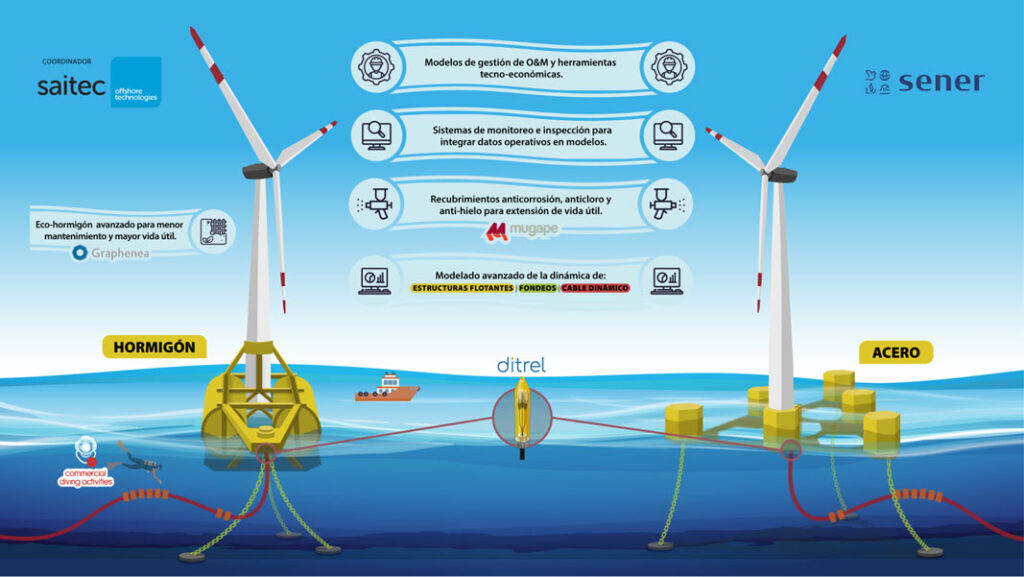
FLOWIND research lines
Development of an advanced O&M model:
- Detailed identification of specific O&M activities for floating offshore wind farms.
Smart monitoring systems:
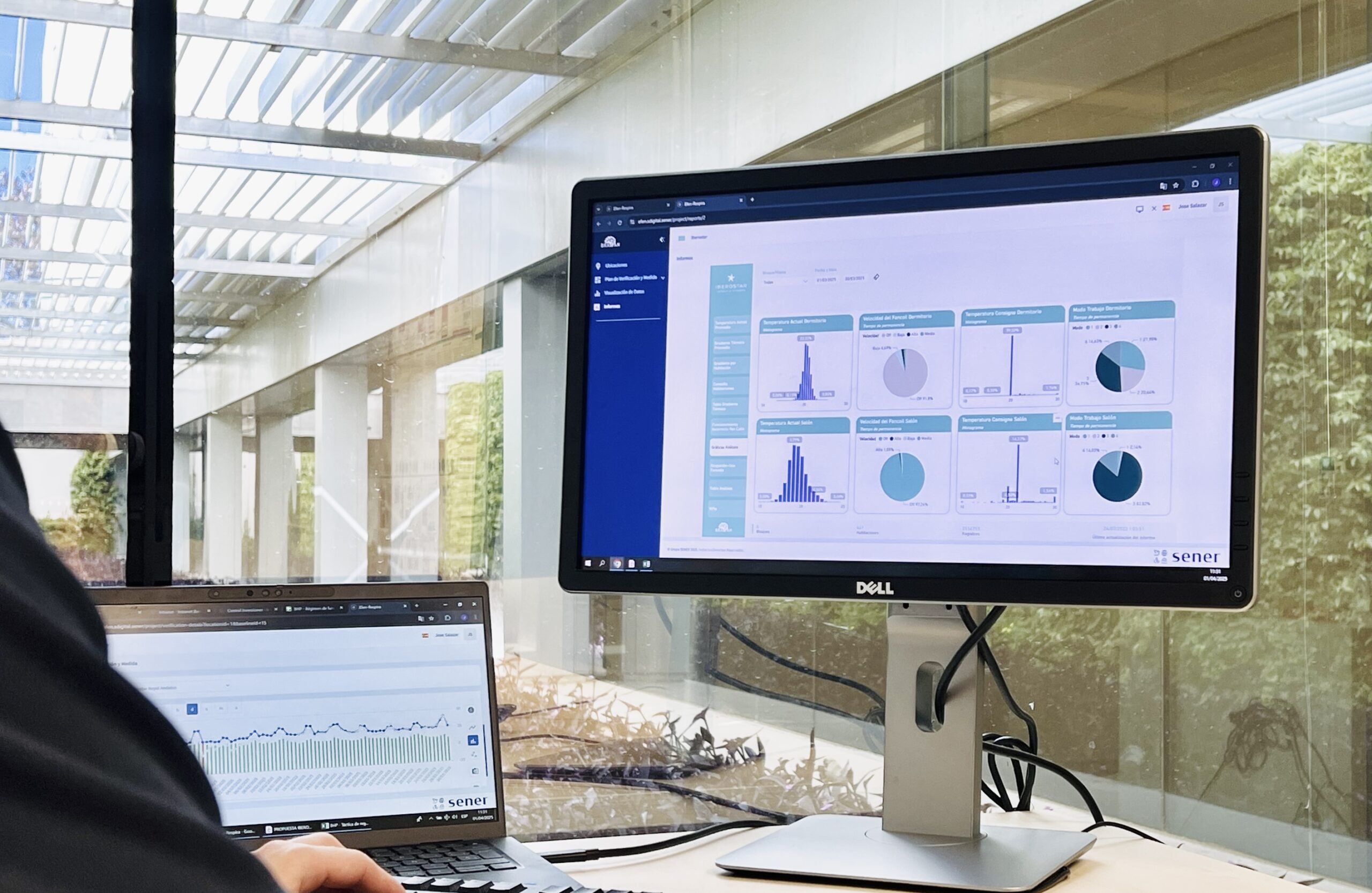
- Development and validation of advanced monitoring systems for the early detection of problems in dynamic cables.
- Development and validation of advanced monitoring systems for the early detection of problems in mooring lines.
- Development and functional validation of a guided cavitation system for the inspection and maintenance of submerged components.
Dynamic identification of components:
- Research and improvement of accuracy in the identification of the dynamics involved in floating structures, mooring systems and dynamic cables, while optimising the model’s computational cost.
Advanced and sustainable materials:
- Research into the physical and chemical characteristics of eco-cement reactivity for applications in floating structures.
- Optimisation of dosing (granularity, superplasticisers and additives) and addition of the nanomaterial graphene oxide in the formulation of advanced concrete.
- Research and development of new anti-corrosion and wear-resistant coatings, incorporating graphene loads, and their comprehensive identification for applications in demanding offshore environments.
Expected impact
Reduction of O&M costs in floating offshore wind farms.
Increased reliability and lifespan of critical components.
Improvement of efficiency and profitability of wind power in deep waters.
Contribution to the development of a more sustainable and competitive offshore renewable energy industry.
Positioning of the project participants as leaders in the innovation of floating wind energy.
Consortium
The FLOWIND project is a collaborative initiative that brings together a multidisciplinary consortium of leading companies and research organisations. Each participant offers their knowledge and experience to drive significant advances in the field of floating wind energy.
The consortium is led by Saitec and is actively participated by Sener, Aeroblade, Inalia, Graphenea, Ditrel, Mugape and CDA Bilbao.
Project subsidised by the Department of Industry, Energy Transition and Sustainability of the Basque Government (2024 HAZITEK Programme) and the European Regional Development Fund (2021-2027 ERDF).