





Sener and Ayesa apply quantum computing to optimise hydrogen generation

Sener and Ayesa apply quantum computing to optimise hydrogen generation

30/09/2025

They use quantum algorithms to simulate the best possible operation of each process carried out in an electrolysis plant.

The project forms part of the digitalisation objectives of the IPCEI (Important Project of Common European Interest) programme developed by Sener, aimed at improving electrolysis technologies and reducing the levelised cost of hydrogen, and will be presented during the 6th meeting of the Production vertical of the Basque Hydrogen Corridor (BH2C) on 25 September.

The engineering and technology group Sener and Ayesa have developed a proof of concept through a quantum solution to optimise operational simulations of electrolysis plants carried out with SenHy, Sener’s digital tool. This solution enables simulation of all processes involved in hydrogen generation using quantum algorithms, from managing the different sources of electrical energy (solar generators, grid purchases, battery storage), through the operation of electrolysis modules and their degradation management, to adjusting hydrogen output flow to align with demand forecasts.

The project forms part of the digitalisation objectives of the IPCEI programme developed by Sener, aimed at advancing electrolysis technologies and reducing the levelised cost of hydrogen (LCOH). To this end, the group has created SenHy, an innovative operational simulation tool for electrolysis plants that integrates different electricity supply profiles into an operational simulation. The project will be presented during the 6th meeting of the Production vertical of the Basque Hydrogen Corridor (BH2C), to be held on 25 September.

SenHy faces a significant technical challenge: solving every minute a complex multiphysics optimisation problem based on the current and potential state of energy profiles and the plant’s operating parameters. Given the limitations of traditional computational tools, the model had to be simplified to meet response time requirements. To accelerate this process and exploit the full complexity of the multiphysics model, Sener carried out a proof of concept based on a quantum computing algorithm provided by Ayesa. The result was successful: a simplified problem was solved with the same quality of solution in one-tenth of the time, paving the way to simulate more complex cases and significantly improve simulation accuracy.

This holistic approach, combined with the inherent scalability of quantum logic, enables proposals for optimal plant operation to be obtained with very short simulation times. This allows for precise planning to extend beyond the simulation periods achievable with the classical (non-quantum) strategy used until now.

Rapid resolution of complex problems

Electrolyser plants are facilities that, by applying electrical currents, are capable of separating hydrogen and oxygen contained in water molecules. The hydrogen generated has multiple applications in industry and research, and can also be used as a clean fuel.

It is a highly complex process that, until now, when operational issues arose, was addressed with classical methods, which were able to deliver quality output within reasonable times but only for moderately complex problems. “As complexity or scale increases, analysis times become prohibitive and it becomes necessary to resort to approximations or extrapolations to obtain results that are no more than indicative.”

So explains Iñigo Pérez Delgado, project lead at Ayesa, who adds: “We sought a scalable tool capable of delivering high-quality results in short execution times thanks to a quantum method, tested in the range where the classical process is still able to confirm the quality of results. The inclusion of a quantum algorithm makes it possible to assess scenarios of greater scale and complexity.”

The use of quantum logic means that an increase in the complexity of the conditions to be met, which in the classical case entails an exponential scaling of difficulty, hardly increases the processing capacity required to solve the problem. “In this IPCEI project, therefore, the main objective was to develop a method capable of delivering scalable results, even if at the scale analysed no speed advantage was obtained,” he states.

“However,” Pérez Delgado continues, “it has been observed that the problem analysed, though moderate in size, is already large enough for the scalability of the quantum method to provide a speed advantage of an order of magnitude. Therefore, our results confirm that quantum computing is already capable of delivering differential results in industry.”

According to Alfonso Corbella, R&D project director in H2 at Sener: “The application of technologies such as quantum computing allows us to tackle with greater accuracy the operational optimisation of complex processes such as those taking place in an electrolysis plant. This advanced simulation capability not only improves efficiency, but also paves the way towards broader adoption of green hydrogen, an area in which Sener has extensive experience.”
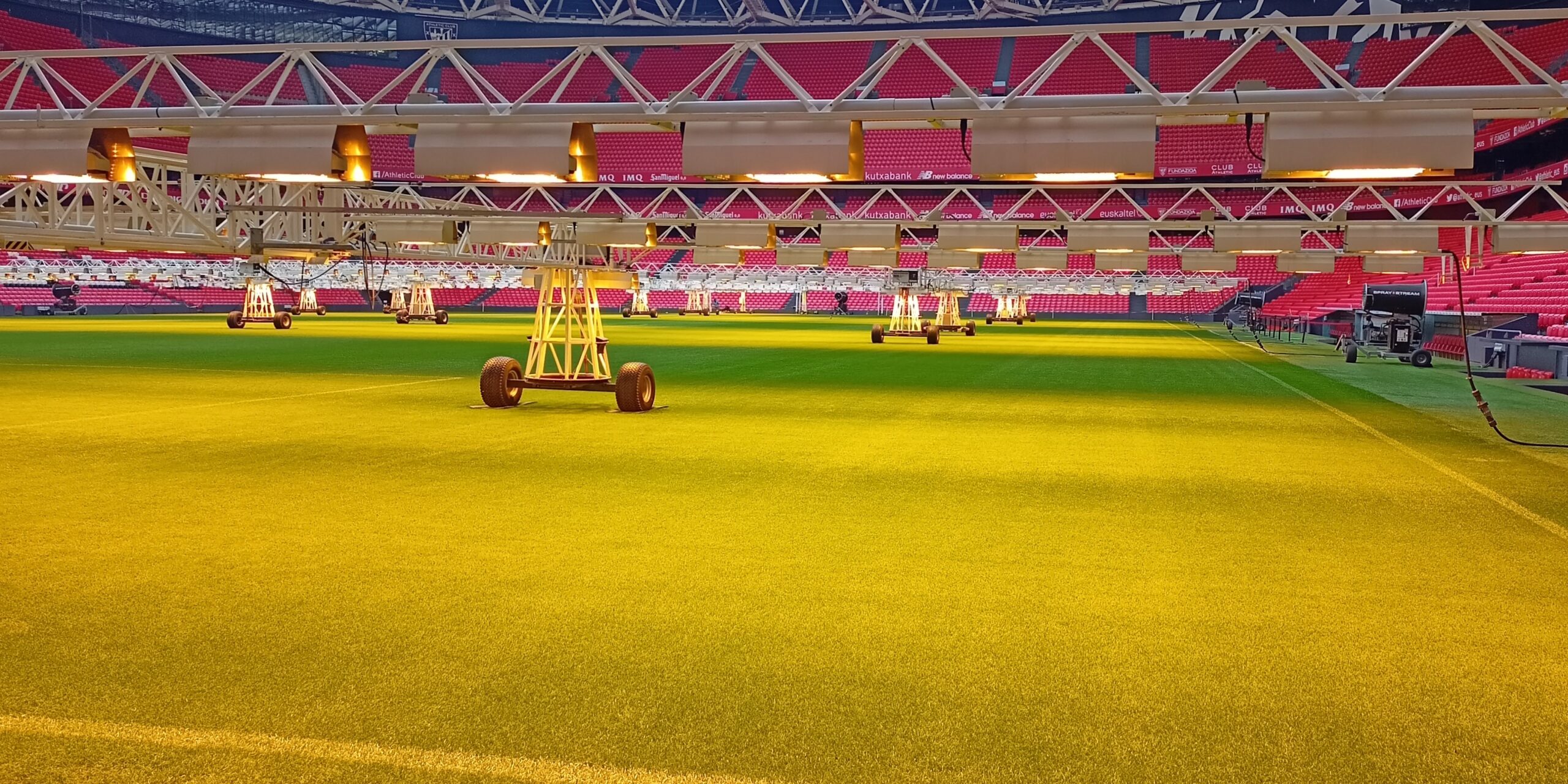

San Mamés is testing a smart turf sensor and monitoring solution deployed by Athletic Club and Sener

San Mamés is testing a smart turf sensor and monitoring solution deployed by Athletic Club and Sener

30/07/2025

The system allows precise, near real-time analysis of pitch conditions (humidity, salinity, temperature, lighting, ventilation, and turf quality) and, by incorporating external data like weather forecasts, enables better decision-making for turf care, yielding energy and water savings and a more sustainable management model.

This pilot project extends Sener’s portfolio in the sports facilities market. It includes solutions such as Velaria®, which integrates all its turf maintenance systems, or Hypogea®, a patented retractable turf system that enables the rapid, safe, and automated removal and protection of natural turf in stadiums.

The iconic San Mamés stadium is testing a digital solution to monitor the condition of Athletic Club’s pitch, jointly deployed by the club and the engineering and technology group Sener. This unique system, a pilot project tailored to the specific needs of San Mamés, is capable of accurately recording and displaying changes in parameters such as humidity, salinity, temperature, lighting, ventilation, and turf quality in each part of the pitch, while also assessing how these factors impact the care of natural turf. The aim is to precisely analyse the pitch’s condition and needs, improve turf maintenance, and optimise energy and water use, thereby achieving a more sustainable management model.

The solution makes it possible to monitor conditions such as humidity, salinity and temperature, and to understand how these parameters are affected by factors like solar radiation, rainfall, and ambient temperature. The system’s algorithm takes all of these elements into account, providing information in near real time to support decision-making by facility managers, while considering the unique context of each area (for example, exposure to sunlight or cumulative rainfall). As a result, it will be possible to save energy and water, improve natural turf maintenance, and reduce the carbon footprint.

This is a flexible solution, designed to adapt to different circumstances, such as the changing light conditions during the day at San Mamés due to the design of its roof. The solution features a digital dashboard that integrates all the information in a single interface, drawing on multiple internal sources (such as sensors deployed on the pitch) and external sources (such as weather stations and AEMET forecasts). In addition, it includes monitoring of the Athletic Club’s Lezama training complex.

Sener’s experience in sports facilities

This project extends Sener’s portfolio in the sports facilities market, where it offers solutions such as Hypogea®, its patented retractable pitch system. With this innovative solution, the natural turf of stadiums can be removed and protected quickly, safely, and automatically, using a set of mechanisms that reposition and move the trays dividing the playing surface. It also features advanced turf maintenance systems (including irrigation, ventilation, heating, drainage, and more). The Hypogea solution has been successfully deployed at the Santiago Bernabéu Stadium.

Óscar Malo, Director of Infrastructure at Athletic Club, notes that “The system being tested in our stadium could provide us with a tool to help improve the quality of our pitch while optimising the resources used to maintain it. This is consistent with the Club’s sustainability strategy, which focuses on reducing energy and water consumption.”

“Sports stadiums are undergoing an exciting technological development, with notable advances such as the case of San Mamés,” says Juan Francisco Paz, Director of Architecture at Sener. “This unique solution will allow the club to progress towards its environmental goals while also improving the care of its playing surfaces, setting a technological benchmark in the field of sports infrastructure.”

Smart Energy platform for Freyconsa

Energy

Dispatchability and Storage

Energy Management System

Smart Energy platform for Freyconsa

Monitoring and optimizing energy consumption and carbon footprint

Case of success

Figures

Saving from compressor and valve actions

Between 5% – 12%

Estimated potential maximum savings

Between 25% – 35%

PERSEI Space and Sener sign a technology licensing agreement for space debris deorbiting applications

PERSEI Space and Sener sign a technology licensing agreement for space debris deorbiting applications

14/07/2025

The agreement licenses to PERSEI Space the results obtained by Sener on electrodynamic tethers within the framework of the European project E.T.PACK-F.

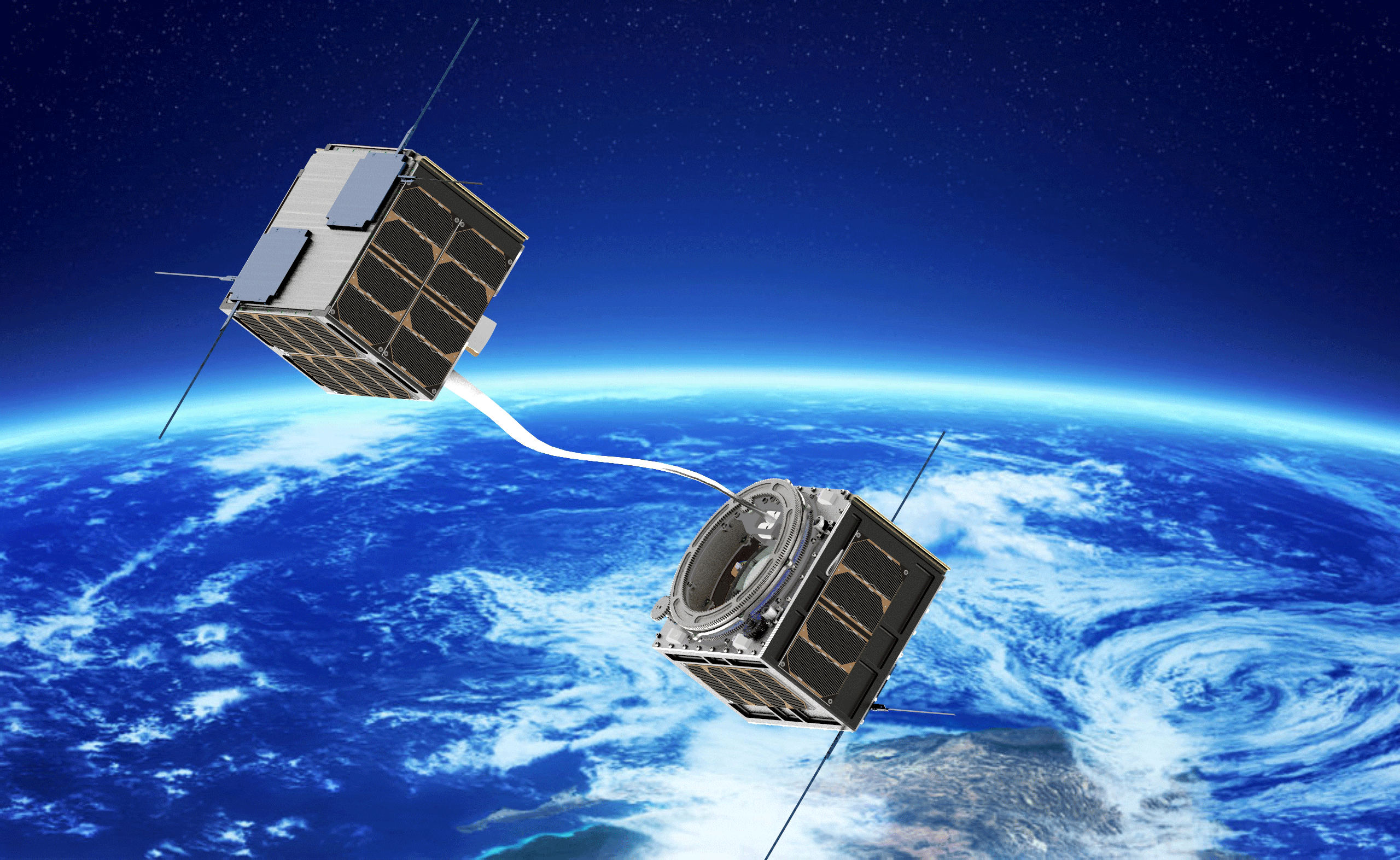
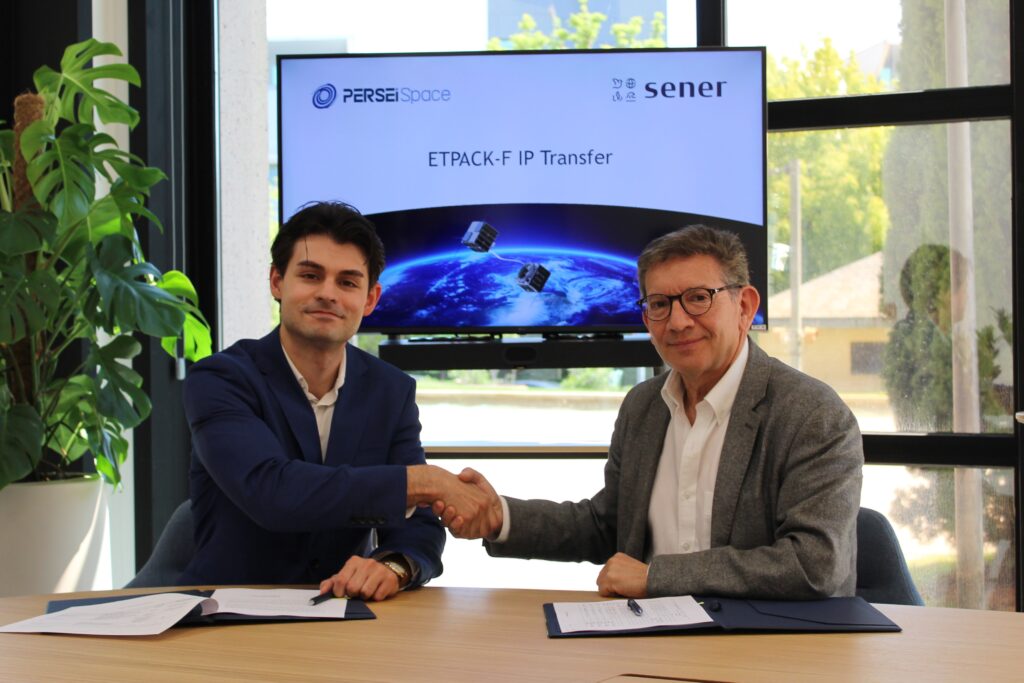
On 30 May 2025, Spanish start-up PERSEI Space and Sener signed a technology licensing agreement for the use of electrodynamic space tethers applied to the deorbiting of space debris. These tethers are long conductive ribbons which, once deployed in orbit, generate a braking force that passively reduces orbital altitude, ultimately leading to the removal of space debris upon atmospheric re-entry.

Under the terms of the agreement, PERSEI Space is authorised to use, modify, manufacture, and sell space debris deorbiting equipment based on the results achieved by Sener within the E.T.PACK-F project, which has been funded with €2.5 million by the European Innovation Council (EIC). The agreement encompasses seven technologies within the deorbiting system, including systems engineering, structure, deployment mechanism, onboard software, attitude determination and control system, and avionics.

Persei ET Pack Fly

This agreement, along with another signed in February 2025 with the three universities involved in the E.T.PACK-F project (Carlos III University of Madrid, University of Padua, and Dresden University of Technology), also grants PERSEI Space ownership of the two deorbiting units developed within E.T.PACK-F. The first is the qualification model, which has undergone rigorous testing during the project. The second is the flight model, which will be demonstrated in orbit by PERSEI Space in spring 2026, thanks to a launch opportunity funded by the Flight Tickets Initiative of the European Commission and the European Space Agency. This demonstration will represent the first in-orbit experiment of an autonomous deorbiting system based on a bare electrodynamic tether equipped with a hollow cathode—i.e., featuring the architecture necessary to deliver high performance and enable the development of effective space debris deorbiting products.

The licensing agreement marks a key milestone in PERSEI Space’s roadmap, as it consolidates and accelerates the company’s ability to prepare deorbiting system products based on electrodynamic tethers. The aerospace industry requires lightweight and efficient deorbiting systems, as without them, objects orbiting above approximately 500 km do not naturally deorbit within five years, as required by regulations in the United States and outlined in the Zero Debris Charter promoted by the European Space Agency.

E.T.PACK-F (2022–2025) is an EIC Transition project funded by the European Innovation Council (EIC). Coordinated by Carlos III University of Madrid, it also includes the participation of Sener (from its Aerospace and Defence division), the University of Padua, Dresden University of Technology, Rocket Factory Augsburg, and PERSEI Space. The project’s aim is to prepare a flight-ready deorbiting system based on a space tether. E.T.PACK-F is the natural continuation of E.T.PACK (2019–2022), a FET OPEN project also funded by the EIC with €3 million. As part of its Pathfinder programme, the EIC is also funding a third project on space tethers: E.T.COMPACT. Also coordinated by UC3M and involving PERSEI Space, E.T.COMPACT is focused on exploring the limits of miniaturisation in space tether technology and investigating new concepts such as the bare-photovoltaic tether.

PERSEI Space is a spin-off from Carlos III University of Madrid, founded in 2023 by its CEO and the principal investigators from the three European universities involved in the E.T.PACK and E.T.PACK-F projects. The company is dedicated to the development, manufacturing, and commercialisation of solutions for space debris mitigation, based on innovative products using electrodynamic space tethers. It is currently being incubated by the ESA-BIC programme of the European Space Agency and the Madri+d Foundation.

Smart skin for airflow sensing (AEROSKIN)

Space

Innovation in Space

Smart skin for airflow sensing (AEROSKIN)

Case of success

Quark to lead technical design of Campus Data Navarra, the 300 MW data centre backed by Grupo VDR

Quark to lead technical design of Campus Data Navarra, the 300 MW data centre backed by Grupo VDR

27/06/2025

Quark, a company specialising in engineering and data centre design, part of the Sener Group and a leading firm in Southern Europe, has been selected to lead the technical design of Campus Data Navarra, a new data centre to be built in the Gazólaz industrial estate, in the Cendea de Cizur, just seven kilometres from Pamplona.

The project, promoted by Grupo VDR and driven by Colliers, involves an estimated investment of €3.3 billion and a projected installed capacity of 300 MW. Its development is expected to create up to 2,600 direct and indirect jobs during the construction and operational phases, scheduled between 2027 and 2029.

Campus Data Navarra aims to become a key node in the European digital ecosystem, specialising in large-scale data processing and storage. It will serve as a strategic infrastructure to support sectors such as artificial intelligence, telecommunications, and cloud computing.

One of the key factors in choosing Navarre as the site was its strong commitment to renewable energy: the autonomous community produces 142% more energy than it consumes. This surplus, essential to ensure sustainable operation, aligns with the goals of the European Green Deal and the European Commission’s strategy to triple the continent’s data centre capacity by 2035.

Its location, along the Bilbao-Zaragoza-Barcelona axis, further enhances the campus’s international connectivity thanks to its proximity to future submarine cable corridors in both the Mediterranean and the Cantabrian seas. Ricardo Abad, CEO of Quark, stated: “Campus Data Navarra will be a flagship infrastructure that will not only accelerate digital transformation, but also have a decisive impact on the region’s socio-economic development. At Quark, we are proud to lead the technical design of such a transformative and ambitious project.”

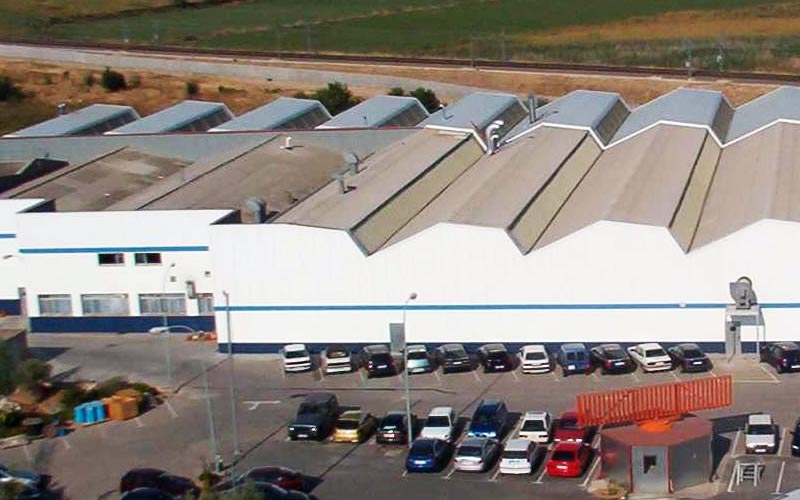
Arganda del Rey

Arganda del Rey


Direction: (Instalaciones de producción) Ctra. Campo Real, km 2,100 28500 Arganda del Rey, Madrid (España / Spain)

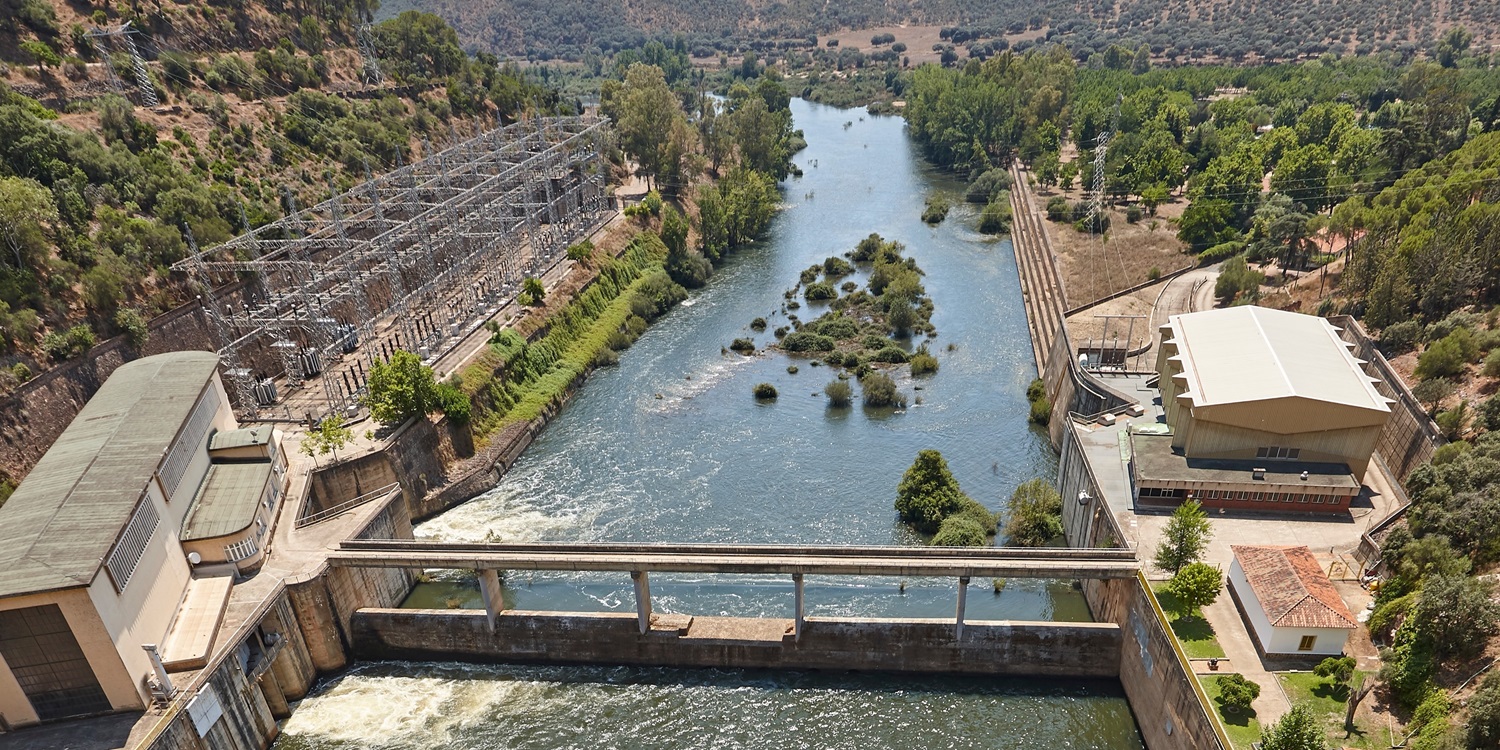
Virtual Models of the Guadiana Hydrographic Confederation Dams

Water

Pumped Hydro, Hydropower & Dams

Virtual Models of the Guadiana Hydrographic Confederation Dams

BIM models for efficient and sustainable management of Guadiana dams

Case of success

Xavier Pascual

Global Director of Consulting and New Technologies

“This project shows the potential of technology to optimize and evolve the operation, maintenance and decision making in critical infrastructures such as dams, essential for energy production and storage, as well as the storage and management of such a necessary asset as water, but also as protective assets against floods and necessary for the adaptation of our territory to the consequences of climate change. We are very proud to work, together with Modelical, in a project with such a relevant cross-sectional component for us, as we offer the Guadiana Hydrographic Confederation our experience and knowledge in engineering together with our technological know-how for the development of digital twins that improve the operation and maintenance of infrastructures.”

Sener Group recognised for Best Practices in Workplace Health Promotion by the INSST

Sener Group recognised for Best Practices in Workplace Health Promotion by the INSST

06/06/2025

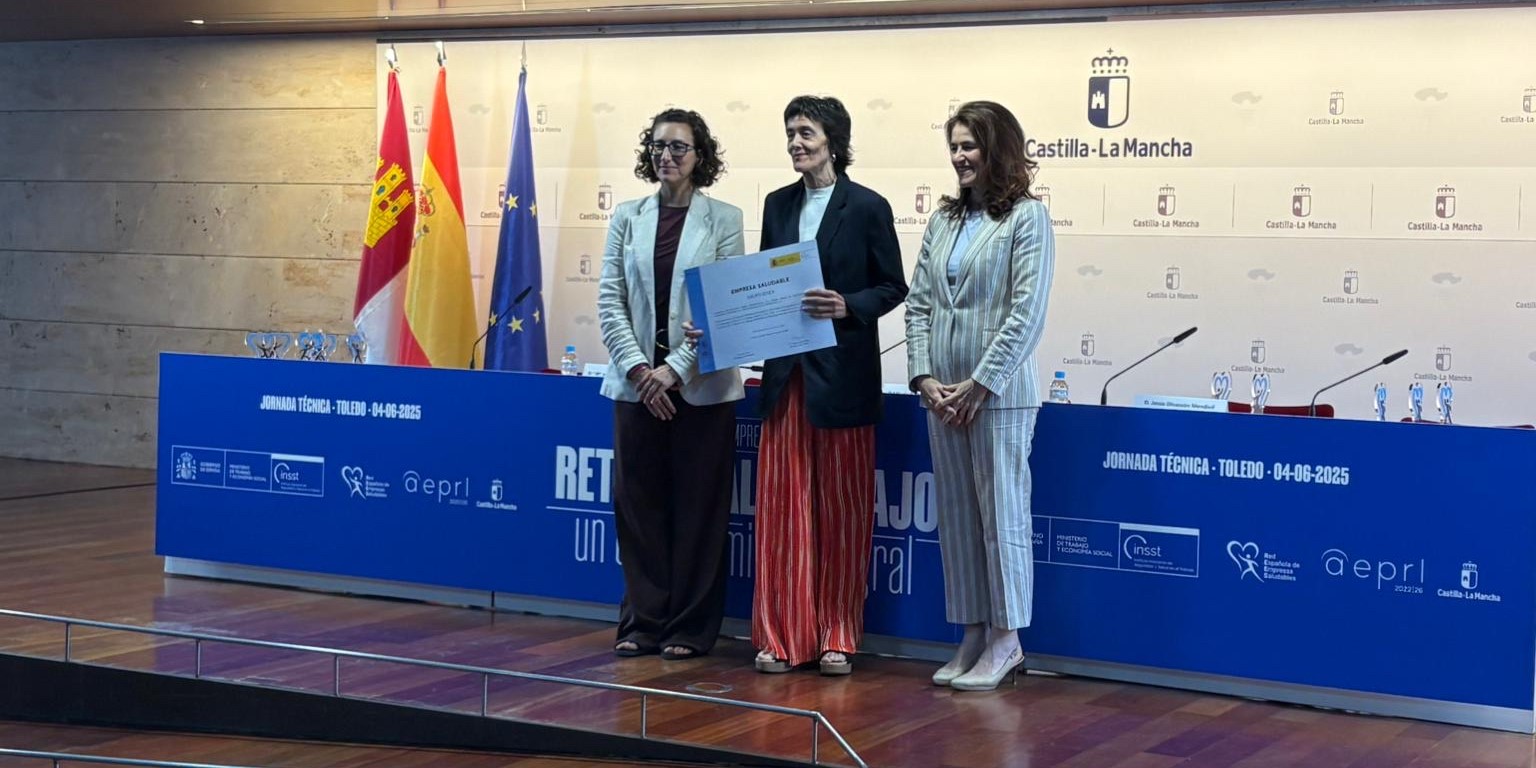
The National Institute for Health and Safety at Work (INSST), a body under the Ministry of Labour and Social Economy of Spain, together with the Regional Ministry of Economy, Business and Employment of Castilla-La Mancha, held the 10th Open Meeting of the Spanish Network of Healthy Companies in Toledo (Spain). The event featured the participation of the Spanish Heart Foundation, the Spanish Foundation for Psychiatry and Mental Health, and Inserta Empleo, as well as institutional representatives, occupational health experts, and leaders of companies recognised for their commitment to promoting healthy work environments.

Among the award-winning companies was Sener, recognised for its Sener Care programme and its strong corporate practices in workplace health promotion. The award was accepted by Mar Rúa, Sener’s Corporate Head of the HSE Department. Other companies, such as Sacyr, Renfe, and Adif, also received awards.This recognition highlights Sener’s firm commitment to the health and wellbeing of its people, embedding a wide range of initiatives into its corporate strategy to foster safe and healthy work environments. These initiatives include disease prevention programmes, psychological support, awareness campaigns on healthy lifestyle habits, sports activities at Sener, and training and awareness sessions for all staff. This distinction by the INSST reaffirms Sener’s dedication to the holistic care of everyone within the group.

Sener advances its decarbonisation plan by contracting 100% renewable energy for most of its offices in Spain

Sener advances its decarbonisation plan by contracting 100% renewable energy for most of its offices in Spain

03/06/2025

The measure will cover more than 75% of the Group’s total electricity consumption and represent a breakthrough in its decarbonisation strategy.

In keeping with its commitment to sustainability and the fight against climate change, the Sener engineering and technology group began consuming 100% renewable energy with a guarantee of origin in most of its offices in Spain in April.

Thanks to this decision, Sener will cover more than 75% of its total energy consumption (based on estimated 2024 data) with electricity from renewable sources, which will significantly contribute to reducing its Scope 2 greenhouse gas (GHG) emissions and to shifting toward more efficient and environmentally friendly operations. Sener will also continue working to contract renewable energy for other group offices outside of Spain.

This milestone reinforces Sener’s commitment to a more sustainable energy model, in line with global climate goals and the growing expectations of its stakeholders. It is also part of a broader set of initiatives the company is driving to promote a real and effective green transition.

Sener will continue progressing on its ESG (Environmental, Social, and Governance) roadmap, implementing actions in areas such as energy efficiency, sustainable mobility, waste management and social impact, all in an effort to build a more responsible future committed to sustainable development.