





 About us
 / section
Careers
Careers / section
News & events
News & events / sectionCountries section
About us
About us / section
Careers
Careers / section
News & events
News & events / sectionCountries section
About us
About us / section
Careers
Careers / section
News & events
News & events / sectionCountries section
About us
About us / section
Careers
Careers / section
News & events
News & events / sectionCountries section


 More results
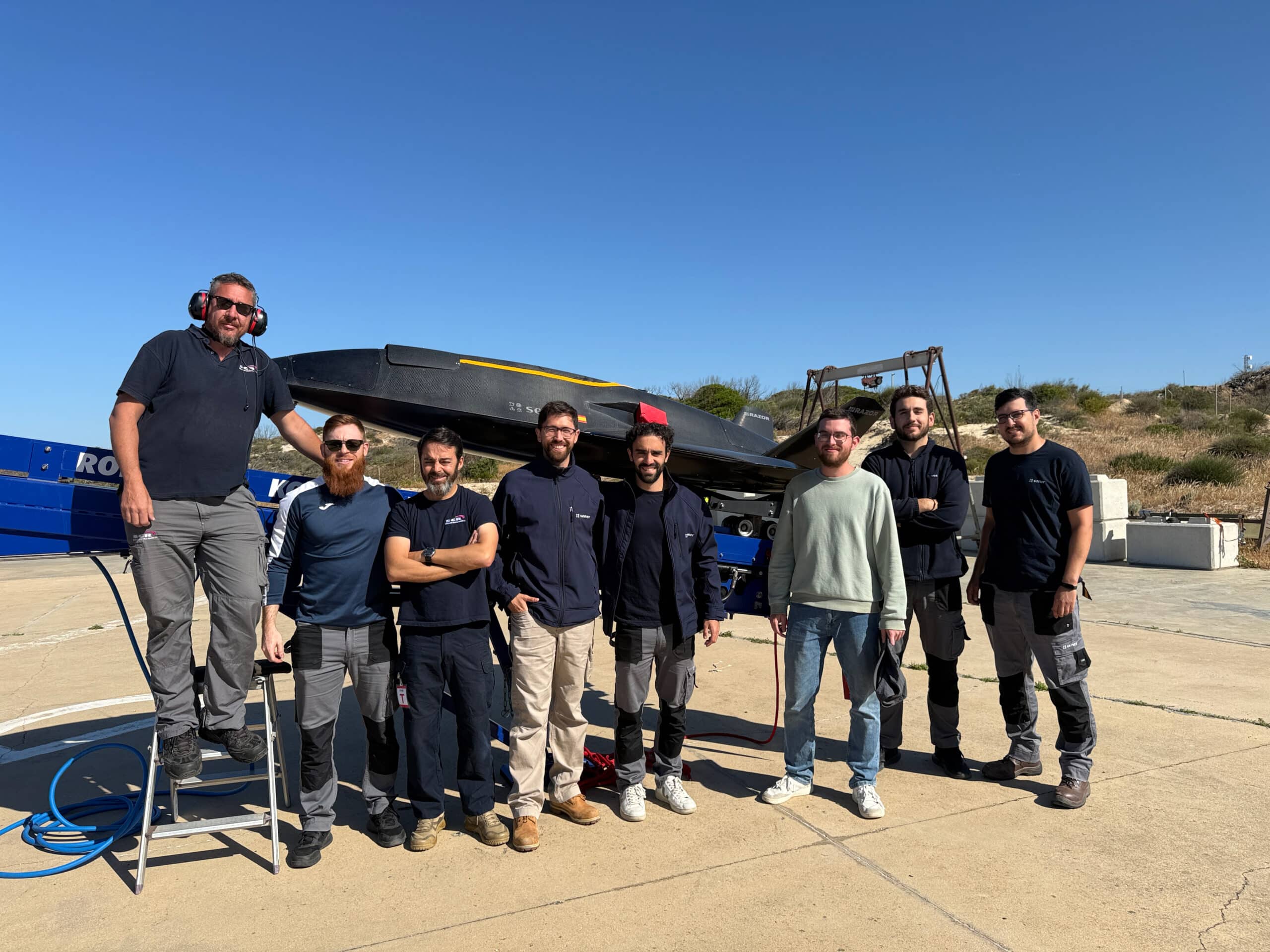
The first tests were carried out in mid-May, providing valuable insight for the next steps of a demanding validation campaign.
In mid-May, Sener began the flight test campaign of Razor (SRC-100 Razor) as an aerial target, as part of the development of a new-generation multipurpose autonomous platform under the company’s SIROCO programme. The first tests, conducted at the El Arenosillo Experimentation Centre (CEDEA) of the National Institute for Aerospace Technology (INTA), mark the start of an extensive test campaign.
Through this campaign, Sener aims to explore the flight envelope of this new platform, validate its high performance and new functionalities and, in short, continue advancing the maturation of Razor while at the same time obtaining relevant information for the development of subsequent platforms within the SIROCO programme.
Sener conceives SIROCO as a fast-development project that brings together, under a single technological vision, a family of aircraft designed to serve as targets for the evaluation and calibration of air defence systems, with the capability to evolve into operational platforms. Within this programme, Sener is developing several platforms that will share a design philosophy based on high autonomy, high speed, low observability and interoperability.
Within this context, the start of flight trials of the first Razor prototype represents a key step in the progressive validation of the platform and in consolidating the knowledge required for the evolution of the product.
Razor: a new-generation multipurpose autonomous platform
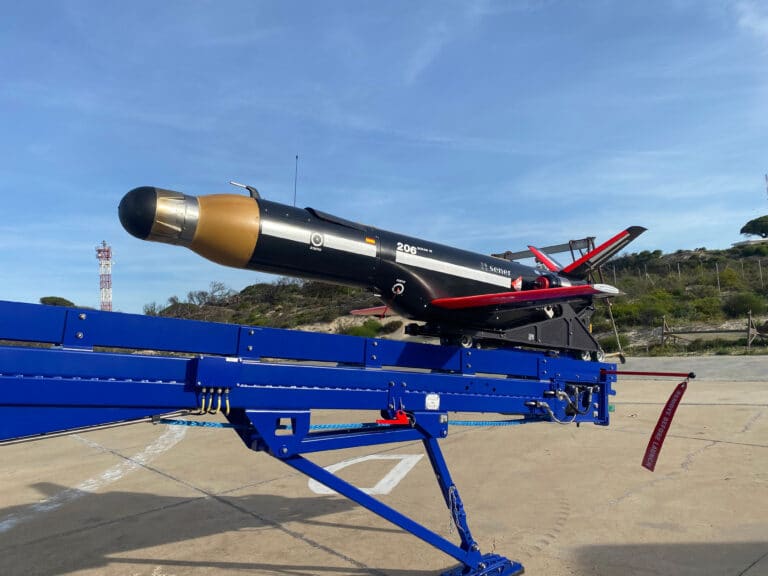
Presented internationally in February at the World Defense Show in Riyadh, Razor is a multipurpose autonomous platform designed to meet current operational needs. Manufactured entirely in Spain and weighing 160 kilograms, it represents a new generation of high-performance recoverable aerial vehicles.
The platform combines advanced engineering with robust and secure communications, ensuring reliable connectivity in highly demanding environments. In addition, it will be able to operate autonomously even in GNSS-denied environments. Thanks to its low-observability design, Razor stands out both as an advanced aerial target and as a platform capable of carrying out ISR (intelligence, surveillance and reconnaissance) missions and precision strike operations.
With a contained cost, it incorporates a parachute recovery system, making it a suitable option for high-risk operations and modern attritable strategies, as it can be deployed even on missions where there is a high risk of loss.
This technological development under the SIROCO programme goes hand in hand with the growth of the group’s industrial infrastructure: following the recent refurbishment and expansion in Arganda del Rey (Madrid), the development of the Tres Cantos facilities (Madrid) and the construction of the Zamudio centre (Bizkaia), Sener will exceed 40,000 m² dedicated exclusively to space and defence.
Sener to supply advanced aerial targets to INTA for ATLANTE 26 Exercises
Iñaki Pinto to lead Sener’s Space and Science division, while Diego Rodriguez takes on newly created technology and innovation leadership role in Aerospace and Defence

Sener Foundation promotes social innovation in the 3rd edition of the SocialTech Challenge.
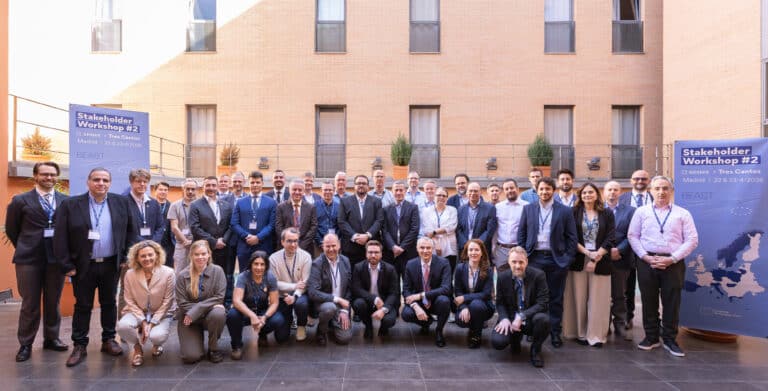
Sener hosts the second workshop of BEAST, the project shaping the future European short‑range missile