





 About us

 More results
- The mind behind the project
Categories:
What inspired you to start your career in the aerospace sector?
It all began when I decided to study Telecommunications Engineering at the University of Cantabria. From an early age, I had a particular interest in mathematics and saw this degree as a way to apply it in a practical way, especially in the field of communications.
After finishing my degree, I had the opportunity to join the university’s microelectronics department as a researcher, where I spent nearly four years taking part in European projects within consortia made up of academic institutions and companies. This experience strengthened my interest in technology and in working in environments where innovation has a real impact. It was in this context that I began to connect particularly with the world of electronic components and their critical role in complex systems.
What made you interested in Sener?
When the research projects I was involved in started to come to an end, I had to make an important decision: continue with a PhD—having already been awarded a scholarship—or move into the private sector.
I decided it was time to take on a new challenge, move to Barcelona, and access a broader professional environment. At that point, a university colleague told me about an opening at TRYO Aerospace in the electronic components procurement department, and I did not hesitate to seize the opportunity.
I was fascinated by the idea of being part of a company that develops communication equipment for transmitting and receiving data between Earth and space, and of contributing through the selection and management of components, which are key to the reliability of these systems.
After a year, the company was acquired by Sener, which represented a significant step forward: projects became more complex, the workload increased, and opportunities arose to collaborate with new markets and clients. The ability to tackle ever more ambitious and complex challenges is what excites me most about being part of Sener.
“In the defence sector, the contribution is equally clear: the development of technologies that help ensure the security of nations”
What area of the business do you work in? And what is your day-to-day work like?
I belong to the Supply Chain department, where I work as a Category Manager for electronic components, as well as for the RF equipment business line for space.
As the person responsible for electronic components, together with the Supply Chain team in Barcelona, we support various divisions such as COM, SEM and ASA, both in space and defence projects.
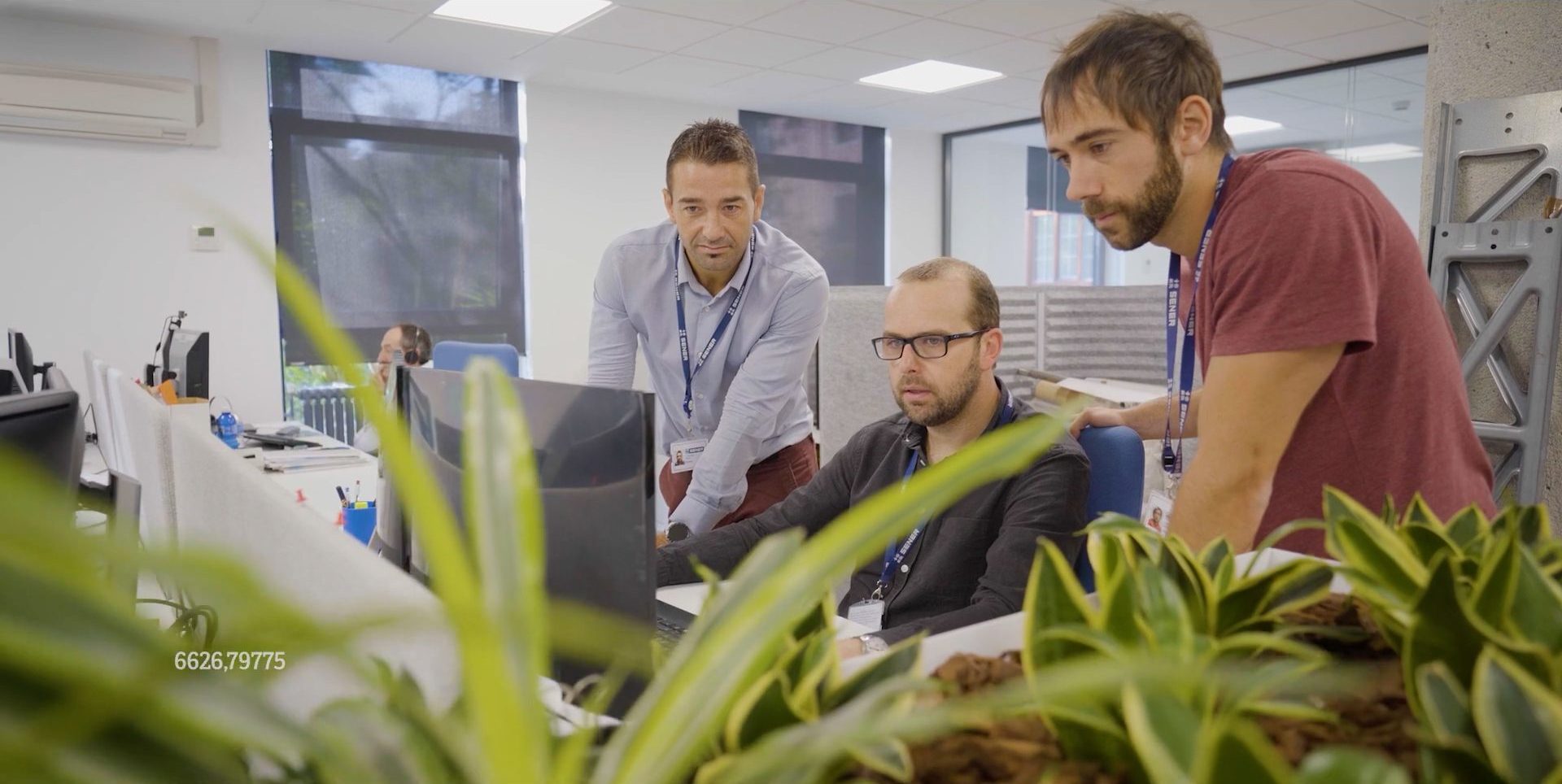
Our main mission is to ensure that materials are available on time for production, with the required quality and within budget. To do so, we work very closely with multiple departments—such as electrical engineering, component engineering, quality, production and project management—which makes the work highly collaborative and dynamic.
We manage procurement in complex environments, with designs under development, open specifications and very demanding schedules. We also continuously face challenges such as the introduction of new components and reliability requirements, as well as increasingly unstable market conditions. These include price increases, raw material shortages, obsolescence and, more recently, geopolitical factors that directly affect the supply chain, such as tariffs and trade restrictions.
All of this means that our work has a direct impact on the viability and success of projects.
What progress have you made since joining Sener? What are the most important projects you are currently working on?
I joined Sener nine years ago as a Procurement Engineer, supporting space projects within the communications division.
Over time, I took on increasing responsibilities until I began coordinating the electronic components procurement team for Sener Aerospace and Defence. During these years, the team has grown both in size and scope, and we have consolidated a more strategic role within the organisation, centralising the procurement of electronic components across different divisions, including defence.
In terms of projects, I have had the opportunity to take part in some particularly significant ones. I would highlight Spainsat NG, a key national programme in secure communications, which has also enabled us to develop a product that can be exported to other clients. Also OneSat, one of the major bets in communications satellite constellations, and PAZ-2, where we have deepened our involvement in the New Space environment. In defence, I am involved in programmes such as IRIS-T SLM and IRIS-T IE, which present new challenges from a supply chain perspective.
In addition, at a cross-functional level, I am part of the Supply Chain Committee, where we work on continuous improvement initiatives within the department. I also collaborate with the Components Discipline to create synergies across divisions and promote standardisation in the use of components, both in traditional space projects and in the New Space sector.
How do you think the projects you work on influence the world or society today/in the future?
The impact of the projects we work on is direct and highly relevant for both present and future society. We take part in cutting-edge developments, often at the limits of technology, which allows us to contribute to advances with a real effect on people’s everyday lives.
In the space sector, the systems we work on enable key applications such as Earth observation, environmental monitoring, support for rescue operations, improved weather forecasting and the provision of communications in remote areas. They are also essential for ensuring secure and reliable communications.
In the defence sector, the contribution is equally clear: the development of technologies that help ensure the security of nations.
In other words, these projects not only drive technological innovation but also have a direct impact on security, connectivity and quality of life in society.
“I was fascinated by the idea of being part of a company that develops communication equipment for transmitting and receiving data between Earth and space”
How do you keep up to date with general knowledge and trends in your sector?
One of our main sources of updates is our suppliers. We maintain direct and continuous contact with them, organising regular meetings where they present the latest market developments, both in new components and in applications or quality levels. Moreover, these interactions are two-way: we also share our needs and challenges with them, allowing them to take these into account in the development of their future products.
Another important avenue is attending workshops and industry trade fairs, which are essential as they are highly focused on trends and the most current topics within our industry.
And, of course, a fundamental part of learning comes from the people within Sener itself. We have professionals with a high level of knowledge and experience, so the exchange of ideas and the ability to listen are key to continuing to grow professionally.
What, in your opinion, distinguishes Sener from its competitors?
In my view, what distinguishes Sener is its ability to tackle highly complex projects with a high level of technical demand, participating in innovative developments at the limits of technology and with significant impact, which positions it as a benchmark in the sector.
I would also highlight its multidisciplinary and collaborative approach, where different areas work in a highly integrated way to achieve common goals. This is reflected in the working environment, where there is a strong culture of collaboration and collective success is prioritised over individual achievement.
What new challenges do you see yourself working on in the medium term?
In the medium term, the path forward involves continuing to move towards an increasingly strategic role within the supply chain, adding value not only in operational management but also in decision-making that impacts project development.
This growth also involves contributing to the development of the team, fostering an environment that promotes collaboration, learning and the ability to deliver value collectively, with the aim of strengthening a supply chain area for electronics that is prepared for future challenges.
One of the main challenges will be adapting component management to an increasingly changing environment, marked by the sector’s transformation towards New Space and the geopolitical implications affecting the supply chain.
In this context, the focus will be on continuing to drive initiatives for standardisation and consolidation of electronic components, as well as cost optimisation and risk anticipation.
“What distinguishes Sener is its ability to tackle highly complex projects with a high level of technical demand”
What new challenges do you foresee in the coming years?
In the medium term, I would like to contribute to the harmonisation of electronic component management and selection criteria by promoting a more structured and coherent approach within the organisation. My goal is to foster a culture that recognises the strategic importance of component engineering and the effort involved in this role, encouraging a greater understanding and appreciation of the work carried out in this field.
Along these lines, I would like to move towards consolidating a cross-cutting components area for all divisions, supported by common procedures that guarantee technical coherence, reliability and traceability across projects.
On a personal level, I aspire to strengthen an environment of collaboration and trust among the people working in this speciality, making their contribution more visible and helping to ensure that their work is recognised within the organisation.

