


 About us

 More results
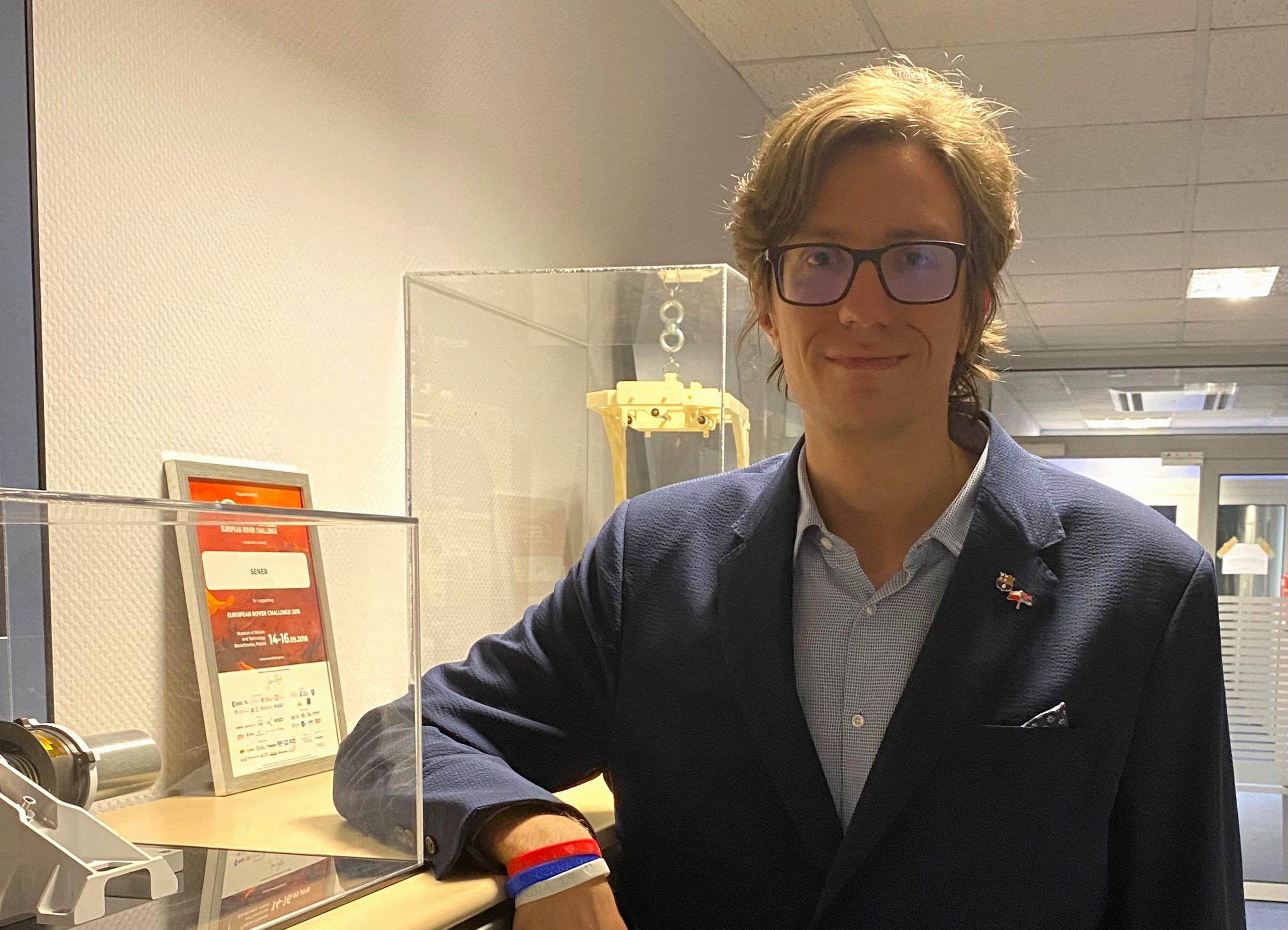
- The mind behind the project
Categories:
What inspired you to start your career in the aerospace sector?
From a very young age, I was drawn to technology, and space sparked a great deal of curiosity in me. I was fascinated by how communications make it possible to connect people and systems and, ultimately, enable complex projects to function. That is why I decided to study Telecommunications Engineering at UPV.
I moved to Madrid in order to work in the space sector, which was what had motivated me to choose this degree. I am inspired by working in environments where reliability, precision and electronic design are critical, and where every single component matters. This combination of technical complexity and purpose is what led me to pursue this career and what continues to motivate me every day.
What made you interested in Sener?
When I moved to Madrid, I had the opportunity to work for three and a half years at another company within the space sector, a period that consolidated my interest in this field. Over time, I identified Sener as an opportunity that fully aligned with the professional path I wanted to build for the future. Not only did it allow me to continue developing within the space domain, but it also opened the door to working on defence projects, a field that I find particularly challenging and stimulating due to its technical complexity and strategic impact. This combination of cutting-edge technology and new challenges was what motivated me to take the leap.
This combination of technical complexity and purpose is what led me to pursue this career
What area of the business do you work in? And what is your day-to-day work like?
I currently work in Sener Aerospace and Defence as a Components Manager within the Electromechanical Systems division. Our department provides support to projects across three markets — traditional space, New Space and defence — delivering technical solutions to more than twenty projects running in parallel.
We are involved from the early bid phases and work closely with engineers from different disciplines to ensure that electronic designs are robust, reliable and fully compliant with project requirements. The components engineering role involves a wide range of tasks: analysis and selection of EEE components, design support, coordination with quality, procurement and manufacturers, and technical follow-up throughout the entire lifecycle.
It is an extremely dynamic environment: no two days are the same, and the range of situations we face makes the work demanding, detail-oriented, varied and highly rewarding.
What progress have you made since joining Sener? What are the most important projects you are currently working on?
This March marked my 14th anniversary at Sener, a journey during which I have had the opportunity to take part in some of the company’s most emblematic projects. I have worked as a hardware engineer on highly significant missions such as the antennas for BepiColombo, Solar Orbiter, JUICE — which is currently on its way to Jupiter — and Meteosat Third Generation. These experiences have allowed me to grow both technically and professionally within the aerospace field.
Over the past six years, within Sener SEM, there arose a need to consolidate the role of components engineer — a relatively new position within the organisation — created to centralise EEE management, ensure compliance with mission requirements, reduce errors and improve efficiency. I naturally took on this responsibility, fully specialising in this area in response to the increasing complexity and workload associated with our projects. This evolution has enabled me to add value across both design phases and validation activities, as well as through transversal support to multiple teams.
We are currently involved in space projects such as PAZ-2, LISA, Moonlight, CIMR and FORUM, together with a significant number of New Space and defence initiatives which, for confidentiality reasons, I am unable to detail. The diversity and technological challenge of all these projects make the work extremely enriching and ensure that each day offers an opportunity to continue learning and contributing to high-reliability solutions.
How do you think the projects you work on influence the world or society today/in the future?
The projects we work on have a direct impact on both the present and the future, as they contribute to advances in knowledge, security and sustainability. In the space sector, we participate in missions that make it possible to observe the Earth with greater precision, improve weather forecasting, study the climate and better understand fundamental physical phenomena. All of this contributes to a more informed, resilient society that is better equipped to anticipate risks.
At the same time, New Space and defence projects drive critical technological capabilities: from improving communications and infrastructure management to strengthening security and strategic autonomy. These areas require highly reliable systems, and our work in components helps ensure that these solutions are robust, safe and technologically competitive.
How do you keep up to date with general knowledge and trends in your sector?
I like to stay very close to technology, so a key part of my professional development comes from direct contact with manufacturers and suppliers. Whenever possible, I attend technical visits, component workshops and specialised sessions on components and radiation effects. Hearing first-hand from those who are developing these technologies is extremely valuable and helps me anticipate where the market is heading.
I also learn a great deal from the day-to-day work at Sener itself. Continuous interaction with other disciplines, joint reviews and spontaneous technical conversations are a constant source of learning. Very often, what helps me progress the most is seeing how colleagues from other areas approach a problem and connecting that insight with my work in components.
And of course, in our role it is essential to stay up to date with obsolescence issues, new technologies, regulatory changes and emerging trends. Ultimately, it is a combination of personal curiosity and professional responsibility: I enjoy learning, and I am also aware that the success of our projects depends on staying one step ahead.
What, in your opinion, distinguishes Sener from its competitors?
In my view, what sets Sener apart from other companies in the sector is the combination of its culture and its approach to engineering. There is a genuine commitment to technical excellence, combined with deep respect for people, clients and the purpose of each project. This balance between rigour and integrity is not just a slogan — it is something that is truly lived day to day.
Another key differentiator is the collaborative culture. There is a very positive working atmosphere among colleagues. The concept of “my own silo” simply does not exist here; instead, there is a strong spirit of cross-disciplinary support. You learn an enormous amount from your colleagues, and this transversal way of working allows us to deliver stronger and more competitive solutions.
What new challenges do you foresee in the coming years?
In the medium term, I see myself leading a fully consolidated components team, with a strong technical identity and a mature way of working. I envision my team tackling increasingly complex challenges that allow us to continue growing sustainably across the three markets in which we operate: traditional space, New Space and defence.
I firmly believe there is significant potential to continue developing new internal methodologies that enable us to work in a more agile and robust manner. I envisage that within the components discipline we will achieve process standardisation and continuous improvement, allowing us to increase efficiency without compromising quality — which I consider one of our most important hallmarks. My aim is for our area to continue expanding its scope, delivering the same level of detail and technical rigour that has characterised us to date, but supported by tools and working dynamics that make it possible to scale our impact.
In this scenario, I hope not only to see a stronger, more cohesive team, but also one that is more autonomous, capable of anticipating market needs, sharing knowledge and generating innovative solutions. For me, technical growth must go hand in hand with team development: creating an environment where people grow professionally, feel heard and are able to contribute their full potential.