





 About us
 More results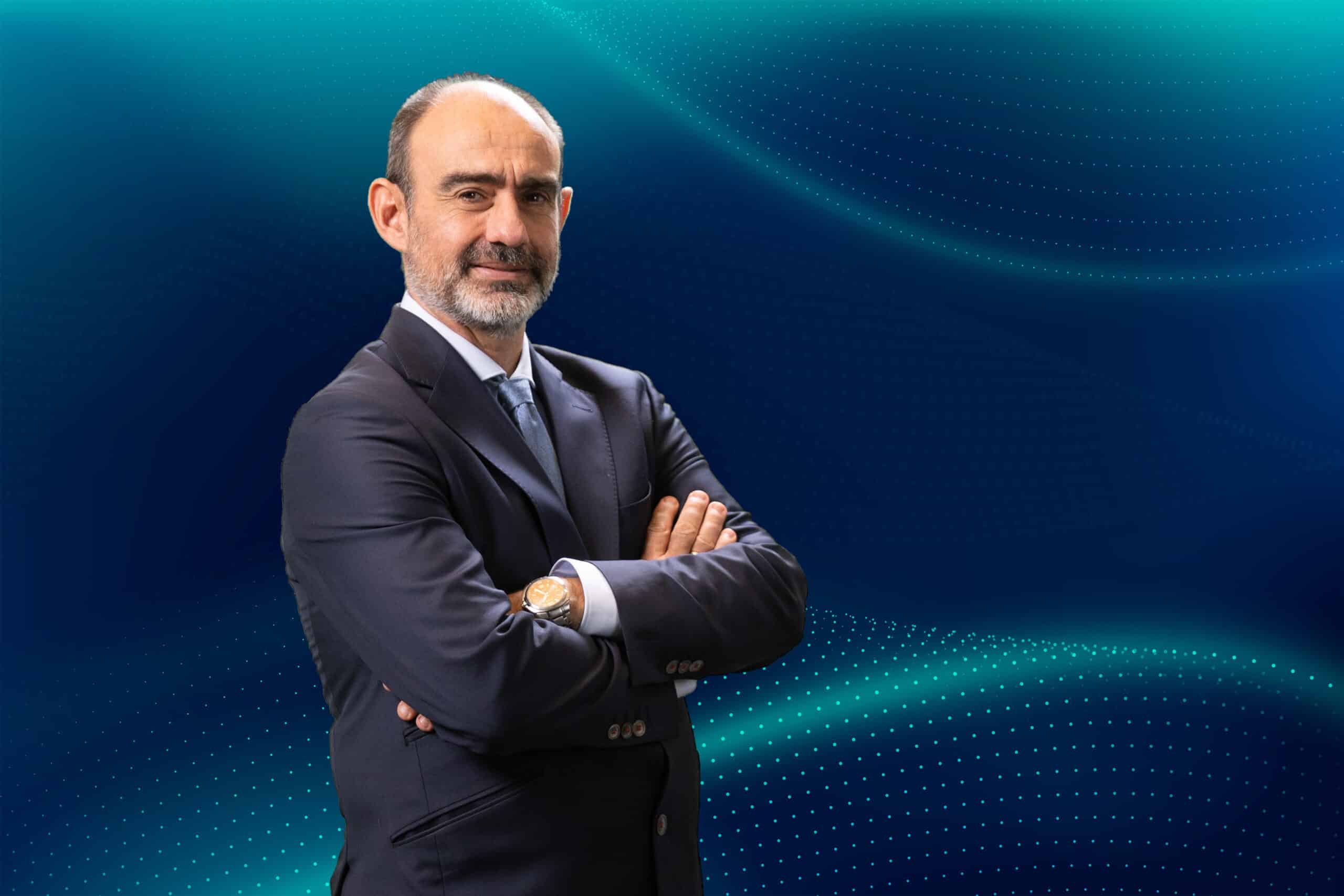
- Get to know our CTEs
Categories:
How did you become CTE at Sener?
Rather than a specific moment, becoming a CTE has been, for me, the result of a particular way of understanding the profession. I have always felt especially drawn to technology, to delving into the more technical aspects of projects and to trying to understand thoroughly how to solve each challenge. Over the years, that way of working, learning and getting involved in technical development at Sener has naturally brought me to this point. But if there is one thing I think is important to stress, it is that this journey is not built alone. After more than 25 years with the company, I have been fortunate enough to share the journey with outstanding professionals, with whom I have experienced challenges, joys and also difficult moments which often ended up becoming a shared satisfaction when we found solutions to complex problems. That is why, for me, being a CTE also means representing, in some way, all those people who have been part of the journey. I could not name them all, although I would like to, but I do want to mention Cristina Tato in particular because she supported my nomination from the very beginning.
What has been the most challenging project of your career?
It is difficult to single out one project above all the others because each one brings something new and teaches you how to deal with different situations. In a professional career in the technology field, learning and challenges are constant and, moreover, they accumulate and evolve over time. That is why we tend to think that the most recent projects are the most demanding, as they usually involve different approaches and challenges. However, if I had to point to some that were especially challenging, I would choose several from the early stage of my career, when we were opening up new markets and developing products that marked a turning point for the company. One of them was the GAIA M2M space project, in which we developed a unit intended to contribute to the creation of a 3D map of the Milky Way. also,as also a very special experience because I had the opportunity to work with another current CTE, Carlos Compostizo. This ESA mission is considered one of the most relevant for modern astronomy because of its capacity to transform our knowledge of the universe. In the field of defence, I would also highlight two very important projects: IRIS-T and METEOR. Both helped to position Sener as a leading company in actuation and control systems at European level. In them, I was also fortunate enough to work alongside major technical references such as Aitor Arce and Gabriel Ybarra, and with excellent project directors such as José Julián Echevarría, Ignacio Cerezo and Fernando Quintana.
What value do you think the role of CTE brings to Sener?
The value of a CTE lies above all in helping to tackle the most complex technical challenges with sound judgement. In demanding projects, specialised knowledge alone is often not enough; experience, analytical ability and a broad perspective are also needed in order to identify what really matters and guide decision-making effectively. That is where I believe a CTE can contribute most: by bringing clarity, simplifying complexity and finding sound, realistic solutions.
I also believe that this role has an important responsibility when it comes to connecting technical knowledge with the rest of the organisation. It is not only about solving problems, but also about sharing experience, helping that knowledge reach teams and contributing to Sener’s continued strengthening of its technological capabilities. And, of course, that contribution must also be projected externally by giving visibility to our capabilities through participation in conferences, specialised forums and international working groups. That presence is important not only for sharing knowledge and learning from other environments, but also for strengthening the confidence of clients and collaborators and continuing to position Sener as a technological benchmark.
The value added by CTE lies, above all, in helping to tackle the most complex technical challenges in a judicious manner.
How do you drive innovation and talent development?
In an environment as fast-changing as today’s, where technological evolution is advancing at great speed, driving innovation within the company is essential if we are to keep our product lines competitive and continue delivering value to the market. To achieve this, it is crucial to remain constantly connected to customers’ needs, to emerging technologies and to the internal knowledge that already exists at Sener. Knowing where we stand and what capabilities we have is the basis for defining a sound strategy for incorporating new technologies. And, in that process, it is also important to identify which technologies are truly worth maturing and which are not yet sufficiently ready to be integrated into products with the necessary guarantees. But innovation is not only a matter of strategy or technology: it also depends, to a great extent, on people. That is why talent development is an essential part of the process. In a company like Sener, with highly skilled professionals, it is important to support them, guide them and encourage them to persevere when faced with challenges, especially when results do not come at first attempt. As CTEs, one of our responsibilities is precisely to help knowledge circulate within the organisation and reach the right people so that innovation can happen in a more natural, efficient and sustainable way.
How do you support teams through mentoring?
The best way to support teams through mentoring is to build a close and trusting relationship in which people feel they can come to you naturally. The experience built up over many years is not truly passed on in a single phrase, a one-off session or a document, however useful all those resources may be. Although it is important to capture lessons learned and share knowledge through reports or talks, what really makes the difference is being available on a day-to-day basis. In my view, mentoring consists above all in being accessible to help interpret specific problems, guide decisions and provide support at the moments when real doubts or difficulties arise in the course of work.
What skill do you consider key to convey or enhance?
The skill I consider most difficult to pass on, but also one of the most important for technical success, is the ability to analyse problems systematically. Very often, when the technical fundamentals or the real root of a problem are not properly understood, people fall into the temptation of changing things without any clear criterion, in the hope that one of those attempts will lead to the solution. However, that way of proceeding almost never works. That is why I believe it is essential to teach people to stop, observe, define the problem properly and build the analysis methodically. There is a very well-known phrase by Charles F. Kettering that sums up this idea perfectly: “A problem well stated is a problem half solved.” When a problem is well framed, a very important part of the journey towards solving it has already been completed.
The skill I find most difficult to teach, but also one of the most important for technical success, is the ability to analyse problems systematically.
What advice would you give to someone who wants to grow in the technical field?
My advice would be, first of all, to be patient and to understand that technical growth is a long process. It is not built overnight, but through time, consistency and many hours spent dealing with real problems. In this kind of path, experience matters a great deal, because you not only broaden your knowledge, but also learn to analyse better, make sounder decisions and handle complex situations with greater confidence.
I also believe it is important never to lose curiosity or the desire to understand why things happen. In the technical field, new challenges, new tools and new ways of approaching problems are always emerging, and that requires an attitude of continuous learning. But above all, I would say that growing technically means becoming genuinely involved in projects, taking on difficult challenges and not losing heart when solutions do not appear at the first attempt. Very often, it is precisely in those moments that one learns the most and grows the most professionally.
What trends will shape the future in your field?
The complexity of electronic systems has grown very significantly in recent years, and everything suggests that this trend will continue in the near future. In order to manage it, increasingly powerful analysis tools will be needed, and this is where artificial intelligence will play a highly significant role. I believe we will see a major transformation in this area, especially in the way information is processed, analysis is accelerated and technical decision-making is supported. But, beyond that evolution in tools, there will be another even more significant change: the incorporation of new materials capable of overcoming some of the current limitations of electronic systems, such as maximum operating temperatures, processing speeds or resistance to aggressive radiation environments. Overcoming these barriers will open the door to new use cases that are already beginning to emerge, such as space exploration on a larger scale, the development of technologies linked to energy generation, or the creation of more efficient and reliable systems in the defence sector.
What motivates you most about your work as a CTE?
What motivates me most in my work as a CTE is continuing to face technical challenges that force me to think, learn and seek solutions to complex problems. After so many years in the profession, I still particularly enjoy that process of analysis and that moment when, after a great deal of work, you manage to find a sound and useful solution. I am also motivated by knowing that this effort does not remain solely on the technical level, but can be translated into products and capabilities that bring real value to Sener and its clients.
In that sense, Sener’s motto, “Transforming the world by challenging the limits of technology”, reflects that way of understanding our work very well. For me, it sums up what attracts me most about this role: continuing to grow technically, helping ensure that knowledge has an impact inside and outside the company, and contributing to taking further what we are capable of doing.
How do you imagine your role will evolve in the coming years?
I believe that technical profiles such as the CTE will carry increasingly greater weight within companies. Technology is profoundly transforming many areas of our lives and of our industrial activity, and that makes specialised technical knowledge increasingly valuable. Although today it may seem that artificial intelligence is going to solve everything, I see it more as a very powerful tool for facilitating access to knowledge, speeding up certain analyses and improving their dissemination. However, the creation of new knowledge, its rigorous interpretation and the definition of technological challenges will continue to depend to a large extent on human intelligence. In that context, the role of the CTE will become increasingly relevant, bringing judgement, experience and analytical ability to guide the company’s technological evolution in the coming years.
Alfonso Muñoz
- CTE
- Aerospace engineering

