



 About us
 / section
Careers
Careers / section
News & events
News & events / sectionCountries section
About us
About us / section
Careers
Careers / section
News & events
News & events / sectionCountries section


 More results
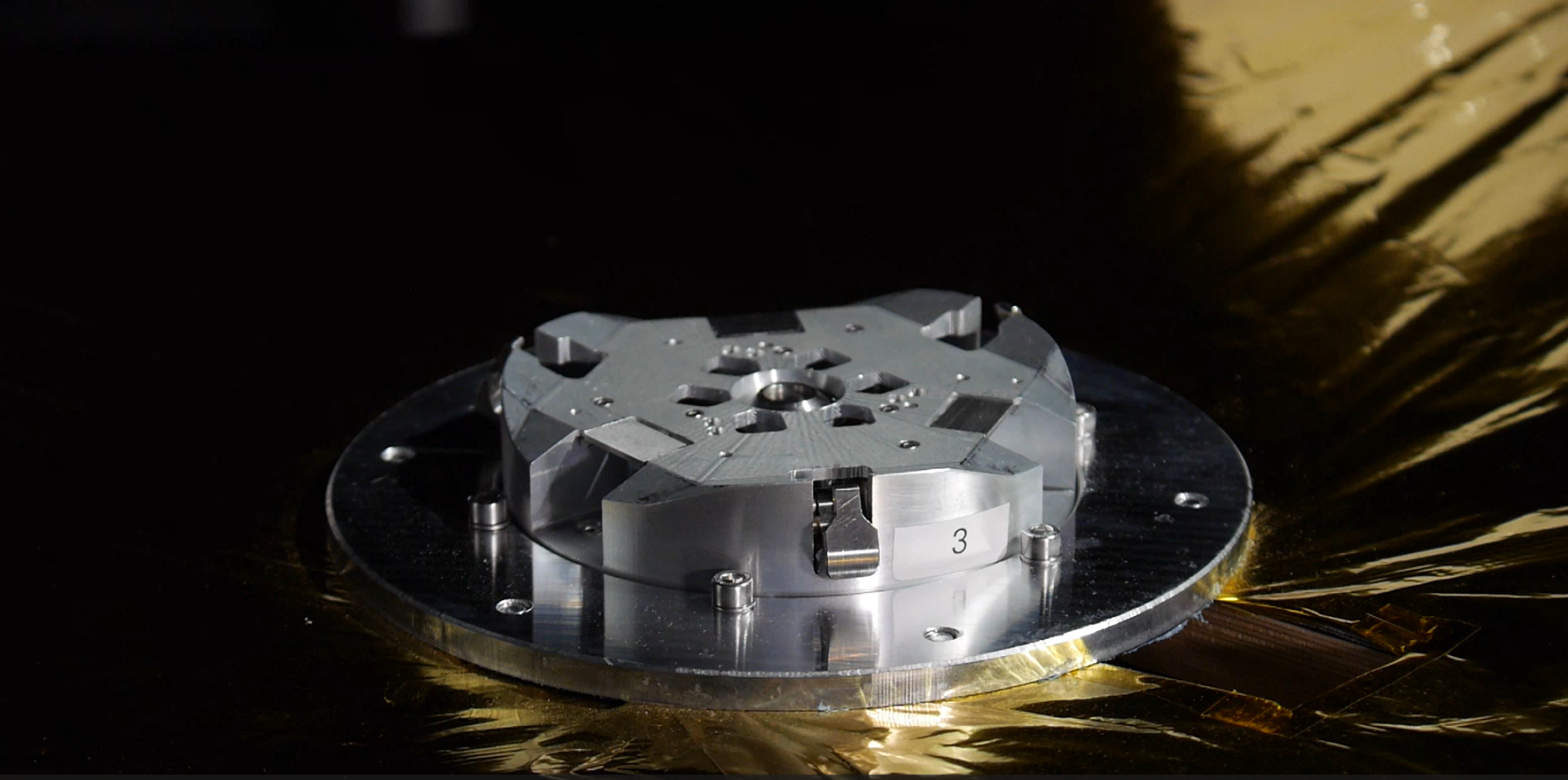
The ASTRALIS consortium, led by ArianeGroup GmbH and bringing together 15 partners from 8 countries, will develop a reusable vehicle to transport cargo, propellant and equipment. Sener is leading one of its technical tasks and will contribute SIROM, its family of multifunctional robotic interfaces, to the refuelling system, as well as its expertise in guidance, navigation and control (GNC).
Sener will lead the selection and integration of the interfaces for the satAPPs and the equipment rack (transport module) that will enable different modules to be connected to Europe’s future logistics orbital transfer vehicle (OTV). This work forms part of ASTRALIS, a project led and funded by the European Commission (grant agreement No 101296312).
ASTRALIS is coordinated by ArianeGroup and brings together 15 partners and seven subcontractors from the space industry and research organisations across 8 European countries. The two-year project aims to develop a modular, reusable and autonomous European space logistics system. It also aims to bring its key technologies to technology readiness level (TRL) 6 — demonstration of a system prototype in a relevant environment.
The project will develop the Logistics Component of the European Commission’s ISOS4I (In-Space Operations and Services for Infrastructure) pilot mission. This orbital transfer vehicle will transport propellant, and modules between the launcher and vehicles already in orbit. It will have docking, refueling, robotic manipulation and payload delivery capabilities. The initiative seeks to strengthen Europe’s strategic autonomy and competitiveness in in-orbit servicing, a key area for extending the operational life of satellites and making space activities more sustainable.
“Plug-and-play” connections in orbit
The vehicle relies on everything it carries being able to connect and disconnect reliably in space. Sener will work on two of these connections.
Firstly, it will lead the design of the interface and rack for satellite applications (satAPPs). These are modules with different functions, such as sensing, image processing or refuelling, which the vehicle will carry from the launcher to the host. The interfaces will ensure their mechanical, electrical, thermal and data compatibility with the vehicle. This will allow any compatible module to be connected and start operating immediately, in much the same way as a USB device. Sener will collaborate with other European organisations supporting this activity: SONACA, iBOSS and the German research centre DFKI.
Secondly, Sener will contribute to the refuelling interface through SIROM (Standard Interface for Robotic Manipulation), the family of multifunctional robotic interfaces developed by the company. Specifically, it will provide the fluid-transfer version of SIROM, with the aim of enabling safe, efficient and leak-free propellant transfer.
SIROM combines mechanical, electrical and data functions in a single connection, together with fluid transfer in its refuelling version. It is one of Europe’s reference universal service interfaces (USIs) for the ISOS4I pilot mission. All these developments aim to reach TRL 6 by the end of the project, marking a further step in the development of European technologies that are key to Europe’s autonomy in in-orbit servicing.
In addition to SIROM, Sener will develop the ASTRALIS guidance, navigation and control (GNC) system alongside Indra, with a particular focus on relative navigation during rendezvous and docking operations. To do so, it will adapt technologies previously developed under ESA programmes, including its vision-based navigation (VBN) solutions, to enable safe and autonomous manoeuvres in orbit. The solution will be integrated into the project’s overall GNC architecture and validated through simulation.
Sener’s participation in ASTRALIS will therefore help Europe acquire its own in-orbit servicing and logistics technology, which currently lacks, one of the objectives of the ISOS ecosystem. The company has experience in robotic interfaces, mechanisms and systems for European space missions, which will be highly valuable to the development of ASTRALIS.
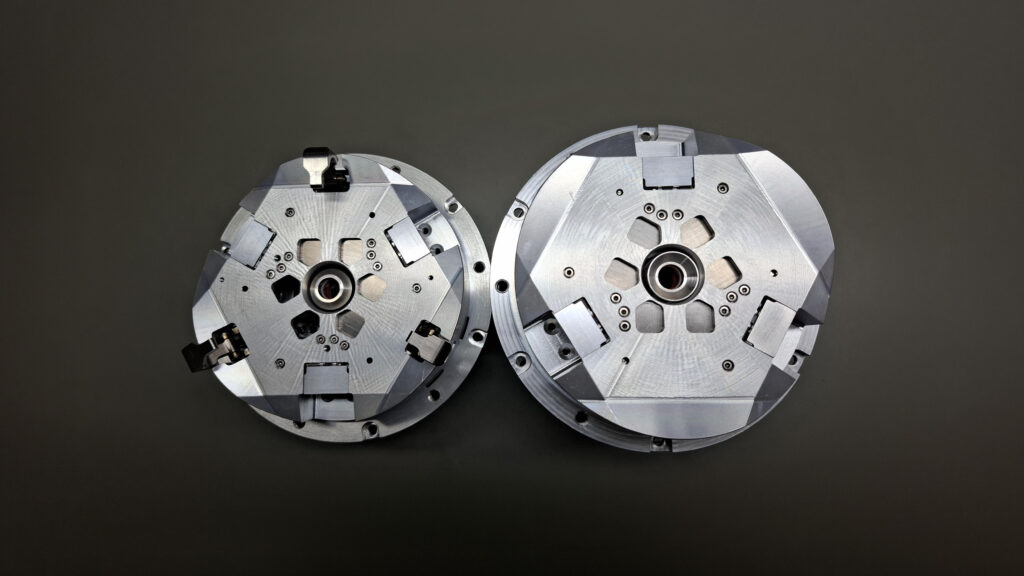
Active and passive components of the SIROM interface, designed to securely dock two satellites and enable the exchange of resources and services in orbit.
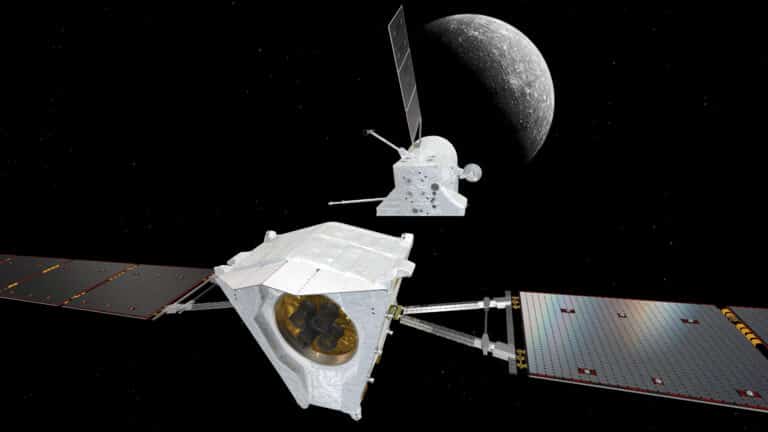
BepiColombo mission, featuring Sener technology, enters final phase of its arrival at Mercury
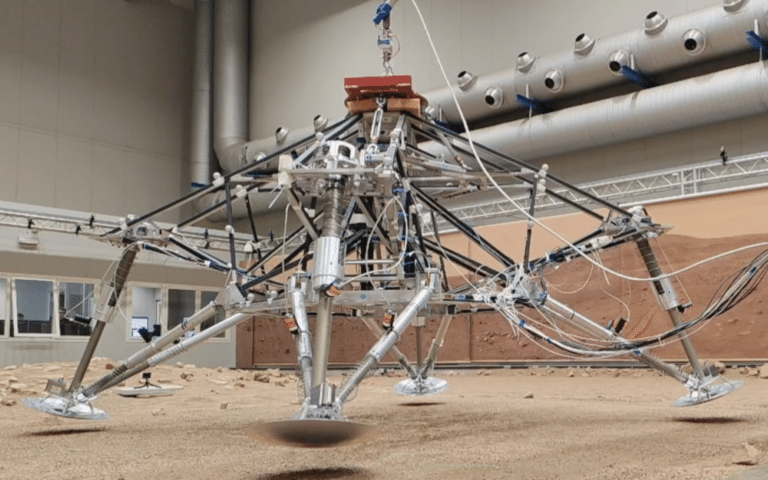
Sener advances qualification of the Rosalind Franklin rover landing gear ahead of its journey to Mars in 2028
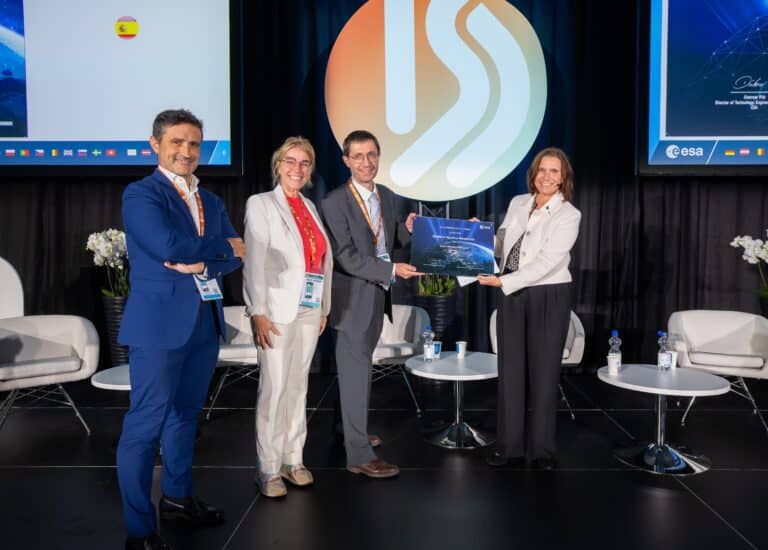
European Space Agency recognises Sener’s excellence in space radiometry
Sener to lead two ESA projects to advance new governmental services for the Low-LEO layer of EU IRIS²