





 About us
 / section
Careers
Careers / section
News & events
News & events / sectionCountries section
About us
About us / section
Careers
Careers / section
News & events
News & events / sectionCountries section
About us
About us / section
Careers
Careers / section
News & events
News & events / sectionCountries section
About us
About us / section
Careers
Careers / section
News & events
News & events / sectionCountries section


 More results
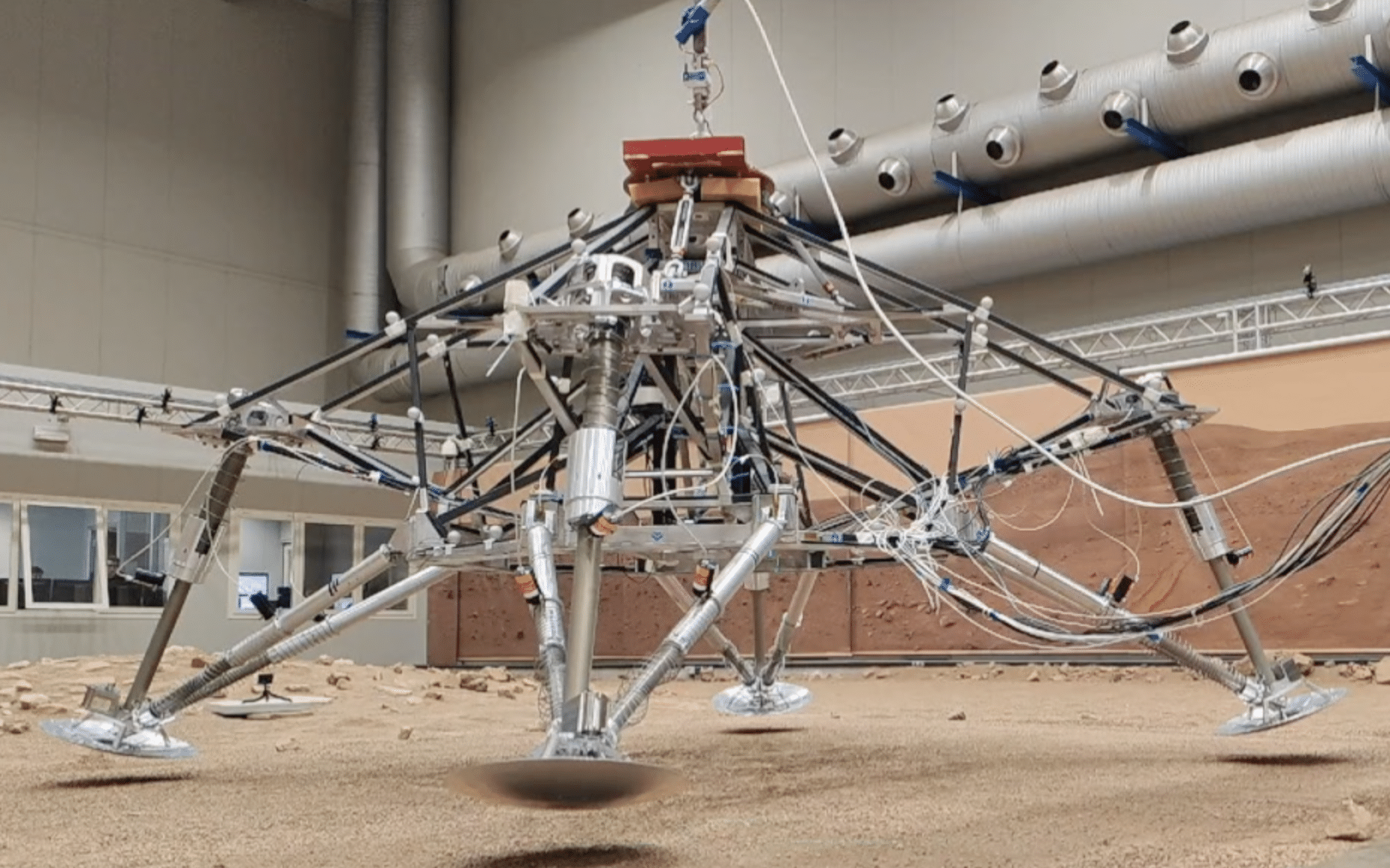
Sener has designed and manufactured the landing gear that will enable the descent platform to touch down safely on the surface of Mars; ExoMars will be the third Mars mission involving Sener, following Mars Science Laboratory and Mars 2020.
This Thursday, 1 October, the European Space Agency (ESA) will test a prototype Mars rover in the Tabernas Desert (Almería) to validate technologies and operations that will form part of the ExoMars mission.
Sener is advancing through the final qualification phase of the landing gear developed for the descent platform of the European Space Agency’s (ESA) Rosalind Franklin rover, part of the ExoMars mission. The system comprises four legs that will remain folded during the journey to Mars and deploy automatically before the platform makes contact with the planet’s surface.
The mission aims to search for possible traces of life on Mars and study the planet’s geochemical environment. To this end, the Rosalind Franklin rover will be able to drill to a depth of two metres, collect subsurface samples and analyse their composition, providing access to material protected from radiation and surface conditions.
Sener’s contribution is particularly significant in the context of the ExoMars mission’s reconfiguration. Following the end of cooperation between ESA and Roscosmos, European industry has developed new systems within a very tight timeframe to replace the Russian elements originally planned for the descent and landing phase and keep the mission on track for launch in 2028.
The landing gear is a critical element in the mission’s final phase. The legs deploy in two pairs immediately after the front heat shield separates, using non-explosive actuators. Tests have confirmed that deployment can be completed in less than one second, readying the platform for landing.
Sener has been responsible for designing and manufacturing the four legs, developed to withstand the demanding mechanical and environmental conditions associated with the journey to and landing on Mars. The system will work in conjunction with the parachutes and engines that will reduce the spacecraft’s descent speed before it reaches the Martian surface.
The system has successfully completed the various verification campaigns conducted during its development, including structural, environmental and functional tests carried out by Sener and the programme’s prime contractors, Thales and Airbus. The qualification model is now undergoing its final tests ahead of the delivery of the flight units, scheduled for the fourth quarter of 2026.
Sener’s extensive contribution to ExoMars
The landing gear forms part of Sener’s contribution to the ExoMars mission. The company is also responsible for the mechanisms and separation adaptor for the entry capsule, as well as its UHF communications antennas. The rover will also incorporate other equipment developed by Sener, including the drill positioning and translation system, the solar-panel deployment mechanism, and X-band and UHF antennas.
Sener has also designed and manufactured the umbilical release mechanism (URM) in Poland, which provides the electromechanical connection between the rover and the descent module. This component will supply electrical power to the vehicle after the platform touches down on Mars and must remain operational in the extreme conditions of the Martian environment.
ExoMars will be the third Mars mission involving Sener. The company previously supplied antenna pointing mechanisms for the Curiosity and Perseverance rovers, part of NASA’s Mars Science Laboratory and Mars 2020 missions respectively. This prior experience in systems designed to operate on the Martian surface underpins its contribution to the Rosalind Franklin mission.
Against this backdrop, ESA will conduct a test campaign in the Tabernas Desert (Almería) on Thursday, 1 October, using a prototype Mars rover. During the demonstration, the experimental vehicle, “Charlie”, will be operated from Turin to validate technologies and procedures that will form part of the ExoMars mission. The teams will test autonomous navigation capabilities and recreate some of the scientific activities that the Rosalind Franklin rover will perform on Mars.
Disclaimer
The views expressed here do not reflect the official position of the European Space Agency.
Header picture: (C) Thales Alenia Space/ALTEC.
The successful completion of the test-model campaigns and the advanced stage of qualification mark a decisive step in our contribution to the mission. Once again, this is a critical system for Sener: it must remain folded throughout the journey, deploy quickly and reliably at a crucial point in the mission, and absorb the final impact while ensuring that all instruments operate correctly on the Martian surface.
Iñaki Pinto, Space and Science Director at Sener.
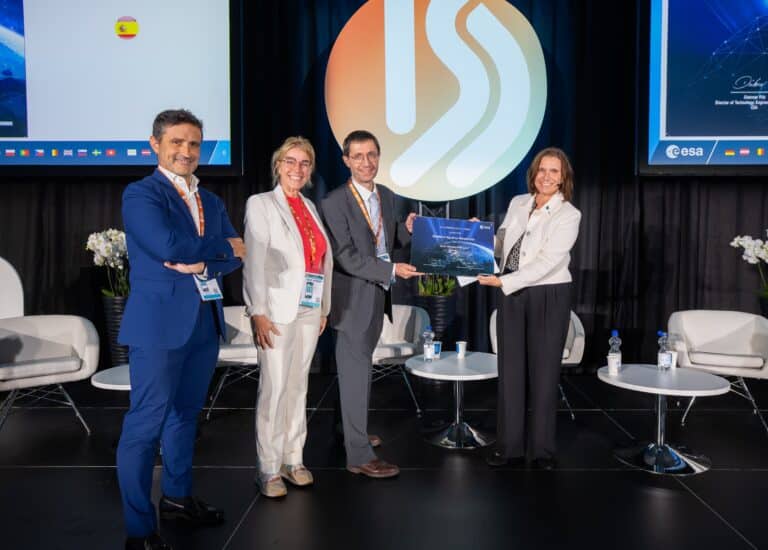
European Space Agency recognises Sener’s excellence in space radiometry
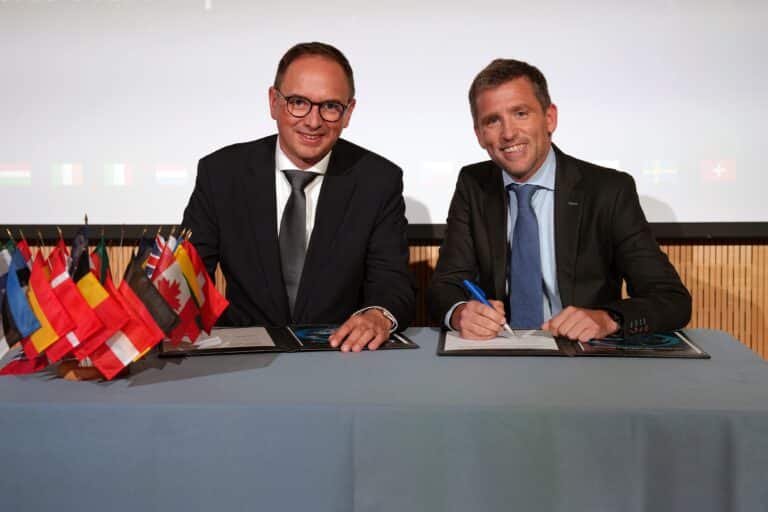
Sener to lead two ESA projects to advance new governmental services for the Low-LEO layer of EU IRIS²
Iñaki Pinto to lead Sener’s Space and Science division, while Diego Rodriguez takes on newly created technology and innovation leadership role in Aerospace and Defence

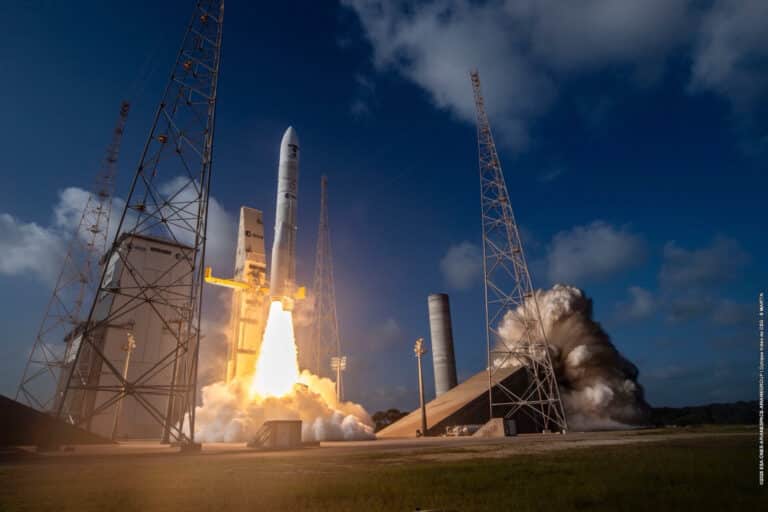
Sener contributes to the MTG-I2 meteorological satellite, successfully launched from Kourou