





 About us
 / section
Careers
Careers / section
News & events
News & events / sectionCountries section
About us
About us / section
Careers
Careers / section
News & events
News & events / sectionCountries section
About us
About us / section
Careers
Careers / section
News & events
News & events / sectionCountries section
About us
About us / section
Careers
Careers / section
News & events
News & events / sectionCountries section


 More results
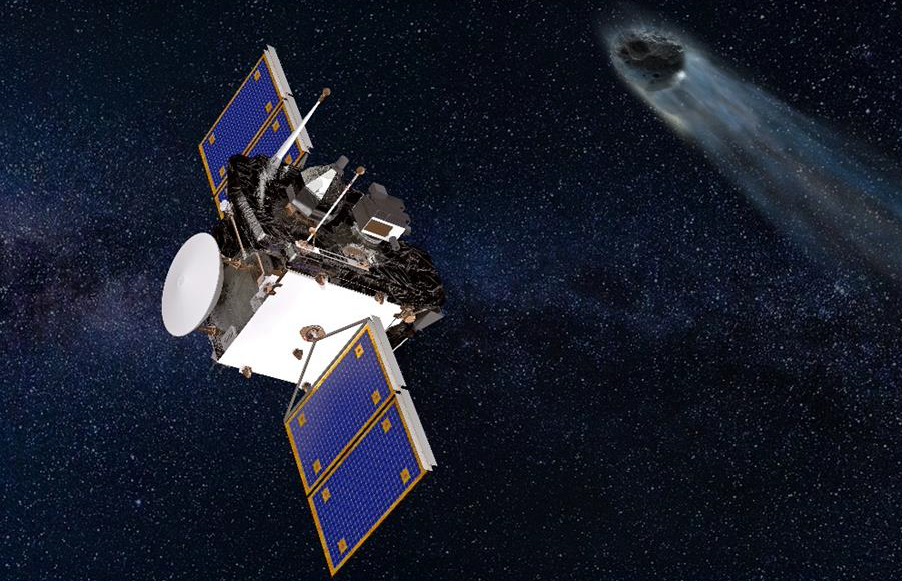
Sener plays a central role in Comet Interceptor as prime contractor for the design and manufacture of one of the probes, which will be released from the main spacecraft; in this role, Sener leads an international industrial consortium comprising more than eight companies from six countries.
Sener has reached a significant milestone in ESA’s science mission Comet Interceptor with the reception of the first flight units of the Dust Field & Plasma (DFP-B2) instrument, a key element of the mission’s scientific payload.
Comet Interceptor is an ESA Science Programme mission that will become the first space mission to explore a long-period comet as it enters the inner Solar System for the first time. The mission will target an as-yet-undiscovered comet and carry out a high-speed flyby, enabling unprecedented observations of a pristine, or “dynamically new”, object that preserves unprocessed material from the very early stages of the Solar System.
The mission architecture comprises a main spacecraft and two probes, which will perform simultaneous, multi-point measurements during the comet flyby. This innovative approach will make it possible to generate a three-dimensional profile of the comet’s environment, providing new insights into its interaction with the solar wind and its physical and chemical properties.
Adopted into the ESA Science Programme in June 2022, Comet Interceptor is being developed in collaboration with the Japan Aerospace Exploration Agency (JAXA), which is providing one of the probes and its associated payload. The mission launch is currently planned for late 2028 or early 2029. Following launch, the spacecraft will travel to the Sun–Earth Lagrange point L2, where it will remain in a quiescent state until a suitable comet is identified, before setting off towards its target.
The DFP-B2 instrument, led by the Polish institute CBK, with contributions from several scientific institutions across Europe, is one of the mission’s core scientific systems. Designed to operate both on the main spacecraft and on probe B2, it will enable multi-discipline and multi-point experiments at different distances from the comet nucleus, contributing to a comprehensive characterisation of the dust, plasma and fields surrounding the comet.
The successful delivery of the DFPB2 flight units represents a major step forward for the project, confirming the maturity of the instrument and its readiness for integration into the mission.
Sener plays a central role in Comet Interceptor as prime contractor for the design and manufacture of one of the probes, which will be released from the main spacecraft led by OHB Italia, the mission’s prime contractor. In this role, Sener leads an international industrial consortium comprising more than eight companies from six countries, including OHB Italia, SAFT (France), MSC (Canada), LENS (The Netherlands), Euro-Composites (Luxembourg) and FHP (Portugal), among others.
The Sener probe, approximately half a metre in diameter, just under one metre in height and with a mass of around 40 kg, will be deployed towards the comet nucleus and will perform close-proximity scientific observations, while the main spacecraft remains at a safer distance. The mission presents major technological challenges, particularly the need to operate and survive in a harsh particulate environment under severe mass and power constraints.
In addition to the probe itself, Sener is supplying other key elements of the mission, including the spacecraft communication antennas that enable command from Earth and the transmission of scientific data, as well as the separation mechanism between the spacecraft and the probe, developed by Sener in Poland. Sener is also contributing to several scientific instruments on both probes and the main spacecraft, in collaboration with the Instituto de Astrofísica de Andalucía (IAA-CSIC).
With the delivery of the first flight instrument, Sener and its partners continue to make steady progress towards a mission that promises to open a new window on the origins of the Solar System.
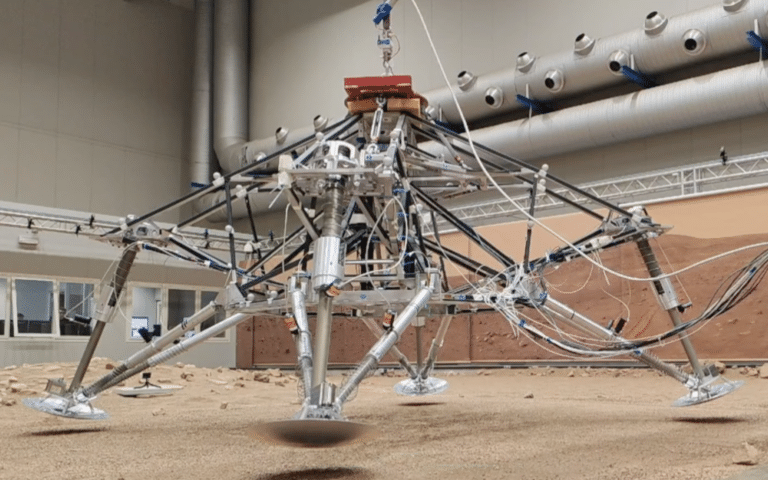
Sener advances qualification of the Rosalind Franklin rover landing gear ahead of its journey to Mars in 2028
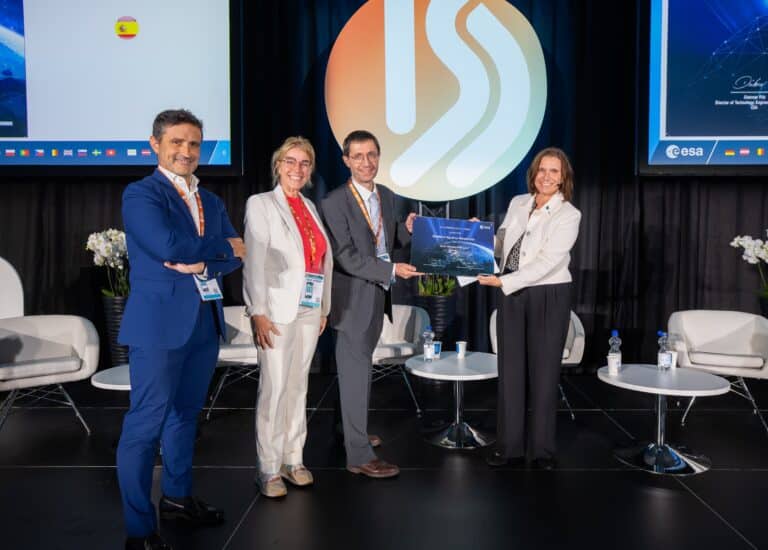
European Space Agency recognises Sener’s excellence in space radiometry
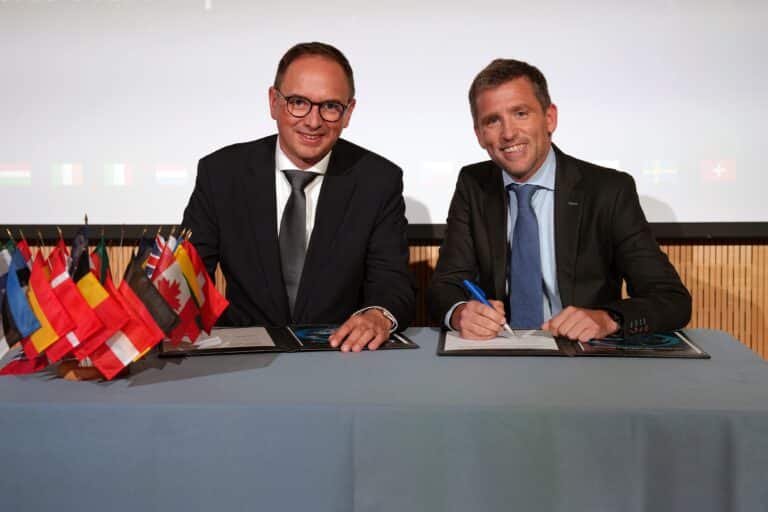
Sener to lead two ESA projects to advance new governmental services for the Low-LEO layer of EU IRIS²
Iñaki Pinto to lead Sener’s Space and Science division, while Diego Rodriguez takes on newly created technology and innovation leadership role in Aerospace and Defence