






 About us
 / section
Careers
Careers / section
News & events
News & events / sectionCountries section
About us
About us / section
Careers
Careers / section
News & events
News & events / sectionCountries section
About us
About us / section
Careers
Careers / section
News & events
News & events / sectionCountries section
About us
About us / section
Careers
Careers / section
News & events
News & events / sectionCountries section


 More results
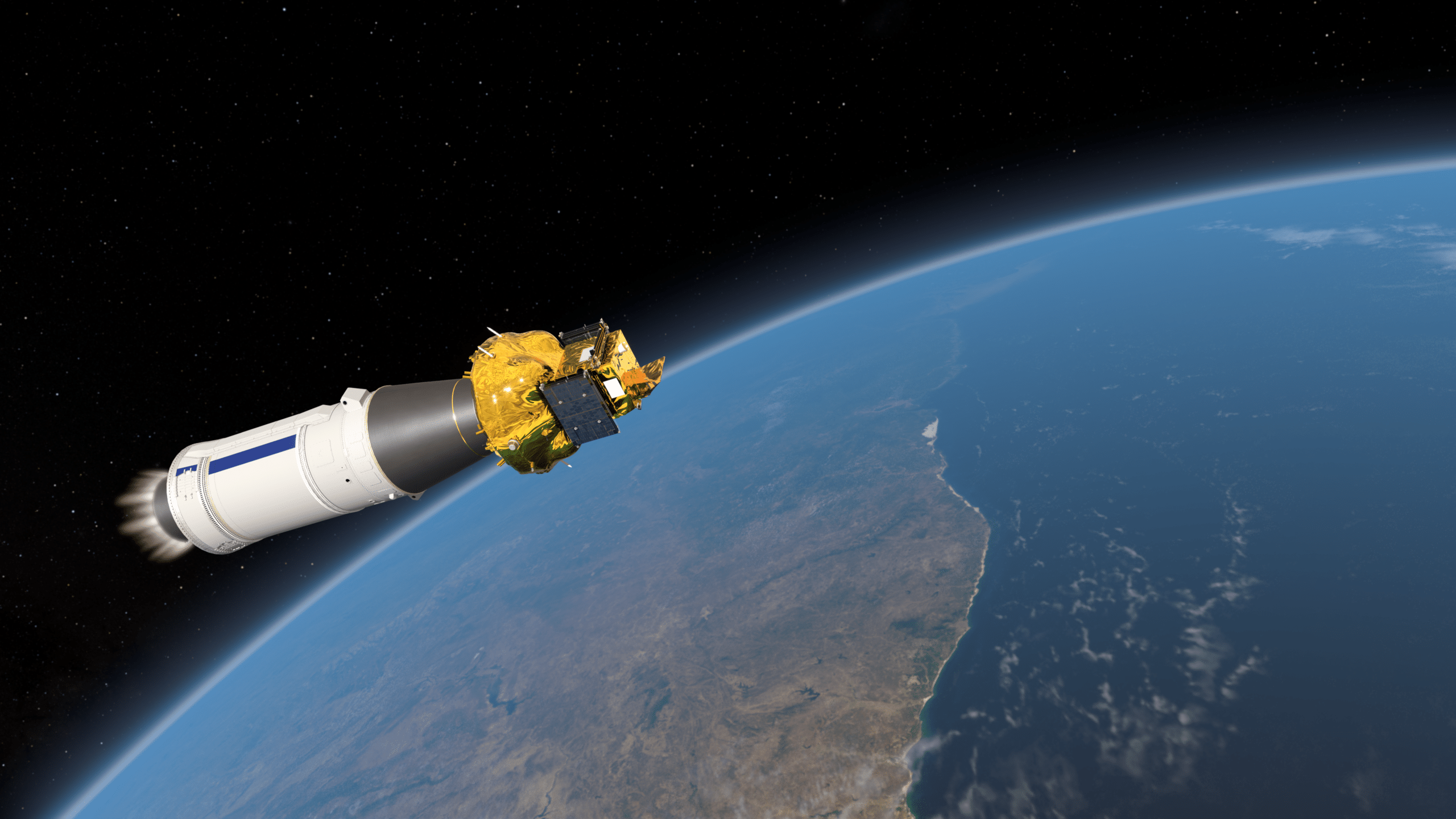
Sener has designed and manufactured a communications antenna for the mission, which will study interactions between the Sun and Earth, as well as phenomena such as solar wind and solar storms. The mission will also achieve a landmark milestone with the continuous observation of the Northern Lights for 45 hours straight.
The industrial engineering and technology group Sener has taken part in the Smile mission, a collaboration between the European Space Agency (ESA) and the Chinese Academy of Sciences (CAS), scheduled for launch on Tuesday, 19 April.
The mission aims to improve understanding of the interaction between the Sun and the Earth by observing the Earth’s magnetic field in X-rays and identifying where and how the solar wind interacts with the planet’s magnetic shield. Smile will also study auroras globally in ultraviolet light to better understand how the Earth responds to solar wind, enabling continuous observation of the Northern Lights for 45 hours straight—a first for a space mission.
In addition, Smile (whose name is derived from the acronym for “Solar wind Magnetosphere Ionosphere Link Explorer”) will help deepen understanding of solar storms and the disturbances they cause on Earth. A better understanding of space weather science is essential to ultimately protect both space-based technology and the safety of any humans in orbit around the Earth.
Sener’s role in the mission
Sener contributed to the mission by developing one of its communications antennas, the X-band receiver antenna. This antenna is responsible for receiving signals sent to the spacecraft and forms part of its payload module.
Sener’s work covered the full process: from design and manufacturing through to final testing to ensure proper performance. The antenna is designed to operate across the full required frequency range (8.025–8.4 GHz), with the necessary mechanical pointing capability integrated directly into the antenna support structure.
Its thermal control system is entirely passive, requiring no active mechanisms, thanks to the use of white paint on its external surfaces to help regulate temperature in space.
For the test campaigns, a dedicated ‘test cap’ was designed and manufactured that made it possible to verify the antenna’s behaviour under real conditions.
The antenna design comprises a radiating element, a septum polariser and a waveguide-to-SMA connector transition.
The Smile mission marks an important step forward in improving our understanding of the interaction between the Sun and the Earth, as well as phenomena that have a direct impact on our technology and on future crewed missions. We are proud to be part of this international collaboration, contributing a communications antenna that will support the mission’s objectives.
Diego Rodríguez, Director of Space and Science at Sener.
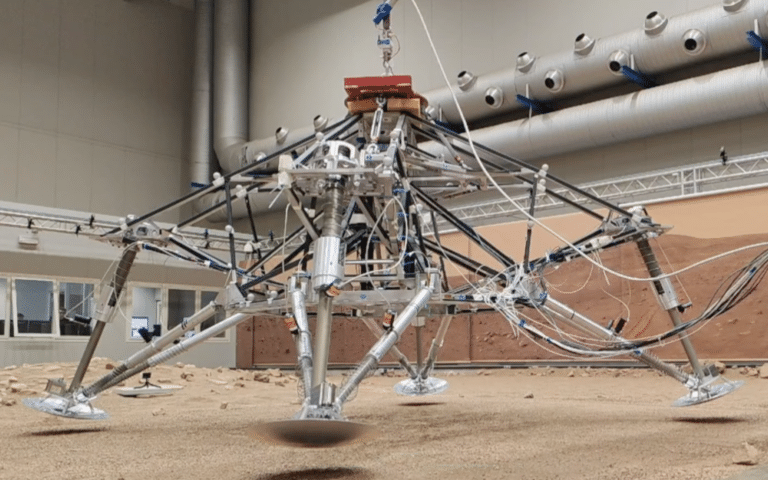
Sener advances qualification of the Rosalind Franklin rover landing gear ahead of its journey to Mars in 2028
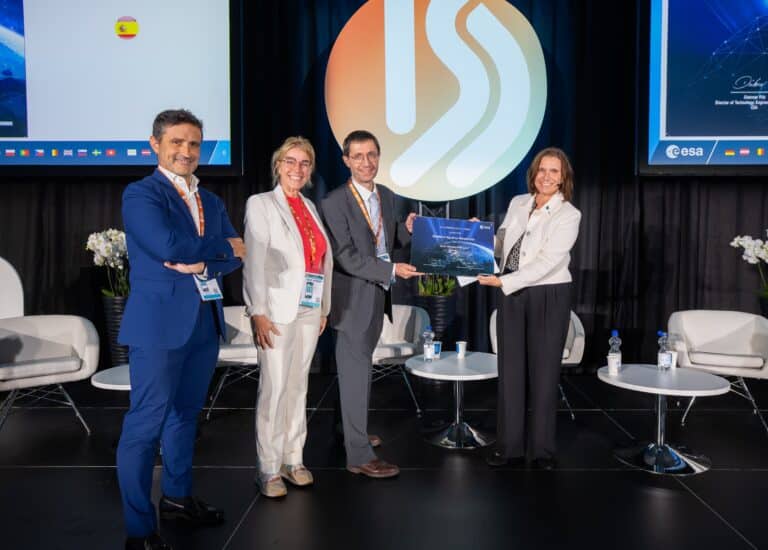
European Space Agency recognises Sener’s excellence in space radiometry
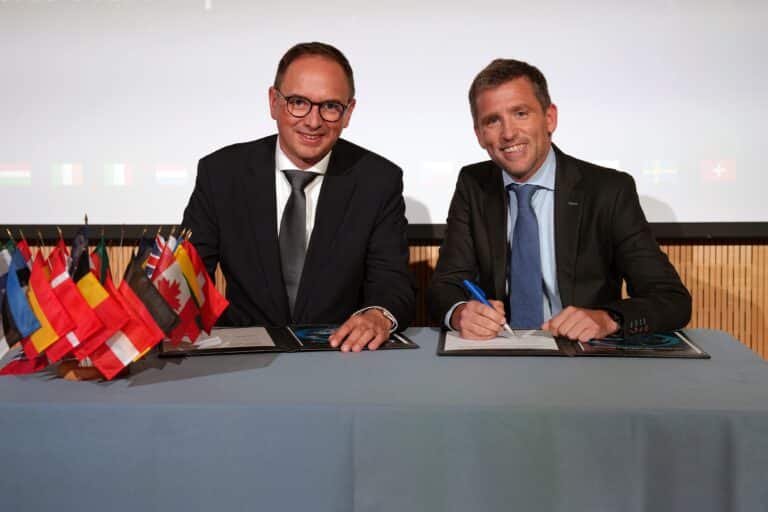
Sener to lead two ESA projects to advance new governmental services for the Low-LEO layer of EU IRIS²
Iñaki Pinto to lead Sener’s Space and Science division, while Diego Rodriguez takes on newly created technology and innovation leadership role in Aerospace and Defence