






 About us
 / section
Careers
Careers / section
News & events
News & events / sectionCountries section
About us
About us / section
Careers
Careers / section
News & events
News & events / sectionCountries section
About us
About us / section
Careers
Careers / section
News & events
News & events / sectionCountries section
About us
About us / section
Careers
Careers / section
News & events
News & events / sectionCountries section


 More results
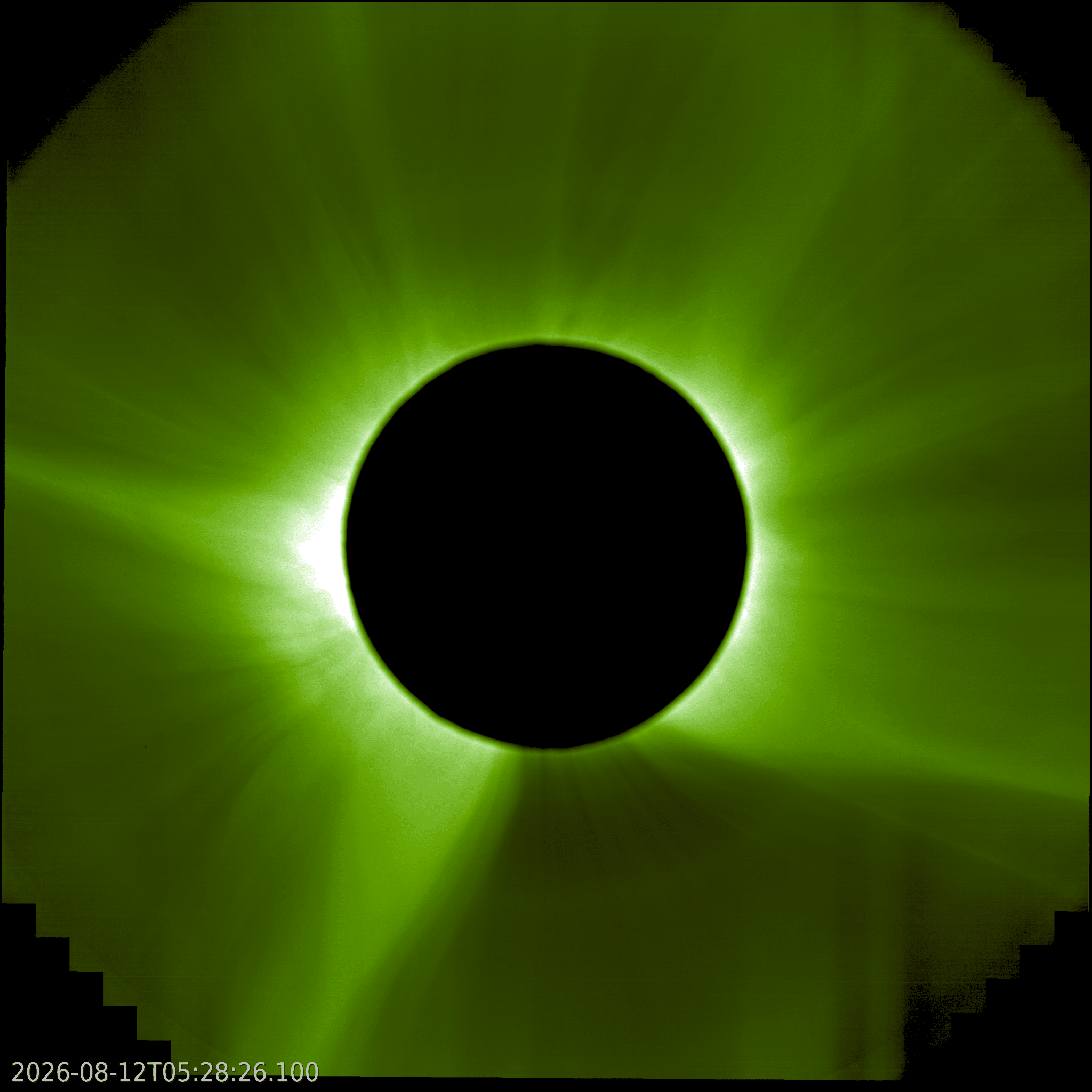
While millions of people on Earth watched the total solar eclipse on 12 August, the European Space Agency’s (ESA) Proba-3 mission had the opportunity to observe the phenomenon from space. During one of the mission’s observation phases, Proba-3 captured a new series of images as part of the scientific activities conducted in connection with the eclipse. This observation, carried out under particularly unusual conditions, will help analyse the mission’s behaviour in an exceptional scenario and further enhance the scientific value of its data.
This achievement is especially significant because Proba-3 was not designed to operate during a natural eclipse of this kind while maintaining scientific activity. The operation involved coping with a temporary loss of power, which required adjustments to mission operations to continue observations safely.
Beyond the eclipse itself, these images demonstrate Proba-3’s ability to turn exceptional circumstances into scientific opportunities. The mission, developed by ESA in collaboration with a European industrial consortium led by Sener, had already made history by obtaining the first images of the solar corona through the creation of artificial eclipses between its two satellites.
Proba-3 is a pioneering technology demonstration mission that uses highly precise formation flying. Its two satellites fly 150 metres apart with millimetre-level accuracy, enabling one spacecraft to block the solar disc while the other observes the corona, the Sun’s outermost atmosphere. This technology opens new possibilities for extended observation of the solar corona and for future scientific missions requiring highly precise virtual structures in space. To date, the mission has accumulated more than 250 hours of observation time, equivalent to approximately 6,000 total solar eclipse observation campaigns on Earth.
As prime contractor for the mission, Sener has led the development of the Proba-3 system, covering both the space and ground segments, in collaboration with ESA and an industrial consortium comprising more than 29 companies from 17 countries, and accommodating the scientific instrument provided by Centre Spatial de Liege from Belgium. Alongside Sener, the Proba-3 core team includes Airbus Defence and Space in Spain, GMV, Redwire and Spacebel. The mission, with a budget of € 200 million, has Spain as its principal contributor, accounting for 38% of the total investment. These companies continue to support the mission through its most demanding operational phases, contributing to the advancement of a key technology for the future of European space exploration.
The new images obtained during the eclipse of 12 August add to the scientific and technological results that Proba-3 continues to generate since entering operational service. Once again, the mission demonstrates the value of European space engineering and the capability of Spanish technology to lead highly complex international projects.
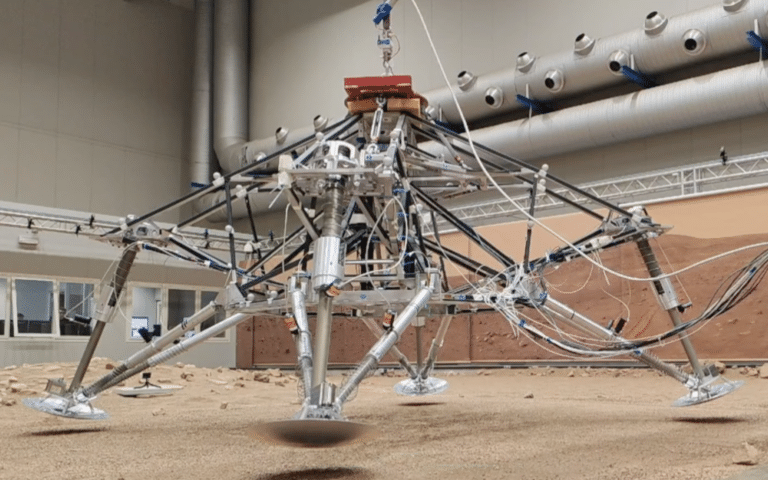
Sener advances qualification of the Rosalind Franklin rover landing gear ahead of its journey to Mars in 2028
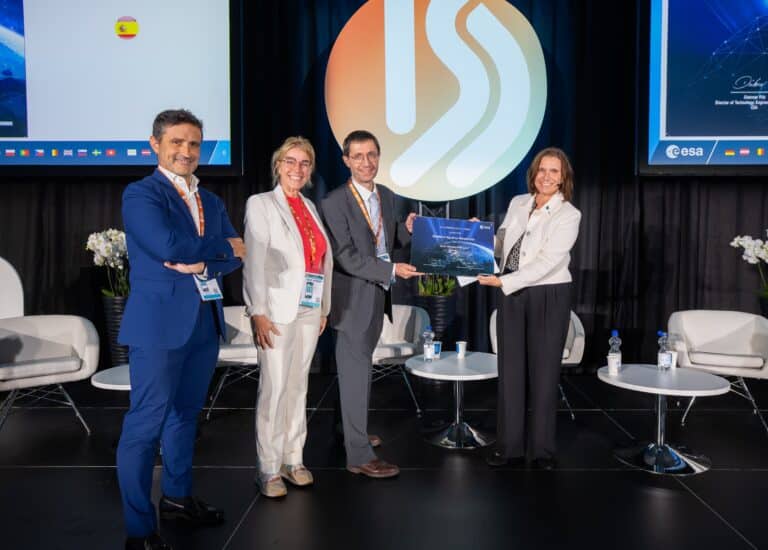
European Space Agency recognises Sener’s excellence in space radiometry
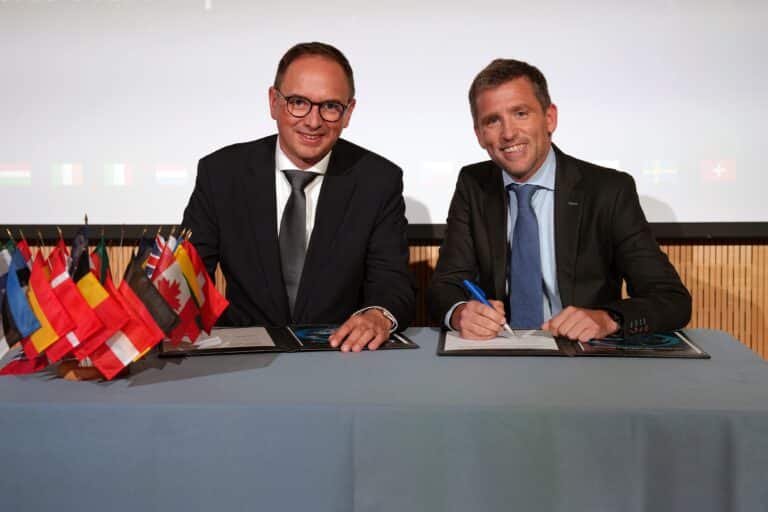
Sener to lead two ESA projects to advance new governmental services for the Low-LEO layer of EU IRIS²
Iñaki Pinto to lead Sener’s Space and Science division, while Diego Rodriguez takes on newly created technology and innovation leadership role in Aerospace and Defence