






 About us

 More results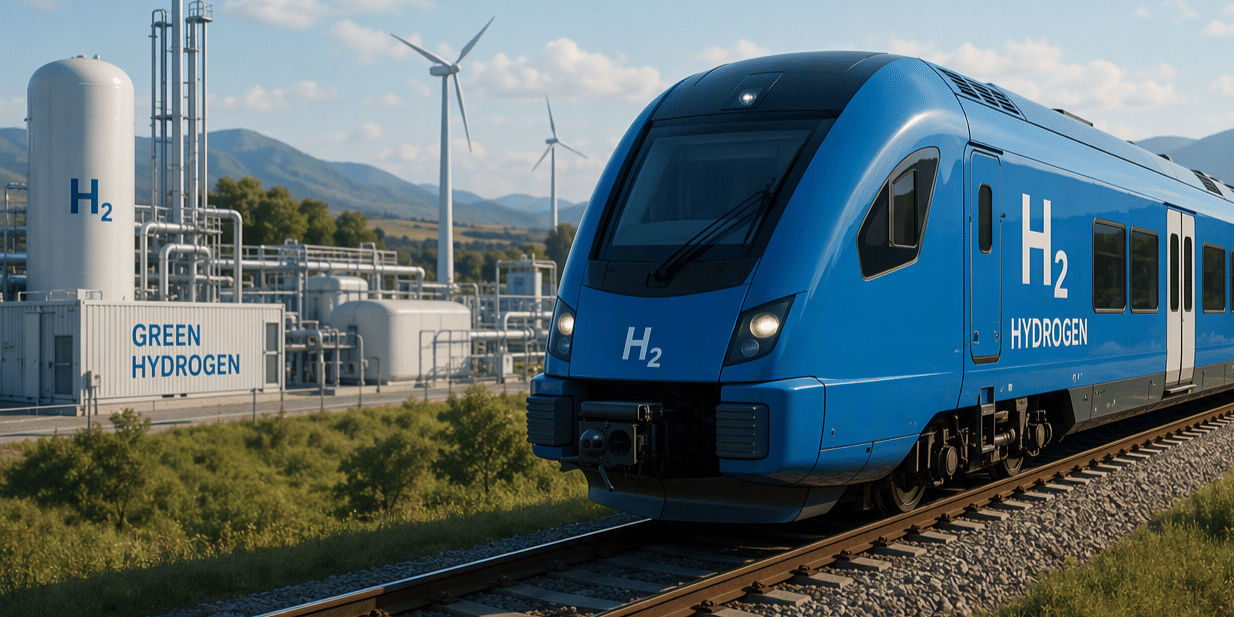
- Mobility & Infrastructures
Categories:
The decarbonisation of transport represents one of the greatest technological and industrial challenges of our time. Rail already holds a favourable position, being one of the most energy-efficient modes of transport and among those with the lowest carbon footprint. However, a significant proportion of the global railway network, particularly regional and freight lines, remains non-electrified. On these routes, diesel continues to be the predominant solution.
Finding alternatives that can replace diesel without requiring the complete electrification of the network has therefore become a priority. In this context, HYMPULSO emerges as a strategic industrial innovation initiative aimed at accelerating the decarbonisation of rail transport through renewable hydrogen technologies.
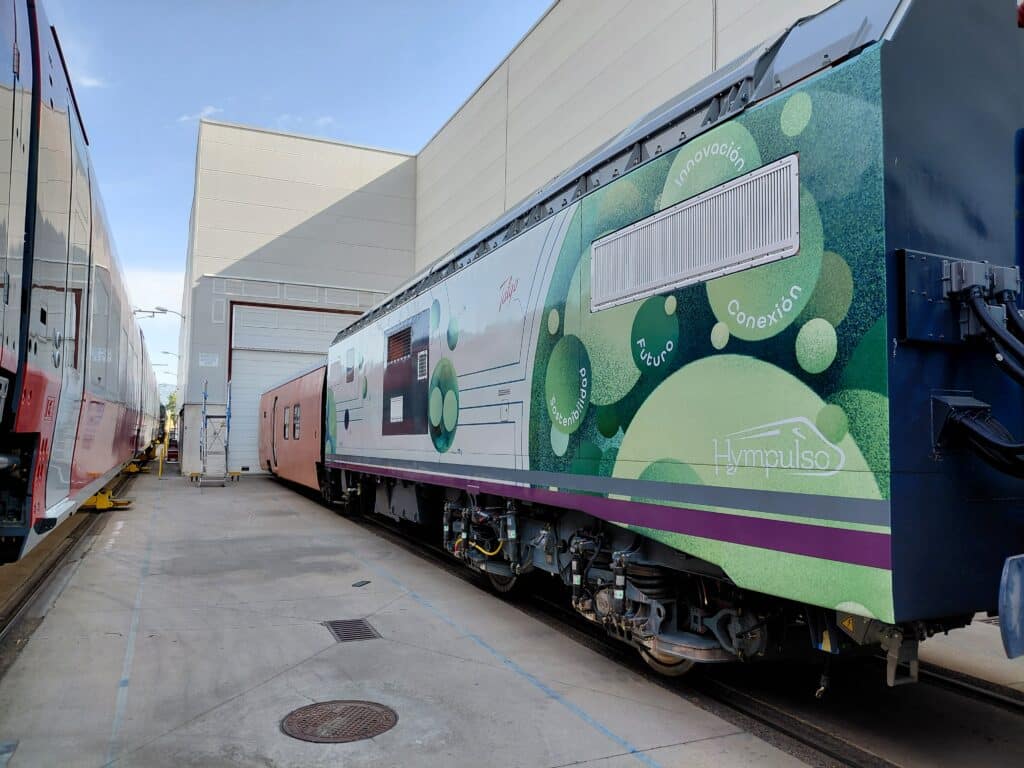
The project is led by Talgo and brings together Sener, Repsol, Golendus, Ingeteam and Optimus, with institutional collaboration from ADIF. Its objective is to develop and validate solutions that facilitate the integration of hydrogen into rail mobility, addressing the entire value chain in a coordinated manner, from energy production and supply through to the operation and maintenance of railway systems.
One of the project’s main activities will be the development of a next-generation railway demonstrator based on a Talgo 250 train. The vehicle will be equipped with a hybrid hydrogen and battery system and will be capable of operating on both electrified infrastructure and routes without overhead line equipment. This combination aims to advance a more sustainable and flexible rail model, capable of adapting to the characteristics of different lines.
As a technology partner within the consortium, Sener contributes its expertise in advanced engineering, risk analysis, techno-economic assessment and digitalisation. Its role includes developing tools to optimise hydrogen supply planning, simulate the operation of refuelling infrastructure and manage assets associated with railway operations in an integrated manner. The company is also involved in assessing the overall technical, operational and economic feasibility of introducing hydrogen into the rail sector.
Why apply hydrogen to railways?
Electrification through overhead catenary systems remains, in many cases, the most efficient option. However, it can require significant investment, lengthy implementation periods and technically complex interventions, particularly on low-traffic routes or in mountainous and difficult-to-access areas.
Renewable hydrogen offers an alternative for certain corridors. When used in fuel cells, it generates electricity onboard through an electrochemical process whose only direct emission is water vapour. In addition, it can provide a range comparable to that of diesel trains, while refuelling is faster than recharging trains powered exclusively by batteries.
Nevertheless, hydrogen should not be viewed as a universal solution or as a complete substitute for electrification. Each technology offers different advantages. Conventional electrification provides excellent energy efficiency but requires substantial upfront investment. Batteries perform particularly well on shorter routes, although their application may be limited by range and charging times. Hydrogen, meanwhile, may be well suited to longer journeys on non-electrified lines.
The choice will depend on factors such as corridor length, topography, expected demand and service frequency. In many cases, the most efficient answer will be a combination of technologies.
Much more than onboard technology
One of the most important aspects of understanding the potential of hydrogen-powered rail transport is recognising that it extends far beyond the train’s propulsion system. Its deployment requires the development of a complete energy ecosystem.
This ecosystem begins with hydrogen production through electrolysis powered by renewable energy. The hydrogen must then be stored, transported and supplied to consumption points. Refuelling facilities require storage and compression systems, as well as safe interfaces with the trains themselves. At the same time, rolling stock must integrate fuel cells, batteries and existing railway systems. All of this must be supported by an effective strategy for operations, maintenance, safety and energy management.
This holistic perspective helps explain both the opportunities and the challenges involved. The current cost of producing renewable hydrogen remains one of the main barriers. In addition, its full cycle, from production and compression through to final conversion into electricity, is less efficient than direct electrification. Infrastructure investment and careful planning of supply points are also required.
Safety and regulation are equally important. The physical properties of hydrogen necessitate specific designs, rigorous protocols and robust risk management. Although hydrogen trains are already in operation, the market is still developing.
Systems engineering as the integrating element
The success of these solutions depends not only on improving each technology individually, but on efficiently integrating the train, the energy infrastructure and railway operations.
Systems engineering makes it possible to model energy demand, optimise hydrogen logistics and supply, analyse risks, assess economic viability and tailor solutions to the specific needs of each corridor. This approach is essential for avoiding one-size-fits-all solutions and for designing projects that are both technically and economically robust.
In addition to HYMPULSO, Sener is involved in studies on hydrogen railway corridors, storage and operational concepts within innovation ecosystems, and the engineering of green hydrogen production, storage and distribution facilities. These capabilities enable the company to address the entire value chain from an integrated perspective.
Hydrogen will not completely replace electrification, but it can play a significant role in those segments where other options are neither viable nor efficient. Turning this potential into operational reality will require collaboration between industrial companies, engineering specialists, infrastructure managers and railway operators. Projects such as HYMPULSO help drive progress in precisely this direction, connecting energy and mobility to explore new ways of making rail transport more sustainable.


Lorenzo Miralles
Lorenzo, a Project Director within Mobility, is an MSc, CEng and MICE-qualified international consultant with over 25 years of experience in the management of multidisciplinary projects across both the public and private sectors. His professional career spans all phases of the project life cycle, from initial conception through to commissioning and operation, with extensive expertise in leading, coordinating and supervising multicultural and cross-functional teams in various countries. Innovation and research have been fundamental pillars of his professional career. He is the author of several patents and utility models, reflecting his commitment to developing innovative, high-value technical solutions.

