



 About us
 More results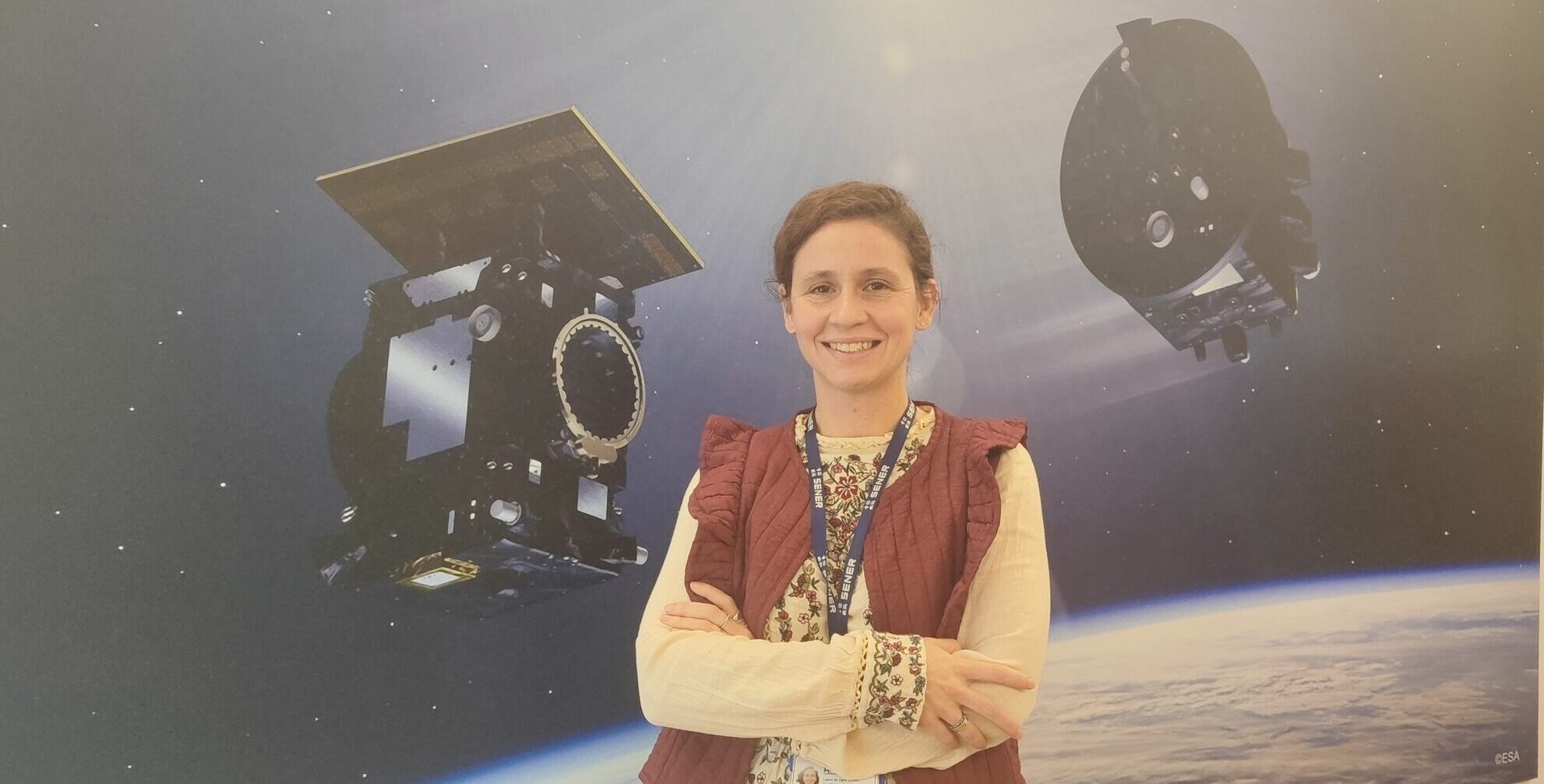
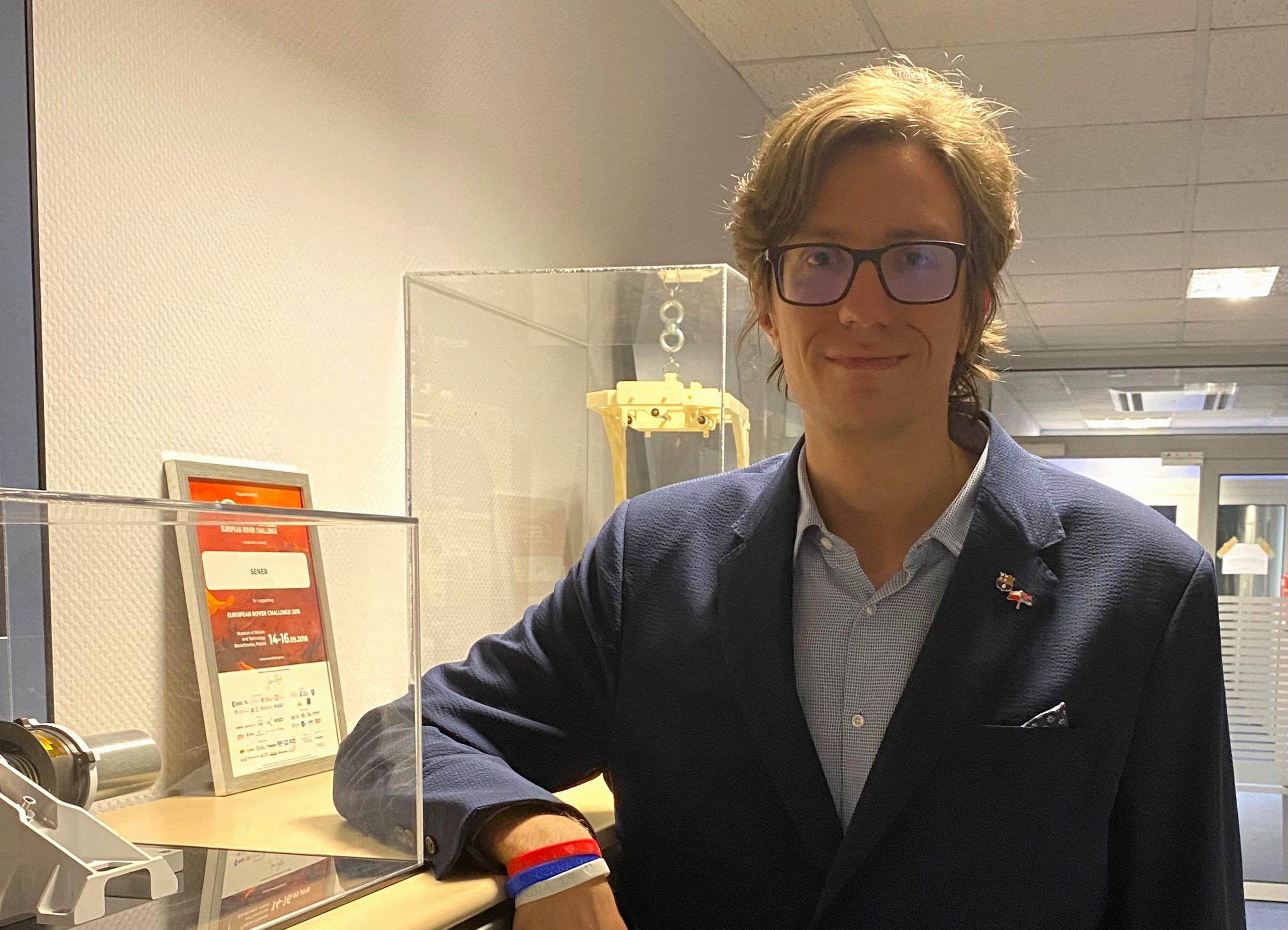
- The mind behind the project
Categories:
What inspired you to start a career in Environmental Sciences?
I graduated with a degree in Environmental Science because I wanted to work in resource management and protect the planet. I have always been more comfortable with numbers than letters, so I knew that my career path would be linked to science. What I never imagined was that I would end up working in the space and defence sector. It has been an incredible surprise and, above all, an exciting challenge.
When I finished my degree, I decided to specialise in quality and environmental regulations. That decision became the gateway to a sector that demands the highest standards in the world. Every day reminds me that, although the path is not always what we imagine, it can take us to extraordinary places if we are willing to learn and take on new challenges.
What made you interested in Sener?
A former colleague, who knew I was looking for a change, said to me, ‘Send me your CV.’ That simple gesture opened the door to a new stage in my life. When I had the interview with my current boss, Eva Creus, and my colleagues Raquel and Alfonso, I felt I had found the place I was looking for. What’s more, I had an advantage: years ago, I had worked in Arganda, when the company was called Rymsa and then TRYO, and I knew the human quality that has always characterised it.
Throughout my career, I have worked for different companies in the sector, each with its own way of doing things. Some lead entire systems, others develop subsystems, and others focus on very specific products. Although the ‘rules of the game’ are the same – regulations, standards – each company adapts them to its own reality. That’s why I believe it’s essential to have a global vision, to understand how each piece fits into the whole, in order to provide solutions that really make a difference.
There is always room for improvement in quality. And to improve, you have to learn, listen and share. My goal is to add value, not only to the company, but to every project and every person involved in it. Because in the end, what makes an organisation great are the people who build it day by day.
My goal is to add value, not only to the company, but to every project and every person.
What area of the business do you work in? And what is your day-to-day work like?
I work in Quality, as Product Assurance Manager, on space and defence projects. My day-to-day work is full of surprises: there are days when I open a document to make progress and, at the end of the day, I realise that I have been resolving incidents with colleagues. Although it can sometimes be frustrating not to be in control of your time, I love it. Knowing that I am doing my bit to find solutions and ensure that what leaves Sener meets the customer’s needs is very rewarding.
What progress have you made since joining Sener? What are the most important projects you are currently working on?
When I joined the company, I told my boss that I wanted to be responsible for an area of expertise in quality, and today I can say that I have achieved that goal. I am currently responsible for the quality of the autonomous navigation products developed by Sener and also for Return of Experience, i.e. the management of problems and lessons learned in the area of quality. Among the most relevant projects are ARIEL MGAMA, with the challenge of coordinating a multi-site project (Poland, Arganda, Cerdanyola and Tres Cantos), and all the projects that come out of Naviground®.
How do you think the projects you work on influence the world or society today/in the future?
I believe Sener has a vision that goes beyond the immediate: it doesn’t just think about tomorrow, but about the future. For example, the autonomous navigation technology we are working on will reduce risks for future military personnel and can also be applied in the civilian sphere. That motivates me a lot.
How do you keep up to date with general knowledge and trends in your sector?
It is a rapidly evolving sector, and it can sometimes be overwhelming to keep up, especially since not all information flows easily for reasons of confidentiality. The internal newsletter helps me a lot, as it filters the most relevant information and keeps us informed about both the company and the sector.
I believe Sener has a vision that goes beyond the immediate.
What, in your opinion, distinguishes Sener from its competitors?
Sener is a company that dares to take risks. It doesn’t feel small and knows how to get everyone to do their bit to achieve great things. It also encourages collaboration between different business areas, which generates agile and shared synergies.
What new challenges do you foresee in the coming years?
I like life to surprise me, but I would love to contribute to standardising working methodologies at Sener, so that we are all clear about our roles and can feel confident even in the face of the unexpected. A solid network of processes allows us to work with confidence and tackle any challenge.
As a quality professional in the aerospace sector, one of the biggest challenges is ensuring compliance with extremely demanding standards in environments where innovation is advancing at a rapid pace. Each project involves working with cutting-edge technologies, global suppliers and regulatory requirements that are not only strict but also constantly evolving.
Furthermore, quality is not limited to verifying that everything is compliant: it involves anticipating risks, ensuring complete traceability and fostering a culture where everyone understands that quality is part of the project’s success. In a sector where there is no room for error, attention to detail and adaptability are essential.
Another important challenge is the integration of new methodologies and digital tools, which enable processes to be improved but require training and cultural change. All this, in an international and highly competitive context, makes quality a strategic role, not just an operational one.