




 About us
 / section
Careers
Careers / section
News & events
News & events / sectionCountries section
About us
About us / section
Careers
Careers / section
News & events
News & events / sectionCountries section


 More results
Led by CATEC, together with Sener and Multiverse Computing, the project will develop a resilient navigation system combining imagery, quantum AI and multisensor fusion.
Funded by the Ministry of Defence’s COINCIDENTE Programme with €1.11 million, the system will be validated in real-world flight trials, reaching Technology Readiness Level (TRL) 6.
The Advanced Centre for Aerospace Technologies (CATEC), in a consortium with the Sener group and Multiverse Computing, has launched ARESIA (Resilient Navigation through Sensor and Image Fusion for High Dynamics). Selected under the Ministry of Defence’s COINCIDENTE Programme for Cooperation in Scientific Research and the Development of Strategic Technologies (topic COINC-2025-PNT), the project has a budget of €1,113,190 to provide unmanned aerial systems (UAS) with reliable positioning capabilities in the event of interference or the complete loss of global navigation satellite system (GNSS) signals.
ARESIA addresses the challenge of operating in environments where GNSS signals are degraded or completely blocked through a solution that integrates visual odometry, map-matching and advanced multisensor fusion. The system compares images captured by on-board cameras with preloaded geospatial databases in real time to estimate the aircraft’s trajectory without relying on external infrastructure.
To overcome weight, size and computational power constraints during high-speed flight, Multiverse Computing will apply artificial intelligence compression techniques based on tensor networks and quantum-inspired computing, enabling complex algorithms to run efficiently on board in real time.
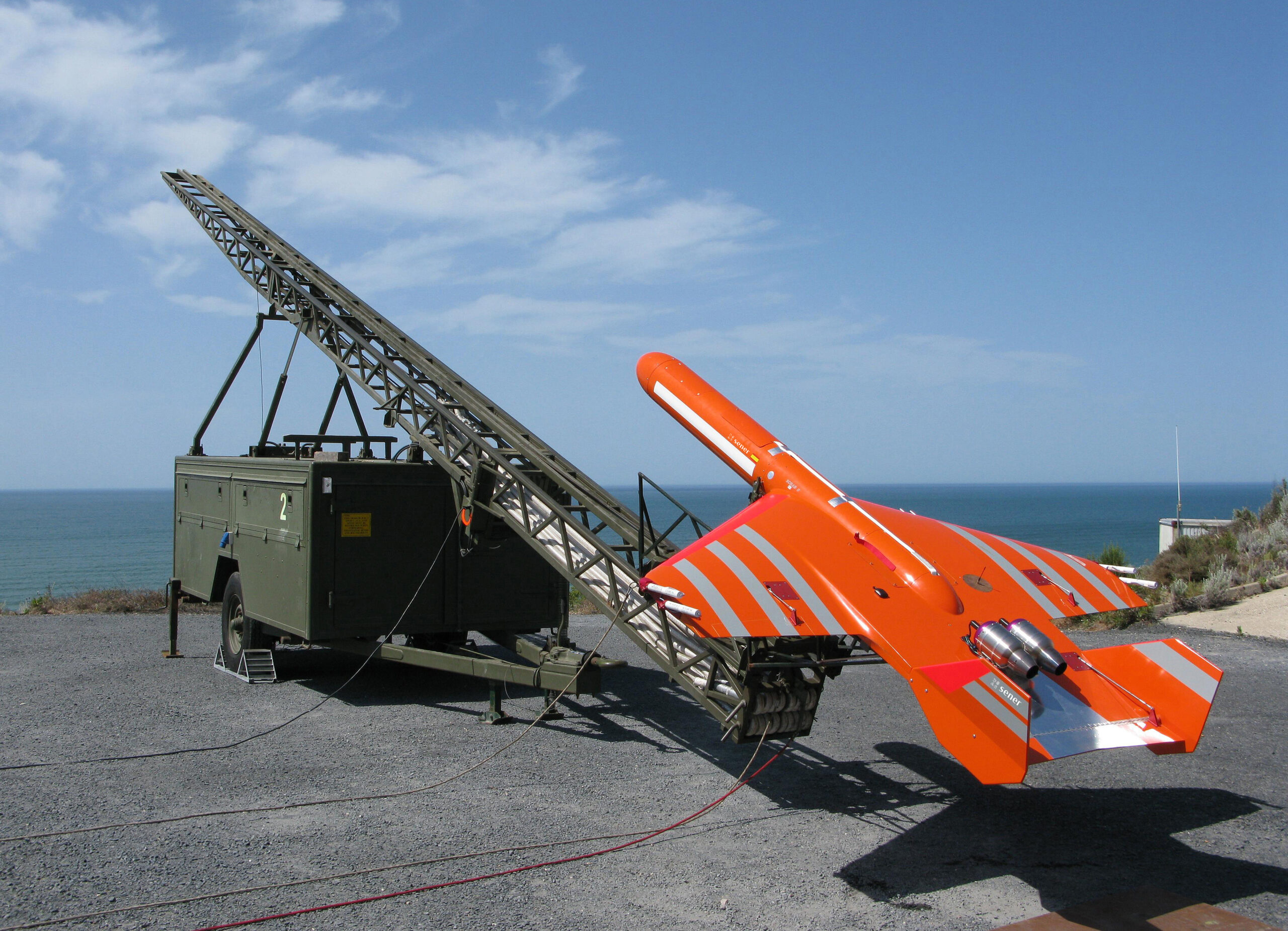
The project aims to achieve Technology Readiness Level (TRL) 6, with final operational validation taking place at CATEC’s ATLAS Alpha Flight Test Centre in Villacarrillo, Jaén. This validation will use Sener’s SCRAB II platform, a high-performance system with automatic flight capabilities and turbine propulsion.
ARESIA brings together the capabilities of three leading organisations in Spain’s aerospace and technology sector:
In addition to their direct application in strengthening strategic autonomy and security in defence, the technologies developed through ARESIA will open up opportunities for critical civilian applications, such as emergency missions, infrastructure inspection and advanced autonomous logistics.
Sener to supply advanced aerial targets to INTA for ATLANTE 26 Exercises
Iñaki Pinto to lead Sener’s Space and Science division, while Diego Rodriguez takes on newly created technology and innovation leadership role in Aerospace and Defence

Sener Foundation promotes social innovation in the 3rd edition of the SocialTech Challenge.
Sener begins flight trials of Razor under the SIROCO programme