






 About us

 More results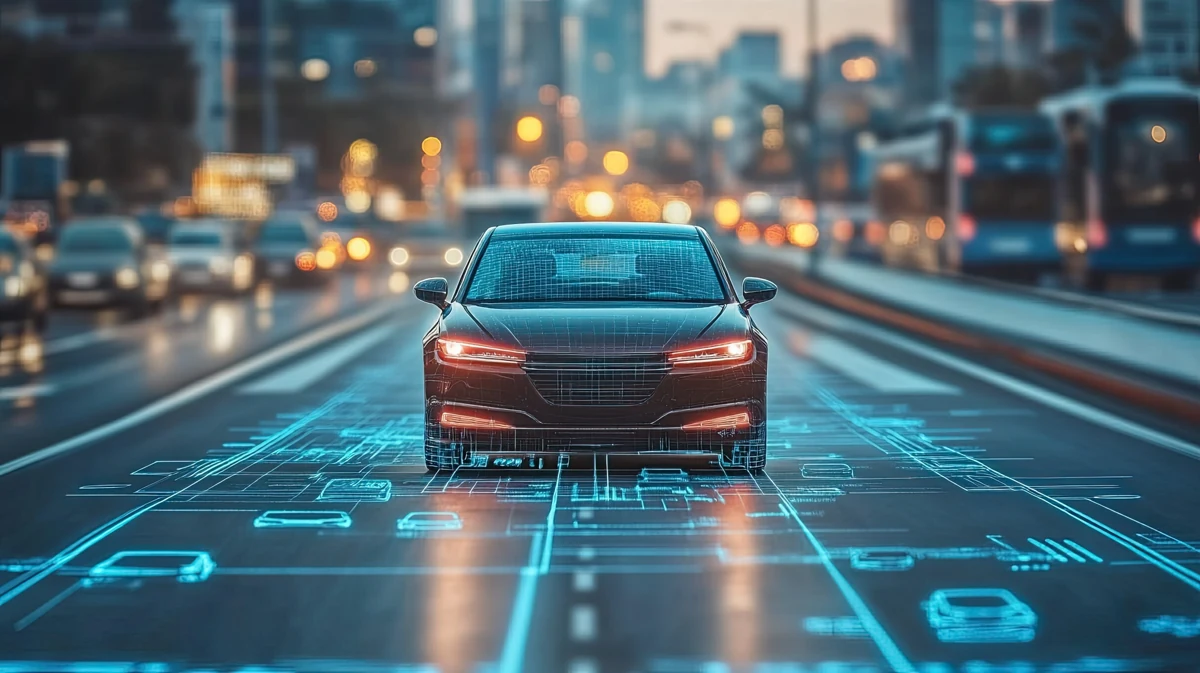
- Mobility & Infrastructures
Categories:
The transformation of transportation is converging around three core pillars: sustainable mobility, automation, and infrastructure digitalization. Advances in autonomous vehicles, the expansion of connected vehicles, and the deployment of smart infrastructure are reshaping mobility models worldwide, with a clear focus on safety, operational efficiency, and emissions reduction. These elements now form an interdependent ecosystem that requires reliable data, standardization, robust connectivity, and road infrastructure capable of actively interacting with vehicles.
The future of mobility does not depend solely on the evolution of the vehicle itself. It emerges from cooperation between vehicles, infrastructure, and the cloud, shifting mobility away from isolated components toward a real-time, cooperative environment where information flows continuously.
Sustainable Mobility: An essential starting point
Sustainable mobility combines environmental performance, operational efficiency, and road safety. It is not limited to reducing emissions; it also involves anticipating incidents, smoothing traffic flow, minimizing sudden braking, and improving predictability across transport networks. In this context, infrastructure digitalization plays a critical role.
Smarter mobility requires roads to become active participants in the system. Sensors, connected nodes, cooperative technologies, and standardized data formats enable vehicles to make safer and more accurate decisions, especially in complex or dynamic traffic environments.
Autonomous vehicles: real progress, still far from full autonomy
Autonomous vehicles have generated significant interest, but high levels of automation (Levels 4 and 5) remain limited to specific, controlled use cases. Today’s market is dominated by Levels 1 and 2, where the driver remains responsible for vehicle operation. In practical terms, Level 5 autonomy does not yet exist and is not expected in the short term.
Autonomy is constrained by several technical and operational factors:
- Detection and interpretation of complex scenarios
- Management of uncertainty
- Reliability and validation of artificial intelligence
- Sensor limitations under adverse environmental conditions
- Dependence on extremely precise and consistent data
- The need for clear, readable, and coherent infrastructure
This is where the Operational Design Domain (ODD) becomes critical. The ODD defines the conditions under which an automated system can operate safely, including lighting, weather, road type, signage quality, and road geometry. Variations in these parameters can significantly expand or restrict autonomous functionality.
While large-scale deployment of high-level automation is not yet viable for civilian mobility, other domains are progressing more rapidly, particularly in defense and controlled operational environments. In these contexts, defined scenarios, strict operational requirements, and cooperative systems accelerate development.
Within this framework, Sener leads the European COMMANDS project through its Aerospace and Defense division. Selected by the European Defence Fund, COMMANDS develops capabilities for cooperative convoys composed of manned and unmanned vehicles, integrating onboard intelligence, tactical autonomy, C4I systems, and a strong emphasis on ethics, safety, and coordinated operations. Although defense-oriented and not directly linked to urban or sustainable mobility, the project illustrates the technological convergence of sensors, automation, advanced software, and vehicle-to-vehicle cooperation that will ultimately influence future terrestrial mobility architectures.
Smart Roads: A core requirement to reduce system disengagements
Smart roads support automation by reducing system disengagements. Poor signage, inadequate lighting, or incomplete digital infrastructure directly limit a vehicle’s ability to operate reliably.
Modern road infrastructure is increasingly incorporating:
- Retroreflective signage optimized for machine vision
- Reinforced and standardized road markings
- Emergency refuge areas suitable for automated vehicles
- Continuous transmission of structured data through digital road infrastructure
- Cooperative systems capable of warning about incidents and hazards
The objective is clear: roads that actively contribute to safety. Intelligent vehicles alone are not enough; measurable, data-enabled roads capable of transmitting reliable information are equally essential.
Functional classification of road infrastructure helps identify which sections are suitable for automation, which require upgrades, and which interventions can reduce critical disengagements.
C-ITS cooperative systems: The common language of connected mobility
The deployment of Cooperative Intelligent Transport Systems (C-ITS) enables certified communication between vehicles, infrastructure, and traffic management centers. This cooperative ecosystem is built on European standards that ensure precision, interoperability, and security, while aligning with global developments in V2X technologies and connected mobility pilots across North America, Asia-Pacific, and Australia.
Key components include:
- V2V (Vehicle-to-Vehicle): direct communication between vehicles to anticipate maneuvers and prevent collisions
- V2I (Vehicle-to-Infrastructure): connectivity with roadside systems, RSUs, variable message signs, and control centers
- SPAT: real-time transmission of traffic signal phases and timing
- MAP: precise intersection geometry for automated maneuvers and priority warnings
- DATEX II: structured publication of incidents, roadworks, restrictions, events, and traffic conditions
- Regulated messages (CAM, DENM, SPAT, MAP): certified information on accidents, congestion, slow vehicles, adverse conditions, and road hazards
This framework is not limited to Europe. North America continues to advance connected vehicle programs and V2X deployments across highways and commercial fleets. China integrates V2X into its smart infrastructure and connected city strategies. Japan, a pioneer in DSRC and V2V/V2I, is migrating toward modern C-ITS standards. South Korea deploys V2X stations on highways as a precursor to higher automation levels. Australia is developing C-ITS pilots while adapting regulatory and spectrum frameworks toward national standardization.
Within Europe, C-ITS corridors in Austria, Germany, the Czech Republic, and the Netherlands already operate with certified messages and common security mechanisms. At the same time, North American and Asia-Pacific markets are expanding rapidly, driven by interest in V2I, V2X, and data-driven smart mobility beyond the European regulatory model.
A key distinction from crowdsourced applications such as Waze is that C-ITS messages are certified, auditable, and directly attributable to infrastructure operators. They do not rely on voluntary or unverified inputs, eliminating risks related to manipulation, inaccuracy, or delayed detection of critical events.
Connected Vehicles: Immediate impact and real-world use cases
Connected vehicles already deliver tangible benefits. While full autonomy remains limited, connectivity is actively improving road safety and traffic management today.
Real-world use cases deployed across Europe and other regions include:
- Automatic warnings to vehicles when a maintenance truck stops on the shoulder
- Communication of mobile roadworks to adjust speed and prevent collisions
- Intelligent bus priority using SPAT and MAP based on real-time delays
- Advance traffic signal information to reduce harsh braking
- Certified warnings displayed directly in the instrument cluster rather than infotainment systems
These connected vehicle applications are already operating successfully in Austria, Germany, Spain, the United States, Japan, and China, with ongoing pilots using C-ITS-based traffic management to optimize intersections and reduce congestion.
One of the most immediate benefits is improved safety for road maintenance crews, as drivers receive certified alerts before visually detecting stopped vehicles.
Software-Defined Vehicles: A Structural Shift in the Industry
The software-defined vehicle (SDV) represents a structural transformation of the automotive industry. By decoupling hardware from functionality, SDVs enable:
- Over-the-air (OTA) updates
- On-demand feature activation
- Configurations that evolve throughout the vehicle’s lifecycle
- Native integration with vehicle–edge–cloud architectures
- A vehicle–cloud ecosystem where functionality depends on software rather than hardware
This shift will lead to vehicles with over a billion lines of code, requiring far more complex validation and lifecycle management processes. Connectivity becomes the foundation for safety, cybersecurity, and operational consistency.
Smart Infrastructure and Connected Mobility: Toward an Integrated Ecosystem
The development of smart infrastructure, combined with technologies such as V2V, V2I, SPAT, MAP, C-ITS, DATEX II, and data-driven models, enables mobility that is more efficient, safer, and more sustainable. Automation will depend as much on vehicle performance as on the quality of the environment in which it operates.
The terms defining this transformation—smart roads, connected mobility, future mobility, autonomous vehicles, connected vehicles—describe a model that is no longer theoretical. It is already being deployed, with real challenges, but also clear, immediate benefits.
The direction is clear: an ecosystem in which vehicles, infrastructure, and the cloud operate together, reducing risk and enabling sustainable mobility aligned with societal needs and the evolving technological landscape.

