




 About us

 More results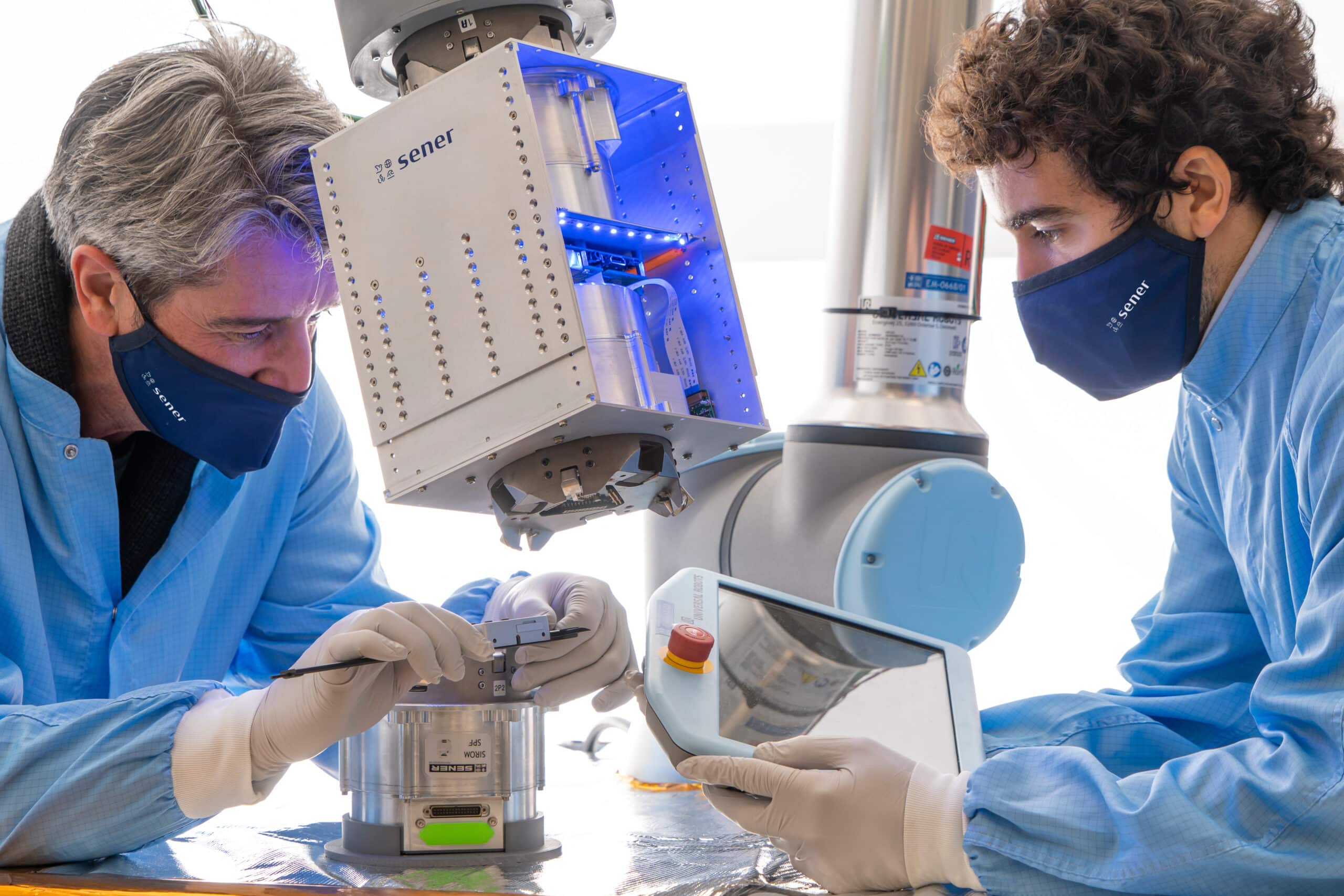
For decades, satellites and space systems were conceived as closed, largely unchangeable structures. They were designed with extreme care, launched into space and expected to operate without direct intervention throughout their entire service life. When something went wrong, the options were usually very limited: in many cases, the satellite became unusable, even if the problem affected only a specific part of the system. This way of working has shaped the development of the space sector for many years.
As space becomes increasingly populated with essential infrastructure—communications, Earth observation, navigation and scientific satellites—the need to maintain, repair or upgrade these systems once they are in orbit is becoming progressively more important. However, doing so is far from straightforward. The extreme conditions of the space environment, the distance from Earth and the complexity of missions make any intervention technically demanding and costly. Added to this is a further challenge: each mission is typically designed with bespoke solutions, which makes it extremely difficult to reuse concepts or tools from one mission to another.
In this context, space robotics comes into play, enabling operations that would be impossible for a human in orbit. Its effectiveness depends to a large extent on a relatively invisible element: how the different parts of the system are connected and communicate with one another. Manipulating a module, replacing a component or docking a tool requires reliable, simple and compatible connection points. Without them, even the most advanced robot has very limited capabilities.
This is why the development of standard interfaces is becoming a strategic factor. These interfaces act as common connection points that integrate mechanical coupling with the transfer of power, data and, in some cases, fluids into a single element. By doing so, they allow different modules, tools or subsystems to be connected and disconnected safely, without the need to design unique solutions for each mission. This represents a shift in approach, bringing to space a logic that is well known in other technological fields: interoperability and modularity.
This approach offers clear advantages. By reducing the need for bespoke designs, missions are simplified and costs are lowered. Flexibility is also increased, as the same system can be adapted to different operations or evolve over time. Instead of replacing an entire satellite when a specific failure occurs, it becomes possible to replace only the affected component or to add new capabilities to systems already in service. All of this helps to extend mission lifetimes and make better use of the investments made.
There are implications beyond the economic ones. The ability to repair and upgrade systems in orbit has a direct impact on the sustainability of the space environment. Preventing satellites from becoming prematurely obsolete reduces the generation of space debris, one of the main long-term risks to space activity. In addition, modularity facilitates the reuse of technologies and encourages more responsible approaches to the design of new missions.
The applications of this type of interface are varied. They range from the maintenance and repair of satellites in orbit to the robotic assembly of large structures that cannot be launched fully assembled from Earth. They also include the replacement of orbital units, refuelling operations, and the manipulation of instruments and payloads in lunar or planetary exploration missions. In all cases, the objective is the same: to make space operations more flexible, efficient and sustainable.
This paradigm shift does not occur in isolation. It requires collaboration between companies, technology centres and space agencies, as well as common frameworks that allow solutions to be validated and progress to be made towards shared standards.
Within this framework sit initiatives such as the Sirom project (Standard Interface for Robotic Manipulation), a standard robotic interface led by Sener, with the participation of various European industrial and technological partners under the Horizon 2020 and Horizon Europe programmes. The aim of Sirom is to continue consolidating itself as a European standard and to expand its adoption in future space missions, evolving the technology towards increasingly complex applications such as permanent space infrastructures and fully autonomous operations.
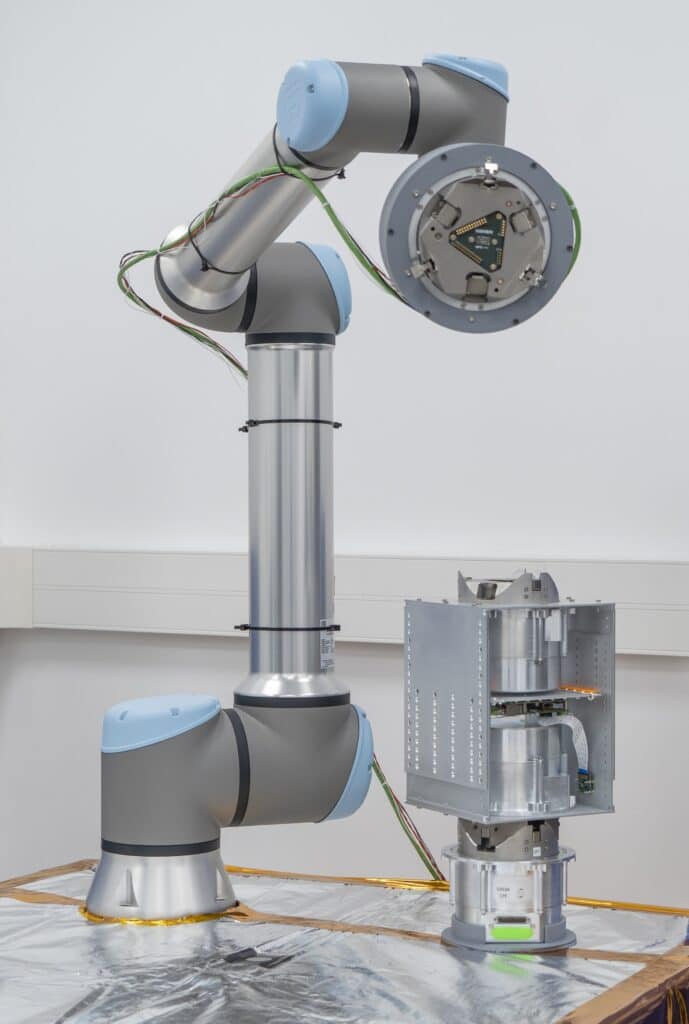
In the long term, this technology could also facilitate the development of modular satellites capable of updating or replacing components to expand their capabilities and avoid obsolescence, thereby contributing to the reduction of space debris. This approach positions Sirom as the interface that links different functional blocks. In this way, a servicing satellite equipped with a robotic arm could approach a satellite in orbit and replace specific modules, such as an antenna, with more advanced versions, extending its service life and optimising its performance.

José Viñals
José Javier Viñals is responsible for the Robotics and Deployment Systems product line, where he leads commercial, R&T and operational functions aimed at increasing the profitability and business volume of this area. He has extensive experience as a project manager in the Electromechanical Systems Division. He has also served as technical lead on projects related to the simulation of material behaviour and processes, as well as in the fields of space, new technologies, aeronautics, vehicles, and actuation and control systems, including the management of R&D initiatives. He has participated in major projects such as Solar Orbiter, Psyche, IBDM HCS Gateway and Sirom. He holds a degree in Industrial Engineering, Mechanical specialism (Bilbao, 1987). In addition, he is Secretary of the Board of Trustees of the Centre for Aeronautical Technologies (CTA), an external evaluator of European R&D projects, an Associate Lecturer at the Bilbao School of Engineering (UPV/EHU), and a member of various bodies of the Basque Aeronautics Cluster (HEGAN) and of the School itself, where he also collaborates in initiatives such as Formula Student and the Bisky Team.

