





 About us
 / section
Careers
Careers / section
News & events
News & events / sectionCountries section
About us
About us / section
Careers
Careers / section
News & events
News & events / sectionCountries section
About us
About us / section
Careers
Careers / section
News & events
News & events / sectionCountries section
About us
About us / section
Careers
Careers / section
News & events
News & events / sectionCountries section


 More results
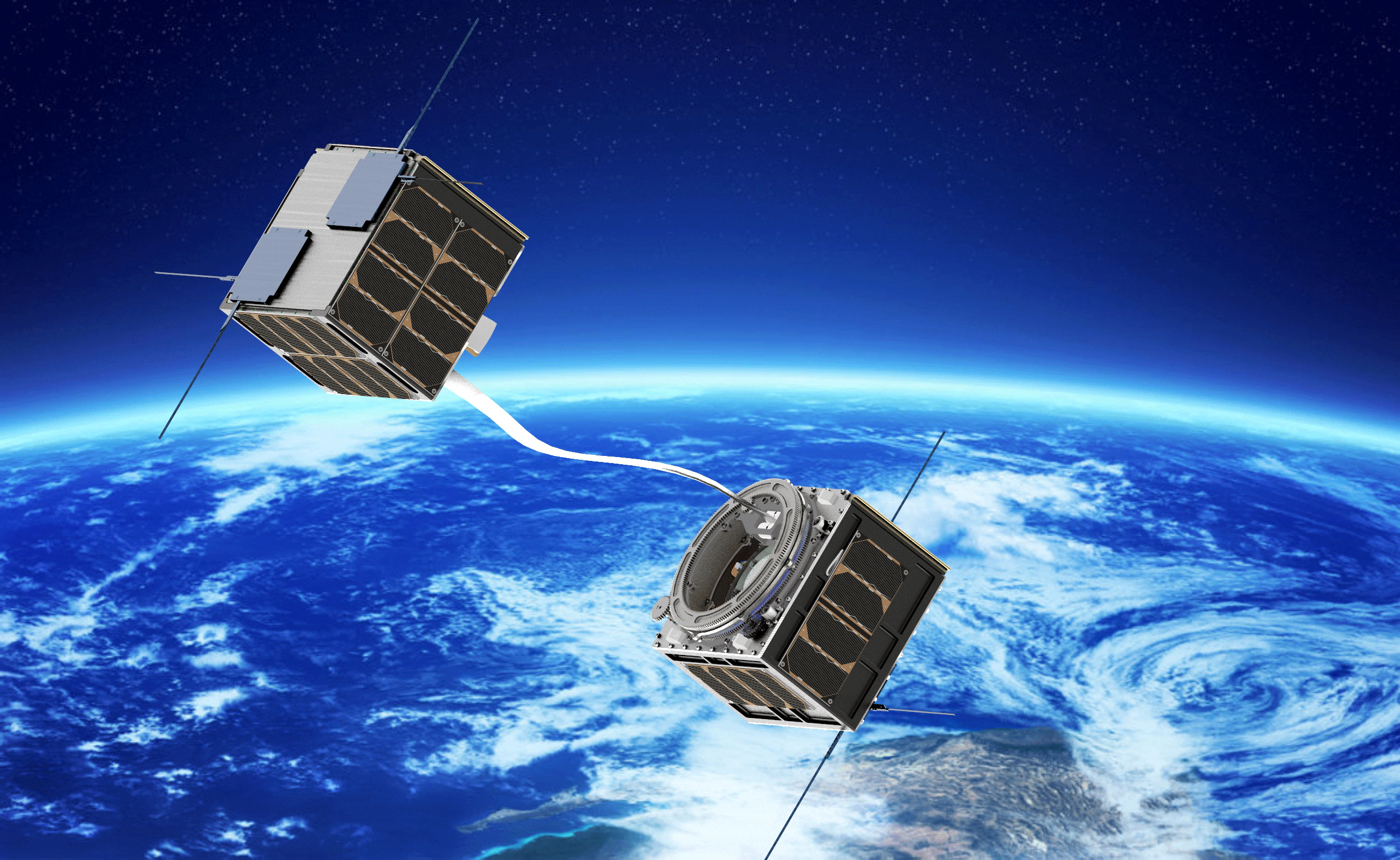
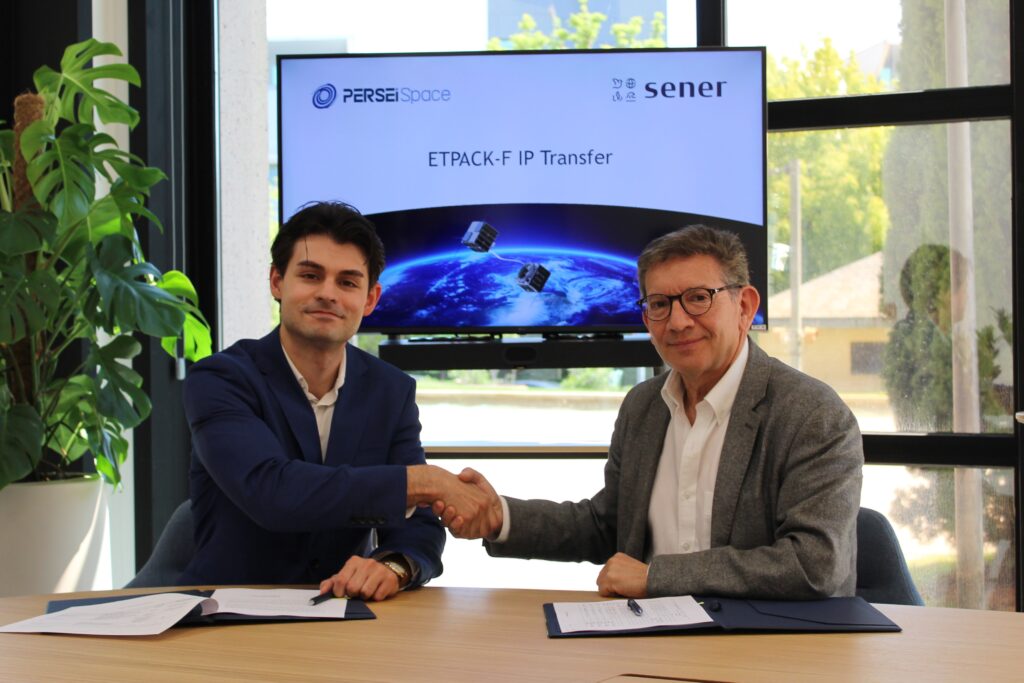
The agreement licenses to PERSEI Space the results obtained by Sener on electrodynamic tethers within the framework of the European project E.T.PACK-F.
On 30 May 2025, Spanish start-up PERSEI Space and Sener signed a technology licensing agreement for the use of electrodynamic space tethers applied to the deorbiting of space debris. These tethers are long conductive ribbons which, once deployed in orbit, generate a braking force that passively reduces orbital altitude, ultimately leading to the removal of space debris upon atmospheric re-entry.
Under the terms of the agreement, PERSEI Space is authorised to use, modify, manufacture, and sell space debris deorbiting equipment based on the results achieved by Sener within the E.T.PACK-F project, which has been funded with €2.5 million by the European Innovation Council (EIC). The agreement encompasses seven technologies within the deorbiting system, including systems engineering, structure, deployment mechanism, onboard software, attitude determination and control system, and avionics.
This agreement, along with another signed in February 2025 with the three universities involved in the E.T.PACK-F project (Carlos III University of Madrid, University of Padua, and Dresden University of Technology), also grants PERSEI Space ownership of the two deorbiting units developed within E.T.PACK-F. The first is the qualification model, which has undergone rigorous testing during the project. The second is the flight model, which will be demonstrated in orbit by PERSEI Space in spring 2026, thanks to a launch opportunity funded by the Flight Tickets Initiative of the European Commission and the European Space Agency. This demonstration will represent the first in-orbit experiment of an autonomous deorbiting system based on a bare electrodynamic tether equipped with a hollow cathode—i.e., featuring the architecture necessary to deliver high performance and enable the development of effective space debris deorbiting products.
The licensing agreement marks a key milestone in PERSEI Space’s roadmap, as it consolidates and accelerates the company’s ability to prepare deorbiting system products based on electrodynamic tethers. The aerospace industry requires lightweight and efficient deorbiting systems, as without them, objects orbiting above approximately 500 km do not naturally deorbit within five years, as required by regulations in the United States and outlined in the Zero Debris Charter promoted by the European Space Agency.
E.T.PACK-F (2022–2025) is an EIC Transition project funded by the European Innovation Council (EIC). Coordinated by Carlos III University of Madrid, it also includes the participation of Sener (from its Aerospace and Defence division), the University of Padua, Dresden University of Technology, Rocket Factory Augsburg, and PERSEI Space. The project’s aim is to prepare a flight-ready deorbiting system based on a space tether. E.T.PACK-F is the natural continuation of E.T.PACK (2019–2022), a FET OPEN project also funded by the EIC with €3 million. As part of its Pathfinder programme, the EIC is also funding a third project on space tethers: E.T.COMPACT. Also coordinated by UC3M and involving PERSEI Space, E.T.COMPACT is focused on exploring the limits of miniaturisation in space tether technology and investigating new concepts such as the bare-photovoltaic tether.
PERSEI Space is a spin-off from Carlos III University of Madrid, founded in 2023 by its CEO and the principal investigators from the three European universities involved in the E.T.PACK and E.T.PACK-F projects. The company is dedicated to the development, manufacturing, and commercialisation of solutions for space debris mitigation, based on innovative products using electrodynamic space tethers. It is currently being incubated by the ESA-BIC programme of the European Space Agency and the Madri+d Foundation.
Sener Foundation, ICLI and TADEH join forces to improve access to water in rural and vulnerable communities
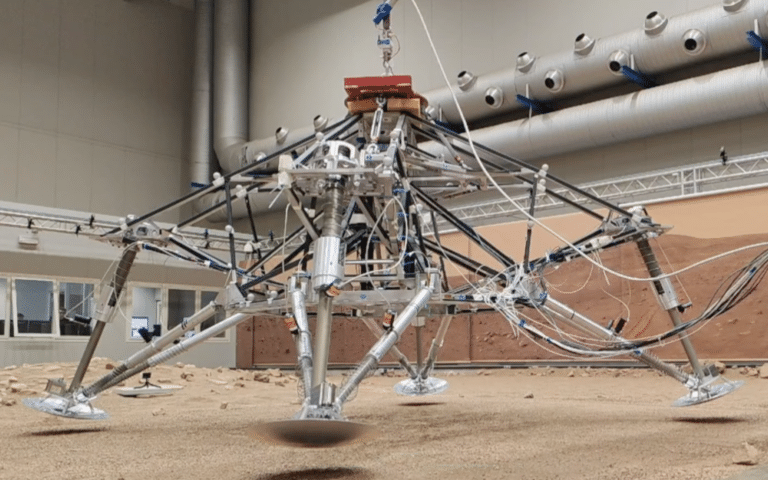
Sener advances qualification of the Rosalind Franklin rover landing gear ahead of its journey to Mars in 2028
Almirall autonomously optimises energy operations at its Sant Andreu de la Barca plant using a digital twin developed by Sener
European Space Agency recognises Sener’s excellence in space radiometry